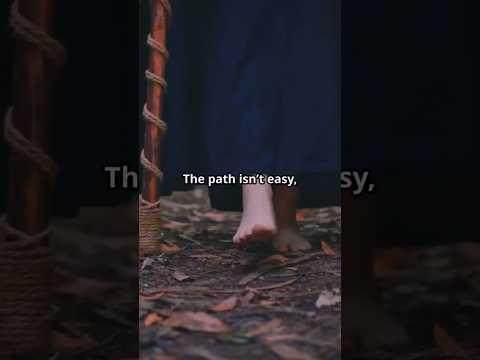
Category: Buddhism

Buddhism is a contemplative tradition rooted in direct insight into suffering, impermanence, and the nature of mind. Rather than belief, it emphasises understanding through observation, ethical living, and inner cultivation. This collection draws from classical Buddhist sources and stories, including the Dhammapada and Jātaka tales, exploring wisdom, compassion, and liberation as lived experience rather than abstract doctrine.

  • Evil Done by Oneself Destroys the Fool | Buddhist Wisdom.

    Evil Done by Oneself Destroys the Fool | A Deep Buddhist Wisdom Teaching on Karma and Awareness.
    Evil Done by Oneself Destroys the Fool | Buddhist Wisdom.

    Evil Done by Oneself Destroys the Fool | Buddhist Wisdom.

    In the world of Buddhist teachings, few insights hit harder than this one from the Dhammapada:
    “Evil done by oneself, born of oneself, crushes the fool.”

    At first glance, it might sound harsh. But dig deeper, and you’ll find it’s a profound truth—one that carries both a warning and a path to liberation.

    Understanding the Quote

    This verse from the Dhammapada (Verse 165) speaks directly to the principle of karma—the spiritual law of cause and effect. According to the Buddha, it’s not external forces, enemies, or fate that bring suffering to our lives. More often, it’s our own choices, our own thoughts, and our own actions that pave the road to our downfall.

    The “fool” in this quote refers to someone who acts out of ignorance, impulsiveness, or ego—someone who blames others for their suffering while remaining blind to the harm they inflict on themselves and others.

    Karma Starts with You

    In Buddhist philosophy, karma isn’t about cosmic punishment. It’s simply the natural result of our actions. When we sow seeds of greed, anger, or deceit, we eventually reap the pain they produce—mentally, emotionally, and spiritually.

    On the flip side, when we cultivate compassion, mindfulness, and wisdom, we begin to transform the quality of our lives and relationships.

    So when the Buddha says “evil done by oneself… crushes the fool,” he’s urging us to wake up. To become conscious of our patterns. To take responsibility for the energy we put into the world—and what we invite back.

    The Inner Enemy

    Modern psychology and spiritual traditions alike echo this truth: self-sabotage is real. We often become our own worst enemy—not because we intend to, but because we’re unaware.
    Negative self-talk, harmful habits, unchecked emotions—all of these can erode our inner peace and destroy our potential.

    This teaching is a wake-up call to face the inner enemy: the untrained mind.

    Mindfulness Is the Way Out

    Thankfully, Buddhism doesn’t leave us with just the warning. It gives us tools to break the cycle—starting with mindfulness.

    By observing our thoughts and actions without judgment, we can begin to make conscious choices rather than reactive ones. We learn to pause before acting out of anger. We start to question our harmful narratives. And we choose peace over pride.

    The moment we realize we are both the cause and the solution is the moment our power returns.

    Why This Wisdom Still Matters Today

    In today’s fast-paced, emotionally charged world, this teaching is more relevant than ever. We live in a time where blaming others is easy, but taking responsibility is rare. The Dhammapada reminds us that true freedom begins within.

    The person who accepts this truth isn’t weak—they’re empowered. Because when we stop pointing fingers outward and look inward, real transformation begins.


    Final Thoughts

    Evil done by oneself, born of oneself, crushes the fool” isn’t about shame—it’s about self-awareness. It’s about realizing that while we may have caused our own suffering, we also have the power to end it.

    You don’t need to be perfect. You just need to be awake.

    So ask yourself:
    Are your actions building peace—or pain?
    Are you planting seeds of wisdom—or weeds of regret?

    Choose mindfully. Your future depends on it.

    Evil Done by Oneself Destroys the Fool | Buddhist Wisdom.
    Evil Done by Oneself Destroys the Fool | Buddhist Wisdom.

    If you found this reflection valuable, subscribe to our YouTube channel, YourWisdomVault, for more!

    #BuddhistWisdom #Karma #Mindfulness

  • Focus on Your Path, Not Others – Buddhist Wisdom Quote.

    Focus on Your Path, Not Others—A Profound Buddhist Wisdom Quote on Mindful Self-Guidance.
    Focus on Your Path, Not Others – Buddhist Wisdom Quote.

    Focus on Your Path, Not Others – Buddhist Wisdom Quote.

    In our hyper-connected world, where social media constantly feeds us the lives, accomplishments, and opinions of others, it’s easy to lose sight of our own journey. One powerful quote from the Buddha reminds us of a timeless truth:

    “Let none neglect his own duty for the sake of another’s.”

    This Buddhist teaching encourages mindfulness, responsibility, and the importance of staying committed to our own spiritual and personal growth. At first glance, it may sound simple—but its depth is profound, especially when applied to modern life.

    The Trap of Comparison

    Comparison is one of the most subtle traps on the path of self-development. Whether it’s through scrolling social media, watching others succeed in your field, or trying to meet expectations set by family or culture, comparison can quickly turn into distraction.

    Buddhism teaches that suffering arises from attachment—and that includes attachment to how others live their lives. When we focus too much on what others are doing, we lose connection with the present moment and our own purpose. The Buddha’s words serve as a wake-up call: don’t trade your path for someone else’s. You were not born to live their life—you were born to live yours.

    Duty in the Buddhist Sense

    In Buddhism, the concept of “duty” isn’t about obligation in a burdensome way. Instead, it speaks to dharma—your personal truth, your role, your path in life. It means living in harmony with your values, your nature, and the lessons you are meant to learn and share.

    Neglecting your duty isn’t just about not doing your job. It’s about avoiding the inner work: not meditating when you need stillness, not speaking truth when it matters, not growing because it’s uncomfortable.

    When we abandon our dharma to chase someone else’s version of success, we drift further from inner peace. The quote calls us back to ourselves.

    How to Stay Focused on Your Path

    Here are a few mindful ways to apply this Buddhist wisdom in daily life:

    1. Limit Distractions

    Turn off the noise when needed—especially social media. If you find yourself constantly checking what others are doing, pause and breathe. Return to your space. Your body. Your breath.

    2. Practice Self-Reflection

    Ask yourself regularly: Am I acting out of alignment with my values? Write down your goals and revisit your “why” often. Mindfulness means returning—again and again—to presence and purpose.

    3. Celebrate Progress, Not Perfection

    Your path isn’t a race. Growth takes time. Comparing yourself to others’ highlight reels only steals your peace. Measure your progress by your own heart and actions, not the world’s applause.

    4. Make Time for Inner Work

    Meditation, journaling, silence, reading spiritual texts—whatever helps you return to your center. That’s your real work. That’s your true path.

    Final Thoughts

    Buddhist wisdom doesn’t tell us to ignore others or live in isolation. It invites us to honor the interconnectedness of all life while still taking responsibility for our unique journey. When the Buddha said, “Let none neglect his own duty for the sake of another’s,” he wasn’t promoting selfishness—he was advocating for self-responsibility.

    You are the guardian of your soul, your peace, and your path. Let others walk theirs, and you walk yours—with mindfulness, integrity, and love.

    Focus on Your Path, Not Others – Buddhist Wisdom Quote.
    Focus on Your Path, Not Others – Buddhist Wisdom Quote.

    Like this teaching?
    Subscribe to Your Wisdom Vault on YouTube for more Buddhist wisdom, spiritual quotes, and mindful reflections.

    🧘‍♂️ Stay grounded. Stay focused. Walk your path.


    #BuddhistWisdom #MindfulnessPractice #StayOnYourPath

  • Live Without Hate – Like an Elephant in the Forest (Buddha).

    Live Without Hate—Like an Elephant in the Forest, Peaceful and Strong in the Buddha’s Way.
    Live Without Hate – Like an Elephant in the Forest (Buddha).

    Live Without Hate – Like an Elephant in the Forest (Buddha).

    Buddhist Wisdom for Inner Peace

    In a world filled with noise, conflict, and division, living without hate may sound unrealistic — or even naive. But over 2,500 years ago, the Buddha offered a radical yet simple teaching:

    “Live without hate, like an elephant in the forest.”

    At first glance, this may sound poetic. But look closer — it’s a deep call for inner freedom and strength. And in today’s fast-paced, hyper-reactive society, it may be more relevant than ever.


    The Elephant as a Symbol in Buddhism

    In Buddhist tradition, the elephant symbolizes patience, mental strength, and calm focus. Elephants don’t react quickly. They move deliberately. When thunder roars or birds scream overhead, they don’t panic — they simply continue walking.

    To “live without hate” like the elephant means developing the kind of inner stillness that isn’t swayed by anger, criticism, or chaos around us. It’s about walking our path — without being pulled into every fight or emotional storm.


    Why We Cling to Hate

    Hate, resentment, and anger are rooted in ego. We feel threatened, insulted, or wronged — and the mind lashes out to defend itself. This reaction is deeply human, but it’s also deeply harmful.

    The Buddha taught that hatred does not cease by hatred — it only deepens suffering, both for us and for others. It clouds judgment, poisons relationships, and hardens the heart. Worse, it traps us in cycles of revenge, blame, and fear.


    Living Without Hate is Not Weakness

    To live without hate doesn’t mean being passive. It doesn’t mean allowing injustice or avoiding boundaries. Rather, it means responding with wisdom instead of reacting with rage.

    The elephant walks forward — it does not run away.

    Similarly, a wise person can confront life’s challenges without falling into hatred. They can disagree without becoming cruel. They can set firm boundaries without poisoning their own heart with resentment.


    Practical Ways to Cultivate This Wisdom

    You don’t need to be a monk or live in a forest to practice this. You can start cultivating this strength right now:

    • Pause before reacting. Ask: Is my response coming from hate or clarity?
    • Practice mindfulness. Return to your breath and body in moments of stress.
    • Reflect daily. What emotions dominated today? Did you nourish peace or feed conflict?
    • Spend time in nature. Like the elephant in the forest, solitude and quiet help reset the mind.

    Ancient Wisdom, Modern Relevance

    This simple Buddhist teaching — “Live without hate, like an elephant in the forest” — offers a timeless guide to modern living.

    In online arguments, at family dinners, in moments of political division or personal betrayal, we can choose a different path. We can walk with calm, clarity, and self-possession.

    We don’t need to chase every insult or correct every opinion. Instead, like the elephant, we can continue walking — strong, still, and free.


    Final Thoughts

    Living without hate is not a philosophy of weakness — it’s a path of power. It requires great strength to stay centered while the world pulls at you from every direction.

    But that strength lives in you. And every moment is a chance to return to it.

    Live Without Hate – Like an Elephant in the Forest (Buddha).
    Live Without Hate – Like an Elephant in the Forest (Buddha).

    If this message resonates, explore more teachings from the Buddha, the Stoics, and other timeless traditions at Your Wisdom Vault on YouTube — where we rediscover what still matters.

    P.S. If this teaching brought you a moment of peace or clarity, consider sharing it — someone else might need that elephant’s wisdom today.

    #Buddha #Mindfulness #LiveWithoutHate #SpiritualGrowth #BuddhistWisdom #InnerPeace #LetGoOfAnger #AncientPhilosophy #YourWisdomVault #EmotionalFreedom

  • Watchfulness Leads to Wisdom | Timeless Buddhist Teaching.

    Watchfulness Leads to Wisdom | A Timeless Buddhist Teaching on Mindful Awareness and Insight.
    Watchfulness Leads to Wisdom | Timeless Buddhist Teaching.

    Watchfulness Leads to Wisdom | Timeless Buddhist Teaching.

    In a world filled with noise, distractions, and constant movement, one of the greatest challenges we face is the ability to be truly present. The Buddhist teaching, “By watchfulness, the wise win wisdom,” speaks directly to this modern struggle—and offers a clear path toward peace and self-understanding.

    But what does watchfulness really mean? And how does it lead to wisdom?

    What Is Watchfulness in Buddhism?

    In Buddhist philosophy, watchfulness—often translated as mindfulness or vigilance—is a foundational practice. It refers to the conscious awareness of our thoughts, actions, and surroundings. This isn’t about being tense or hyper-alert; it’s about being present in the moment with calm attention.

    Watchfulness means living intentionally rather than automatically. It’s the opposite of sleepwalking through life.

    The Buddha emphasized that those who remain aware, who “watch” their thoughts and actions with discernment, are the ones who gain deep understanding. This is not merely intellectual wisdom, but experiential wisdom—a knowing that comes from seeing clearly how things really are.

    Why Watchfulness Leads to Wisdom

    So how does watchfulness unlock wisdom?

    1. Clarity of Mind
      When we are watchful, we notice the thoughts and emotions that arise. Instead of reacting blindly, we pause and see things for what they are. This clarity allows us to make wiser choices—ones not driven by impulse, ego, or fear.
    2. Understanding Cause and Effect
      Watchfulness helps us observe patterns. We begin to see how our actions lead to consequences. This understanding is at the heart of Buddhist teachings on karma and personal responsibility.
    3. Inner Peace
      Wisdom is not just about knowledge—it’s about peace. Watchful living cultivates stillness. In that stillness, we find insight, healing, and a sense of balance that transcends chaos.
    4. Compassion and Connection
      As we become more aware of our own inner world, we also become more attuned to others. Watchfulness leads to empathy, which is a cornerstone of wisdom in Buddhist thought.

    Applying Watchfulness in Daily Life

    You don’t need to live in a monastery or meditate for hours to be watchful. Here are simple ways to bring watchfulness into your daily routine:

    • Start the day slowly: Before jumping into emails or social media, take a moment to sit quietly and breathe.
    • Check in with your thoughts: Pause throughout the day and ask, “What am I feeling right now? What am I thinking?”
    • Respond, don’t react: When faced with a challenge or conflict, take a breath. Watch your internal response before you speak or act.
    • Be present with others: Put your phone down. Look people in the eye. Listen fully.

    These small habits build the foundation for mindful living—and from that, wisdom naturally flows.

    A Message for Modern Seekers

    In a digital world filled with scrolling, noise, and surface-level interaction, watchfulness is a radical act. It is a return to self. A way of reclaiming our time, our minds, and our peace.

    The Buddha’s teaching is as relevant now as it was thousands of years ago. “By watchfulness, the wise win wisdom” is more than a quote—it’s a roadmap. And it begins with a single breath, a single moment of awareness.


    Ready to walk the path of presence and peace?
    Start today. Practice watchfulness. And let the wisdom unfold.

    Watchfulness Leads to Wisdom | Timeless Buddhist Teaching.
    Watchfulness Leads to Wisdom | Timeless Buddhist Teaching.

    P.S. If this reflection resonated with you, consider subscribing to our YouTube channel, YourWisdomVault, for more timeless wisdom, mindful teachings, and daily inspiration—straight from the vault. 🙏✨

    #Mindfulness #BuddhistWisdom #SpiritualGrowth