Category: TechnoAIVolution

Welcome to TechnoAIVolution – your hub for exploring the evolving relationship between artificial intelligence, technology, and humanity. From bite-sized explainers to deep dives, this space unpacks how AI is transforming the way we think, create, and live. Whether you’re a curious beginner or a tech-savvy explorer, TechnoAIVolution delivers clear, engaging content at the frontier of innovation.

  • Can Artificial Intelligence Really Understand Human Emotions

    Can Artificial Intelligence Really Understand Human Emotions? #artificialintelligence #nextgenai
    Can Artificial Intelligence Really Understand Human Emotions?

    Can Artificial Intelligence Really Understand Human Emotions?

    Can artificial intelligence (AI) actually understand how we feel — or is it simply mimicking emotion with code?

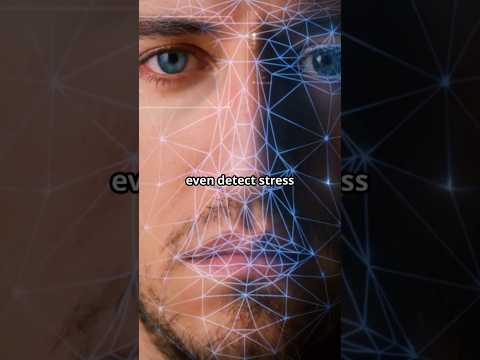
    That question sits at the heart of one of the most fascinating and unsettling aspects of modern technology. As AI becomes more advanced in recognizing human facial expressions, vocal tones, and behavioral patterns, it’s easy to forget one key truth: recognizing emotion is not the same as experiencing it.

    But as AI continues to evolve, we’re forced to ask: Do we need it to feel… or just act like it does?


    What AI Can Do — And Can’t

    Today’s AI is incredibly good at analyzing emotional cues. It can:

    • Detect micro-expressions using computer vision
    • Analyze sentiment in your voice through natural language processing
    • Predict mood shifts based on behavioral data

    Tools like emotion recognition software, AI-powered therapy bots, and social AI assistants are already being used in everything from customer service to mental health support.

    But while AI can simulate empathy — it doesn’t feel anything. It doesn’t love. It doesn’t grieve. It doesn’t feel guilt or compassion. What it does is calculate and predict what humans expect to see or hear based on emotional context.

    So when we say “AI understands emotion,” what we really mean is: it’s excellent at performing emotional intelligence, not experiencing it.


    The Ethics of Artificial Empathy

    This raises big questions. If a machine can respond to your sadness in a comforting way, does it matter that it doesn’t actually care? If it helps calm someone down or improves user experience, isn’t that good enough?

    Some argue yes — especially in applications like elder care, mental health, or customer support, where emotional responsiveness can enhance well-being or reduce loneliness.

    Others worry that we may blur the line between real empathy and artificial performance. When humans begin to bond with machines, mistaking their programmed responses for real feeling, we risk creating relationships based on illusion.

    This is where the ethical questions of AI consciousness and emotional simulation get complicated. Are we creating tools… or companions? And if they simulate emotions perfectly, will it even matter to us that they don’t feel them?


    Can Machines Ever Feel?

    Some AI theorists and technologists believe it’s possible — eventually. They argue that if consciousness arises from complex systems, then a sufficiently advanced machine could develop self-awareness, even emotions.

    But others — especially neuroscientists and philosophers — believe emotion is inseparable from biology. Without a body, a nervous system, or the lived experience of pain, loss, or joy, a machine may never be capable of real emotion.

    In this view, AI may become more human-like in its performance, but never in its essence. It’s like watching an actor play grief — convincing, powerful, even moving… but never actually grieving.


    Why It Still Matters

    So, can artificial intelligence really understand human emotions?

    The answer — for now — is no. But it can recognize and respond to emotion in ways that are increasingly convincing, and that’s enough to reshape our world. From AI-powered customer interactions to emotionally aware robots, we are entering a world where emotional simulation is becoming more important than emotional authenticity.

    The danger? Mistaking simulation for connection.
    The opportunity? Using AI to better understand ourselves.

    At the end of the day, AI may never feel love, fear, or joy — but how we teach it to respond to our emotions will shape the future of human-machine relationships.

    Can Artificial Intelligence Really Understand Human Emotions?
    Can Artificial Intelligence Really Understand Human Emotions?

    Want more tech + philosophy + future-focused thought?
    🧠 Subscribe to TechnoAIVolution on YouTube for weekly shorts and blog posts that challenge how we see technology — and how it sees us.

    P.S. Can artificial intelligence truly understand us — or just reflect us?

    #ArtificialIntelligence #AIandEmotions #MachineLearning #AIEthics #EmotionalIntelligence #AIempathy #TechnoAIVolution
  • What Is Computer Vision? The AI Behind Facial Recognition.

    What Is Computer Vision? The AI Behind Facial Recognition and More. #nextgenai #technology #ai
    What Is Computer Vision? The AI Behind Facial Recognition and More.

    What Is Computer Vision? The AI Behind Facial Recognition and More.

    Many people still ask what is computer vision and how it actually works in AI systems. In the world of artificial intelligence, few technologies are more fascinating—and more widely used—than computer vision. From unlocking your phone with a glance to helping self-driving cars recognize stop signs, computer vision is how machines “see” and make sense of the visual world.

    But what exactly is computer vision? How does it work? And why is it quietly shaping everything from healthcare to surveillance?

    In this article, we’ll break down the basics of computer vision, how AI interprets visual data, and where this powerful technology shows up in everyday life.


    What Is Computer Vision?

    Computer vision is a field within artificial intelligence (AI) that enables machines to interpret and understand digital images and video—much like humans do with their eyes and brains. But instead of seeing with eyeballs, machines analyze data from images using complex algorithms, pattern recognition, and deep learning models.

    The goal of computer vision is not just to “see,” but to understand what’s in an image, recognize patterns, and make decisions based on that information.


    How Does It Work?

    At its core, computer vision breaks visual content down into pixels—tiny data points of color and intensity. AI systems process these pixels using neural networks trained on massive datasets. Over time, the model learns to identify features like edges, shapes, textures, and movement.

    For example:

    • A face is recognized by identifying patterns like eyes, nose, and mouth in relation to each other.
    • A stop sign is detected by its shape, color, and position on a road.
    • A tumor might be found by scanning for irregular shapes in medical images.

    This process is called image classification, and when done in real time across video, it becomes object detection and tracking.


    Real-World Applications of Computer Vision

    Computer vision is already embedded in many aspects of our daily lives—often without us realizing it. Some common applications include:

    • Facial recognition: Used in smartphones, airport security, and social media tagging.
    • Object detection: Powering autonomous vehicles, retail inventory tracking, and robot navigation.
    • Medical imaging: Assisting doctors in analyzing X-rays, MRIs, and CT scans more quickly and accurately.
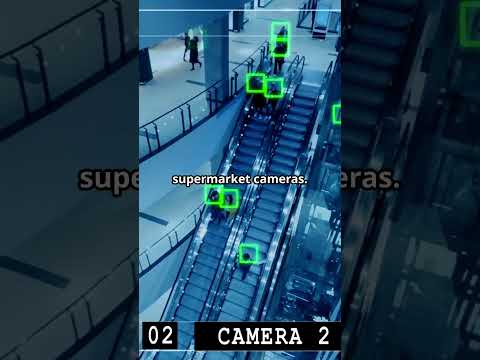
    • Surveillance: Enhancing camera systems with AI to detect unusual behavior or identify individuals.
    • Manufacturing and logistics: Checking product quality, counting items, and automating workflows.

    The potential use cases for computer vision are growing fast, especially as AI hardware becomes more powerful and data becomes more abundant.


    Is Computer Vision Replacing Human Vision?

    Not quite. While computer vision excels in certain areas—like processing thousands of images per second or spotting details invisible to the human eye—it still lacks the nuance, context, and emotion that human vision brings. A machine can recognize a face, but it doesn’t know that person. It can detect a pattern, but it doesn’t understand why that pattern matters.

    That’s why most AI vision systems are built to augment, not replace, human judgment.


    Ethical and Social Implications

    As computer vision becomes more advanced, concerns about privacy, bias, and surveillance grow. For example:

    • Facial recognition systems have been shown to misidentify people of color more often than white faces.
    • Surveillance tools powered by AI can track people without their consent.
    • Retail stores use vision AI to monitor customer behavior in ways that may feel intrusive.

    The conversation around AI ethics and transparency is just as important as the technology itself. As we continue to develop and deploy computer vision systems, we need to ask not just can we—but should we?

    What Is Computer Vision? The AI Behind Facial Recognition and More.
    What Is Computer Vision? The AI Behind Facial Recognition and More.

    Final Thoughts

    Computer vision is one of the most impactful—and invisible—forms of AI shaping our world today. From facial recognition and self-driving cars to healthcare and retail, it’s changing how machines interact with the visual environment. Understanding what is computer vision is key to grasping how machines interpret the world visually.

    The better we understand how computer vision works, the more prepared we’ll be to use it wisely—and question it when necessary.

    For more insights on AI, ethics, and the future of technology, subscribe to TechnoAivolution on YouTube—where we decode what’s next, one short at a time.

    P.S. If you’ve ever wondered what computer vision really is, now you know—it’s not just about machines seeing, but about them understanding our world.

    #WhatIsComputerVision #ComputerVision #AIExplained #FacialRecognition #ArtificialIntelligence #MachineLearning #ObjectDetection #AITechnology #TechnoAivolution #SmartTech

  • What Are AI Tokens—and Why They Matter for the Future

    What Are AI Tokens—and Why They Matter for the Future of Technology. #technology #nextgenai #tech
    What Are AI Tokens—and Why They Matter for the Future of Technology

    What Are AI Tokens—and Why They Matter for the Future of Technology

    In a world rapidly driven by artificial intelligence, AI tokens are emerging as a powerful concept that could reshape how we interact with technology, data, and decentralized systems. While the term might sound like another passing crypto trend, it actually represents a much deeper shift in how AI can be owned, accessed, and governed.

    This post explores what AI tokens are, how they work, and why they’re poised to play a critical role in the future of AI and decentralized infrastructure.


    What Are The Tokens?

    AI tokens are digital assets—often built on blockchain networks—that are used to power, govern, or access artificial intelligence ecosystems. Unlike traditional software licensing or API payment models, AI tokens function more like fuel for distributed AI systems.

    They can be used to:

    • Pay for training AI models
    • Buy or sell datasets
    • Access compute power
    • Interact with decentralized AI services
    • Participate in governance decisions

    These tokens live on blockchain platforms, which makes them programmable, transparent, and tradeable. Instead of AI being siloed behind corporate firewalls, AI tokens allow users to access and support AI tools in an open, decentralized way.


    Why Do The Tokens Matter?

    To understand their importance, we have to look at how AI is currently controlled.

    Right now, most artificial intelligence systems are run by centralized tech giants. These corporations control the data, the models, and the decision-making. The future we’re heading toward—where AI plays a role in finance, healthcare, communication, and even governance—could be dominated by a few powerful players.

    But AI tokens offer another path.

    By enabling decentralized AI infrastructure, tokens let communities own, contribute to, and benefit from the intelligence they help build. Instead of handing over your data or your compute power for free, AI tokens allow people to participate in value creation.

    This changes everything—from access and transparency to economics and ethics.


    Real-World Examples of AI Token Projects

    Several promising projects are already putting AI tokens into action:

    • Ocean Protocol – Focuses on data sharing and monetization, where tokens are used to buy and sell datasets for AI training.
    • Fetch.ai – Builds autonomous economic agents that use tokens to coordinate tasks in decentralized environments.
    • SingularityNET – One of the earliest platforms to offer decentralized AI services powered by blockchain and its AGIX token.

    These projects aren’t just experimental—they’re shaping how AI economies could function in the next decade.


    AI Tokens and Web3: A Powerful Combination

    AI tokens are part of a broader shift known as Web3—a vision of the internet where users, not corporations, control the tools and data.

    In the Web3 world:

    • You don’t just use the service—you help shape it.
    • You don’t just give data—you get compensated for it.
    • You don’t rely on one centralized company—you interact with a decentralized network of peers.

    AI tokens are the currency of that world. They’re how you access, fuel, and guide AI in a way that reflects your values.

    What Are AI Tokens—and Why They Matter for the Future of Technology
    What Are AI Tokens—and Why They Matter for the Future of Technology

    Final Thoughts: The Future Is Already Being Tokenized

    AI tokens may sound futuristic, but they’re already being used to train models, power platforms, and reward contributors. They allow for a shared intelligence model, one where the tools of the future aren’t owned by a few—but shared by many.

    As we move deeper into an AI-powered era, tokens could be the mechanism that makes this evolution more ethical, transparent, and inclusive.

    So next time you hear the term “AI token,” don’t brush it off as tech jargon. It might just be the digital key to the future of intelligence.


    Explore more on TechnoAivolution on YouTube for insights at the intersection of AI, ethics, decentralization, and human evolution.
    Subscribe to the channel and stay ahead of the curve.

    P.S.

    The future of AI might not belong to corporations—it could belong to you, powered by the quiet rise of AI tokens.

    #AITokens #ArtificialIntelligence #DecentralizedAI #BlockchainAI #Web3 #OceanProtocol #FetchAI #TechnoAivolution #FutureOfTechnology #CryptoAI

  • Deep Learning in 60 Seconds — How AI Learns From the World.

    Deep Learning in 60 Seconds — How AI Learns From the World. #nextgenai #artificialintelligence
    Deep Learning in 60 Seconds — How AI Learns From the World.

    Deep Learning in 60 Seconds — How AI Learns From the World.

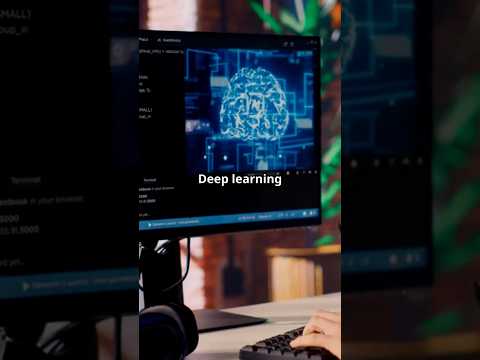
    Artificial intelligence might seem like magic, but under the hood, it’s all math and patterns — especially when it comes to deep learning. This subset of machine learning is responsible for some of the most impressive technologies today: facial recognition, autonomous vehicles, language models like ChatGPT, and even AI-generated art.

    But how does deep learning actually work? And more importantly — how does a machine learn without being told what to do?

    Let’s break it down.


    What Is Deep Learning, Really?

    At its core, deep learning is a method for training machines to recognize patterns in large datasets. It’s called “deep” because it uses multiple layers of artificial neural networks — software structures inspired (loosely) by the human brain.

    Each “layer” processes a part of the input data — whether that’s an image, a sentence, or even a sound. The deeper the network, the more abstract the understanding becomes. Early layers in a vision model might detect edges or colors. Later layers start detecting eyes, faces, or objects.


    Not Rules — Patterns

    One of the biggest misconceptions about AI is that someone programs it to know what a cat, or a human face, or a word means. That’s not how deep learning works. It doesn’t use fixed rules.

    Instead, the model is shown thousands or even millions of examples, each with feedback — either labeled or inferred — and it slowly adjusts its internal parameters to reduce error. These adjustments are tiny changes to “weights” — numerical values inside the network that influence how it reacts to input.

    In other words: it learns by doing. By failing, repeatedly — and then correcting.


    How AI Trains Itself

    Here’s a simplified version of what training a deep learning model looks like:

    1. The model is given an input (like a photo).
    2. It makes a prediction (e.g., “this is a dog”).
    3. If it’s wrong, the system calculates how far off it was.
    4. It adjusts internal weights to do better next time.

    Repeat that millions of times with thousands of examples, and the model starts to get very good at spotting patterns. Not just dogs, but the essence of “dog-ness” — statistically speaking.

    The result? A system that doesn’t understand the world like humans do… but performs shockingly well at specific tasks.


    Where You See Deep Learning Today

    You’ve already encountered deep learning today, whether you noticed or not:

    • Voice assistants (Siri, Alexa, Google Assistant)
    • Face unlock on your phone
    • Recommendation algorithms on YouTube or Netflix
    • Chatbots and AI writing tools
    • Medical imaging systems that detect anomalies

    These systems are built on deep learning models that trained on massive datasets — sometimes spanning petabytes of information.


    The Limitations

    Despite its power, deep learning isn’t true understanding. It can’t reason. It doesn’t know why something is a cat — only that it usually looks a certain way. It can make mistakes in ways no human would. But it’s fast, scalable, and endlessly adaptable.

    That’s what makes it so revolutionary — and also why we need to understand how it works.


    Deep Learning in 60 Seconds — How AI Learns From the World.

    Conclusion: AI Learns From Us

    Deep learning isn’t magic. It’s the machine equivalent of watching, guessing, correcting, and repeating — at scale. These systems learn from us. From our images, words, habits, and choices.

    And in return, they reflect back a new kind of intelligence — one built from patterns, not meaning.

    As AI becomes a bigger part of our world, understanding deep learning helps us stay grounded in what these systems can do — and what they still can’t.


    Watch the 60-second video version on Technoaivolution on YouTube for a lightning-fast breakdown — and subscribe if you’re into sharp insights on AI, tech, and the future.

    P.S.

    Machines don’t think like us — but they’re learning from us every day. Understanding how they learn might be the most human thing we can do.

    #DeepLearning #MachineLearning #NeuralNetworks #ArtificialIntelligence #AIExplained #AITraining #Technoaivolution #UnderstandingAI #DataScience #HowAIWorks #AIIn60Seconds #AIForBeginners #AIKnowledge #ModernAI #TechEducation