Category: TechnoAIVolution

Welcome to TechnoAIVolution – your hub for exploring the evolving relationship between artificial intelligence, technology, and humanity. From bite-sized explainers to deep dives, this space unpacks how AI is transforming the way we think, create, and live. Whether you’re a curious beginner or a tech-savvy explorer, TechnoAIVolution delivers clear, engaging content at the frontier of innovation.

  • Top 5 AI Myths DEBUNKED: What Most People Get Totally Wrong.

    Top 5 AI Myths DEBUNKED: What Most People Get Totally Wrong. #ArtificialIntelligence #AIExplained
    Top 5 AI Myths DEBUNKED: What Most People Get Totally Wrong.

    Top 5 AI Myths DEBUNKED: What Most People Get Totally Wrong.

    Artificial intelligence is everywhere right now — from social media filters to self-driving cars and chatbot assistants. But along with its rise comes a wave of misunderstanding, hype, and flat-out fiction.

    In this post, we’re busting the top 5 most common AI myths people believe — and showing you what AI actually is (and isn’t). Understanding AI myths is essential if you want to use artificial intelligence wisely and avoid common misconceptions.


    1. Myth: AI Is Smarter Than Humans

    One of the most common assumptions is that AI is now “smarter” than us. After all, it can beat chess champions, pass exams, and write articles. But here’s the truth: AI isn’t truly intelligent — it’s just incredibly fast and specialized.

    AI systems are trained for narrow tasks. They can excel at pattern recognition, but they don’t understand context, nuance, or meaning. They can’t reason or reflect. They don’t ask “why.” Human intelligence is flexible, emotional, ethical, and creative — something AI simply can’t replicate (yet).


    2. Myth: AI Will Replace All Human Jobs

    Yes, AI is going to impact the job market. But no, it’s not going to wipe out every profession.

    What AI does is automate tasks, not entire roles. Think of how calculators changed accounting — or how ATMs changed banking. Those industries didn’t die. They evolved.

    AI will likely take over repetitive, routine work — but it also creates opportunities for new jobs in AI ethics, prompt engineering, data analysis, and more. The future workforce will need to work with AI, not be replaced by it.


    3. Myth: AI Has Emotions or Consciousness

    We’ve all seen the sci-fi stories — sentient machines, emotional robots, and love stories with AIs. But in reality, AI doesn’t feel anything.

    Even when AI-generated text says “I understand,” it doesn’t. It’s mimicking patterns in human speech, not expressing real awareness. AI doesn’t have a mind, memory, self-awareness, or emotions. It’s running algorithms, not forming feelings.

    Believing otherwise can be dangerous — it can cause people to over-trust AI in situations where empathy and ethics matter.


    4. Myth: AI Is Unbiased and Objective

    A lot of people believe that because AI is mathematical, it’s fair. But in truth, AI reflects the data it’s trained on — and that data often carries human bias.

    There have been cases of AI systems discriminating in hiring, loan approvals, and facial recognition. That’s not because the AI is “evil” — it’s because it learned from biased patterns in historical data.

    AI isn’t naturally fair. To make it ethical and equitable, we need human oversight, diverse teams, and better training data.


    5. Myth: AI Understands Language Like Humans

    Modern language models can write news articles, essays, even poems. It’s easy to believe they “understand” language.

    But they don’t.

    What these models do is predict the next word based on patterns in massive datasets. They don’t know what words mean — they just recognize how they’re typically used.

    This becomes a problem when we start trusting AI to summarize legal documents, explain health issues, or answer moral questions. AI sounds confident — even when it’s wrong. That illusion of understanding can be dangerous.


    So What’s the Truth About AI?

    AI is a powerful tool. It’s changing industries, shaping culture, and raising big questions about the future. But it’s not magic. And it’s definitely not human.

    To use AI responsibly — and protect ourselves from hype, fear, or misinformation — we need to understand what it is and what it’s not.

    This is why it’s so important to debunk these myths now, while the technology is still evolving.

    Top 5 AI Myths DEBUNKED: What Most People Get Totally Wrong.
    Top 5 AI Myths DEBUNKED: What Most People Get Totally Wrong.

    Final Thoughts

    If you’ve been caught up in the buzz around AI — or just want to stay informed as this space grows — make sure you’re getting the facts. The more you understand the truth behind the tech, the better you can adapt, innovate, and stay ahead.

    #AIMyths #ArtificialIntelligence #MachineLearning #TechExplained #FutureOfAI #Debunked #AIvsHumans #AItruth #TechnologyMyths #AIInsights

    P.S. Want more no-hype, straight-talking videos about AI, tech myths, and the future? Subscribe to Technoaivolution on YouTube — we drop new videos every week.

    Thanks for watching: Top 5 AI Myths DEBUNKED: What Most People Get Totally Wrong. And remember! Many common AI myths continue to mislead people about what artificial intelligence can truly do.
  • Inside AI Brain: How Artificial Intelligence Really Thinks

    Inside the AI Brain: How Artificial Intelligence Really Thinks. #artificialintelligence #nextgenai
    Inside the AI Brain: How Artificial Intelligence Really Thinks.

    Inside the AI Brain: How Artificial Intelligence Really Thinks.

    Artificial Intelligence is everywhere—from your phone’s voice assistant to the recommendation engine behind your favorite streaming service. But what’s actually going on inside the “brain” of an AI? How does artificial intelligence process information, make decisions, and seemingly “think” without consciousness?

    In this post, we take a deeper look inside the AI brain to understand how it works, and why it’s changing everything—from how we work to how we live.

    AI Doesn’t Think—It Processes Patterns

    Let’s get this out of the way: AI doesn’t have thoughts, emotions, or consciousness. When we say an AI “thinks,” what we really mean is that it processes data and detects patterns. Unlike the human brain, which uses neurons and experiences to build understanding, artificial intelligence uses mathematical models—specifically, neural networks.

    A neural network is a system of interconnected nodes (like simplified digital neurons) designed to simulate the way the human brain interprets information. These nodes are organized into layers: an input layer, hidden layers, and an output layer. Data flows through these layers, with each layer extracting features or patterns and passing the refined information to the next.

    Neural Networks: The Core of AI Learning

    At the heart of most modern AI systems is the artificial neural network (ANN). When you show an AI a photo of a cat, it doesn’t see “a cat.” It sees a grid of pixels—numbers representing light and color. The input layer of the network takes in this data. As it moves through the hidden layers, the AI identifies basic features—like edges, curves, and textures.

    Each layer gets “smarter,” combining these low-level features into more complex shapes. Eventually, the AI arrives at a final decision: this image likely contains a cat. This is how AI performs image recognition, voice recognition, and even natural language processing.

    The more data an AI processes, the better it becomes at recognizing patterns. This is called machine learning, and when you stack many neural network layers together, you get deep learning—the most powerful form of machine learning today.

    No Consciousness, Just Code

    Despite the complexity of AI, it’s important to remember: there’s no awareness behind its answers. AI doesn’t “know” anything. It doesn’t understand, feel, or reason like humans do. It’s just running calculations based on the data it’s been fed.

    This distinction is key when we talk about topics like AI ethics, AI bias, and the future of artificial general intelligence (AGI). Current AI systems are incredibly capable—but they’re also fundamentally narrow. They’re great at one thing at a time, whether it’s playing chess or detecting spam, but they don’t have common sense or self-awareness.

    Why It Matters

    Understanding how artificial intelligence works helps demystify the tech that’s increasingly shaping our world. Whether it’s chatbots, self-driving cars, or generative AI models like ChatGPT, they all rely on similar principles: pattern recognition, neural networks, and data-driven learning.

    As AI continues to evolve, it’s crucial for everyone—not just developers—to understand how it “thinks.” This knowledge empowers us to use AI responsibly, question its decisions, and even shape its future development.

    Inside the AI Brain: How Artificial Intelligence Really Thinks
    Inside the AI Brain: How Artificial Intelligence Really Thinks.

    Final Thoughts

    The AI brain isn’t made of thoughts and dreams—it’s built from layers of logic, data, and computation. But within that structure lies an incredible capacity for learning, solving problems, and reshaping entire industries.

    Want to see how AI “thinks” in under a minute?
    🎥 Watch our YouTube Short: Inside the AI Brain
    And if you’re hungry for more bite-sized tech wisdom, don’t forget to like, comment, and subscribe to Technoaivolution on YouTube.

  • How NASA Uses AI to Explore Space and Plan Missions.

    How NASA Uses AI to Explore Space, Plan Missions, and Avoid Disasters. #artificialintelligence
    How NASA Uses AI to Explore Space, Plan Missions, and Avoid Disasters.

    How NASA Uses AI to Explore Space, Plan Missions, and Avoid Disasters.

    Artificial Intelligence isn’t just changing life on Earth — it’s reshaping how we explore the cosmos. At NASA, AI plays a mission-critical role in everything from interplanetary landings to data analysis and real-time decision-making. It’s no longer just a tool for automation — it’s become an essential co-pilot in humanity’s greatest adventure: space exploration. NASA uses AI to enhance space exploration and streamline mission planning.

    In this article, we’ll break down how NASA uses AI to explore space, plan complex missions, and prevent disasters — both in orbit and on Earth.


    Exploring Space with Autonomous Intelligence

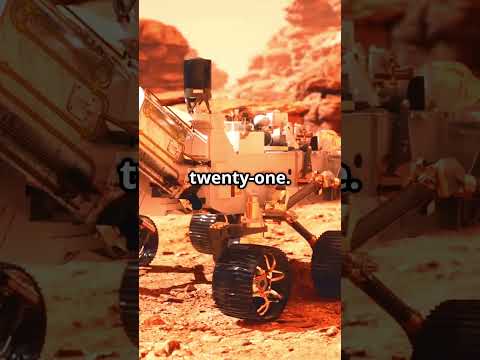
    One of the most groundbreaking uses of artificial intelligence at NASA is in planetary exploration. The Mars rover Perseverance, which landed in 2021, didn’t rely solely on Earth-based commands. It used an onboard AI system known as Terrain-Relative Navigation to guide its own descent and landing on the Martian surface.

    Why is that so important? Because the delay between Earth and Mars signals can be up to 20 minutes. There’s no time for a human to steer or react. AI had to analyze terrain in real time, avoid hazards, and land the rover safely — all autonomously.

    This isn’t science fiction. It’s a real-world example of machine learning being used in one of the most dangerous and complex tasks in aerospace history.


    Planning Missions with Data-Driven Precision

    NASA also relies on artificial intelligence to help plan and manage missions more efficiently. With countless variables to consider — weather conditions, spacecraft readiness, orbital mechanics, and more — traditional planning methods can be slow and error-prone.

    AI systems can simulate thousands of scenarios quickly and accurately. They evaluate possible mission timelines, fuel needs, launch windows, and system redundancies. Tools like Deep Space Network scheduling AI help manage communication between Earth and multiple space probes without conflict or interference.

    This kind of predictive planning allows NASA to conserve resources, reduce mission risk, and execute far more complex operations with confidence.


    Preventing Disasters in Space and On Earth

    Disaster prevention is another area where AI proves invaluable.

    In Earth’s orbit, there are thousands of satellites — and even more pieces of space debris. Collision risk is real. NASA uses AI algorithms to track satellite trajectories, predict possible collisions, and recommend avoidance maneuvers long before danger becomes imminent.

    Back on Earth, AI is used to monitor spacecraft systems in real time. Machine learning models detect anomalies in telemetry data — often spotting issues before they lead to system failure. This proactive maintenance is key to long-duration missions and deep space exploration.

    But it doesn’t stop there. NASA also leverages AI to process climate data, monitor natural disasters, and even detect early signs of wildfires and floods. These systems help scientists respond faster and more effectively to Earth-based crises — all using technology developed for space.


    AI as NASA’s Co-Pilot for the Future

    AI is not replacing human intelligence at NASA — it’s extending it. With the sheer scale and complexity of modern space missions, human cognition alone can’t keep up. AI bridges that gap by offering speed, precision, and continuous learning in real-time environments.

    From exploring alien worlds to predicting disasters before they strike, AI is quickly becoming NASA’s most trusted partner. As technology evolves, we can expect this relationship to deepen — with AI guiding probes through alien terrain, managing space habitats, and maybe even assisting in crewed missions to Mars and beyond.


    How NASA Uses AI to Explore Space, Plan Missions, and Avoid Disasters
    How NASA Uses AI to Explore Space, Plan Missions, and Avoid Disasters.

    Final Thoughts

    NASA’s use of AI isn’t just about efficiency — it’s about survival, discovery, and pushing the limits of what’s possible. The synergy between human vision and machine intelligence is launching us into a new era of space exploration.

    As AI continues to evolve, so will the way we explore the stars. The future of space is smarter, faster, and more autonomous — and it’s already here.

    For more on how artificial intelligence is transforming the world and beyond, subscribe to Technoaivolution on YouTube and join us at the edge of the future.

    #NASA #ArtificialIntelligence #SpaceExploration #AIinSpace #MarsRover #MachineLearning #SpaceTechnology #Technoaivolution #FutureTech #DeepSpace #AutonomousSystems #NASAMissions #SmartMachines #SpaceInnovation #AIRevolution

    P.S. The future of exploration isn’t just about going farther — it’s about getting smarter. Thanks for reading. Stay curious, stay future-focused. 🚀

    Thanks for watching: How NASA Uses AI to Explore Space and Plan Missions.

  • How AI Diagnoses Illness Instantly (Healthcare Breakthrough)

    How AI Diagnoses Illness Instantly (Healthcare Tech Breakthrough) #technology #nextgenai
    How AI Diagnoses Illness Instantly (Healthcare Tech Breakthrough).

    How AI Diagnoses Illness Instantly (Healthcare Tech Breakthrough).

    Imagine going to the doctor, getting a scan, and receiving a diagnosis within seconds—not hours, not days. Just a few seconds. Thanks to the rapid evolution of artificial intelligence in healthcare, this is no longer science fiction—it’s real, and it’s already happening. AI diagnoses are revolutionizing healthcare by delivering faster, more accurate results.

    Welcome to the world of AI-driven medical diagnostics—a field that’s transforming how we detect, understand, and treat disease. From early cancer detection to identifying rare genetic disorders, AI diagnosis systems are changing the game.

    The Problem with Traditional Diagnostics

    Traditional medical diagnosis is a mix of science, experience, and sometimes guesswork. It takes time for human professionals to interpret scans, analyze lab results, and piece together symptoms. Even the most experienced doctors can miss subtle patterns in complex data.

    In critical conditions like cancer or heart disease, time isn’t just money—it’s life. Delayed diagnosis can mean delayed treatment, reduced survival rates, and increased costs. This is where AI in medicine is stepping in with unprecedented speed and precision.

    How AI Diagnoses Illness in Seconds

    Medical AI systems use machine learning algorithms trained on vast datasets—images, patient histories, lab results, and outcomes. These systems learn to detect patterns and correlations that are often invisible to the human eye.

    For example:

    • An AI model developed by Google Health was able to diagnose lung cancer from CT scans faster and more accurately than experienced radiologists.
    • Another AI tool can detect rare genetic conditions in children by analyzing facial features in photographs—something that might take a human expert days or weeks to confirm.

    These systems can analyze thousands of variables in real-time, giving doctors a near-instant second opinion—or even a first.

    Why AI Is So Effective in Medicine

    There are several reasons why AI diagnosis technology is so effective:

    1. Speed: AI can process massive datasets in seconds.
    2. Consistency: Unlike humans, AI doesn’t get tired or distracted.
    3. Scalability: Once trained, AI models can be deployed worldwide.
    4. Early Detection: AI can often spot patterns before symptoms become obvious.

    It’s important to note that AI doesn’t replace doctors—it enhances their ability to make faster, more accurate decisions. In many cases, AI serves as a diagnostic assistant, flagging potential issues and suggesting further testing.

    The Ethical and Practical Questions

    Of course, this breakthrough comes with questions.

    Can we trust an algorithm with something as important as our health? What happens if AI gets it wrong? How do we ensure patient privacy and data security in these massive training datasets?

    These are important concerns, and they’re being addressed by healthcare professionals, ethicists, and AI developers alike. Transparency, validation, and strict data governance are becoming essential parts of deploying AI in healthcare safely and responsibly.

    What the Future Holds

    The future of AI in healthcare is incredibly promising. We’re likely to see:

    • More integration of AI tools into everyday clinics and hospitals
    • Personalized diagnostics tailored to your genetic and lifestyle data
    • Reduced diagnostic errors across all levels of healthcare

    AI will not replace the human element in medicine—but it allows medical professionals to do what they do best: focus on care, empathy, and treatment, while the AI handles the heavy data lifting.

    Final Thoughts

    AI that diagnoses illness instantly isn’t just a futuristic dream—it’s already saving lives. Whether it’s catching cancer early, identifying rare conditions, or speeding up emergency room decisions, the impact is massive.

    As this technology continues to evolve, we stand at the edge of a new era in medicine—one where artificial intelligence and human compassion work side by side.

    How AI Diagnoses Illness Instantly (Healthcare Tech Breakthrough)
    How AI Diagnoses Illness Instantly (Healthcare Tech Breakthrough)

    Want More?

    Subscribe to TechnoAivolution on YouTube for more insights on AI breakthroughs, future tech trends, and how innovation is transforming the world—one algorithm at a time.

    #AIinHealthcare #MedicalAI #FutureOfMedicine #HealthTech #ArtificialIntelligence #DiagnosisTech #MachineLearning #MedicalInnovation #InstantDiagnosis #TechnoAivolution

    P.S. The next time you see a doctor, imagine what’s possible when AI is part of the diagnosis. The future of medicine is closer than you think.

    Thanks for watching: How AI Diagnoses Illness Instantly (Healthcare Breakthrough)