Category: YourWisdomVault

Welcome to YourWisdomVault – a curated space for timeless insights, bite-sized life lessons, and practical knowledge worth keeping. From mindset shifts to productivity hacks, this vault stores the gems that help you think deeper, grow smarter, and live better. Whether it’s wisdom from tech, philosophy, or personal growth—you’ll find it here.

  • How to Pause Without Guilt: Mindful Rest for Inner Peace!

    How to Pause Without Guilt — Practice Mindful Rest to Restore Balance, Clarity, and Inner Peace.
    How to Pause Without Guilt: Mindful Rest for Inner Peace!

    How to Pause Without Guilt: Mindful Rest for Inner Peace!

    In a culture obsessed with productivity and constant motion, the simple act of resting has become something we feel we must justify. We’ve been conditioned to associate stillness with laziness, and pausing with falling behind. But what if we told you that pausing—when done mindfully—is not a weakness, but a sacred form of wisdom?

    This idea is deeply rooted in both Buddhist teachings and Stoic philosophy. In both traditions, intentional rest isn’t seen as optional—it’s essential. It’s not an escape from life, but a way to return to it fully.

    The Guilt Trap of Rest

    Many of us are familiar with the voice in our heads that whispers, “You should be doing something.” Even when our body is tired, or our mind is overwhelmed, we push through. We fear being seen as unproductive or idle. This guilt-driven mindset keeps us stuck in cycles of burnout and self-judgment.

    But rest is not the opposite of effort—it’s what sustains it. Just like the inhale must follow the exhale, pausing gives life rhythm and depth. Without it, we lose our connection to presence and meaning.

    What Does Mindful Rest Look Like?

    Mindful rest is not just lying on the couch scrolling your phone. It’s the conscious decision to stop, breathe, and be with yourself without distraction.

    It could be:

    • Sitting quietly with your breath for five minutes.
    • Taking a walk without headphones, simply noticing your surroundings.
    • Saying “no” to something not aligned with your energy today.
    • A full stop—doing nothing, and being okay with it.

    Mindful rest honors the truth that you are not your productivity. You are a human being, not a human doing.

    What Buddhism Teaches About Stillness

    In Buddhism, stillness is not laziness—it’s a gateway to clarity and compassion. The Buddha himself taught the importance of right effort, which includes knowing when to act and when to pause.

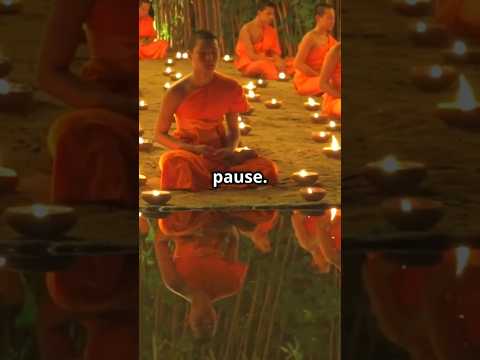
    Monastics often spend hours in seated meditation—not to escape life, but to engage with it more deeply. In those moments of silence, they cultivate presence, awareness, and inner peace.

    You don’t need to be a monk to embrace this. Even one mindful breath can create a pause in the storm.

    The Stoic Echo

    Interestingly, Stoic thinkers like Marcus Aurelius also emphasized the value of retreat. In his Meditations, he often reminded himself to “return to the self,” especially in moments of chaos or overstimulation.

    In this way, Stoicism and Buddhism meet: The still mind sees clearly. The rested soul acts wisely.

    You Are Allowed to Pause

    This is your reminder: You are allowed to rest. Without explanation. Without guilt.

    You are not falling behind by pausing. You’re showing up for yourself in the most honest way possible.

    When you choose rest with intention, you’re not stepping off the path—you’re walking it, mindfully. That pause becomes a sacred space where healing, clarity, and renewal can arise.

    A New Definition of Strength

    In a world that glorifies hustle, choosing rest is radical. It’s an act of resistance against burnout. It’s a reclaiming of your time, your energy, and your peace.

    Let’s redefine strength not as endless motion, but as the wisdom to know when to be still. In that stillness, we discover the peace that’s been waiting for us all along.

    How to Pause Without Guilt: Mindful Rest for Inner Peace!
    How to Pause Without Guilt: Mindful Rest for Inner Peace!

    If this message spoke to you, watch the 45-second video that inspired it:
    How to Pause Without Guilt: Mindful Rest for Inner Peace – available now on Your Wisdom Vault on YouTube.

    🧘‍♂️ Subscribe for more reflections on mindfulness, Buddhist wisdom, and intentional living.
  • What the Buddha Knew About Anxiety Before Psychology Did.

    What the Buddha Knew About Anxiety — Ancient Wisdom That Modern Psychology Is Just Discovering.
    What the Buddha Knew About Anxiety Before Psychology Did.

    What the Buddha Knew About Anxiety Before Psychology Did.

    In our modern world, anxiety is often labeled as a psychological or neurological issue, treated with medication, therapy, and mindfulness-based practices. But what if the core of this condition was already understood thousands of years ago—by a man sitting quietly beneath a Bodhi tree?

    That man was Siddhartha Gautama, better known as the Buddha. And long before anxiety was studied in laboratories or explained in therapy sessions, he offered a surprisingly modern diagnosis of the human condition—and a profound method for healing it.

    Anxiety and the Root of Suffering

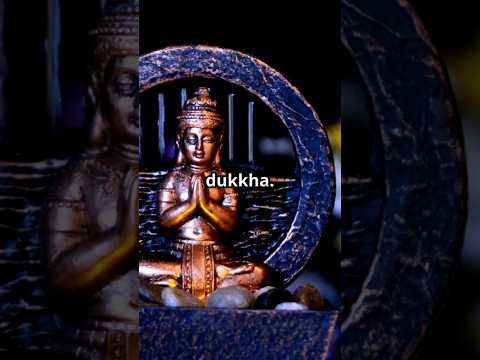
    The Buddha never used the word “anxiety” as we know it today. But he talked extensively about dukkha—a Pali word often translated as suffering, dissatisfaction, or unease. It’s the undercurrent of tension that runs through our lives, even when things seem “fine.”

    Modern psychology might define anxiety as a chronic state of fear, worry, or tension. But the Buddha explained that this suffering is deeply rooted in attachment—our craving for control, pleasure, security, and permanence in a world that is inherently uncertain and ever-changing.

    Sound familiar? That’s because it mirrors what psychologists today describe as cognitive distortions—ways of thinking that trap us in fear-based responses. Our desire to control outcomes, avoid discomfort, and resist change feeds the very anxiety we’re trying to escape.

    The Buddha’s Diagnosis: The Four Noble Truths

    At the heart of the Buddha’s teaching is a framework that almost reads like a therapeutic model:

    1. Life involves suffering (dukkha).
    2. Suffering is caused by craving and attachment.
    3. There is a way to end this suffering.
    4. The way is through the Eightfold Path.

    These teachings might sound spiritual or abstract, but they speak directly to what psychologists now confirm: trying to resist pain or force happiness leads to more suffering. Accepting reality, staying present, and letting go—these are the keys to peace of mind.

    Modern Therapy and Ancient Wisdom Align

    Fast forward to the 21st century, and we see the same principles being rediscovered. Mindfulness-based therapies like MBCT (Mindfulness-Based Cognitive Therapy) and MBSR (Mindfulness-Based Stress Reduction) teach people to observe their thoughts, detach from emotional reactions, and live in the present moment.

    CBT (Cognitive Behavioral Therapy), one of the most effective treatments for anxiety, also echoes these ancient insights: thoughts are not facts, and suffering is created by how we interpret reality—not reality itself.

    In many ways, the Buddha was the original cognitive therapist. He taught that liberation doesn’t come from changing the world, but from transforming how we relate to it.

    Letting Go: The Real Antidote to Anxiety

    Perhaps the most powerful takeaway from the Buddha’s view on anxiety is this: you don’t have to fix everything—just stop clinging.

    Letting go doesn’t mean apathy or passivity. It means releasing the mental grip on things we can’t control: outcomes, people’s opinions, the future. By loosening that grip, we give ourselves space to breathe, to respond rather than react, and to live more freely.

    It’s no wonder that modern mindfulness is rooted in Buddhist practice. The tools may have changed—apps, journals, therapy sessions—but the core wisdom remains the same.

    What the Buddha Knew About Anxiety Before Psychology Did.
    What the Buddha Knew About Anxiety Before Psychology Did.

    Final Thoughts

    So what did the Buddha know about anxiety before psychology did? Quite a lot.

    He understood that the human mind is a storm of fear, craving, and illusion—and that peace comes not from suppressing these forces, but from seeing them clearly and letting go.
    Today, science is catching up to what ancient wisdom has always known.

    If you’re struggling with anxiety, it may be worth exploring not just modern strategies, but timeless ones. The past has more to offer than we think.

    #BuddhistWisdom #MindfulnessForAnxiety #AncientPsychology #SpiritualHealing #LettingGo #MentalHealthAwareness #Dukkha #AttachmentAndSuffering #CBT #MindfulnessPractice

    P.S. If you found value in this, consider subscribing to YourWisdomVault on YouTube—more timeless insights are just a scroll away.

  • Breathing Is the First Rebellion: Take Back Your Power!

    Breathing Is the First Rebellion — Take Back Your Power in Silence, Presence, and Stillness.
    Breathing Is the First Rebellion: Take Back Your Power in Silence!

    Breathing Is the First Rebellion: Take Back Your Power in Silence!

    In a culture built on speed, distraction, and noise, silence is rare. Stillness is rarer. But there is something even more radical—something so simple, so accessible, we overlook its power every day.

    The breath.

    Breathing—consciously—is your first act of rebellion.
    Why? Because in a world that wants to automate your thoughts, hijack your attention, and profit from your stress, taking a slow, intentional breath is not just calming. It’s revolutionary.


    Why Breathing Is Revolutionary

    Breath is the bridge between your body and your mind. It’s the only part of your nervous system you can control both consciously and unconsciously. That makes it incredibly powerful.

    When you slow your breath, you send a message to your body: We are safe.
    You exit the stress loop. You calm your heart rate. You shift from fight or flight to rest and restore.

    And when you do this—when you take back your autonomic rhythm from the chaos of the world—you reclaim control over how you feel, how you respond, and how you show up.

    That’s rebellion.
    Because a calm, grounded person is hard to manipulate.
    You stop reacting, and start choosing.


    The World Wants Your Breath

    We don’t talk about this enough: your breath is constantly being hijacked.
    Notifications. Alarms. Clickbait. Conflict. Endless scrolling.

    All of these things disrupt your breathing patterns. They make you shallow breathe. They keep your nervous system on edge. Why? Because a dysregulated person is more likely to consume, argue, obey, and react.

    Stillness doesn’t serve systems of control. But presence? That’s dangerous.

    Every time you pause and take a deep breath—without reacting—you are choosing presence over programming. You are saying: “I will not be rushed. I will not be triggered. I will not be owned.”


    Silence Is Strategy

    Rebellion doesn’t have to be loud. In fact, the most profound acts of defiance are often invisible.

    When you breathe consciously in a stressful meeting,
    when you exhale before replying to someone trying to provoke you,
    when you close your eyes and return to yourself instead of reacting—

    You are resisting the pull of a reactive world.

    You are building inner power.

    This is not just self-care. This is self-mastery.


    Take Back Your Power

    Breath is free. It’s always with you.
    And yet, most people give it away without even realizing it.

    They give it to stress.
    To screens.
    To fear.
    To control.

    But when you own your breath, you own your state.
    And when you own your state, you become unshakable.

    So the next time you feel overwhelmed, angry, anxious, or out of control—don’t just react.
    Pause.
    Breathe.
    That’s your first rebellion.
    And it’s one you can win, over and over again.

    Breathing Is the First Rebellion: Take Back Your Power in Silence!
    Breathing Is the First Rebellion: Take Back Your Power in Silence!

    Final Thought

    This isn’t just a mindfulness trick.
    It’s a way of life.
    A quiet revolution.

    Inhale power.
    Exhale control.
    Reclaim your breath—and with it, your clarity, calm, and freedom.


    Want more like this? Subscribe to YourWisdomVault on YouTube for weekly drops of grounded insight, self-mastery tools, and inner transformation—one breath at a time.

    #MindfulRebellion #InnerPower #ConsciousBreath

    P.S. The world moves fast, but your breath is timeless. When in doubt, return to it—and you’ll always find your way back to power.

  • Why Most Mindfulness Advice Fails-What Truly Works Instead.

    Why Most Mindfulness Advice Fails — And What Truly Works for Lasting Peace and Mental Clarity.
    Why Most Mindfulness Advice Fails—and What Truly Works Instead.

    Why Most Mindfulness Advice Fails—and What Truly Works Instead.

    In today’s fast-paced world, mindfulness has become a buzzword — tossed around in self-help books, corporate wellness programs, and meditation apps. You’ve probably heard the typical advice: “Just clear your mind” or “Focus only on your breath.” But if you’ve ever tried to follow that guidance and still felt anxious, overwhelmed, or like you were doing it wrong, you’re not alone. Not all mindfulness advice leads to real change—some of it misses the mark entirely.

    Here’s the truth: Most mainstream mindfulness advice misses the point entirely. It oversimplifies a deep, nuanced practice — and in doing so, it often sets people up to feel like they’re failing.

    The Myth of the “Empty Mind”

    Let’s start with one of the biggest misconceptions:
    Mindfulness is not about having a blank mind.

    That idea — that a “successful” meditation means stopping all thoughts — is one of the most damaging myths in the wellness world. The mind thinks, just as the lungs breathe. You don’t force it to stop; you learn to relate to it differently.

    When people are told to “just clear your mind,” they often end up feeling frustrated when thoughts inevitably arise. Instead of cultivating peace, they build internal resistance — and the practice becomes a battle rather than a refuge.

    What Mindfulness Really Is

    At its core, mindfulness means paying attention on purpose, in the present moment, without judgment. It’s not about erasing thoughts — it’s about becoming aware of them.

    Rather than fighting your mental activity, true mindfulness invites you to observe it. You learn to watch your thoughts and emotions like clouds passing through the sky — temporary, shifting, and separate from who you really are.

    This shift in perspective is powerful. It creates space between you and the chaos. You’re no longer lost in thought — you’re aware that you’re thinking. That’s a subtle but profound transformation.

    Awareness Over Control

    The real secret to mindfulness isn’t control — it’s awareness.

    You don’t need to force yourself into stillness. You simply become present to what’s already happening. Whether it’s anxiety, boredom, tension, or even joy — you meet it, feel it fully, and let it pass.

    This is what most popular advice misses: it tries to teach mindfulness as a tool to fix or escape uncomfortable feelings. But true mindfulness is about turning toward those feelings, not away from them.

    It’s in this honest, non-judgmental awareness that real healing begins.

    A Practice That Meets You Where You Are

    You don’t need incense, a special cushion, or hours of silence to practice mindfulness. You need just one thing: a willingness to notice what’s happening inside you — right here, right now.

    That might look like:

    • Taking a conscious breath before answering a stressful email.
    • Noticing the tension in your shoulders during a commute.
    • Watching your thoughts spiral — without getting caught in them.

    These small moments are where mindfulness lives. And they add up.

    Why Most Mindfulness Advice Fails—and What Truly Works Instead.
    Why Most Mindfulness Advice Fails—and What Truly Works Instead.

    The Takeaway

    Mindfulness isn’t about “clearing your mind” — it’s about changing your relationship to your mind. When you let go of control and lean into awareness, you unlock the true potential of this ancient practice.

    So the next time someone tells you to just “quiet your thoughts,” smile. Then return to the present — as it is, not as you think it should be.


    Looking for deeper clarity and practical wisdom?
    Follow YourWisdomVault on YouTube for more insights that cut through the fluff and get to what really matters.

    #MindfulnessMatters #SelfAwareness #MentalClarity

    P.S. Struggling to quiet your mind doesn’t mean you’re doing it wrong — it means you’re human. The real practice is learning to stay present with the noise. Keep showing up. That’s the work.

    Thanks for watching: Why Most Mindfulness Advice Fails-What Truly Works Instead.