Category: YourWisdomVault

Welcome to YourWisdomVault – a curated space for timeless insights, bite-sized life lessons, and practical knowledge worth keeping. From mindset shifts to productivity hacks, this vault stores the gems that help you think deeper, grow smarter, and live better. Whether it’s wisdom from tech, philosophy, or personal growth—you’ll find it here.

  • The Stoics Knew About Self-Improvement Before It Was Trendy

    What the Stoics Knew About Self-Improvement — Ancient Wisdom Long Before It Became Trendy.
    What the Stoics Knew About Self-Improvement Before It Was Trendy.

    What the Stoics Knew About Self-Improvement Before It Was Trendy.

    Before “self-improvement” became a billion-dollar industry filled with productivity hacks, motivational speeches, and endless morning routine checklists, the ancient Stoics were quietly mastering the art of personal growth. They didn’t have YouTube channels or Instagram Reels, but their practices were surprisingly modern — and far more sustainable.

    The Original Self-Improvement Framework

    When people think of Stoicism, they often picture emotionless philosophers detached from the world. But true Stoicism isn’t about suppressing emotions — it’s about cultivating clarity, discipline, and intentional living. It’s one of the earliest and most effective frameworks for self-improvement, self-mastery, and mental resilience.

    Marcus Aurelius, the Roman emperor and Stoic philosopher, journaled daily — not to entertain others, but to sharpen his mind. His book Meditations is filled with private reflections meant to keep him grounded, focused, and morally aligned. That’s more than journaling. That’s self-coaching.

    Epictetus and the Power of Choice

    Epictetus, a former slave turned teacher, taught that the foundation of all improvement lies in knowing what is in your control and acting accordingly. One of his most powerful quotes is:

    “First, say to yourself what you would be, and then do what you have to do.”

    This isn’t motivational fluff. It’s a call to clarity — know who you want to become, then align your actions accordingly. No shortcuts. No external validation needed.

    Modern self-improvement often focuses on results: success, wealth, fitness, productivity. The Stoics focused on virtue: courage, temperance, justice, and wisdom. In their view, becoming a better person wasn’t about appearing impressive. It was about living well.

    Seneca: Less Rush, More Reason

    Seneca, the Roman statesman and philosopher, emphasized the value of time — and how frequently we waste it chasing things that don’t matter. In today’s hustle culture, his insights feel especially relevant:

    “It is not that we have a short time to live, but that we waste a lot of it.”

    Seneca would likely look at our obsession with apps, hacks, and life optimization as a distraction from what truly matters: self-awareness, presence, and purposeful action.

    Why Stoic Wisdom Still Works

    Unlike many modern trends, Stoicism isn’t built on dopamine hits or shallow positivity. It’s built on a quiet, consistent practice of becoming a better human — regardless of external circumstances. That’s why it’s having such a resurgence today, especially among those who are tired of empty motivation and are looking for something real.

    Here’s why Stoic wisdom continues to resonate:

    • Timeless principles: Truths about human nature and behavior that still apply today.
    • Daily action: It’s a practice, not a philosophy you memorize.
    • Inner freedom: The Stoics focused on mastering the mind — not the world.

    In a digital age where attention is scattered and trends change by the week, Stoicism offers something different: stillness, structure, and meaning.

    The Stoic Approach to Growth

    So, what would a Stoic version of self-improvement look like today?

    • Less content, more contemplation.
    • Less performance, more presence.
    • Less trying to be someone else — more becoming who you truly are.

    There’s no “Top 10 Habits of Highly Stoic People” list. There’s just the quiet work of showing up to your life, with intention.


    What the Stoics Knew About Self-Improvement Before It Was Trendy.
    What the Stoics Knew About Self-Improvement Before It Was Trendy.

    Final Thoughts

    The Stoics weren’t influencers. They weren’t motivational speakers. But they understood self-improvement better than most modern voices ever will.

    Because they weren’t trying to go viral.
    They were trying to live well.

    If you’re serious about growing from the inside out — not just for show, but for real — maybe it’s time to revisit what the Stoics knew all along. Subscribe to YourWisdomVault on YouTube for more Stoic insights!

    #Stoicism #SelfImprovement #MarcusAurelius #Epictetus #Seneca #AncientWisdom #ModernMindset #DailyDiscipline #PersonalGrowth #SelfMastery #PhilosophyOfLife #TimelessTruths #YourWisdomVault #MentalResilience #InnerGrowth

    P.S. If this kind of timeless insight speaks to you, consider joining the vault — where ancient wisdom meets modern growth, one thought at a time.

  • One Question That Will Instantly Change Your Perspective

    One Life-Changing Question — A Stoic Insight That Will Transform Your Perspective and Peace.
    One Life-Changing Question That Will Transform Your Perspective!

    One Life-Changing Question That Will Transform Your Perspective!

    We live in a world that constantly urges us to ask, “What do I want?”
    It’s a question built into modern society—linked to personal goals, material desires, and the pursuit of happiness. And while there’s nothing wrong with ambition, there’s another question—one far more powerful—that has the potential to radically transform how you see your life:

    “What does life want from me?”

    This question is more than a mindset shift—it’s a complete reorientation of how we engage with the world. It moves us from a self-centered lens to a purpose-driven life. Instead of seeing life as something to conquer, we begin to see it as something to collaborate with. And that changes everything.


    Why This Question Is Life-Changing

    Most people operate from a place of getting.

    • What can I get from this job?
    • What can I get from this relationship?
    • What can I get out of life?

    But the “get” mindset often leads to burnout, emptiness, and frustration. It puts you at the center of a story that never quite satisfies. When you flip that question—when you ask, “What does life want from me?”—you begin to connect to something deeper.

    You stop chasing, and start listening.

    This question invites presence. It invites awareness. It calls you to look at your unique gifts, your environment, your passions, and the needs of the world around you. It’s about service. Contribution. Meaning. And ironically, when you start giving, you also begin receiving—a deeper sense of fulfillment, direction, and joy.


    Purpose Over Pleasure

    Let’s face it—pleasure is fleeting.
    The dopamine hit from success or recognition doesn’t last. That’s why so many people hit their goals and still feel empty inside. But purpose? Purpose endures.

    When you ask what life wants from you, you begin aligning your actions with your values. You stop living on autopilot and start living with intention.

    Whether life is nudging you to share your story, help others, create, lead, or even rest—there’s power in listening. Sometimes, the answer isn’t loud. It’s quiet. It shows up as a pull in your gut or a whisper in your heart. The more you ask, the more you’ll hear.


    How to Practice This Mindset Shift

    You don’t need to overhaul your life overnight. Start small. Here are a few ways to begin:

    1. Pause daily and ask: “What is life asking from me today?”
    2. Reflect on challenges not just as obstacles, but as calls to action.
    3. Notice patterns in what people seek from you—your strengths often reveal your purpose.
    4. Journal when you feel stuck. Write down the question and let your thoughts flow.
    5. Stay open—the answer may come through people, events, or quiet moments.

    A New Lens on Living

    When you stop living for yourself alone, and begin living in alignment with life itself, you feel more grounded. You act with clarity. You attract better opportunities because your energy shifts from neediness to offering. You become someone who gives rather than takes—and in doing so, you create ripples far beyond yourself.

    This isn’t just a philosophical idea. It’s a practical, daily shift that can realign your goals, deepen your relationships, and unlock a more meaningful life.


    One Life-Changing Question That Will Transform Your Perspective!
    One Life-Changing Question That Will Transform Your Perspective!

    Final Thoughts

    Next time you feel confused, stuck, or unmotivated, pause and ask:
    “What does life want from me right now?”

    That one question can guide you toward a clearer path, a truer voice, and a more fulfilling existence.


    If this resonated with you, check out more wisdom drops at YourWisdomVault on YouTube, and don’t forget to share this post with someone who might need a new lens on life.

    #LifePurpose #MindsetShift #PersonalGrowth #SelfAwareness #ConsciousLiving #SpiritualAwakening #TransformationJourney #DeepQuestions #InnerWisdom #YourWisdomVault #LiveWithIntention #MeaningfulLiving #PurposeDrivenLife

    P.S. The answers we seek often begin with the right questions. Don’t wait for life to speak louder—start listening now. If this message stirred something in you, share it forward. Someone else might be waiting for the same shift.

  • What Marcus Aurelius Would Say About Modern-Day Problems

    What Marcus Aurelius Would Say About Your Modern-Day Problems — Timeless Advice for Peace.
    What Marcus Aurelius Would Say About Your Modern-Day Problems.

    What Marcus Aurelius Would Say About Your Modern-Day Problems.

    Timeless Stoic Wisdom for the Chaos of Today

    In a world of endless notifications, rising anxiety, and constant comparison, it’s easy to feel overwhelmed. But what if the key to handling modern life came from an ancient Roman emperor? That’s where Marcus Aurelius, one of history’s greatest Stoic philosophers, still speaks to us today.

    You may be facing bills, burnout, deadlines, or emotional stress. Marcus faced plagues, political betrayal, and the pressure of ruling the Roman Empire. And yet, through it all, he found clarity—not by changing the world around him, but by changing the way he thought about it.

    Here’s what Marcus Aurelius would likely say about your modern-day problems—and why his words are more relevant now than ever.


    “You Have Power Over Your Mind—Not Outside Events”

    This core Stoic principle is one of Marcus’s most quoted lines, and for good reason. In his Meditations, he reminds himself (and us) that the external world is full of chaos and unpredictability. But our power lies in how we respond.

    When your boss is unreasonable, traffic is a mess, or life throws you something unfair—you don’t control the event. But you do control your mindset, your attitude, and your reaction.

    This idea is more than just “positive thinking.” It’s about recognizing your sphere of control and not wasting emotional energy on things you can’t change. That’s powerful in any era—but especially now when digital noise constantly pulls at your attention.


    Modern Problems, Ancient Perspective

    Marcus Aurelius wouldn’t scroll through social media—but he knew all about envy, distraction, and the fear of missing out. He wrote about the danger of comparing yourself to others and chasing things that don’t matter.

    He might say something like:

    “You’re anxious because you’ve forgotten what truly matters: virtue, clarity, and action. Not likes. Not opinions. Not outcomes you can’t control.”

    Modern stress often stems from attachment to outcomes, from constantly needing things to go “right.” Marcus would remind us that peace comes not from things going our way—but from responding with wisdom when they don’t.


    “The Obstacle Is the Way”

    This is a Stoic mindset that Marcus championed long before it became a popular book title. Every problem you face is not just a burden—it’s an opportunity.

    A failed project? A chance to learn.
    A broken relationship? A test of forgiveness and strength.
    Financial trouble? A lesson in discipline and values.

    Marcus would challenge you to reframe your problems not as punishments, but as paths to growth. In the Stoic worldview, everything life throws at you is material to work with—not a reason to quit.


    Your Stress Is Real—But So Is Your Strength

    Marcus wouldn’t dismiss your feelings. He’d acknowledge the pain, the fatigue, the fear. But he’d also remind you that you are stronger than you think.

    His meditations weren’t written for an audience—they were personal notes, meant to remind himself to endure with reason and calm. That’s what makes them so powerful: they’re honest, human, and raw.

    He’d likely say to you:

    “Yes, this is hard. But so were the days before—and you’re still here. That means you can handle this too.”


    What Marcus Aurelius Would Say About Your Modern-Day Problems.
    What Marcus Aurelius Would Say About Your Modern-Day Problems.

    Final Thoughts: What Would Marcus Say Today?

    If Marcus Aurelius were alive right now, he wouldn’t waste time complaining. He wouldn’t blame the news, social media, or other people for his inner state.
    He’d reflect.
    He’d act with purpose.
    He’d stay centered—while the world spun around him.

    And he’d encourage you to do the same.

    Your problems may feel overwhelming, but you’re not powerless. You control your response. Your mindset. Your next move.

    So the next time you’re stuck, anxious, or angry, ask yourself:
    What would Marcus Aurelius say about this?

    You may already know the answer. You just need to live it.


    For more bite-sized Stoic wisdom, ancient insights, and modern mindset shifts, follow YourWisdomVault on YouTube—where philosophy meets real life.

    #MarcusAurelius #Stoicism #StoicWisdom #AncientPhilosophy #ModernStoic #InnerStrength #EmotionalResilience #DailyStoic #LifeAdvice #MindsetMatters #YourWisdomVault #OvercomingObstacles #PhilosophyOfLife #MentalClarity #SelfImprovement

    P.S. Life won’t always go your way—but Marcus Aurelius would remind you: it’s not the chaos outside that defines you, but the calm you carry within.

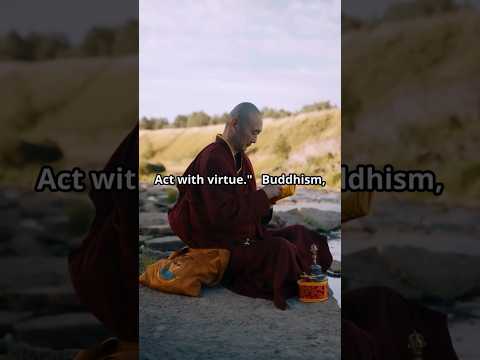
  • Stoicism vs Buddhism: Key Differences-Mindset & Inner Peace

    Stoicism vs. Buddhism — Key Differences in Mindset, Inner Peace, and the Path to Freedom.
    Stoicism vs Buddhism: Key Differences in Mindset & Inner Peace.

    Stoicism vs Buddhism: Key Differences in Mindset & Inner Peace.

    When it comes to timeless wisdom for living a peaceful and meaningful life, Stoicism and Buddhism stand out as two of the most respected and widely studied philosophies. Although they developed in entirely different parts of the world—Stoicism in ancient Greece and Rome, and Buddhism in ancient India—they share a surprising number of similarities. Both offer powerful guidance on how to reduce suffering, cultivate emotional resilience, and live with purpose.

    Yet at their core, Stoicism and Buddhism differ in profound ways. Let’s explore what sets them apart—and how each path can help you find your own version of inner peace.


    The Similarities: A Shared Goal of Inner Calm

    Both Stoicism and Buddhism are deeply concerned with the inner life. They teach that true happiness does not come from external circumstances, but from within. Both philosophies offer tools to help us navigate pain, uncertainty, and loss—without being controlled by them.

    In Stoicism, this means focusing only on what you can control: your thoughts, your actions, and your attitude. In Buddhism, it means recognizing that attachment and desire are the roots of suffering, and that liberation comes from seeing through the illusion of self.

    Both traditions encourage mindfulness, self-discipline, and compassion. They promote living in the present moment, not being ruled by fleeting emotions or external events. This makes both incredibly relevant in our modern world, where stress and distraction are at an all-time high.


    The Key Differences: Control vs Liberation

    The primary difference between Stoicism and Buddhism lies in their view of the self and the ultimate goal of the practice.

    Stoicism is about mastering the self in the face of life’s inevitable hardships. It teaches you to stand firm, accept what you cannot change, and live with integrity. Think of Marcus Aurelius writing in Meditations: “You have power over your mind—not outside events. Realize this, and you will find strength.” In Stoicism, the self is something to be strengthened, refined, and guided by reason and virtue.

    Buddhism, in contrast, teaches that the self is an illusion. The ego, with all its desires and fears, is the source of suffering. The Buddhist path is one of liberation from the self, through practices like meditation, mindfulness, and ethical living. The goal is not to strengthen the self, but to transcend it—to awaken to a deeper truth beyond identity and separation.

    So, while Stoicism embraces the storm with a calm and rational mind, Buddhism encourages us to see that the storm itself may be nothing more than a projection of our attachments and false beliefs.


    Which One Is “Better”?

    That depends entirely on your personal mindset and spiritual goals. If you’re looking for practical tools to improve your emotional resilience, face challenges head-on, and live ethically in the world, Stoicism may speak to you. If you’re seeking spiritual liberation, peace beyond the ego, and a deeper understanding of reality, Buddhism offers a profound path.

    Many people today actually draw from both traditions, using Stoic principles for navigating daily life, and Buddhist teachings for inner exploration and mindfulness. There’s no rule saying you can’t benefit from the wisdom of both.


    Final Thoughts

    At the heart of both Stoicism and Buddhism is the desire to end suffering and live a life of clarity, calm, and compassion. They just take different roads to get there.

    One trains you to master your mind.
    The other shows you how to let go of your mind entirely.

    Whichever path you choose—or even if you walk a bit of both—you’re taking steps toward a wiser, more peaceful life.

    Stoicism vs Buddhism: Key Differences in Mindset & Inner Peace.

    Looking to explore more bite-sized wisdom on philosophy, mindset, and inner peace?
    Follow YourWisdomVault on YouTube for weekly insights that make ancient ideas feel fresh, modern, and deeply personal.

    #Stoicism #Buddhism #Mindfulness #InnerPeace #EmotionalResilience #SelfAwareness #LetGoOfEgo #PhilosophyOfLife #SpiritualGrowth #DailyWisdom #ModernStoicism #BuddhistWisdom #AncientPhilosophy #YourWisdomVault

    P.S. The journey to inner peace doesn’t have to follow just one path—sometimes, the most powerful wisdom comes from blending traditions. Keep exploring. Keep growing. And remember: your inner vault is deeper than you think.