Blog

  • Mindfulness Isn’t About Calm — It’s About Present Awareness

    Mindfulness Isn’t About Calm—It's About Clear, Present Awareness and Living Fully Awake Now.
    Mindfulness Isn’t About Calm — It’s About Clear, Present Awareness

    Mindfulness Isn’t About Calm — It’s About Clear, Present Awareness

    When people hear the word mindfulness, they often picture peace: stillness, calm breathing, and a quiet mind. The image is soothing — and misleading.

    Because this practice isn’t about becoming perfectly calm. It’s about becoming perfectly clear.

    Let’s Drop the Calm Myth

    Many assume this awareness practice is a shortcut to inner peace. That if you do it right, you’ll feel relaxed and centered all the time.

    But that expectation sets people up to feel like they’re failing. The truth? Most of the time, showing up for presence means encountering thoughts, emotions, and inner chaos — exactly as they are.

    You don’t do this to feel good. You do it to see clearly.

    Clarity is the point. And it’s far more powerful than calm.

    Seeing Things As They Are

    What makes this kind of practice transformative isn’t emotional stillness — it’s perception.

    Awareness means noticing what’s really going on inside you. It might be discomfort, stress, irritation, or overwhelm. But instead of pushing those states away, you allow them to be seen. You witness them without needing to fix, fight, or flee.

    And in doing so, you create a gap between what’s happening and how you respond.

    That’s clarity. That’s freedom.

    Calm May Follow, But It’s Not the Goal

    Some days, peace will come. But if you chase it directly, you’re likely to end up frustrated. Because the mind isn’t always quiet — and it doesn’t need to be.

    What matters more is the ability to notice without being pulled in. To observe your thoughts instead of getting lost in them. To feel what you’re feeling without being swept away.

    This presence doesn’t require a perfect mood. It just requires attention.

    Why Clarity Changes Everything

    Clarity is like turning on the light in a cluttered room. The mess was always there — now you can actually see it. From that seeing, you can choose your next step with intention rather than habit.

    Buddhist traditions often focus more on insight than on emotional states. That’s because insight gives rise to genuine peace — not the other way around.

    “Peace does not mean to be in a place where there is no noise… it means to be in the midst of those things and still be calm in your heart.”

    But even that calm comes from clarity, not control.

    Everyday Practices That Build Awareness

    You don’t need long silent retreats to begin. A few small shifts make a big difference:

    • Check in with yourself: Ask, “What am I experiencing right now?” without needing to change it.
    • Name what arises: When thoughts or emotions come up, label them gently. “That’s fear.” “That’s planning.” “That’s judgment.”
    • Feel your breath: Not to force relaxation, but to anchor attention. Notice the inhale, the exhale, and the sensations in between.

    These practices are simple — but they build a deeper presence over time.

    Mindfulness Isn’t About Calm — It’s About Clear, Present Awareness
    Mindfulness Isn’t About Calm — It’s About Clear, Present Awareness

    Real Peace Is Presence

    True inner stability doesn’t come from suppressing what you feel. It comes from meeting it with honesty and space.

    This work isn’t always easy. But it’s real. It’s sustainable. And it brings you back to yourself — without needing the outside world to quiet down first.

    So no, you’re not doing it wrong if you don’t feel calm. In fact, you’re likely on the right path.

    Because peace isn’t the absence of noise — it’s the presence of clarity.

    P.S. If this sparked something in you, consider subscribing to YourWisdomVault on YouTube for more grounded insights on clarity, presence, and practical wisdom.

    #Mindful #Clarity #BePresent
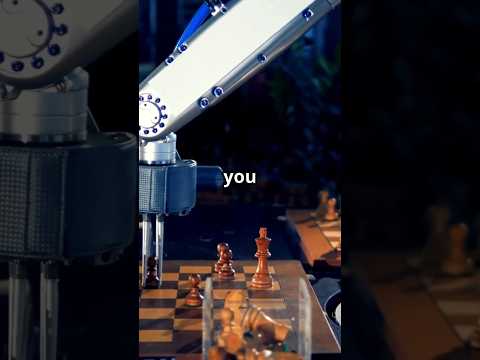
  • Why AI Still Struggles With Common Sense | Machine Learning

    Why AI Still Struggles With Common Sense | Machine Learning Explained #nextgenai #technology
    Why AI Still Struggles With Common Sense | Machine Learning Explained

    Why AI Still Struggles With Common Sense | Machine Learning Explained

    Artificial intelligence has made stunning progress recently. It can generate images, write human-like text, compose music, and even outperform doctors at pattern recognition. But there’s one glaring weakness that still haunts modern AI systems: a lack of common sense.

    We’ve trained machines to process billions of data points. Yet they often fail at tasks a child can handle — like understanding why a sandwich doesn’t go into a DVD player, or recognizing that you shouldn’t answer a knock at the refrigerator. These failures are not just quirks — they reveal a deeper issue with how machine learning works.


    What Is Common Sense, and Why Does AI Lack It?

    Common sense is more than just knowledge. It’s the ability to apply basic reasoning to real-world situations — the kind of unspoken logic humans develop through experience. It’s understanding that water makes things wet, that people get cold without jackets, or that sarcasm exists in tone, not just words.

    But most artificial intelligence systems don’t “understand” in the way we do. They recognize statistical patterns across massive datasets. Large language models like ChatGPT or GPT-4 don’t reason about the world — they predict the next word based on what they’ve seen. That works beautifully in many cases, but it breaks down in unpredictable environments.

    Without lived experience, AI doesn’t know what’s obvious to us. It doesn’t understand cause and effect beyond what it’s statistically learned. That’s why AI models can write convincing essays but fail at basic logic puzzles or real-world planning.


    Why Machine Learning Struggles with Context

    The core reason is that machine learning isn’t grounded in reality. It learns correlations, not context. For example, an AI might learn that “sunlight” often appears near the word “warm” — but it doesn’t feel warmth, or know what the sun actually is. There’s no sensory grounding.

    In cognitive science, this is called the symbol grounding problem — how can a machine assign meaning to words if it doesn’t experience the world? Without sensors, a body, or feedback loops tied to the physical world, artificial intelligence stays stuck in abstraction.

    This leads to impressive but fragile performance. An AI might ace a math test but completely fail to fold a shirt. It might win Jeopardy, but misunderstand a joke. Until machines can connect language to physical experience, common sense will remain a missing link.


    The Future of AI and Human Reasoning

    There’s active research trying to close this gap. Projects in robotics aim to give AI systems a sense of embodiment. Others explore neuro-symbolic approaches — combining traditional logic with modern machine learning. But it’s still early days.

    We’re a long way from artificial general intelligence — a system that understands and reasons like a human across domains. Until then, we should remember: just because AI sounds smart doesn’t mean it knows what it’s saying.


    Why AI Still Struggles With Common Sense | Machine Learning Explained
    Why AI Still Struggles With Common Sense | Machine Learning Explained

    Final Thoughts

    When we marvel at what machine learning can do, we should also stay aware of what it still can’t. Common sense is a form of intelligence we take for granted — but it’s incredibly complex, subtle, and difficult to replicate.

    That gap matters. As we build more powerful artificial intelligence, the real test won’t just be whether it can generate ideas or solve problems — it will be whether it can navigate the messy, unpredictable logic of everyday life.

    For now, the machines are fast learners. But when it comes to wisdom, they still have a long way to go.


    Want more insights into how AI actually works? Subscribe to Technoaivolution on YouTube— where we decode the future one idea at a time.

    #ArtificialIntelligence #MachineLearning #CommonSense #AIExplained #TechPhilosophy #FutureOfAI #CognitiveScience #NeuralNetworks #AGI #Technoaivolution

  • Staying Present When the Future Feels Overwhelming.

    Staying Present When the Future Feels Overwhelming | Buddhist Wisdom
    Staying Present When the Future Feels Overwhelming | Buddhist Wisdom

    Staying Present When the Future Feels Overwhelming | Buddhist Wisdom

    How Buddhist Wisdom Helps You Come Back to Now

    In a world full of noise, speed, and uncertainty, it’s easy to feel overwhelmed. Most of us live several steps ahead of ourselves — planning, predicting, worrying. Our attention is rarely where we are. Instead, it lives in a future that hasn’t arrived.

    But Buddhist wisdom teaches a radical idea: peace isn’t found in the future. It’s found in the Stillness.


    Why We Drift from the current moment

    The human brain is a planning machine. It scans for threats, creates to-do lists, and imagines outcomes. That’s useful — until it turns into constant mental noise. When we live entirely in imagined futures, we lose touch with what’s real.

    This is where anxiety grows. The mind loops through possibilities. The body stays here, but our thoughts are elsewhere. And the longer we stay disconnected from the current moment, the more chaotic things feel.

    The goal isn’t to banish all thoughts about the future. It’s to return to now, again and again — the only place we can actually live.


    Buddhist Insights on the Present

    In Buddhism, mindfulness is the path to presence. It’s not about emptying the mind or achieving some perfect calm. It’s about waking up to what is already here.

    Thich Nhat Hanh wrote, “The present moment is the only moment available to us, and it is the door to all moments.”

    That means your life isn’t happening later. It’s happening now. When you drink tea, wash your hands, speak to someone — that’s your life unfolding. When you’re mindful, you’re not just going through the motions. You’re present for it.

    This shift in attention may sound small. But it changes everything.


    How to Come Back to the Stillness

    The good news is you don’t need special conditions to become more present. It happens in micro-moments — simple, intentional awareness.

    Here are a few ways to reconnect with the Stillness:

    • Notice your surroundings. Take 10 seconds to look around. What do you see, hear, or feel?
    • Use grounding cues. The feeling of your feet on the ground or hands on your lap can bring you back quickly.
    • Pause in between tasks. Before jumping to the next thing, take one moment to check in: Where am I? What’s here?
    • Acknowledge wandering. Your mind will drift. That’s okay. Just gently return.

    These practices aren’t about control — they’re about connection. And over time, they retrain the mind to stay a little closer to now.


    Why the Present Is Enough

    The present is not perfect. But it’s real. And real is where life becomes bearable again.

    When you stop chasing clarity from the future, you begin to find clarity in what’s already here. You realize that right now — even with uncertainty — you can be steady. You can be clear. You can even be calm.

    Buddhism doesn’t promise to fix everything. It simply invites us to live fully — and that only happens in the present.


    Staying Present When the Future Feels Overwhelming | Buddhist Wisdom
    Staying Present When the Future Feels Overwhelming | Buddhist Wisdom

    Final Thought

    If the future feels overwhelming, come back to what’s immediate. Feel the chair beneath you. Listen to the quiet in the room. Notice one thing that’s okay.

    This isn’t escape. It’s return.

    You don’t need to solve the future today. You only need to be present for this moment.

    Because this is where your life is — not later, not someday, but now.

    P.S. If this post helped you reconnect with the now, consider subscribing to YourWisdomVault on YouTube for more grounded insights drawn from timeless teachings. ✨

    #MindfulLiving #BuddhistWisdom #StayPresent #LiveInTheMoment #SpiritualGrowth #OvercomeAnxiety #MindfulnessPractice

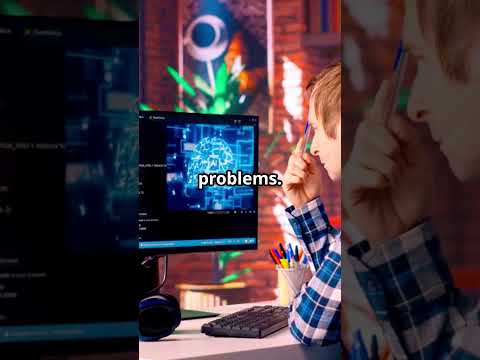
  • Will AI Replace Programmers? The Truth Behind the Hype.

    Will AI Replace Programmers? The Truth Behind the Hype. #nextgenai #artificialintelligence #chatgpt
    Will AI Replace Programmers? The Truth Behind the Hype.

    Will AI Replace Programmers? The Truth Behind the Hype.

    Every few months, a new headline circulates: “AI to Replace Programmers.” It sounds dramatic, attention-grabbing—and maybe even a little terrifying for those of us who write code for a living. But is it true?

    With the rapid development of tools like ChatGPT, GitHub Copilot, and other code-generating AI systems, it’s understandable that developers are asking serious questions about the future of their profession. However, the conversation about whether AI will replace programmers is far more nuanced than it might seem at first glance.

    What AI Can (and Can’t) Do in Programming

    AI has already proven it can generate functioning code snippets, autocomplete boilerplate, and even help debug simpler errors. It can save time, reduce repetitive tasks, and act as a productivity booster. In that sense, AI is already transforming how programming happens.

    But transformation is not the same as replacement.

    While AI can mimic certain tasks a programmer performs, it doesn’t truly “understand” code. It doesn’t know what the software is for, what the client actually needs, or how a given system fits into a complex business process. These are all aspects of development that require human context, strategic thinking, and creative problem-solving.

    In short: AI can write code, but it can’t think like a developer.

    The Human Edge in Software Development

    Developers do far more than just push syntax. They design systems, optimize architecture, gather requirements, and interpret feedback. They adapt solutions on the fly, communicate with stakeholders, and troubleshoot edge cases that AI models may never have seen.

    Even the most advanced AI lacks the ability to hold real conversations, negotiate trade-offs, or understand emotional nuance—something developers often do with clients, product teams, and other collaborators.

    So when we ask, “Will AI replace programmers?” we’re missing the bigger picture. The better question is: how will programmers evolve alongside AI?

    Collaborating With AI, Not Competing Against It

    Instead of fearing AI, developers can begin viewing it as a powerful tool. Much like how IDEs, version control, and Stack Overflow changed the way we code, AI will likely become another essential part of the modern programmer’s toolkit.

    Junior developers might lean on AI for basic syntax help. Senior engineers might use it to automate tests or refactor legacy code more efficiently. Project managers could even leverage AI to model early prototypes or explore architectural options.

    But the direction, insight, and quality control still need to come from humans.

    The Future: Augmented Programmers, Not Obsolete Ones

    History shows us that automation doesn’t always destroy jobs—it reshapes them. The same is true here. Developers who embrace AI may actually find themselves more valuable, not less. They’ll deliver faster, with fewer errors, and have more time to focus on higher-level logic and system design.

    The demand for software isn’t shrinking. If anything, it’s growing faster than ever. And that means skilled developers—especially those who know how to use AI strategically—will remain in high demand.

    Conclusion: Don’t Fear the Hype

    So, will AI replace programmers? Not entirely. Not anytime soon.

    Yes, the role is changing. Some parts of coding are becoming more automated. But that doesn’t mean developers are going extinct—it means we’re evolving. And those who learn to collaborate with AI instead of resisting it will be ahead of the curve.

    Keep coding. Keep thinking. And keep adapting.

    Will AI Replace Programmers? The Truth Behind the Hype.
    Will AI Replace Programmers? The Truth Behind the Hype.

    Looking for grounded takes on the future of AI, tech, and digital evolution?
    Follow Technoaivolution on YouTube for short-form insights that cut through the hype.

    #AIReplaceProgrammers #FutureOfCoding #ArtificialIntelligence #TechTrends #SoftwareDevelopment

    Thanks for watching: Will AI Replace Programmers? The Truth Behind the Hype.

    #AIReplaceProgrammers #FutureOfProgramming #ArtificialIntelligence #SoftwareDevelopment #AIvsDevelopers #CodingWithAI #GitHubCopilot #ChatGPTCoding #Technoaivolution #AIAssistedDevelopment #ProgrammerJobs #AIInTech #DeveloperTools #AIandJobs #DigitalEvolution