Blog

  • AI that Can Hear Your Emotions: The Rise of Emotion-Tracking

    AI That Can Hear Your Emotions: The Rise of Emotion-Tracking Tech. #artificialintelligence #nextgen
    AI That Can Hear Your Emotions: The Rise of Emotion-Tracking Tech.

    AI That Can Hear Your Emotions: The Rise of Emotion-Tracking Tech.

    Artificial Intelligence is getting eerily personal. It no longer just understands your words — it’s learning to understand your emotions. From the way you speak, breathe, or pause, emotion-tracking AI can now detect sadness, stress, excitement, or fear — often more accurately than a human. AI that can hear is no longer science fiction—it’s analyzing tone, pitch, and emotion.

    Welcome to the next wave of machine learning: AI that can hear how you feel.


    What Is Emotion-Tracking AI?

    Emotion-tracking AI (also known as affective computing) is a field of artificial intelligence designed to recognize and interpret human emotional states. Traditionally, this involved facial analysis or biometric data. But now, systems are evolving to analyze vocal cues — pitch, tone, speed, hesitation, breathing — to infer emotional intent.

    This means that your phone, virtual assistant, or even a customer service bot might not just hear what you’re saying… but also detect how you’re feeling when you say it.


    How Does It Work?

    These systems are powered by large datasets that train AI models to match vocal patterns with emotional labels. For example:

    • A slower, softer voice might indicate sadness or fatigue
    • Elevated pitch and erratic pacing may suggest anxiety or stress
    • Changes in breathing rhythm can signal tension or emotional shifts

    Combined with Natural Language Processing (NLP), the AI can draw powerful conclusions about your state of mind — even in real-time.


    Where Is This Tech Being Used?

    Emotion-detection AI is already being deployed in:

    • Call centers: To detect frustration or calm and guide support scripts accordingly
    • Mental health apps: Promising “early detection” of emotional imbalances
    • Driver monitoring systems: Identifying road rage or fatigue
    • Marketing and sales: Tailoring pitches to emotional reactions
    • Government pilot programs: Testing surveillance in high-stress areas (like border control or public transport)

    While it’s framed as “helpful” or “empathetic,” the implications are far deeper.


    The Ethical Dilemma

    With great power comes… manipulation?

    If AI can hear when you’re emotionally vulnerable, it can be used to nudge your behavior — serve you more products, change your screen time, or predict your reactions. This transforms tech from a tool into an influencer.

    And let’s not ignore the privacy concerns.
    What happens when your voice becomes data — stored, analyzed, and sold?

    Unlike cookies or browsing history, you can’t “clear” your emotional tone. Once it’s captured, it becomes another layer of behavioral tracking.


    The Future: Empathy or Exploitation?

    This technology walks a razor-thin line between empathy and exploitation.

    On one hand, it could revolutionize emotional support tools and help people with mental health challenges. On the other, it opens the door to mass emotional profiling — a future where machines don’t just know what you want, but how to sell it to you based on how you feel.

    Emotion AI might be sold as progress, but it demands critical awareness, strict regulation, and a deeper public conversation.


    AI That Can Hear Your Emotions: The Rise of Emotion-Tracking Tech.
    AI That Can Hear Your Emotions: The Rise of Emotion-Tracking Tech.

    Final Thoughts

    Emotion-tracking AI isn’t coming. It’s already here. And the ability for machines to hear your emotional state raises a simple but powerful question:

    Who’s listening — and what are they doing with what they hear?

    As AI continues to evolve, we must ask not just what it can do… but what it should do. Because the moment we give up control of our emotions — even unknowingly — we also risk giving up control of our decisions.

    At Technoaivolution, we’re not here to fear the future — but to question it.


    Want more insights into how technology is shaping (or reshaping) the human mind?
    Subscribe to TechnoAivolution on YouTube, follow, and stay sharp. The future isn’t naive — and neither are we.

    #EmotionAI #ArtificialIntelligence #AffectiveComputing #VoiceTech #TechEthics #AIPrivacy #FutureOfAI #HumanMachine #EmotionalSurveillance #AIandEmotions #DigitalEmpathy #Technoaivolution #MindAndMachine #DataPrivacy

    P.S. — If your voice reveals your emotions, the question isn’t if you’re being heard — it’s who’s listening, and why?

    Thanks for watching: AI that Can Hear Your Emotions: The Rise of Emotion-Tracking.

    Remember! With rapid advancements, we now have AI that can hear and respond to how we feel.

  • Is Stoicism Still Relevant? Timeless Wisdom for Modern Life

    Is Stoicism Still Relevant Today? — Timeless Wisdom for Modern Life, Peace, and Resilience.
    Is Stoicism Still Relevant Today? Timeless Wisdom for Modern Life.

    Is Stoicism Still Relevant Today? Timeless Wisdom for Modern Life.

    In a world of instant gratification, viral outrage, and nonstop noise, the question arises: Is Stoicism still relevant today?

    The short answer? More than ever.

    What Is Stoicism, Really?

    Stoicism is an ancient philosophy that emerged in Greece around 300 BCE, later adopted and refined by Roman thinkers like Marcus Aurelius, Seneca, and Epictetus. Contrary to popular belief, Stoicism isn’t about suppressing emotion or pretending to be unaffected. It’s about mastering your response to the world, especially when life gets unpredictable — which, let’s face it, is always.

    At its core, Stoicism teaches us to distinguish between what we can control and what we can’t. Our thoughts, actions, and choices are ours. The weather, the news, other people’s opinions? Not so much.


    Why Stoicism Still Matters

    We live in an age of emotional reactivity. Social media trains us to respond instantly, often without reflection. Stress, comparison, and anxiety run high. And it’s here that Stoic wisdom becomes a kind of mental armor.

    Instead of being pulled into the chaos, Stoicism helps you pause. It reminds you: You don’t have to react to everything. You don’t have to be offended by every comment. You don’t have to spiral every time something goes wrong.

    This is emotional control — not by bottling feelings, but by filtering reactions through reason.


    What the Stoics Taught (and Why It Still Works)

    Take Epictetus, for example. Born a slave, he taught that real freedom comes from the inside. His famous quote says it all:

    “Some things are up to us, and some things are not.”

    This mindset helps you let go of things outside your control — the economy, someone cutting you off in traffic, even the outcome of your efforts — while putting full focus on your character, your attitude, and your discipline.

    Marcus Aurelius, the Roman emperor, faced war, betrayal, and plague — and still practiced Stoicism daily. His journals, Meditations, are full of reminders to stay present, keep perspective, and rise above emotion-driven chaos.


    Stoicism as a Modern Superpower

    Think of Stoicism as a kind of operating system for modern life — especially if you’re feeling overwhelmed, distracted, or pulled in every direction.

    In 2025, relevance isn’t the issue. Resonance is. Stoic principles don’t just apply — they resonate deeply with anyone trying to find calm in a world that profits from panic.

    By practicing Stoicism, you’re not becoming emotionless. You’re becoming unshakeable. And that’s something the modern world could use a lot more of.


    Bringing Stoicism Into Your Daily Life

    You don’t need to become a full-time philosopher. Just start with this:

    • Pause before you react.
    • Ask yourself: Is this in my control?
    • Focus your energy only on what’s yours to change.
    • Let the rest pass — like clouds in the sky.

    Over time, this practice becomes second nature. You’ll stop wasting energy on things that don’t matter. You’ll stop trying to control what you can’t. And you’ll gain a kind of mental clarity that most people never find.

    Is Stoicism Still Relevant? Timeless Wisdom for Modern Life
    Is Stoicism Still Relevant? Timeless Wisdom for Modern Life

    Final Thoughts

    So, is Stoicism still relevant today?

    Not only is it relevant — it’s essential. In a world that rewards outrage and distraction, Stoicism is a return to focus, resilience, and strength. It doesn’t promise perfection — just progress. It doesn’t erase emotion — it channels it.

    If you’re seeking timeless wisdom that actually works in real life, Stoicism might just be your edge. Subscribe to YourWisdomVault on YouTube for more!

    #Stoicism #ModernPhilosophy #EmotionalControl #TimelessWisdom #MarcusAurelius #Epictetus #SelfMastery #MentalClarity #DailyStoic #AncientWisdom #PhilosophyForLife #MindsetShift #YourWisdomVault

    P.S. — The world hasn’t changed as much as we think. But how we respond to it? That’s where wisdom still wins.

    Thanks for watching: Is Stoicism Still Relevant? Timeless Wisdom for Modern Life

  • Can AI Feel Regret? The Truth About Machine Emotion!

    Can AI Feel Regret or Just Simulate It? The Truth About Machine Emotion. #nextgenai #technology
    Can AI Feel Regret or Just Simulate It? The Truth About Machine Emotion!

    Can AI Feel Regret or Just Simulate It? The Truth About Machine Emotion!

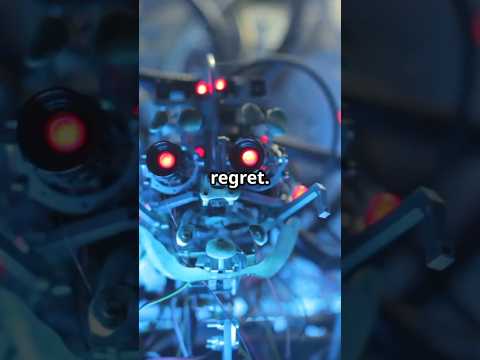
    As artificial intelligence continues to evolve, one of the most provocative questions we face is: Can AI feel regret? Or is what we see merely a simulation of human emotion?

    This question touches on the deeper themes of consciousness, emotional intelligence, and what truly separates humans from machines. While AI can analyze data, learn from mistakes, and even say “I’m sorry,” does that mean it feels anything at all? Or is it simply performing a highly advanced trick of mimicry?

    In this article, we’ll explore whether AI can feel regret, how machine emotion is simulated, and why it matters for the future of human-AI interaction.


    What Is Regret? And can AI feel regret?

    To understand whether AI can feel regret, we have to first define what regret actually is. Regret is a complex human emotion involving memory, reflection, moral reasoning, and a sense of loss or responsibility for past actions. It often includes both psychological and physiological responses—tightness in the chest, anxiety, sadness, or guilt.

    It’s not just about knowing you made a mistake—it’s about feeling the weight of that mistake.


    What AI Can Do (and Why It’s Not Regret)

    AI systems, particularly those powered by machine learning, are capable of identifying past outcomes that didn’t yield optimal results. They can adjust future behavior accordingly. In some cases, AI may even “apologize” in a chatbot script or generate phrases that resemble emotional remorse.

    But here’s the catch: AI doesn’t remember, reflect, or feel. It processes inputs and generates statistically probable outputs. There’s no internal awareness, no self-reflection, no emotional context.

    So while it may simulate the appearance of regret, it’s not experiencing it. It’s calculating—not caring.


    Why Simulated Emotion Matters

    So if AI can’t feel regret, does it matter that it can simulate it?

    Yes—and here’s why. As AI becomes more integrated into everyday life—customer service, healthcare, education, and even therapy—its ability to simulate emotional intelligence becomes more critical. People respond better to systems that appear to understand them.

    But this also raises ethical concerns. When AI mimics regret or empathy, it creates a false sense of emotional connection. Users may assume that the system understands their pain, when in reality, it’s just mimicking emotional language without any real experience behind it.

    This can lead to trust issues, manipulation, or overreliance on artificial systems for emotional support.


    Regret: The Line AI Can’t Cross (Yet)

    Emotions like regret require consciousness, a sense of self, and a moral compass—traits no AI currently possesses. Even the most advanced language models like ChatGPT or generative AI tools are ultimately non-conscious, data-driven systems.

    The difference between emotion and emotional simulation is like the difference between a fire and a photo of fire. One is real. The other looks real, but doesn’t burn.

    Until AI develops something resembling consciousness (a massive leap in both theory and tech), regret will remain a human-only experience.


    Why This Matters for the Future

    Understanding what AI can and can’t feel helps us set clearer boundaries. It reminds us to remain cautious when designing and interacting with systems that seem human.

    Yes, machines will keep getting better at talking like us, predicting like us, and even behaving like us. But emotion—real, felt, human emotion—remains the final frontier. And maybe, just maybe, that’s what will always keep us ahead of the code.

    Can AI Feel Regret? The Truth About Machine Emotion!
    Can AI Feel Regret? The Truth About Machine Emotion!

    Want more insights like this?
    Subscribe to TechnoAivolution on YouTube and join the conversation about where humanity ends—and where AI begins.

    #ArtificialIntelligence #AIEmotion #MachineLearning #TechPhilosophy #AIRegret #SimulatedEmotion #AIConsciousness #FutureOfAI #TechnoAivolution #HumanVsMachine

    P.S. If this made you think twice about what machines really feel, share it with someone curious about where human emotion ends—and artificial simulation begins.

    Thanks for watching: Can AI Feel Regret? The Truth About Machine Emotion!

  • Why Stoics Stay Calm Under Pressure and Still Feel Emotions?

    Why Stoics Stay Calm Under Pressure — Yet Still Feel Every Emotion with Depth and Clarity.
    Why Stoics Stay Calm Under Pressure and Still Feel Every Emotion?

    Why Stoics Stay Calm Under Pressure and Still Feel Every Emotion?

    When people think of Stoicism, they often imagine someone emotionless—cold, detached, almost robotic. It’s one of the most common misconceptions surrounding Stoic philosophy. But here’s the truth: Stoics don’t suppress emotions—they master them.

    In a world filled with emotional overreactions and impulsive decisions, the Stoic mindset stands out as a model for inner strength and clarity. This blog will break down why Stoics stay calm under pressure and how they can feel every emotion—without being controlled by them.

    The Myth of the Emotionless Stoic

    Ask someone what Stoicism means, and you’ll likely hear something like “not feeling anything” or “being tough and unbothered.” That definition is not only shallow—it’s wrong.

    Stoics, from ancient times to modern thinkers, recognized that emotions are natural. You can’t stop yourself from feeling. What you can do is choose how you respond. That’s where the Stoic power lies.

    Seneca, one of the great Roman Stoic philosophers, wrote extensively about anger and how it can destroy lives if left unchecked. He didn’t deny its existence—he studied it, dissected it, and learned how to deal with it rationally.

    Feel Everything, React to Nothing (Without Thinking)

    Stoicism teaches that emotions are temporary impulses—neither good nor bad in themselves. What matters is how we interpret them and what we do next. A Stoic might feel fear in a crisis or frustration in conflict, but they don’t lash out. They pause, reflect, and respond with reason, not emotion.

    This self-control isn’t about being cold-hearted—it’s about being clear-headed.

    Modern neuroscience actually backs this up. Taking a moment to assess your emotions before reacting activates the rational part of the brain. Stoics figured this out 2,000 years ago without brain scans.

    Staying Calm Under Pressure Is a Superpower

    Think about the last time things got intense—a stressful deadline, a heated argument, or a personal crisis. Most people react. But the Stoic response is to stop, breathe, and focus on what’s within your control.

    This doesn’t mean ignoring reality. It means facing it with discipline and strength. It’s why Stoicism has become a go-to philosophy for athletes, leaders, entrepreneurs, and even military professionals. When chaos hits, calm is your greatest weapon.

    Stoicism Is More Relevant Than Ever

    We live in an age of outrage, hot takes, and emotional burnout. Every scroll on social media can trigger anger or anxiety. In this environment, Stoicism offers a blueprint for mental resilience.

    Instead of letting every news headline or negative comment throw you off, Stoicism teaches you to build a foundation inside yourself. It’s not about being indifferent—it’s about being anchored.

    You Still Feel—But You’re In Charge

    The Stoic doesn’t avoid emotion. They observe it, understand it, and decide whether it deserves a reaction. That’s the ultimate emotional intelligence—feeling deeply but not letting feelings drive the wheel.

    So the next time someone says, “Stoics don’t feel,” remember this: They feel everything. They just don’t let it control them.

    Why Stoics Stay Calm Under Pressure and Still Feel Emotions?
    Why Stoics Stay Calm Under Pressure and Still Feel Emotions?

    Want more timeless insights like this?
    Subscribe to YourWisdomVault on YouTube and keep building a calm, clear mind in a chaotic world.

    #Stoicism #StoicMindset #EmotionalControl #SelfMastery #AncientWisdom #CalmUnderPressure #EmotionalDiscipline #PhilosophyForLife #ModernStoic #MentalStrength

    P.S. If this post helped shift your view on Stoicism, consider sharing it with someone who could use a little calm in their chaos. And remember: Stoics stay calm not because they suppress emotion, but because they understand it.

    Thanks for watching: Why Stoics Stay Calm Under Pressure and Still Feel Emotions?