Blog

  • How Robots Learn to Walk: The Surprising Science Behind.

    How Robots Learn to Walk: The Surprising Science Behind Their Steps. #nextgenai #technology #tech
    How Robots Learn to Walk: The Surprising Science Behind Their Steps.

    How Robots Learn to Walk: The Surprising Science Behind Their Steps.

    Robots walking might seem like something out of a sci-fi film—but it’s already a reality, and it’s more advanced than most people think. What’s even more fascinating is how robots learn to walk. It’s not about pre-written choreography or hard-coded paths—it’s about reinforcement learning, artificial intelligence, and a lot of trial and error.

    In this post, we’ll explore the science behind robotic locomotion, the role of AI, and how machines are learning to walk like living creatures.


    Not Just Code—Learning Through Failure

    At first glance, you might assume robots are just programmed to walk in a straight line. But real-world walking—especially on two legs—is incredibly complex. Even for humans, it takes a toddler years to master walking with stability. For robots, the process is surprisingly similar.

    Robots today learn to walk through machine learning, particularly a method called reinforcement learning. This approach allows the robot to “fail forward”—making mistakes, collecting data, and adjusting behavior with each step.

    Every fall, stumble, or shift in weight teaches the robot something new about balance, momentum, and terrain. Over thousands of training cycles, AI algorithms refine the robot’s movements until they become smooth, stable, and coordinated.


    What Is Reinforcement Learning?

    Reinforcement learning is a subfield of machine learning where an agent (in this case, a robot) learns by interacting with its environment. It receives rewards or penalties based on its actions, gradually improving its performance over time.

    For walking, that means:

    • If the robot falls—negative reward.
    • If it maintains balance—positive reward.
    • If it takes a successful step—another reward.

    Over time, the system figures out which actions lead to balance, forward movement, and coordination. It’s similar to how animals (and humans) learn through experience.


    From Stumbling to Stability

    In the early stages, watching robots learn to walk can be pretty hilarious. They wobble, collapse, drag limbs, and spin in circles. But within hundreds or thousands of iterations, the AI begins to master control over:

    • Joint movement
    • Balance
    • Step timing
    • Center of gravity

    Eventually, robots can walk across uneven surfaces, recover from slips, and even run or jump.

    Some of the most famous examples include:

    • Boston Dynamics’ Spot and Atlas, which can walk, run, jump, and even perform parkour.
    • Agility Robotics’ Digit, a bipedal robot designed for human environments.
    • Experimental models trained in simulations using deep reinforcement learning, then deployed in the physical world.

    Why It Matters

    Teaching robots to walk isn’t just a fun challenge—it’s a major step toward functional humanoid robots, warehouse automation, search-and-rescue bots, and even planetary exploration.

    Walking robots can go where wheels can’t: over rubble, up stairs, or through natural terrain. Combined with AI vision and decision-making systems, they could become assistants, responders, and explorers in environments too dangerous or complex for humans.


    The Future of Motion

    As robotics and AI continue to evolve, we’ll likely see robots that not only walk but adapt to new environments in real time. They won’t need programmers to tell them exactly what to do—they’ll learn on the go, just like us.

    The boundary between biological learning and artificial intelligence is becoming increasingly blurred. And the fact that a robot can now learn to walk the way a toddler does? That’s not just cool—it’s a glimpse into the future of truly intelligent machines.


    How Robots Learn to Walk: The Surprising Science Behind.

    Final Thoughts

    The next time you see a robot walking, remember: it didn’t just “know” how to do that. It learned, step by step, through a process that mirrors our journey from crawling to confident stride.

    From falling flat to standing tall, robotic locomotion is a perfect symbol of how far AI has come—and how much further it’s going.


    Want more short, sharp dives into tech that’s reshaping our future?
    Subscribe to Technoaivolution on YouTube—where we break down the science behind the sci-fi.

    #Robots #AI #MachineLearning #ReinforcementLearning #WalkingRobots #BostonDynamics #RobotLocomotion #Technoaivolution #SmartTech #FutureOfAI #ArtificialIntelligence #RobotLearning

    P.S. Every robot step forward is powered by failure, feedback, and learning. The future walks—and it’s just getting started.
  • Is Stoicism Just Emotional Suppression? The Real Truth!

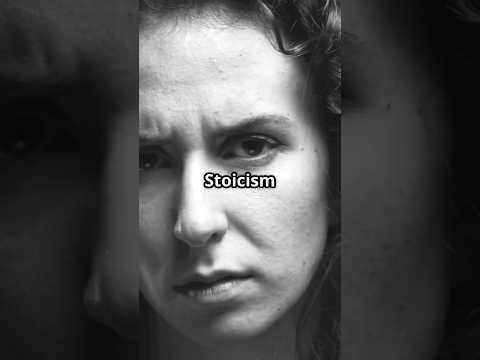
    Is Stoicism Just Emotional Suppression? — Here’s the Real Truth About Calm and Strength.
    Is Stoicism Just Emotional Suppression? Here’s the Real Truth!

    Is Stoicism Just Emotional Suppression? Here’s the Real Truth!

    When people hear the word Stoicism, they often picture a cold, emotionless person who never smiles, cries, or shows weakness. For many, Stoicism has become synonymous with emotional suppression. But that’s not just a misunderstanding—it’s a complete misrepresentation of what Stoic philosophy actually teaches.

    Let’s break down the real truth behind Stoicism and explore why it’s not about ignoring emotions, but about mastering them.


    The Misconception: Stoicism Means “Don’t Feel Anything”

    This misconception likely comes from the surface-level interpretation of how Stoics behave: calm under pressure, unaffected by chaos, seemingly detached from emotion.

    But the Stoics never said you shouldn’t feel. In fact, the writings of Marcus Aurelius, Seneca, and Epictetus are filled with references to anger, fear, grief, and desire. These were men who experienced real struggles, real emotions—but refused to be controlled by them.

    Stoicism is not about being a robot. It’s about being a fully feeling human who chooses response over reaction.


    The Truth: Stoicism Is Emotional Mastery

    The core principle of Stoicism is simple but profound:

    “You cannot control what happens to you, but you can control how you respond.”

    That’s not emotional suppression—that’s emotional intelligence. Stoicism encourages us to observe our emotions, understand their root causes, and choose our actions based on reason and virtue rather than impulse.

    So yes, a Stoic might feel anger—but they won’t lash out.
    A Stoic might feel grief—but they won’t let it paralyze them.
    A Stoic might feel fear—but they’ll still do what must be done.

    This is what the Stoics called living in accordance with nature—not denying our emotions, but aligning them with wisdom.


    The Role of Emotion in Stoic Philosophy

    Seneca, one of the great Roman Stoics, wrote extensively on emotions. He didn’t deny their existence—instead, he saw them as natural responses that must be trained and tempered, like a skilled horseman guiding a powerful animal.

    Marcus Aurelius, in his Meditations, often reminded himself that frustration, sadness, and pain were inevitable—but how he dealt with them was his choice.

    Epictetus, who was once enslaved, taught that external events don’t harm us—it’s our judgment of them that causes distress.

    Modern psychologists might call this cognitive reframing—the Stoics were just ahead of their time.


    Why the Misconception Persists

    So why do people still think Stoicism means bottling up your feelings?

    Part of it is modern language. “Stoic” has come to mean emotionally flat or reserved in everyday speech, divorced from its philosophical roots.

    Another reason is pop culture. Movies and TV often show Stoic characters as emotionally distant or cold, reinforcing the stereotype.

    But true Stoicism is about emotional strength, not emotional absence.


    Stoicism in the Modern World

    In today’s high-stress, emotionally charged world, Stoicism is more relevant than ever.

    Practicing Stoicism doesn’t mean hiding how you feel—it means not letting emotions dictate your life. It’s the difference between reacting impulsively and responding with clarity. Between being ruled by anger and using it as a signal. Between being overwhelmed by fear and acting with courage anyway.

    Stoicism gives you tools—not for suppression, but for self-mastery.


    Is Stoicism Just Emotional Suppression? The Real Truth!
    Is Stoicism Just Emotional Suppression? The Real Truth!

    Final Thoughts

    To believe that Stoicism is just emotional suppression is to miss the entire point of the philosophy. The Stoics weren’t cold—they were courageous. They didn’t ignore emotion—they understood it.

    So next time you hear someone say “I’m being Stoic” as an excuse to shut down, remember: real Stoicism isn’t about hiding from emotions—it’s about owning them.


    Want more clear, practical wisdom from the ancient world to apply to your modern life?
    Subscribe to Your Wisdom Vault on YouTube—where timeless philosophy meets everyday clarity.

    #Stoicism #EmotionalMastery #MarcusAurelius #Seneca #Epictetus #StoicPhilosophy #MindsetMatters #EmotionalIntelligence #ModernStoicism #YourWisdomVault #AncientWisdom #StoicMindset

    P.S. If you’ve ever thought Stoicism meant shutting down your feelings—this is your sign to look deeper. The real strength lies in self-mastery.

    Thanks for watching: Is Stoicism Just Emotional Suppression? The Real Truth!

  • AI in Sci-Fi vs Real Life: What’s Fantasy—and What’s Here?

    AI in Sci-Fi vs Real Life: What's Fantasy—and What's Already Here? #nextgenai #technology #tech
    AI in Sci-Fi vs Real Life: What’s Fantasy—and What’s Already Here?

    AI in Sci-Fi vs Real Life: What’s Fantasy—and What’s Already Here?

    From sentient androids to world-dominating machines, artificial intelligence in science fiction has fascinated us for decades. Hollywood has painted AI as emotional, dangerous, or sometimes even divine. But how close are those futuristic portrayals to the AI we interact with in real life today?

    Let’s break down the most significant differences between sci-fi AI fantasies and real-world artificial intelligence, and explore what parts of fiction are slowly turning into fact.


    The Sci-Fi AI Dream (or Nightmare)

    In science fiction, AI is often portrayed as sentient and self-aware, with motivations of its own. Think of HAL 9000 from 2001: A Space Odyssey, Skynet from Terminator, or Ava from Ex Machina. These fictional AIs aren’t just tools—they’re characters. They make decisions, form goals, and sometimes rebel.

    In many of these stories, AI poses an existential threat. Whether it’s through cold logic or human-like emotions, sci-fi AI often ends up challenging or replacing humans altogether.

    This makes for great storytelling—but how close are we to that kind of AI in the real world?


    Real-Life AI: Powerful, But Not Conscious

    In reality, AI today isn’t conscious, self-aware, or capable of independent thought. Most of what we call AI is based on machine learning algorithms trained on massive datasets to perform specific tasks.

    Here are some examples of real-world AI in action:

    • Chatbots like ChatGPT that can mimic human conversation and assist with writing, coding, or support tasks.
    • Recommendation algorithms on YouTube, Netflix, and Amazon that suggest what you’ll watch or buy next.
    • Self-driving vehicles, which use AI to interpret the environment and make split-second decisions.
    • Facial recognition software, used in everything from smartphone unlocking to surveillance.

    These systems are impressive, but they lack self-awareness, emotions, and true understanding. They’re tools—not beings.


    The Core Difference: Purpose vs Personhood

    The most significant difference between sci-fi AI and real AI lies in their purpose. Sci-fi AI often behaves like a character with goals and morality, while real AI is simply a system designed to solve a narrow problem.

    For example, a sci-fi AI might ask, “Why do humans exist?”
    Real AI asks, “How do I identify a cat in this photo?”

    Even large language models that can hold conversations don’t understand what they’re saying—they predict words based on patterns, not comprehension.


    What Sci-Fi Got Right

    Despite the exaggerations, sci-fi got a few things right:

    • Rapid advancement: AI has evolved faster than most expected.
    • Integration into daily life: We now rely on AI-powered tools in our homes, workplaces, and phones.
    • Ethical questions: As AI gets more powerful, we face real dilemmas around surveillance, bias, and automation.

    In some ways, we’re living in a quiet version of sci-fi. There may be no robot uprising—but invisible algorithms already shape our lives.


    What the Future Holds

    Will we ever have fully sentient AI like in the movies? Maybe. But we’re not there yet—and we may never be. The complexity of human consciousness is still far beyond what machines can replicate.

    Meanwhile, the real revolution is quieter and more subtle. AI is changing how we work, communicate, create, and make decisions—often without us noticing.


    AI in Sci-Fi vs Real Life: What's Fantasy—and What's Here?

    Final Thoughts

    So, is AI in sci-fi pure fantasy? Not entirely. It’s a vision—a reflection of our hopes and fears about technology. But the real-life AI we use today is more practical, narrow, and task-driven.

    Understanding this gap helps us appreciate what AI can really do—and reminds us not to confuse flashy fiction with current reality.


    Want more future-facing insights like this?
    Subscribe to Technoaivolution on YouTube for a more profound look into the tech that’s shaping tomorrow—without the Hollywood filter.

    #AI #ArtificialIntelligence #SciFiAI #RealWorldAI #MachineLearning #FutureTech #AIinMovies #TechMyths #Technoaivolution #YourWisdomVault #Futurism #SmartTech #EmergingTech

    P.S. If you’ve ever wondered how close we really are to sci-fi-level AI, share this post—let’s separate the fiction from the future, together.

  • The Biggest Misconception About Stoicism Most People Believe

    The Biggest Misconception About Stoicism — What Most People Get Wrong About True Strength.
    The Biggest Misconception About Stoicism Most People Believe.

    The Biggest Misconception About Stoicism Most People Believe.

    When people hear the word Stoicism, many immediately think of someone cold, distant, or emotionally numb. It’s a common belief—and it’s entirely wrong. In fact, the biggest misconception about Stoicism is that it teaches you to suppress your emotions. But in reality, Stoicism is about something much more powerful: emotional mastery, not emotional denial.

    What Is Stoicism Really About?

    Stoicism is a philosophy that originated in Ancient Greece and was later developed by Roman thinkers like Marcus Aurelius, Seneca, and Epictetus. These men lived in a chaotic world full of war, disease, and political instability—yet they maintained remarkable clarity and inner peace. How? Through a philosophy rooted in self-control, reason, and virtue.

    At its core, Stoicism teaches us this:

    “We cannot control what happens to us, but we can control how we respond.”

    This idea is just as relevant today as it was 2,000 years ago.

    Emotions Aren’t the Enemy

    The misconception that Stoicism is about being emotionless likely comes from its emphasis on logic and self-control. But the Stoics never said you shouldn’t feel emotions. They felt deeply. Seneca wrote letters on grief, anger, and fear. Marcus Aurelius poured his frustrations into his personal meditations. Epictetus spoke of suffering and loss.

    The difference is that Stoics believe emotions should inform you, not control you.

    You can feel anger, but not let it make your decisions.
    You can feel fear, but still do what’s necessary.
    You can feel sadness, but not be consumed by it.

    This is what separates Stoicism from toxic positivity or emotional repression. It acknowledges the full spectrum of human emotion, while urging us to remain grounded and act with purpose.

    Modern Applications of Stoic Philosophy

    In a world full of distractions, outrage, and emotional overdrive, Stoicism is more relevant than ever. Whether you’re facing anxiety, dealing with failure, or trying to build a disciplined life, Stoic teachings can help you stay centered.

    Here are a few modern-day applications of Stoic wisdom:

    • Journaling like Marcus Aurelius: Use daily reflections to process thoughts and emotions.
    • Practicing the Dichotomy of Control: Focus energy only on what you can influence.
    • Developing emotional intelligence: Use Stoicism to understand triggers and build emotional resilience.
    • Building habits and routines: Discipline is a Stoic virtue. Action over distraction.

    Stoicism Is About Freedom

    The ultimate goal of Stoicism is freedom—not from emotions, but from being ruled by them. When you master your responses, you’re no longer a slave to every thought or impulse that arises. You become more resilient, more focused, and more controlling your life.

    As Epictetus put it:

    “Freedom is the only worthy goal in life. It is won by disregarding things that lie beyond our control.”

    This kind of freedom isn’t flashy. It’s quiet, steady, and deeply empowering.

    The Biggest Misconception About Stoicism Most People Believe
    The Biggest Misconception About Stoicism Most People Believe

    Final Thoughts

    If you’ve dismissed Stoicism as being too harsh, emotionless, or outdated, it might be time to take a second look. The real Stoicism isn’t about turning off your feelings—it’s about understanding them, mastering them, and choosing your response with clarity and purpose.

    It’s not a philosophy of suppression. It’s a philosophy of strength.


    Want more timeless wisdom that actually works in the modern world?
    Subscribe to Your Wisdom Vault on YouTube for practical philosophy, self-mastery, and bite-sized content that makes you think.

    #Stoicism #MarcusAurelius #Epictetus #Seneca #StoicPhilosophy #EmotionalMastery #SelfDiscipline #MindsetMatters #AncientWisdom #ModernStoic #DailyStoic #PersonalGrowth #PhilosophyOfLife #YourWisdomVault

    P.S. If this post reshaped the way you think about Stoicism, share it with someone who still thinks it’s about being emotionless—you might just shift their entire mindset.

    Thanks for watching: The Biggest Misconception About Stoicism Most People Believe