Blog

  • Cold Shower for Mental Strength: Stoic Habit for Discipline

    Cold Showers for Mental Strength — A Stoic Habit to Build Discipline, Resilience, and Focus.
    Cold Showers for Mental Strength: A Stoic Habit That Builds Discipline.

    Cold Showers for Mental Strength: A Stoic Habit That Builds Discipline.

    In a world obsessed with comfort, cold showers might seem like an odd choice. But for those who follow Stoic philosophy, cold exposure is more than just a morning shock—it’s a form of mental training.

    Practiced for centuries in various forms, voluntary discomfort is a timeless tool for building self-discipline, emotional control, and resilience. The Stoics, especially figures like Marcus Aurelius and Seneca, believed that by intentionally exposing ourselves to hardship, we strengthen the mind and free ourselves from dependence on luxury.

    And that’s exactly where cold showers come in.


    Why Cold Showers?

    Cold showers are a modern way to practice voluntary discomfort—doing something hard on purpose to gain mental strength. They’re free, accessible, and brutally effective. There’s no waiting. No gear. Just a faucet and your willpower.

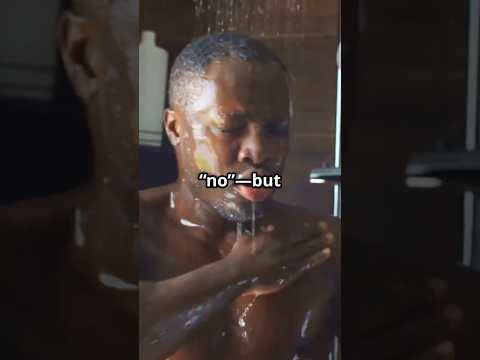
    When you take a cold shower, your body screams “no.” Your instinct is to flee. But when you choose to stay—when you breathe through the discomfort—you’re not just toughening your body. You’re sharpening your inner discipline.

    Each time you face that cold blast and choose calm over panic, presence over flight, you’re rewiring your brain to respond instead of react. That’s Stoicism in action.


    The Stoic Principle of Voluntary Discomfort

    The Stoics believed that we should not just tolerate discomfort—we should train in it. Seneca famously wrote:

    “Set aside a certain number of days during which you shall be content with the scantiest and cheapest fare… saying to yourself the while, ‘Is this the condition that I feared?’”

    The point wasn’t to suffer for suffering’s sake. It was to develop freedom from fear, from craving, from the illusion that comfort equals happiness. Cold showers reflect that perfectly. You’re not doing it to punish yourself. You’re doing it to build a mind that doesn’t break when life gets cold—literally or figuratively.


    Mental and Physical Benefits

    Beyond Stoic discipline, cold showers also come with a host of practical benefits:

    • Boosted alertness and energy
    • Improved circulation
    • Reduced inflammation
    • Strengthened immune system
    • Mood and resilience benefits from cold shock response

    But in the Stoic framework, it’s not about health trends or biohacking—it’s about choosing discomfort before life chooses it for you.


    How to Start (Without Quitting Day One)

    If you’re new to cold showers, don’t go full ice-bath right away. Here’s a simple Stoic training method:

    1. Start warm: Take your regular shower
    2. Finish cold: End with 10–15 seconds of cold water
    3. Focus on your breath: Stay calm and centered
    4. Add time over the week: Work up to 1–2 minutes

    The win isn’t in the duration. It’s in the moment you resist running from discomfort.

    That’s where discipline is built.


    Mind Over Comfort

    In the age of instant everything, cold showers teach the opposite: presence, control, and endurance. You can’t scroll your way out. You can’t talk your way through. You can only face the cold—and learn to respond with strength.

    This practice isn’t about the water. It’s about becoming the type of person who doesn’t flinch when things get uncomfortable. That’s a skill modern life doesn’t hand you. It’s one you earn—one cold second at a time.


    Cold Shower for Mental Strength: Stoic Habit for Discipline

    Final Thoughts

    Cold showers aren’t a miracle. They’re a mirror. They show you how you respond when comfort is stripped away. And in that space, you have a choice: flinch or breathe. Escape, or endure.

    The Stoics would choose the latter.
    So can you.


    For more timeless tools that sharpen your mindset and strengthen your discipline, subscribe to YourWisdomVault on YouTube—and put ancient wisdom to work in your modern life.

    #ColdShowers #MentalStrength #StoicDiscipline #VoluntaryDiscomfort #MindsetTraining #DailyStoic #BuildResilience #ModernStoic #YourWisdomVault #SelfMastery #DiscomfortTraining #AncientWisdom #ColdExposureChallenge

    P.S. The next time life hits you with something cold, let it. That moment of discomfort is precisely where strength is born.
  • How AI Is Changing Video Games: Smarter NPCs and Gameplay

    How AI Is Changing Video Games Forever: Smarter NPCs and Gameplay. #nextgenai #tech
    How AI Is Changing Video Games Forever: Smarter NPCs and Gameplay

    How AI Is Changing Video Games Forever: Smarter NPCs and Gameplay

    Artificial Intelligence is no longer confined to labs, research papers, or sci-fi movies. It’s now living inside your favorite video games—and changing them in ways that go far beyond graphics or performance. From smarter enemies to evolving storylines, AI is transforming the gaming world from the inside out.

    So what does that mean for the way we play? And is this just another tech buzzword, or is AI in video games really something game-changing?

    Let’s take a look at how artificial intelligence is redefining how games are created, experienced, and remembered.


    Smarter NPCs: From Predictable to Adaptive

    We’ve all seen it before—the enemy that runs in a straight line, the ally that walks into walls, or the shopkeeper who repeats the same line over and over again. That’s old-school NPC behavior.

    Modern AI-powered NPCs are a different story.

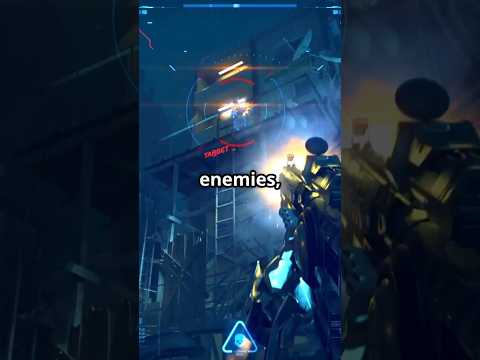
    Today’s game developers are using artificial intelligence to give non-playable characters a memory, a personality, and a sense of awareness. In some cases, NPCs can learn from your actions, adapt their strategies, or even respond differently based on your previous choices.

    Games like The Last of Us Part II introduced enemies who call out to each other by name and change tactics on the fly. Meanwhile, some indie developers are experimenting with procedural personalities, where every NPC behaves uniquely—even across different playthroughs.

    It’s not just smarter enemies. It’s smarter worlds.


    AI-Generated Dialogue and Dynamic Storylines

    Another huge innovation is AI-generated dialogue. Instead of relying on pre-written text trees, some studios are using AI models to create dynamic conversations. This allows for more fluid, lifelike interactions with in-game characters—and means no two players will have the exact same experience.

    Imagine playing an RPG where you can ask any question you want—and the NPCs actually respond in a meaningful way. We’re not fully there yet, but with the rise of large language models, this type of interaction is inching closer to reality.

    Dynamic dialogue also means more immersive storytelling. Games can now branch in ways that weren’t possible before. Instead of choosing from limited dialogue options, you could influence the narrative naturally through conversation.


    AI as a Game Designer’s Assistant

    It’s not just what happens in the game. AI is also being used behind the scenes to assist with game development.

    Procedural generation, powered by AI, is already being used to create massive open-world maps, populate environments, and generate quests. This helps studios create richer worlds more efficiently—and lets indie developers punch above their weight.

    Some developers are even using AI to balance gameplay, analyze player behavior, and automatically tweak difficulty levels in real time. The goal? Games that feel tailor-made for each individual player.


    Is AI the Future of Gaming—or Just a Tool?

    It’s easy to get caught up in the hype, but AI in gaming isn’t here to replace developers. It’s here to enhance what’s possible.

    Game design is still a deeply human craft. The magic comes from storytelling, pacing, emotion, and creativity. What AI brings to the table is scale, adaptability, and responsiveness.

    It helps create games that feel alive—worlds that respond, react, and evolve with the player. That’s not science fiction anymore. That’s 2025.


    How AI Is Changing Video Games: Smarter NPCs and Gameplay
    How AI Is Changing Video Games: Smarter NPCs and Gameplay

    Final Thoughts

    AI is changing video games—but it’s not just about making things smarter. It’s about making them more human. More responsive. More immersive. Whether it’s an NPC reacting to your play style or a storyline that evolves based on your dialogue, the integration of AI is reshaping how we connect with digital worlds.

    So next time an enemy flanks you, or an NPC remembers something you said hours ago, just know—that’s not just good coding. That’s artificial intelligence at work.

    And it’s only getting better.


    Want more fast takes on how AI is shaping our future? Subscribe to Technoaivolution on YouTube and stay ahead of the next wave of tech that’s changing everything.

    #AIinGaming #SmartNPCs #VideoGameAI #GameDevTools #AIinGameDesign #GenerativeAI #FutureOfGaming #TechInGames #AdaptiveGameplay #GamingWithAI #AIInnovation #Technoaivolution #AIStorytelling

    P.S. The next time the NPC surprises you, remember—it might not be scripted. It might just be smart. AI is changing the game… literally.

    Thanks for watching: How AI Is Changing Video Games: Smarter NPCs and Gameplay

  • The 10-Sec. Stoic Trick to Instantly Regain Calm and Control

    The 10-Second Stoic Trick — Instantly Regain Calm, Control, and Clarity in Any Situation.
    The 10-Second Stoic Trick to Instantly Regain Calm and Control

    The 10-Second Stoic Trick to Instantly Regain Calm and Control

    In a world driven by stress, overreaction, and emotional overload, learning how to stay calm isn’t just helpful—it’s essential. And the Stoics knew it.

    Centuries ago, long before smartphones and deadlines, philosophers like Marcus Aurelius, Epictetus, and Seneca mastered the art of mental control. One of their most powerful tools? A deceptively simple question that could reset the mind in 10 seconds or less.

    This ancient technique is still incredibly relevant today—and it might just be the mental trick you’ve been looking for.


    What Is This 10-Second Stoic Trick?

    Here it is:
    When you feel overwhelmed, stressed, or triggered, pause and ask yourself:

    “Is this within my control?”

    That’s it. One question. And it’s the gateway to instant calm and mental clarity.

    This technique comes from the core of Stoic philosophy. The Stoics believed that peace doesn’t come from external events—it comes from within. You can’t always control what happens, but you can control how you respond to it.


    Why This Works So Fast

    When you stop and ask, “Is this within my control?”—you shift from emotion to logic. Your brain exits panic mode and enters perspective mode.

    If the answer is no—you release the mental weight.
    If the answer is yes—you take focused, intentional action.

    Either way, you’re no longer at the mercy of your emotions. You’re controlling your mind again.

    It’s simple, it’s fast, and it works in just about any situation—from a frustrating conversation to a missed deadline, to traffic that’s driving you nuts.


    The Philosophy Behind It

    This question comes straight from Epictetus, who taught that our main job in life is to distinguish between what we can control and what we cannot.

    We can’t control other people’s actions, the weather, or the economy. But we can control our thoughts, choices, and attitude. By focusing only on what’s within your power, you eliminate mental clutter and emotional chaos.

    Marcus Aurelius echoed the same message in Meditations: “You have power over your mind—not outside events. Realize this, and you will find strength.”


    Modern Benefits of an Ancient Tool

    Today, this mindset is backed by neuroscience and psychology. Modern cognitive-behavioral therapy (CBT) uses a similar approach: challenge your automatic reactions, question your thoughts, and respond intentionally.

    Using this Stoic trick not only helps reduce anxiety and stress, it builds emotional resilience. Over time, you’ll find yourself:

    • Reacting less to minor annoyances
    • Recovering faster from emotional spikes
    • Feeling more grounded and in control

    It’s not magic—it’s mental discipline. And it takes just 10 seconds.


    How to Use This in Real Life

    Here’s how to apply the trick:

    1. Feel the emotions rise—stress, anger, fear, frustration
    2. Pause and breathe
    3. Ask: “Is this within my control?”
    4. If no: Release it. Let your energy go elsewhere.
    5. If yes: Focus on your response. Choose wisely.

    You can write it on a sticky note, set it as a phone reminder, or use it as a daily mantra. The more you practice, the more natural it becomes.


    The 10-Sec. Stoic Trick to Instantly Regain Calm and Control
    The 10-Sec. Stoic Trick to Instantly Regain Calm and Control

    Final Thoughts

    In just 10 seconds, this Stoic trick can bring you back to calm, clarity, and control. It doesn’t require a long meditation, a journal, or any fancy app. Just a shift in mindset—rooted in thousands of years of wisdom.

    When emotions hit hard, don’t get swept away. Ask the question. Regain control.

    As Marcus Aurelius said, “If you are distressed by anything external, the pain is not due to the thing itself, but to your estimate of it.”

    And your estimate is something you can change.


    For more practical Stoic wisdom, subscribe to YourWisdomVault on YouTube and discover how ancient philosophy still holds the keys to modern peace of mind.

    #Stoicism #StayCalm #MentalClarity #SelfControl #MarcusAurelius #AncientWisdom #DailyStoic #EmotionalDiscipline #MindsetMatters #PhilosophyOfLife #10SecondTrick #YourWisdomVault #ControlYourEmotions #StressReliefTips #ModernStoic

    P.S. If this post helped you take back control of your thoughts, imagine what applying Stoic wisdom daily could do. Keep your mind trained—10 seconds at a time.

  • Is AI Art Real Art? Why Machines Making Art Feels So Strange

    Is AI Art Real Art? Why Machines Making Art Feels So Strange? #nextgenai #artificialintelligence
    Is AI Art Real Art? Why Machines Making Art Feels So Strange

    Is AI Art Real Art? Why Machines Making Art Feels So Strange

    In a world where artificial intelligence is composing music, writing poetry, and creating paintings that rival the work of seasoned artists, a powerful question emerges: Is AI art actually “real” art?

    At first glance, it’s easy to be impressed by what AI-generated art can produce. Tools like Midjourney, DALL·E, and Stable Diffusion can create stunning, surreal visuals in seconds—images that would take a human artist hours, days, or even weeks to craft. But beneath the surface of those beautiful outputs lies a complex philosophical and creative debate: can a machine truly be creative?


    What Is AI Art?

    AI art is artwork created with the assistance of artificial intelligence. It’s generated using algorithms trained on vast datasets of existing human art. These models learn patterns, colors, compositions, and styles, then remix or reinterpret them based on a text prompt or other input.

    The result? Visually captivating images that are often difficult to distinguish from human-made art. But because the machine doesn’t have emotions, life experiences, or intention in the human sense, some argue that what it’s producing is simply stylistic mimicry—not genuine creativity.


    The Strange Feeling Behind AI-Generated Art

    There’s a reason AI-generated art feels weird. On the surface, it’s impressive—sometimes even jaw-dropping. But emotionally, many people find it a little empty. That’s because traditional art is more than just aesthetics; it’s a form of human expression. It’s shaped by emotions, culture, memories, and personal struggle.

    When a human creates art, it reflects a moment in time, a thought process, or a feeling. When AI creates art, it’s combining data—statistically selecting shapes, colors, and elements based on patterns it learned from existing images. It doesn’t “feel” anything. It doesn’t mean anything. And that’s what makes it feel so strange.


    Is AI Creative?

    This is the heart of the debate. What even is creativity? If it means producing something new and valuable, then sure—AI can be creative in a limited sense. It can remix ideas and create variations we haven’t seen before.

    But if creativity requires emotion, intention, or self-awareness, then AI doesn’t qualify. It’s more of a mirror—reflecting what it has seen, rather than inventing something from within.

    Think of AI like a supercharged collage artist. It has access to millions of references and can combine them in dazzling ways—but it doesn’t know why it’s doing it, or what it means.


    Artists vs Algorithms

    Some traditional artists feel threatened by AI. Others are embracing it as a new tool in their creative arsenal. The difference lies in how AI is used.

    • AI as a tool: Artists use it to spark ideas, generate references, or explore new styles. In this case, the human is still in control, and the art has personal meaning.
    • AI as the artist: When AI is left to create on its own based on prompts, it blurs the line between author and algorithm.

    So, who’s the real artist—the machine, the coder, or the person typing the prompt?


    The Future of AI Art

    One thing’s for sure—AI art is here to stay, and it’s evolving fast. As these systems grow more advanced, they’ll play a bigger role in everything from digital design to entertainment and advertising.

    But as we admire the outputs, we’ll keep asking deeper questions. Can machines ever truly understand beauty? Will they learn to express emotion? Should they be credited as creators?

    Or is all of this just human projection—our tendency to see meaning where there is only math?


    Is AI Art Real Art? Why Machines Making Art Feels So Strange
    Is AI Art Real Art? Why Machines Making Art Feels So Strange

    Final Thoughts

    AI-generated art is fascinating, powerful, and sometimes unsettling. It challenges our ideas of creativity, authorship, and what it means to be an artist. While machines may never feel or understand their own creations, they’re pushing us to rethink our relationship with art, technology, and even ourselves.

    So, is AI art real art? That might depend more on how we define creativity than what the machine actually produces.


    Explore more on the future of creativity and artificial intelligence at Technoaivolution on YouTube—and don’t forget to subscribe for weekly insights into how technology is reshaping our world.

    #AIArt #GenerativeArt #ArtificialIntelligence #DigitalCreativity #CreativeAI #MachineLearningArt #AIvsArtists #FutureOfArt #IsAIArtReal #TechAndCreativity #Midjourney #DALLE #AIPhilosophy #Technoaivolution #AIandArt #ModernArtDebate

    P.S. As AI evolves, so does our definition of creativity. If this post made you pause and rethink what art means in the digital age, consider subscribing for more bold questions and future-forward insights.