
Blog

  • Life isn’t the Problem — It’s How You’re Holding on to It.

    Life Isn’t the Problem—It's How You’re Holding On to It and Resisting the Flow of What Is.
    Life isn’t the Problem — It’s How You’re Holding on to It.

    Life isn’t the Problem — It’s How You’re Holding on to It.

    Have you ever felt like life was just… too much? Like things were spiraling, or slipping out of your control? You’re not alone. But here’s a gentle truth from Buddhist wisdom:
    Life itself isn’t the problem — it’s how tightly we’re trying to hold onto it.

    This simple idea has profound implications. Most of our suffering doesn’t come from what’s happening around us — but from the way we grasp at expectations, outcomes, identities, and control.

    The Pain of Holding On

    We all want things to go our way. We plan. We prepare. We set expectations. And when life doesn’t match up — we feel pain, disappointment, even anger.

    But Buddhism teaches that suffering (dukkha) comes from attachment — our tendency to cling to what we like, and push away what we don’t. It’s not the thing that causes the pain. It’s our mental grip on that thing.

    Let’s say a relationship ends. The pain isn’t just about the absence of the person — it’s the inner resistance to that change. It’s our refusal to accept that something once beautiful has run its course.

    Or consider a dream or goal that didn’t work out. The suffering isn’t in the failure itself — it’s in the tight grasp we had on how things “should’ve” gone.

    Life Flows — Let It

    Imagine holding water in your hands. The tighter you squeeze, the faster it slips through your fingers. But if you loosen your grip, you can hold it gently, even for a little while.

    Life works the same way.

    Trying to control every moment, every outcome, every twist of fate is exhausting — and futile. When we cling, we suffer. When we loosen our grip, we find peace.

    That doesn’t mean we stop caring or striving. It means we live and act without becoming attached to how it all unfolds.

    Letting Go Isn’t Giving Up

    A common misconception is that letting go means giving up. That’s not it at all.

    Letting go means trusting life. It means recognizing that everything is temporary — joy, sorrow, relationships, successes, failures. And in that impermanence, we can find a strange, liberating kind of peace.

    It’s about making space. When we release our grip on what we think we need, we open up to what we actually need.

    Practical Ways to Loosen the Grip

    Here are a few small ways to begin practicing non-attachment in daily life:

    • Notice when you’re resisting: Are you tense? Obsessing over outcomes? That’s a cue to pause.
    • Use the breath: A few mindful breaths can reconnect you to the present moment.
    • Practice gratitude: Focus on what is, not what’s missing.
    • Reframe change: Instead of fearing endings, see them as transitions.
    • Affirmation: Try saying, “I allow life to unfold without needing to control it.”

    These are not overnight fixes, but gentle practices that shift your relationship to life — one breath, one moment at a time.

    The Freedom of Letting Go

    In the end, this path isn’t about being passive. It’s about being free. Free from the exhausting need to control, predict, and possess. Free to live with clarity and calm, even when the world is chaotic.

    When we stop gripping so tightly, we start seeing more clearly. And we remember: life was never ours to control — only to experience.

    Life isn’t the Problem — It’s How You’re Holding on to It.
    Life isn’t the Problem — It’s How You’re Holding on to It.

    If this resonated with you, take a deep breath. Maybe… loosen the grip. Let today be enough.

    🌀

    For more mindful reflections like this, subscribe to YourWisdomVault on YouTube.
    You’ll find weekly insights rooted in Buddhist philosophy, mindfulness, and modern spiritual clarity.

    P.S.

    If this message helped ease your grip on life, imagine what letting go a little more could bring. Come back often — your wisdom’s just unfolding.

    #LettingGo #BuddhistWisdom #NonAttachment #Mindfulness #InnerPeace #SpiritualGrowth #LifeLessons #EmotionalFreedom #PeacefulLiving #YourWisdomVault #PresentMoment #SufferingAndAttachment #PersonalGrowth #LiveWithClarity #MindfulLiving
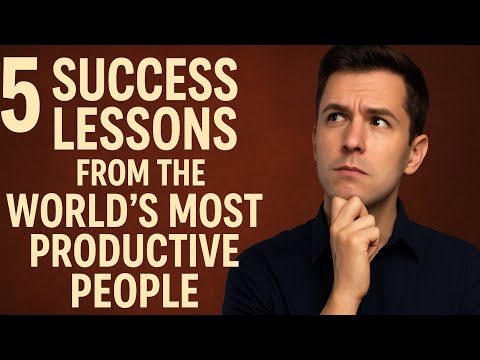
  • 5 Success Lessons from the World’s Most Productive People.

    5 Success Lessons from the World’s Most Productive People! #Productivity #SuccessMindset #Discipline
    5 Success Lessons from the World’s Most Productive People.

    5 Success Lessons from the World’s Most Productive People.

    We often assume that productivity comes from grinding harder, waking up earlier, or packing every minute with tasks. But the world’s most productive people—those who consistently create, lead, and build—aren’t necessarily busier. They’re clearer. They focus not just on doing more, but on doing what matters, with intention.

    Here are five success lessons drawn from some of the world’s most productive minds—lessons that go beyond hustle and lean into wisdom, rhythm, and focus.

    1. Start Before You’re Ready

    The first myth we need to break is the idea that you have to feel ready before you begin.

    Steven Pressfield, author of The War of Art, writes, “The professional acts. The amateur waits for inspiration.” Productive people don’t wait for confidence—they build it through action.

    Whether it’s launching a project, starting a new habit, or stepping into an unfamiliar role, forward motion creates clarity. Don’t wait for the perfect moment. It doesn’t exist. Start now, and learn as you go.

    2. Create Rituals, Not Just To-Do Lists

    To-do lists help you remember. Rituals help you become.

    The world’s most consistent creators—from writers to entrepreneurs—often rely on structured routines. Maya Angelou wrote daily in a small hotel room. Jerry Seinfeld committed to writing one joke a day, tracking his progress with a simple calendar X.

    By creating a ritual around your most important work, you remove the friction of decision fatigue. You stop asking if you’ll do it, and simply do it.

    Rituals turn intention into momentum. Over time, they build an identity.

    3. Learn to Say No—Often

    Warren Buffett once said, “The difference between successful people and really successful people is that really successful people say no to almost everything.”

    This lesson is simple, but not easy.
    Productivity isn’t about doing more—it’s about doing less, better. That means saying no to distractions, unnecessary commitments, and opportunities that don’t align with your true path.

    Every time you say yes to something trivial, you’re saying no to something meaningful. High achievers protect their time with quiet discipline. And they don’t apologize for it.

    4. Work With Your Energy, Not Against It

    We’re not machines. Our energy fluctuates, our focus ebbs and flows. The most productive people don’t force themselves into a rigid mold—they listen to their natural rhythms.

    Naval Ravikant calls this “working like a lion.” Sprint with intensity, then rest deeply. Productivity isn’t about pushing nonstop—it’s about timing your best effort when you’re mentally sharp.

    Track your energy for a few days. Are your mornings clear and creative? Are your afternoons sluggish? Align your deep work with your peak energy, and your output will increase without extra effort.

    5. Let Go of the Outcome

    This may seem counterintuitive, but it’s one of the most powerful lessons.

    Highly productive people are deeply invested in their process, not just their results. They know that outcomes are influenced by many factors, most of them out of their control. What they can control is how they show up every day.

    James Clear reminds us, “You do not rise to the level of your goals. You fall to the level of your systems.”

    Detach from results. Focus on rhythm, effort, and improvement. Paradoxically, that’s what leads to lasting success.

    5 Success Lessons from the World’s Most Productive People.
    5 Success Lessons from the World’s Most Productive People.

    Final Thoughts

    Success isn’t about being busy—it’s about being intentional. The most productive people master the fundamentals: they start before they feel ready, commit to rituals, protect their time, align their work with their energy, and release their grip on outcomes.

    These five lessons aren’t just productivity tips. They’re part of a philosophy of living—one that values presence over pressure, clarity over chaos.

    Want more calm insights like this?
    Subscribe to YourWisdomVault on YouTube, where timeless wisdom meets focused modern living.

    #SuccessLessons #ProductivityWisdom #WorkSmarter #SelfImprovement #MindfulProductivity #DailyDiscipline #IntentionalLiving #StoicMindset #BuddhistWisdom #FocusAndClarity #DeepWork #YourWisdomVault

  • How Buddhist Monks Master Silence—and What We Can Learn.

    How Buddhist Monks Master Silence—and What We Can Learn About Awareness, Peace, and Presence.
    How Buddhist Monks Master Silence—and What We Can Learn.

    How Buddhist Monks Master Silence—and What We Can Learn.

    In a world filled with constant noise—notifications, conversations, and a never-ending stream of information—silence has become a rare commodity. Yet for Buddhist monks, silence is not just the absence of sound; it’s a vital spiritual tool. It is how they cultivate mindfulness, sharpen awareness, and connect to something far deeper than daily distractions. Buddhist monks have long used silence as a pathway to inner transformation.

    But why is silence so essential in Buddhist practice? And more importantly, what can we learn from it?

    The Purpose of Silence in Monastic Life

    In Buddhist monasteries, silence is more than just a practice—it’s a way of life. Monks spend hours, even days, in complete silence. It’s not a punishment or an act of isolation, but a conscious path toward self-awareness and mental clarity.

    Silence allows monks to turn inward. When the world quiets down, the mind begins to speak more clearly. But here’s the trick: it doesn’t start off peaceful. In fact, the first thing many monks face in silence is mental noise—worries, regrets, random thoughts, and buried emotions.

    Over time, however, by staying present and practicing meditation, that noise settles. In its place comes something truly powerful: stillness. From that stillness arises deep insight, spiritual clarity, and a stronger sense of connection with the present moment.

    Silence as a Mirror

    For Buddhist monks, silence works like a mirror. Without external distractions, they’re able to see their thoughts, emotions, and habits more clearly. This is key to mindfulness practice—observing without reacting.

    Imagine spending 10 minutes in complete silence. No phone. No music. Just you and your thoughts. Most people would find this challenging. But monks embrace this discomfort because they know it leads to growth.

    Through silence, they uncover what’s hidden under the surface. They learn to recognize the difference between thoughts they should follow—and thoughts they should simply let go.

    The Wisdom We Can Apply

    You don’t have to become a monk or visit a remote monastery to benefit from this practice. Just a few minutes of intentional silence each day can have a huge impact on your mental well-being.

    Here’s how you can bring monastic wisdom into your daily life:

    • Start small – Try 5 minutes of silent sitting. Observe your thoughts without judgment.
    • Disconnect – Step away from devices for short stretches. Let your mind breathe.
    • Use breath as an anchor – When silence feels uncomfortable, return to your breath. It helps ground your awareness.
    • Create mindful moments – Walk in silence. Eat in silence. Let daily actions become meditative.

    The more we lean into silence, the more we discover about ourselves—and the world around us.

    Silence Is Not Emptiness

    There’s a beautiful quote often heard in Buddhist circles: “Silence isn’t empty; it’s full of answers.”

    To those who haven’t experienced it, silence may seem void, boring, or even unsettling. But monks understand that it’s in those very quiet moments that we hear what truly matters—the whisper of the heart, the intuition of the soul, and the truth beyond words.

    Silence creates space for insight. For monks, it opens the door to compassion, wisdom, and enlightenment. For us, it can offer something equally powerful: peace, perspective, and a break from the overwhelming demands of modern life.

    Final Thoughts

    In an age where attention is a commodity and noise is everywhere, the monk’s path of silence holds more value than ever. It’s not about escaping the world—but learning to meet it from a calm, centered place.

    So take a moment today. Step into stillness. Close your eyes. Breathe. Listen. There’s wisdom waiting in the quiet.

    How Buddhist Monks Master Silence—and What We Can Learn.
    How Buddhist Monks Master Silence—and What We Can Learn.

    Looking for more bite-sized spiritual insight? See our YouTube channel, YourWisdomVault, and subscribe for weekly Shorts on mindfulness, Buddhist teachings, and life’s deeper truths.

    P.S. Curious how Buddhist monks live with such clarity and peace? Their silence holds the key—and now, you hold the insight.

    #BuddhistMonks #Mindfulness #Meditation #InnerPeace #SpiritualWisdom #MonkLife #SilencePractice #SelfAwareness #MentalClarity #YourWisdomVault

  • Why Buddhism Isn’t Focused on Positivity All the Time.

    Why Buddhism Isn’t Focused on Positivity All the Time—but on Truth, Balance, and Inner Freedom.
    Why Buddhism Isn’t Focused on Positivity All the Time.

    Why Buddhism Isn’t Focused on Positivity All the Time.

    When people think of Buddhism, they often imagine peaceful monks, serene smiles, and a mindset full of positive vibes. But this popular image misses something essential. Buddhism isn’t about always being happy. It’s not about “good vibes only.” In fact, Buddhism teaches us that trying to cling to constant positivity is just another form of attachment—and suffering.

    In a world obsessed with positive thinking, Buddhism offers something different: clarity. Mindfulness. And a deep, compassionate understanding of how life really works.

    Buddhism and the Myth of Constant Positivity

    In Western self-help culture, positivity is often sold as the ultimate goal. We’re told to think positively, speak affirmations, and avoid anything that might feel “negative.” But Buddhism sees this differently. Why Buddhism isn’t focused on constant positivity?

    Buddhism teaches that everything is impermanent—including emotions. Joy comes and goes. So does sadness, frustration, boredom, and even peace. Trying to hold on to one and push the others away creates suffering. This is known as attachment.

    When we constantly chase happiness and resist discomfort, we end up denying reality. Buddhism invites us to do the opposite—to sit with what is, even if it’s painful.

    Suffering Isn’t Failure—It’s a Teacher

    One of the core truths in Buddhism is the First Noble Truth: life involves suffering (dukkha). That doesn’t mean life is only pain, but it acknowledges that challenges, loss, illness, and uncertainty are part of the human experience.

    Instead of labeling these moments as “negative” or something to escape, this is why Buddhism encourages us to observe them mindfully. To look deeply. When we do, we begin to see that suffering can be a teacher.

    This approach helps us develop equanimity—a steady mind that isn’t shaken by highs or lows. That’s far more powerful than forced positivity.

    Mindfulness Over Positivity

    Rather than striving to feel good all the time, Buddhism teaches us to be fully present—with whatever arises. This is the practice of mindfulness.

    Mindfulness means watching our thoughts and emotions with awareness, but without judgment. When sadness comes, we notice it. When anger appears, we observe it. And when joy arises, we appreciate it—without clinging to it.

    This balanced approach leads to inner peace. Not the fake kind that comes from pretending everything’s fine, but a genuine calm that comes from accepting life as it is.

    Letting Go of the Need to Feel Good

    The need to feel good all the time is a form of craving—tanha in Buddhist terms. And like all craving, it leads to suffering. Buddhism teaches us to let go of craving, not just for material things, but for emotional states as well.

    By letting go of the constant pursuit of happiness, we open the door to something deeper: freedom. Freedom from needing life to be a certain way. Freedom to face the present moment honestly.

    This is the heart of Buddhist wisdom—not escaping life, but fully engaging with it, with an open heart and a clear mind.

    Real Peace Comes from Acceptance

    Buddhism isn’t about staying upbeat or avoiding pain. It’s about acceptance, awareness, and compassion—toward ourselves and others. When we stop fighting reality, we find peace that isn’t dependent on external conditions.

    That peace doesn’t always look cheerful. Sometimes it’s quiet. Sometimes it’s stillness in the middle of chaos. But it’s real.

    Final Thoughts

    If you’ve ever felt like positivity culture just doesn’t cut it—like it’s masking something deeper—you’re not alone. Buddhism reminds us that life isn’t meant to be polished into perfection. It’s meant to be lived, with full awareness and compassion.

    So the next time someone tells you to “just be positive,” pause. Take a breath. And remember: clarity is more powerful than cheerfulness. And true peace isn’t about avoiding the storm—it’s about learning to sit with it.

    Why Buddhism Isn’t Focused on Positivity All the Time.
    Why Buddhism Isn’t Focused on Positivity All the Time.

    Liked this post?
    Subscribe to YourWisdomVault on YouTube for weekly insights from Buddhism, Stoicism, and timeless teachings.
    No fluff—just clarity.

    P.S. Ever wondered why Buddhism resonates so deeply in times of struggle? It’s because it doesn’t ask us to escape reality—it teaches us to understand it.

    #Buddhism #Mindfulness #LettingGo #YourWisdomVault #NonAttachment #RadicalAcceptance

    And remember! This is why Buddhism values awareness over forced happiness! And thanks for watching: Why Buddhism Isn’t Focused on Positivity All the Time.