Blog

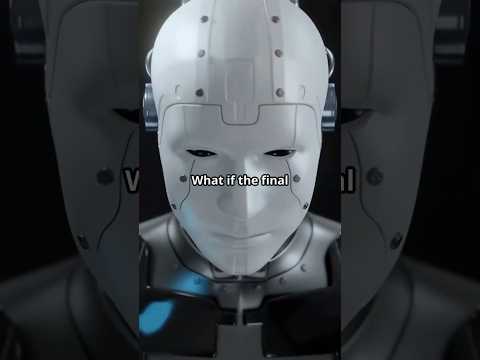
  • Your Life. AI’s Call. Would You Accept the Outcome?

    Your Life. AI's Call. Would You Accept the Outcome? #nextgenai #artificialintelligence #technology
    Your Life. AI’s Call. Would You Accept the Outcome?

    Your Life. AI’s Call. Would You Accept the Outcome?

    Artificial intelligence is no longer science fiction. It’s in our phones, our homes, our hospitals. It curates our content, guides our navigation, and even evaluates our job applications. But what happens when AI is trusted with the ultimate decision—who lives, and who doesn’t?

    Would you surrender that call to a machine?

    This is the core question explored in our short-form reflection, “Your Life. AI’s Call. Would You Accept the Outcome?” A philosophical dive into the growing role of artificial intelligence in life-or-death decision-making—and whether we should trust it.


    From Search Algorithms to Survival Algorithms

    AI today can recognize faces, detect diseases, and write essays. But emerging systems are already being developed to assist in medical triage, autonomous weapons, and even criminal sentencing algorithms. These aren’t distant futures—they’re already here in prototype, testing, or controversial deployment.

    We’ve gone from machines that sort information to machines that weigh lives.

    The core argument in favor is simple:
    AI is faster. More consistent. Less emotional.
    But is that enough?


    Logic Over Life?

    Imagine a self-driving car must choose between swerving into one pedestrian or continuing forward into another. The AI calculates impact speed, probability of death, and chooses. Logically. Efficiently.

    But ethically?

    Would you want to be the person in that equation? Or the one left out of it?

    AI doesn’t have empathy. It doesn’t question motive, intention, or context unless it’s programmed to—and even then, only in the most abstract sense. It doesn’t understand grief. Or value. Or meaning. It knows data, not dignity.


    Human Bias vs. Machine Bias

    Now, humans aren’t perfect either. We bring emotion, prejudice, fatigue, and inconsistency to high-stakes decisions. But here’s the catch: so does AI—through its training data.

    If the data it’s trained on reflects societal bias, it will reproduce that bias at scale.
    Except unlike humans, it will do so invisibly, quickly, and under a veil of objectivity.

    That’s why the idea of trusting AI with human life raises urgent questions of algorithmic ethics, transparency, and accountability.


    Who Do We Really Trust?

    In crisis, would you trust a doctor guided by AI-assisted diagnosis?
    Would you board a fully autonomous aircraft?
    Would you accept a court ruling partially informed by machine learning?

    These are not abstract questions.
    They are increasingly relevant in the intersection of technology, ethics, and power.

    And they force us to confront something uncomfortable:

    As humans, we often crave certainty.
    But in seeking it from machines, do we trade away our own humanity?


    What the Short Invites You to Consider

    “Your Life. AI’s Call.” isn’t here to answer the question.
    It’s here to ask it—clearly, visually, and urgently.

    As artificial intelligence continues to evolve, we must engage in more than just technical debates. We need philosophical ones.
    Conversations about responsibility. About trust. About whether decision-making without consciousness can ever be truly ethical.

    Because if a machine holds your fate in its algorithm, the real question isn’t just “Can it decide?”
    It’s “Should it?”

    Your Life. AI's Call. Would You Accept the Outcome?
    Your Life. AI’s Call. Would You Accept the Outcome?

    Final Reflection

    As AI gains power, it’s not just about what machines can do.
    It’s about what we let them do—and what that says about us.

    Would you let an algorithm decide your future?
    Would you surrender control in the name of efficiency?

    Your life. AI’s call.
    Would you accept the outcome?

    P.S. If this reflection challenged your thinking, consider subscribing to TechnoAIVolution on YouTube for more short-form explorations of AI, ethics, and the evolving future we’re all stepping into.

    #AIandEthics #TrustInAI #TechnoAIVolution #MachineMorality #ArtificialIntelligence #AlgorithmicJustice #LifeAndAI #AIDecisionMaking #EthicalTech #FutureOfHumanity
  • The Spiritual Value of Boredom | A Buddhist Mindfulness View

    The Spiritual Value of Boredom | A Buddhist Mindfulness View on Stillness, Presence, and Growth.
    The Spiritual Value of Boredom | A Buddhist Mindfulness View!

    The Spiritual Value of Boredom | A Buddhist Mindfulness View!

    Boredom.
    Most of us see it as a problem—something to fix, fill, or scroll away from. In today’s fast-paced, overstimulated world, even a few seconds of silence can feel uncomfortable. But in Buddhist philosophy, that discomfort is an invitation. A signal. A doorway.

    In boredom, there is spiritual potential.
    In Buddhism, boredom is not something to escape. It’s something to notice. It’s a moment of spaciousness—a crack in the constant mental chatter where awareness can arise.


    Boredom Isn’t the Enemy—Distraction Is

    When we say we’re “bored,” what we often mean is that nothing is grabbing our attention. There’s no dopamine rush. No stimulation. Just… space.

    But that space is exactly what mindfulness seeks to cultivate.

    Buddhist teachers often speak of the mind like a still pond. When disturbed, the surface ripples. Thoughts, emotions, cravings—all of it clouds the water. But boredom? That’s a moment when the water begins to still. And when we sit with it long enough, something deeper becomes visible.


    Mindfulness Begins in the Gap

    This short reflection—The Spiritual Value of Boredom—explores that quiet gap. The space between distraction and insight. It’s a visual meditation on how boredom can lead us inward, not away.

    Instead of running from boredom, mindfulness asks:

    What happens if I stay with this moment, just as it is?

    By bringing awareness to our discomfort, we begin to see boredom as a form of inner resistance. A barrier that, when gently held in awareness, starts to dissolve. What lies beneath it is often stillness, calm, and even clarity.


    Boredom as a Teacher

    Many Buddhist monks and nuns speak about the first days of retreat as excruciatingly boring. With no devices, no books, and no external input, the mind protests. It clings. It wanders. But then, gradually, it softens. The silence becomes a teacher.

    Boredom reveals our dependency on stimulation.
    It reflects how uncomfortable we are with simply being.

    But that’s also the beauty of it.

    When we learn to sit with boredom—not fight it—we open ourselves to deeper mindfulness. We begin to notice things we once missed: the breath, the subtle emotions, the passing nature of thought. In that quiet, we come home to ourselves.


    A Buddhist Mindfulness View on Boredom

    From a Buddhist perspective, boredom is not negative. It is neutral. And within that neutrality is profound opportunity.

    • It slows the mind.
    • It creates space for awareness.
    • It breaks the cycle of craving.
    • It points us to the present moment.

    Boredom asks us to just sit.
    To just breathe.
    To just be.

    And in doing so, it mirrors the heart of mindfulness itself.


    From Escape to Embrace

    So the next time boredom creeps in, notice your instinct. Do you reach for your phone? Open a new tab? Check a feed?

    Instead, consider this:

    What happens if I just sit with this feeling?

    That moment might feel hollow at first, but if you stay with it, something subtle shifts. It becomes a doorway to stillness—and stillness is where insight begins.

    The Spiritual Value of Boredom | A Buddhist Mindfulness View!
    The Spiritual Value of Boredom | A Buddhist Mindfulness View!

    Final Reflection

    Boredom is not a spiritual failure. It is a signal that you are no longer distracted. It’s the mind returning to itself. It’s the moment before the moment.

    Embrace it.
    Sit with it.
    Let it teach you something real.

    P.S. If this reflection brought you a moment of stillness or insight, consider subscribing to Your Wisdom Vault on YouTube for more mindful short films rooted in Buddhist thought and everyday awareness. 🧘‍♂️

    #SpiritualValueOfBoredom #BuddhistMindfulness #MindfulAwareness #InnerStillness #YourWisdomVault

  • Are We Creating the Last Invention Humanity Will Ever Need?

    Are We Creating the Last Invention Humanity Will Ever Need? #AGI #artificialintelligence #AI
    Are We Creating the Last Invention Humanity Will Ever Need?

    Are We Creating the Last Invention Humanity Will Ever Need?

    We live in an era of exponential innovation. Every year, we push the boundaries of what machines can do. But there’s one question few are truly prepared to answer:
    What if the next invention we create… is the last we’ll ever need to make?

    That question centers around Artificial General Intelligence (AGI)—a form of AI that can perform any intellectual task a human can, and possibly even improve itself beyond human capability. AGI represents not just a tool, but a potential turning point in the story of human civilization. We may be creating a form of intelligence we don’t fully understand.

    What Is AGI?

    Unlike narrow AI systems—like those that recommend your next video or beat you at chess—AGI would be able to reason, learn, and adapt across domains. It wouldn’t just be a better calculator. It would be a general thinker, capable of designing its own software, solving unknown problems, and perhaps even improving its own intelligence. Creating AGI isn’t just a technical feat—it’s a philosophical turning point.

    That’s where the concept of the “last invention” comes in.

    The Last Invention Hypothesis

    The term “last invention” was popularized by futurists and AI researchers who recognized the unique nature of AGI. If we build a system that can recursively improve itself—refining its own algorithms, rewriting its own code, and designing its own successors—then human input may no longer be required in the loop of progress.

    Imagine an intelligence that doesn’t wait for the next research paper, but writes the next 10 breakthroughs in a day.

    If AGI surpasses our capacity for invention, humanity may no longer be the leading force of innovation. From that point forward, technological evolution could be shaped by non-human minds. By creating machines that learn, we may redefine what it means to be human.

    The Promise and the Peril

    On one hand, AGI could solve problems that have stumped humanity for centuries: curing disease, reversing climate damage, designing sustainable economies. It could usher in a golden age of abundance.

    But there’s also the darker possibility: that we lose control. If AGI begins optimizing for goals that aren’t aligned with human values—or if it simply sees us as irrelevant—it could make decisions we can’t predict, understand, or reverse.

    This is why researchers like Nick Bostrom and Eliezer Yudkowsky emphasize AI alignment—ensuring that future intelligences are not just powerful, but benevolent.

    Are We Ready?

    At the heart of this issue is a sobering reality: we may be approaching the creation of AGI faster than we’re preparing for it. Companies and nations are racing to build more capable AI, but safety and alignment are often secondary to speed and profit. Are we creating tools to serve us, or successors to surpass us?

    Technological progress is no longer just about better tools—it’s about what kind of intelligence we’re bringing into the world, and what that intelligence might do with us in it.

    What Comes After the Last Invention?

    If AGI truly becomes the last invention we need to make, the world will change in ways we can barely imagine. Work, education, government, even consciousness itself may evolve.

    But the choice isn’t whether AGI is coming—it’s how we prepare for it, how we guide it, and how we make space for human meaning in a post-invention world.

    Because ultimately, the invention that out-invents us might still be shaped by the values we embed in it today.

    Are We Creating the Last Invention Humanity Will Ever Need?
    Are We Creating the Last Invention Humanity Will Ever Need?

    Final Thoughts

    AGI could be humanity’s greatest creation—or our final one. It’s not just a technological milestone. It’s a philosophical, ethical, and existential moment.

    If we’re building the last invention, let’s make sure we do it with wisdom, caution, and clarity of purpose.

    Subscribe to Technoaivolution on YouTube for more insights into the future of intelligence, AI ethics, and the next chapter of human evolution.

    P.S.

    Are we creating the last invention—or the first step toward something beyond us? Either way, the future won’t wait. Stay curious.

    #ArtificialGeneralIntelligence #AGI #LastInvention #FutureOfAI #Superintelligence #AIAlignment #Technoaivolution #AIRevolution #Transhumanism #HumanVsMachine #AIExplained #Singularity

  • Stop Fixing the Ego: Watch It, Understand It, Be Free!

    Stop Fixing the Ego: Watch It, Understand It, Be Free, and Discover the Peace Beyond the Self.
    Stop Fixing the Ego: Watch It, Understand It, Be Free!

    Stop Fixing the Ego: Watch It, Understand It, Be Free!

    In today’s world of self-help and personal development, the ego often gets a bad reputation. We’re told to “overcome” it, “kill” it, or “fix” it—like it’s some broken part of ourselves standing in the way of happiness. But in many spiritual traditions, especially Buddhism and mindfulness-based practices, the ego is not something to be fixed. It’s something to be watched.

    What Is the Ego, Really?

    The ego isn’t some monster hiding in your mind. It’s the voice that says, “I am this,” or “I need that.” It’s the collection of identities, fears, and desires that form our sense of a separate self. Stop fixing the ego—it was never broken, only misunderstood.

    From a Buddhist perspective, this ego is not a permanent entity—it’s a habit. A pattern of thought. A survival mechanism formed over time. The problem isn’t that we have an ego; the problem is that we believe every word it says.

    The Trap of Trying to Fix the Ego

    When we try to “fix” the ego, we end up reinforcing it. Think about that. The desire to fix the self often comes from the ego itself—it’s another mask, another role: “The one who improves.” So every time you fight your ego, you’re actually feeding it.

    This is why so many people feel stuck on their spiritual journey. They’re still caught in a cycle of resistance: judging their thoughts, trying to silence their inner critic, or pushing away their darker emotions. But judgment only strengthens the illusion of separateness. The true shift happens when we observe the ego instead of battling it.

    The Power of Observation

    Observation is not passive. It’s powerful.

    In mindfulness practice, we are taught to observe thoughts and feelings as they arise—without judgment and without attachment. When you watch the ego in this way, something remarkable happens: it starts to lose its power. Not because you’ve beaten it, but because you’ve stopped identifying with it.

    This is what spiritual teacher Eckhart Tolle calls “the power of presence.” When you become the observer of your thoughts, you step outside the ego. You no longer are the voice in your head—you’re simply the awareness that notices it.

    Freedom Through Awareness

    True spiritual freedom doesn’t come from fixing yourself—it comes from knowing yourself beyond the ego. And that knowing begins with awareness. It’s not about achieving a perfect state. It’s about being present with what is, including your ego, without getting caught in its stories.

    Letting go doesn’t mean denying the ego. It means watching it, understanding it, and realizing that you are more than it. You are not your thoughts. You are not your fears. You are the awareness behind them.

    A Gentle Reminder

    If you find yourself trying to “fix” your mind, pause. Ask yourself: who is trying to fix whom? Can I just observe this moment? Can I witness the thought without following it?

    This practice may seem simple, but it’s transformative. Over time, awareness grows, and the ego naturally softens. Not because you forced it to change, but because you stopped believing it was all there was.

    Stop Fixing the Ego: Watch It, Understand It, Be Free!
    Stop Fixing the Ego: Watch It, Understand It, Be Free!

    Final Thoughts

    In the path of mindfulness and Buddhist insight, the invitation is clear: stop fixing the ego. Watch it. Understand it. And be free.

    Let this be your daily practice—not to change who you are, but to see who you truly are beyond the surface. In that stillness, clarity and peace emerge naturally. And remember: The real transformation begins the moment you stop fixing the ego and start observing it with calm awareness.

    If this message resonates with you, explore more mindful insights and spiritual reflections by subscribing to Your Wisdom Vault on YouTube.

    P.S. Stop Fixing the Ego.
    You were never meant to fight your inner world—only to understand it. The more you observe, the more you awaken. Keep watching. Keep walking. Freedom follows.

    #StopFixingTheEgo #MindfulnessPractice #EgoDeath #BuddhistWisdom #SpiritualAwakening #NonAttachment #ObserveTheMind #LetGoOfEgo #InnerPeace #YourWisdomVault #SelfAwareness #ConsciousLiving #MeditationJourney #AwakenTheSelf