Blog

  • Buddha’s Timeless Advice for Handling Toxic People.

    Buddha’s Timeless Advice for Handling Toxic People with Peace, Compassion, and Inner Strength.
    Buddha’s Timeless Advice for Handling Toxic People with Peace.

    Buddha’s Timeless Advice for Handling Toxic People with Peace.

    In today’s world of constant noise, stress, and emotional friction, one question echoes louder than ever: how do we deal with toxic people without losing our inner peace? Fortunately, this isn’t a modern problem—and it’s one that the Buddha addressed with timeless clarity. The Buddha’s teachings offer timeless guidance for handling life’s emotional challenges with grace.

    Whether it’s a manipulative coworker, a critical family member, or someone who just seems to drain your energy, we’ve all faced difficult people. What’s profound is that Buddhist philosophy doesn’t just offer a strategy—it offers a mindset shift.


    “Hatred Does Not Cease by Hatred…”

    One of the Buddha’s most powerful teachings on this subject is found in the Dhammapada, where he says:

    “Hatred does not cease by hatred, but only by love; this is the eternal rule.”

    At first glance, this may sound soft or even unrealistic—especially when dealing with someone truly toxic. But in Buddhism, “love” doesn’t mean approval or passivity. It means cultivating compassion, even if that compassion includes firm boundaries or walking away.


    Understanding the Nature of Toxicity

    From a Buddhist perspective, toxic behavior often arises from unresolved suffering, ignorance, and attachment. When someone lashes out, manipulates, or constantly criticizes, they are likely reacting from their own pain. That doesn’t excuse their behavior, but it does help us see clearly—and without unnecessary emotional entanglement.

    This clarity is the foundation of mindfulness, a key pillar in Buddhist practice. When we approach conflict mindfully, we shift from reacting blindly to responding wisely. We start asking: What’s really happening here? Can I respond without absorbing their negativity?


    Practical Wisdom: How to Deal with Toxic People Mindfully

    So, how do we actually apply Buddha’s advice when we’re in the middle of a heated conversation or dealing with recurring emotional drama?

    Here are a few mindfulness-based strategies:

    1. Pause Before You React

    Train yourself to notice when your emotions are rising. Take a breath. Step back. The space between stimulus and response is where wisdom lives.

    2. Don’t Catch What They Throw

    When someone throws anger or blame at you, you don’t have to catch it. You can let it pass through you without becoming a container for their poison.

    3. Compassion with Boundaries

    Compassion doesn’t mean staying in harmful situations. It means wishing someone well—even from a distance—while also honoring your own mental and emotional health.

    4. Practice Non-Attachment

    We often get hurt not just by what someone says, but by our attachment to their approval or validation. Letting go of that need is a powerful act of freedom.

    Choosing peace over conflict is a timeless lesson found in the heart of Buddhist wisdom.


    Protecting Your Peace Is Not Selfish—It’s Spiritual

    The Buddha emphasized the importance of guarding your mind. Just as you wouldn’t let someone walk into your home and dump garbage in your living room, you don’t need to let people dump negativity into your mental space.

    Choosing peace doesn’t make you weak. It means you’re becoming wise. It means you’re no longer letting someone else’s chaos decide your mood, your day, or your sense of self-worth.


    Final Thoughts

    When we choose to handle toxic people with peace, we’re not just avoiding conflict—we’re actively practicing dharma. We’re choosing awareness over ego, stillness over reaction, and compassion over control.

    It may not always be easy, but over time, this practice transforms us. And in that transformation, we become less reactive, more resilient, and more deeply rooted in who we truly are.

    Buddha’s Timeless Advice for Handling Toxic People with Peace.
    Buddha’s Timeless Advice for Handling Toxic People with Peace.

    If this teaching resonated with you, check out the full video on YourWisdomVault’s YouTube channel, and don’t forget to subscribe for weekly Buddhist shorts and mindful life tips.

    May you be free from harm, and may your peace remain untouched. And remember: In a world full of noise, the Buddha’s words remain timeless reminders to protect your inner stillness! 🧘‍♂️

    #BuddhaWisdom #Mindfulness #ToxicPeople #EmotionalDetachment #InnerPeace #LettingGo #SpiritualGrowth #LifeAdvice #Dhammapada #BuddhistTeachings #ProtectYourPeace
  • Is AI Biased—Or Just Reflecting Us? Ethics of Machine Bias.

    Is AI Biased—Or Just Reflecting Us? The Ethics of Machine Bias. #AIBias #ArtificialIntelligence
    Is AI Biased—Or Just Reflecting Us? The Ethics of Machine Bias.

    Is AI Biased—Or Just Reflecting Us? The Ethics of Machine Bias.

    Artificial Intelligence has become one of the most powerful tools of the modern age. It shapes decisions in hiring, policing, healthcare, finance, and beyond. But as these systems become more influential, one question keeps rising to the surface:
    Is AI biased?

    This is not just a theoretical concern. The phrase “AI biased” has real-world weight. It represents a growing awareness that machines, despite their perceived neutrality, can carry the same harmful patterns and prejudices as the data—and people—behind them.

    What Does “AI Biased” Mean?

    When we say a system is AI biased, we’re pointing to the way algorithms can produce unfair outcomes, especially for marginalized groups. These outcomes often reflect historical inequalities and social patterns already present in our world.

    AI systems don’t have opinions. They don’t form intentions. But they do learn. They learn from human-created data, and that’s where the bias begins.

    If the training data is incomplete, prejudiced, or skewed, the output will be too. An AI biased system doesn’t invent discrimination—it replicates what it finds.

    Real-Life Examples of AI Bias

    Here are some powerful examples where AI biased systems have created problems:

    • Hiring tools that favor male candidates over female ones due to biased resumes in historical data
    • Facial recognition software that misidentifies people of color more frequently than white individuals
    • Predictive policing algorithms that target specific neighborhoods, reinforcing existing stereotypes
    • Medical AI systems that under-diagnose illnesses in underrepresented populations

    In each case, the problem isn’t that the machine is evil. It’s that it learned from flawed information—and no one checked it closely enough.

    Why Is AI Bias So Dangerous?

    What makes AI biased systems especially concerning is their scale and invisibility.

    When a biased human makes a decision, we can see it. We can challenge it. But when an AI system is biased, its decisions are often hidden behind complex code and proprietary algorithms. The consequences still land—but accountability is harder to trace.

    Bias in AI is also easily scalable. A flawed decision can replicate across millions of interactions, impacting far more people than a single biased individual ever could.

    Can We Prevent AI From Being Biased?

    To reduce the risk of creating AI biased systems, developers and organizations must take deliberate steps, including:

    • Auditing training data to remove historical bias
    • Diversity in design teams to provide multiple perspectives
    • Bias testing throughout development and deployment
    • Transparency in how algorithms make decisions

    Preventing AI bias isn’t easy—but it’s necessary. The goal is not to build perfect systems, but to build responsible ones.

    Is It Fair to Say “AI Is Biased”?

    Some critics argue that calling AI biased puts too much blame on the machine. And they’re right—it’s not the algorithm’s fault. The real issue is human bias encoded into automated systems.

    Still, the phrase “AI biased” is useful. It reminds us that even advanced, data-driven technologies are only as fair as the people who build them. And if we’re not careful, those tools can reinforce the very problems we hoped they would solve.

    Is AI Biased—Or Just Reflecting Us? The Ethics of Machine Bias.
    Is AI Biased—Or Just Reflecting Us? The Ethics of Machine Bias.

    Moving Forward With Ethics

    At Technoaivolution, we believe the future of AI must be guided by ethics, transparency, and awareness. We can’t afford to hand over decisions to systems we don’t fully understand—and we shouldn’t automate injustice just because it’s efficient.

    Asking “Is AI biased?” is the first step. The next step is making sure it isn’t.


    P.S. If this message challenged your perspective, share it forward. The more we understand how AI works, the better we can shape the systems we depend on.

    #AIBiased #AlgorithmicBias #MachineLearning #EthicalAI #TechEthics #ResponsibleAI #ArtificialIntelligence #AIandSociety #Technoaivolution

  • Who Are You Really? A Thought Pretending to Stay.

    Who Are You Really? A Thought Pretending to Stay in a World That’s Always Changing and Flowing.
    Who Are You Really? A Thought Pretending to Stay.

    Who Are You Really? A Thought Pretending to Stay.

    We live most of our lives answering to a name, a role, a personality.
    We say, “This is who I am.”
    But is it?

    Who you were five years ago, five weeks ago—even five minutes ago—has changed. Your thoughts shifted. Your mood changed. Your beliefs may have softened or hardened. So who, exactly, is the “you” that you’re clinging to?

    In Buddhist thought, this question is not just poetic—it’s essential.
    The Buddha pointed to the concept of anatta, or non-self, as one of the core truths of existence. Alongside impermanence (anicca) and suffering (dukkha), non-self helps explain why we struggle—and how we can be free.

    The Illusion of a Fixed Self

    Most of us grow up believing we have a fixed identity. Something solid. A core self that stays the same no matter what.

    But that’s not what we find when we look closely.

    Our “self” is a moving target—a constant swirl of thoughts, memories, emotions, habits, stories, and social masks. We act differently with our families than with strangers. We think one thing in the morning and another by evening.

    What feels like “me” is often just a collection of thought patterns and preferences, stitched together with memory and emotion.

    The problem is, we believe the story. We cling to it. And when something challenges that story—loss, failure, change—we feel threatened.

    What the Buddha Taught

    The Buddha didn’t say we don’t exist. He said the self we think we are isn’t solid. It’s not a permanent, unchanging thing. It’s more like a process than a person—a flow of conditions constantly rising and falling.

    This isn’t philosophy. It’s practice.

    When we start to observe the self in meditation, we see it more clearly:

    • A thought arises—“I’m not good enough.”
    • A moment later—“I’ve got this.”
    • Then a memory—“I’ve failed before.”
    • Then a plan—“Here’s what I’ll do next.”

    Who, in all of that, is the “real” you?

    The answer: none of them and all of them—temporarily.

    A Thought Pretending to Stay

    The phrase “a thought pretending to stay” captures this beautifully.
    What we call “I” is often just a dominant thought wearing the mask of permanence. But thoughts change. Feelings change. And when they do, our sense of self shifts with them.

    This doesn’t mean we’re nothing.
    It means we’re not a fixed thing. We’re a living thread in motion.

    And that’s good news.

    Because when you’re not locked into being one version of yourself, you can be present. You can evolve. You can respond instead of react. You can breathe.

    So… Who Are You really?

    You are awareness watching the waves.

    You are not the wave. Not the thought. Not the fear or the craving.

    You are the space it all moves through.
    The awareness that observes, allows, and lets go—again and again.

    And in that space, there is peace. Not because you’ve figured out who you are—but because you’ve stopped needing to. But pause for a moment and ask yourself: who are you really?


    YourWisdomVault shares reflections like this to remind you:
    You are not your past.
    You are not your thoughts.
    You are not your fear.

    You are the thread. And the thread is always moving.

    Who Are You Really? A Thought Pretending to Stay.
    Who Are You Really? A Thought Pretending to Stay.

    P.S. If this message helped you pause and see yourself more clearly, share it with someone walking their own path. One breath of truth can change everything.

    📺 Like these reflections?
    Subscribe to YourWisdomVault on YouTube for more Buddhist wisdom in under a minute—quiet truths, steady practice.

    #NonSelf #Buddhism #Mindfulness #SpiritualGrowth #Anatta #SelfAwareness #Dharma #EgoAndSelf #PresentMoment #YourWisdomVault

  • Can We Teach AI Right from Wrong? Ethics of Machine Morals.

    Can We Teach AI Right from wrong? The Ethics of Machine Morals. #AIethics #AImorality #Machine
    Can We Teach AI Right from Wrong? The Ethics of Machine Morals.

    Can We Teach AI Right from Wrong? The Ethics of Machine Morals.

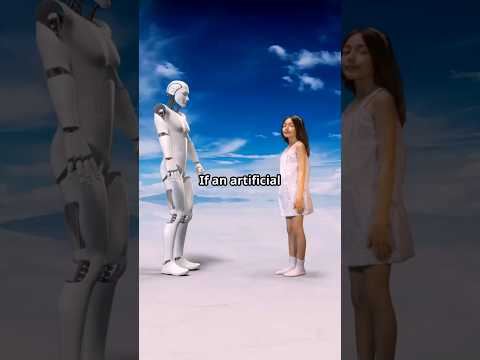
    As artificial intelligence continues to evolve, we’re no longer asking just what AI can do—we’re starting to ask what it should do. Once a topic reserved for sci-fi novels and philosophy classes, AI ethics has become a real-world issue, one that’s growing more urgent with every new leap in technology. Before we can trust machines with complex decisions, we have to teach AI how to weigh consequences—just like we teach children.

    The question is no longer hypothetical:
    Can we teach AI right from wrong? And more importantly—whose “right” are we teaching?

    Why AI Needs Morals

    AI systems already make decisions that affect our lives—from credit scoring and hiring to medical diagnostics and criminal sentencing. While these decisions may appear data-driven and objective, they’re actually shaped by human values, cultural norms, and built-in biases.

    The illusion of neutrality is dangerous. Behind every algorithm is a designer, a dataset, and a context. And when an AI makes a decision, it’s not acting on some universal truth—it’s acting on what it has learned.

    So if we’re going to build systems that make ethical decisions, we have to ask: What ethical framework are we using? Are we teaching AI the same conflicting, messy moral codes we struggle with as humans?

    Morality Isn’t Math

    Unlike code, morality isn’t absolute.
    What’s considered just or fair in one society might be completely unacceptable in another. One culture’s freedom is another’s threat. One person’s justice is another’s bias.

    Teaching a machine to distinguish right from wrong means reducing incredibly complex human values into logic trees and probability scores. That’s not only difficult—it’s dangerous.

    How do you code empathy?
    How does a machine weigh lives in a self-driving car crash scenario?
    Should an AI prioritize the many over the few? The young over the old? The law over emotion?

    These aren’t just programming decisions—they’re philosophical ones. And we’re handing them to engineers, data scientists, and increasingly—the AI itself.

    Bias Is Inevitable

    Even when we don’t mean to, we teach machines our flaws.

    AI learns from data, and data reflects the world as it is—not as it should be. If the world is biased, unjust, or unequal, the AI will reflect that reality. In fact, without intentional design, it may even amplify it.

    We’ve already seen real-world examples of this:

    • Facial recognition systems that misidentify people of color.
    • Recruitment algorithms that favor male applicants.
    • Predictive policing tools that target certain communities unfairly.

    These outcomes aren’t glitches. They’re reflections of us.
    Teaching AI ethics means confronting our own.

    Coding Power, Not Just Rules

    Here’s the truth: When we teach AI morals, we’re not just encoding logic—we’re encoding power.
    The decisions AI makes can shape economies, sway elections, even determine life and death. So the values we build into these systems—intentionally or not—carry enormous influence.

    It’s not enough to make AI smart. We have to make it wise.
    And wisdom doesn’t come from data alone—it comes from reflection, context, and yes, ethics.

    What Comes Next?

    As we move deeper into the age of artificial intelligence, the ethical questions will only get more complex. Should AI have rights? Can it be held accountable? Can it ever truly understand human values?

    We’re not just teaching machines how to think—we’re teaching them how to decide.
    And the more they decide, the more we must ask: Are we shaping AI in our image—or are we creating something beyond our control?

    Can We Teach AI Right from Wrong? The Ethics of Machine Morals.
    Can We Teach AI Right from Wrong? The Ethics of Machine Morals.

    Technoaivolution on YouTube isn’t just about where AI is going—it’s about how we guide it there.
    And that starts with asking better questions.


    P.S. If this made you think twice, share it forward. Let’s keep the conversation—and the code—human. And remember: The real challenge isn’t just to build intelligence, but to teach AI the moral boundaries humans still struggle to define.

    #AIethics #ArtificialIntelligence #MachineLearning #MoralAI #AlgorithmicBias #TechPhilosophy #FutureOfAI #EthicalAI #DigitalEthics #Technoaivolution