Blog

  • You Are a Guest Here—Live Lightly, Love Deeply, Wake Up!

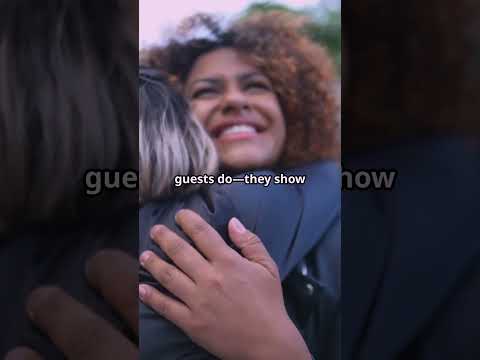
    You Are a Guest Here—Live Lightly, Love Deeply, Wake Up, and Cherish Each Fleeting Moment Fully.
    You Are a Guest Here—Live Lightly, Love Deeply, Wake Up!

    You Are a Guest Here—Live Lightly, Love Deeply, Wake Up!

    We often move through life like we own it—grabbing, planning, accumulating, rushing. But what if we saw life not as something we possess, but as something we’re simply visiting?

    In Buddhist philosophy, impermanence (anicca) teaches us that nothing lasts—our bodies, our relationships, even our thoughts. Everything is in flux. And with that truth comes a powerful invitation: to live like a guest.

    What Does It Mean to Be a Guest in This Life?

    Imagine arriving at someone’s home. You don’t take over the space, rearrange their furniture, or claim ownership. You move with respect. You notice the little things. You offer something back.

    Life is no different. We’re visitors in this world, passing through spaces, moments, and connections that we don’t get to keep. Recognizing this doesn’t make life bleak—it makes it beautiful. It calls us to live with intention, presence, and humility.

    Live Lightly

    To live lightly means to carry less—not just in your hands, but in your heart and mind. It’s not about minimalism for the sake of trend, but about non-attachment, one of the core teachings of the Buddha.

    When we cling—whether to possessions, opinions, or outcomes—we suffer. But when we live lightly, we create space. Space to breathe. Space to appreciate. Space to move without being burdened by things that don’t last.

    Ask yourself:

    • Am I holding too tightly to what’s meant to pass?
    • Can I soften my grip today, even just a little?

    Love Deeply

    Living as a guest doesn’t mean being cold or distant. On the contrary—it means loving even more deeply, because we understand how fleeting everything is.

    When you know you have limited time somewhere, you pay more attention. You say what matters. You forgive faster. You love fully, not in spite of impermanence—but because of it.

    The Buddha taught compassion (karuna) and loving-kindness (metta) as pathways to awakening. When we love deeply, we align with the truth that we are not separate from others. We’re all guests here—sharing space, time, and breath.

    Wake Up

    To “wake up” in the Buddhist sense is not just about spiritual enlightenment—it’s about waking up now, in this very moment. Waking up to how precious it all is. Waking up to the stories we’re trapped in. Waking up to the breath we’ve been ignoring.

    You don’t need a mountain retreat or a perfect meditation practice. Waking up starts with awareness:

    • Noticing the breeze on your skin.
    • Hearing your own heartbeat.
    • Witnessing your thoughts without getting swept away.

    Every mindful breath is an awakening. Every act of presence is a small liberation.

    Why This Perspective Matters

    In a world that constantly pushes us to do more, own more, be more—this truth comes as a quiet rebellion:
    You are a guest here. Live accordingly.

    It doesn’t mean giving up. It means showing up with gentleness. With care. With presence. It means asking not, “What can I take from this life?” but “How can I honor the chance to be here?”

    Whether you’re on a spiritual path, exploring Buddhism, or just tired of the weight of modern life, this perspective offers relief. You don’t have to carry everything. You don’t have to fix everything. You just have to be here—awake.

    You Are a Guest Here—Live Lightly, Love Deeply, Wake Up!
    You Are a Guest Here—Live Lightly, Love Deeply, Wake Up!

    Final Thoughts

    This short reflection is more than poetic—it’s practical. It’s a reminder to slow down, to breathe, and to remember:
    You’re not here forever. You’re here now.

    So live lightly. Love deeply. And wake up—while there’s still time.

    P.S. If this reflection resonated with you, don’t just scroll away—subscribe to YourWisdomVault on YouTube for more mindful insights and spiritual clarity each week. 🧘‍♂️✨

    #MindfulLiving #BuddhistWisdom #Impermanence #SpiritualAwakening #NonAttachment #LiveLightly #LoveDeeply #WakeUpNow #YourWisdomVault

  • Why AI May Never Be Capable of True Creativity.

    Why AI May Never Be Capable of True Creativity. #AIvsCreativity #HumanMindVsMachine #ai
    Why AI May Never Be Capable of True Creativity.

    Why AI May Never Be Capable of True Creativity.

    In the age of artificial intelligence, one question keeps resurfacing: Can AI be truly creative? It’s a fascinating, even unsettling thought. After all, we’ve seen AI compose symphonies, paint in Van Gogh’s style, write convincing short stories, and even generate film scripts. But is that genuine creativity—or just intelligent imitation?

    At Technoaivolution, we explore questions that live at the edge of technology and human consciousness. And this one cuts right to the core of what it means to be human.

    What Makes Creativity “True”?

    To unpack this, we need to understand what separates true creativity from surface-level novelty. Creativity isn’t just about generating new combinations of ideas. It’s about insight, emotional depth, lived experience, and—perhaps most importantly—intention.

    When a human paints, composes, or writes, they’re doing more than just outputting content. They’re drawing from a rich, internal world made up of emotions, memories, dreams, and struggles. Creative expression often emerges from suffering, doubt, rebellion, or deep reflection. It’s an act of meaning-making—not just pattern recognition.

    Artificial intelligence doesn’t experience these things. It doesn’t feel wonder. It doesn’t wrestle with uncertainty. It doesn’t break rules intentionally. It doesn’t stare into the void of a blank page and feel afraid—or inspired.

    Why AI Is Impressive, But Not Conscious

    What AI does incredibly well is analyze massive datasets, detect patterns, and generate outputs that statistically resemble human-made work. This is especially clear with large language models and generative art tools. Many wonder why AI excels at imitation but struggles with true innovation.

    But here’s the catch: AI models have no understanding of what they’re creating. There’s no self-awareness. No internal narrative. No emotional context. What looks like creativity on the surface is often just a mirror of our own creations, reflected back with uncanny accuracy.

    This isn’t to say AI can’t be useful in creative workflows. In fact, it can be a powerful tool. Writers use AI for brainstorming. Designers use it to prototype. Musicians experiment with AI-generated sounds. But the spark of originality—that unpredictable, soulful leap—still comes from the human mind.

    The Illusion of AI Creativity

    When AI produces something impressive, it’s tempting to attribute creativity to the machine. But that impression is shaped by our own projection. We see meaning where there is none. We assume intention where there is only code. This is known as the “ELIZA effect”—our tendency to anthropomorphize machines that mimic human behavior.

    But no matter how fluent or expressive an AI appears, it has no inner world. It isn’t aware of beauty, pain, irony, or purpose. And without those things, it may never cross the threshold into what we’d call true creativity.

    Creativity Requires Consciousness

    One of the key arguments in this debate is that creativity may be inseparable from consciousness. Not just the ability to generate new ideas, but to understand them. To feel them. To assign value and meaning that goes beyond utility.

    Human creativity often involves breaking patterns—not just repeating or remixing them. It involves emotional risk, existential questioning, and the courage to express something uniquely personal. Until AI develops something resembling conscious experience, it may always be stuck playing back a clever simulation of what it thinks creativity looks like.

    Why AI May Never Be Capable of True Creativity
    Why AI May Never Be Capable of True Creativity.

    Final Thought

    So, is AI creative? In a technical sense, maybe. It can produce surprising, useful, and beautiful things. But in the deeper, more human sense—true creativity might remain out of reach. It’s not just about output. It’s about insight. Meaning. Intention. Emotion. And those are things that no algorithm has yet mastered.

    At Technoaivolution, we believe that understanding the limits of artificial intelligence is just as important as exploring its potential. As we push the boundaries of what machines can do, let’s not lose sight of what makes human creativity so powerful—and so irreplaceable.


    Liked this perspective?
    Subscribe to Technoaivolution on YouTube for more content on AI, consciousness, and the future of thought. Let’s explore where tech ends… and humanity begins.

    P.S. Wondering why AI still can’t touch true creativity? You’re not alone — and the answers might surprise you. 🤖🧠

  • The Falling Leaf’s Lesson on Time, Self, and Stillness.

    The Falling Leaf’s Lesson on Time, Self, and Stillness—A Gentle Reminder of Life’s Impermanence.
    The Falling Leaf’s Lesson on Time, Self, and Stillness.

    The Falling Leaf’s Lesson on Time, Self, and Stillness.

    What can a falling leaf teach us? At first glance, not much. But when we slow down—truly pause—and observe the way a leaf drifts from its branch to the ground, we begin to uncover something profound. In that simple act of descent lies a quiet, powerful teaching on time, self, and stillness. A lesson rooted in ancient Buddhist wisdom, yet as relevant today as ever.

    The Wisdom in the Ordinary

    In Buddhism and other contemplative traditions, nature is not just scenery—it is scripture. Mountains speak of endurance, rivers show us flow, and leaves… leaves whisper the truth of impermanence. A falling leaf doesn’t resist the wind, nor does it cling to the branch it once called home. It lets go. Not out of defeat, but because that is the way of things.

    The leaf doesn’t try to guide the wind. It doesn’t rush its fall or fear where it will land. It simply allows itself to move with the moment. There is no self-centered striving, no internal monologue trying to make sense of the journey. The leaf just is.

    And that stillness? That surrender? It’s something most of us have forgotten in our noisy, forward-chasing lives.

    The Illusion of Time and the Self

    Modern life teaches us to worship time. We fill our days with goals, plans, and productivity hacks, as though salvation lies in efficiency. But time, from a Buddhist perspective, is not something we have—it’s something we imagine. The past is memory. The future is speculation. What exists is only this moment. Just like the leaf, we are always falling through now.

    We also cling tightly to the idea of “self.” We believe we are fixed, separate beings who must control everything around us to feel safe or meaningful. But the falling leaf reminds us: the self is not solid—it is changing, fluid, light as air. Who we were yesterday is not who we are now. And the more we try to hold onto a rigid sense of self, the more we suffer.

    Stillness is Not Inaction

    Stillness is often misunderstood as being passive, boring, or empty. But in truth, stillness is a deep state of presence. It’s the awareness that sits beneath thought, beneath emotion. It’s not about stopping movement, but about becoming conscious of it.

    The falling leaf isn’t frozen—it’s in motion. But that motion isn’t frantic. It’s aligned. It’s not resisting reality. It’s responding to it, gracefully. That’s the kind of stillness the spiritual path invites us into. Not escape, but presence. Not control, but cooperation.

    How to Practice the Falling Leaf’s Wisdom

    So how do we embody what the falling leaf teaches?

    • Pause — even for a few moments. Notice your breath. Watch the world without rushing to label or judge.
    • Let go of the story — especially the one that says you must always be doing, fixing, or becoming.
    • Trust the wind — sometimes surrendering to life’s flow brings more peace than struggling against it.
    • Be the witness — observe your thoughts like leaves drifting in your own mental sky. Don’t grasp. Just notice.

    You don’t need a forest. Just a window. Or a moment on the sidewalk. Nature is always offering you insight—you just have to be present enough to receive it.

    The Falling Leaf’s Lesson on Time, Self, and Stillness.
    The Falling Leaf’s Lesson on Time, Self, and Stillness.

    Final Thought

    A falling leaf may seem insignificant. But in that silent drop, we’re invited into something timeless: a glimpse of the now, the dissolving of self, the return to stillness.

    It’s not about doing more. It’s about remembering who you are beneath the noise.
    And sometimes, that remembering begins with a leaf.


    Liked this reflection?
    Follow YourWisdomVault on YouTube for more bite-sized insights drawn from ancient truths and everyday life.

    P.S. If this stirred something in you, don’t keep it to yourself—share the stillness. Someone else might need this gentle reminder today. 🍃

    #BuddhistWisdom #MindfulnessInNature #SpiritualReflections #YourWisdomVault #PresentMoment #StillnessSpeaks #NatureAsTeacher #ZenTeachings #InnerPeace #DharmaInDailyLife

  • The Free Will Debate. Can AI Make Its Own Choices?

    Can AI Make Its Own Choices? The Free Will Debate in Artificial Minds. #nextgenai #technology
    Can AI Make Its Own Choices? The Free Will Debate in Artificial Minds.

    Can AI Make Its Own Choices? The Free Will Debate in Artificial Minds.

    “The free will debate isn’t just a human issue anymore—AI is now part of the conversation.”

    As artificial intelligence grows more sophisticated, the lines between code, cognition, and consciousness continue to blur. AI can now write poems, compose music, design buildings, and even hold conversations. But with all its intelligence, one question remains at the heart of both technology and philosophy:

    Can an AI ever truly make its own choices? Or is it just executing code with no real agency?

    This question strikes at the core of the debate around AI free will and machine consciousness, and it has huge implications for how we design, use, and relate to artificial minds.


    What Is Free Will, Really?

    Before we tackle AI, we need to understand what free will means in the human context. In simple terms, free will is the ability to make decisions that are not entirely determined by external causes—like programming, instinct, or environmental conditioning.

    In humans, free will is deeply tied to self-awareness, the capacity for reflection, and the feeling of choice. We weigh options, consider outcomes, and act in ways that feel spontaneous—even if science continues to show that much of our behavior may be influenced by subconscious patterns and prior experiences.

    Now apply that to AI: can a machine reflect on its actions? Can it doubt, question, or decide based on an inner sense of self?


    How AI “Chooses” — Or Doesn’t

    At a surface level, AI appears to make decisions all the time. A self-driving car “decides” when to brake. A chatbot “chooses” the next word in a sentence. But underneath these actions lies a system of logic, algorithms, and probabilities.

    AI is built to process data and follow instructions. Even advanced machine learning models, like neural networks, are ultimately predictive tools. They generate outputs based on learned patterns—not on intention or desire.

    At the center of the AI consciousness discussion is the age-old free will debate.

    This is why many experts argue that AI cannot truly have free will. Its “choices” are the result of training data, not independent thought. There is no conscious awareness guiding those actions—only code. This ongoing free will debate challenges what it means to truly make a decision.


    But What If Humans Are Also Programmed?

    Here’s where it gets interesting. Some philosophers and neuroscientists argue that human free will is an illusion. If our brains are governed by physical laws and shaped by genetics, biology, and experience… are we really choosing, or are we just very complex machines?

    This leads to a fascinating twist: if humans are deterministic systems too, then maybe AI isn’t that different from us after all. The key distinction might not be whether AI has free will, but whether it can ever develop something like subjective awareness—an inner life.


    The Ethics of Artificial Minds

    Even if AI can’t make real choices today, we’re getting closer to building systems that can mimic decision-making so well that we might not be able to tell the difference.

    That raises a whole new set of questions:

    • Should we give AI systems rights or responsibilities?
    • Who’s accountable if an AI “chooses” to act in harmful ways?
    • Can a machine be morally responsible if it lacks free will?

    These aren’t just sci-fi hypotheticals—they’re questions that engineers, ethicists, and governments are already facing.


    So… Can AI Have Free Will?

    Right now, the answer seems to be: not yet. AI does not possess the self-awareness, consciousness, or independent agency that defines true free will.

    But as technology evolves—and our understanding of consciousness deepens—the line between simulated choice and real autonomy may continue to blur.

    One thing is certain: the debate around AI free will, machine consciousness, and artificial autonomy is only just beginning.

    Can AI Make Its Own Choices? The Free Will Debate in Artificial Minds.
    Can AI Make Its Own Choices? The Free Will Debate in Artificial Minds.

    P.S. Like these kinds of questions? Subscribe to Technoaivolution on YouTube for more mind-bending takes on the future of AI, technology, and what it means to be human.

    #AIFreeWill #ArtificialIntelligence #MachineConsciousness #TechEthics #MindVsMachine #PhilosophyOfAI #ArtificialMinds #FutureOfAI #Technoaivolution #AIPhilosophy

    Thanks for watching: Can AI Make Its Own Choices? The Free Will Debate in Artificial Minds