Blog

  • What Is Computer Vision? The AI Behind Facial Recognition.

    What Is Computer Vision? The AI Behind Facial Recognition and More. #nextgenai #technology #ai
    What Is Computer Vision? The AI Behind Facial Recognition and More.

    What Is Computer Vision? The AI Behind Facial Recognition and More.

    Many people still ask what is computer vision and how it actually works in AI systems. In the world of artificial intelligence, few technologies are more fascinating—and more widely used—than computer vision. From unlocking your phone with a glance to helping self-driving cars recognize stop signs, computer vision is how machines “see” and make sense of the visual world.

    But what exactly is computer vision? How does it work? And why is it quietly shaping everything from healthcare to surveillance?

    In this article, we’ll break down the basics of computer vision, how AI interprets visual data, and where this powerful technology shows up in everyday life.


    What Is Computer Vision?

    Computer vision is a field within artificial intelligence (AI) that enables machines to interpret and understand digital images and video—much like humans do with their eyes and brains. But instead of seeing with eyeballs, machines analyze data from images using complex algorithms, pattern recognition, and deep learning models.

    The goal of computer vision is not just to “see,” but to understand what’s in an image, recognize patterns, and make decisions based on that information.


    How Does It Work?

    At its core, computer vision breaks visual content down into pixels—tiny data points of color and intensity. AI systems process these pixels using neural networks trained on massive datasets. Over time, the model learns to identify features like edges, shapes, textures, and movement.

    For example:

    • A face is recognized by identifying patterns like eyes, nose, and mouth in relation to each other.
    • A stop sign is detected by its shape, color, and position on a road.
    • A tumor might be found by scanning for irregular shapes in medical images.

    This process is called image classification, and when done in real time across video, it becomes object detection and tracking.


    Real-World Applications of Computer Vision

    Computer vision is already embedded in many aspects of our daily lives—often without us realizing it. Some common applications include:

    • Facial recognition: Used in smartphones, airport security, and social media tagging.
    • Object detection: Powering autonomous vehicles, retail inventory tracking, and robot navigation.
    • Medical imaging: Assisting doctors in analyzing X-rays, MRIs, and CT scans more quickly and accurately.
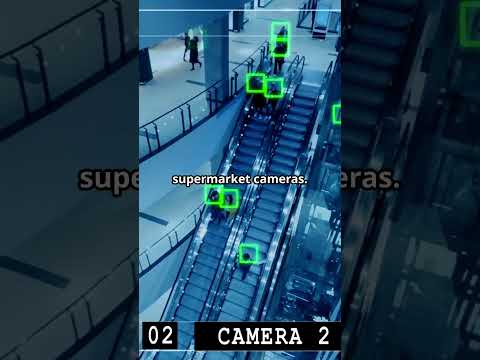
    • Surveillance: Enhancing camera systems with AI to detect unusual behavior or identify individuals.
    • Manufacturing and logistics: Checking product quality, counting items, and automating workflows.

    The potential use cases for computer vision are growing fast, especially as AI hardware becomes more powerful and data becomes more abundant.


    Is Computer Vision Replacing Human Vision?

    Not quite. While computer vision excels in certain areas—like processing thousands of images per second or spotting details invisible to the human eye—it still lacks the nuance, context, and emotion that human vision brings. A machine can recognize a face, but it doesn’t know that person. It can detect a pattern, but it doesn’t understand why that pattern matters.

    That’s why most AI vision systems are built to augment, not replace, human judgment.


    Ethical and Social Implications

    As computer vision becomes more advanced, concerns about privacy, bias, and surveillance grow. For example:

    • Facial recognition systems have been shown to misidentify people of color more often than white faces.
    • Surveillance tools powered by AI can track people without their consent.
    • Retail stores use vision AI to monitor customer behavior in ways that may feel intrusive.

    The conversation around AI ethics and transparency is just as important as the technology itself. As we continue to develop and deploy computer vision systems, we need to ask not just can we—but should we?

    What Is Computer Vision? The AI Behind Facial Recognition and More.
    What Is Computer Vision? The AI Behind Facial Recognition and More.

    Final Thoughts

    Computer vision is one of the most impactful—and invisible—forms of AI shaping our world today. From facial recognition and self-driving cars to healthcare and retail, it’s changing how machines interact with the visual environment. Understanding what is computer vision is key to grasping how machines interpret the world visually.

    The better we understand how computer vision works, the more prepared we’ll be to use it wisely—and question it when necessary.

    For more insights on AI, ethics, and the future of technology, subscribe to TechnoAivolution on YouTube—where we decode what’s next, one short at a time.

    P.S. If you’ve ever wondered what computer vision really is, now you know—it’s not just about machines seeing, but about them understanding our world.

    #WhatIsComputerVision #ComputerVision #AIExplained #FacialRecognition #ArtificialIntelligence #MachineLearning #ObjectDetection #AITechnology #TechnoAivolution #SmartTech

  • Why Letting Go Sounds Easy—but Hurts Deeply in the Practice

    Why Letting Go Sounds Easy—but Hurts Deeply in Buddhist Practice and Teaches True Compassion.
    Why Letting Go Sounds Easy—but Hurts Deeply in Buddhist Practice

    Why Letting Go Sounds Easy—but Hurts Deeply in Buddhist Practice

    “Just let go.”
    It’s advice we’ve all heard—often given with good intention, but rarely followed with real understanding. In Buddhist practice, letting go isn’t a quick fix or casual decision. It’s a profound, often painful process that cuts through layers of emotional attachment, ego, and expectation. Many people ask why letting go is so difficult, even when holding on causes more pain.

    This post explores why letting go is so difficult, even though it sounds simple—and how Buddhist wisdom can help us move through that pain toward peace.


    The Illusion of Simplicity

    On the surface, letting go seems easy. We imagine it as a soft release, a graceful sigh, a peaceful exit from pain. But when you actually try to let go of something you’re deeply attached to—whether it’s a relationship, a belief, or even a part of your identity—it hurts.

    Why? Because the mind clings.
    And clinging is exactly what the Buddha identified as the root of suffering.


    Why It Hurts to Let Go

    Letting go hurts because it challenges everything the ego tries to protect. It means:

    • Releasing control
    • Facing impermanence
    • Accepting that we don’t own or define people, outcomes, or even ourselves

    In Buddhist philosophy, this is the path of non-attachment—but non-attachment doesn’t mean apathy. It doesn’t mean we stop caring. It means we care without clinging, love without controlling, and experience without grasping.

    Letting go often feels like grief, because in a way, it is. We’re grieving the version of reality we held onto. And that grief is the gateway to transformation.


    The Role of Mindfulness

    In Buddhist practice, mindfulness is the key to letting go—not by force, but through awareness. We’re taught to observe our emotions without judgment. Instead of suppressing anger, sadness, fear, or desire, we watch them rise, peak, and fall—like waves on the ocean.

    When we stay present with what arises, we begin to see that we don’t have to hold onto it.
    That’s the quiet power of mindfulness: it shows us that we can feel fully, and still release.


    Real Letting Go Takes Courage

    This process is not always peaceful. In fact, it can feel violent—like tearing part of yourself away. But that’s only because the part we’re releasing is often something we’ve mistaken for our self.

    Buddhist practice encourages us to investigate:

    • What am I really holding onto?
    • Is this emotion permanent?
    • Does this belief serve me—or bind me?

    Through this inner inquiry, we find that letting go is not the loss of something real, but the release of illusion. The pain, though intense, leads to clarity.


    The Stillness After the Storm

    Many people who walk this path describe the feeling after a true letting go as one of profound stillness. Like the calm that follows a rainstorm, the emotional air is clean. You can breathe again. The tension held in your body and mind begins to soften.

    And in that quiet space, something deeper arises—not numbness, but peace. Not emptiness, but freedom.

    Why Letting Go Sounds Easy—but Hurts Deeply in Buddhist Practice
    Why Letting Go Sounds Easy—but Hurts Deeply in Buddhist Practice

    Final Thoughts

    Letting go may sound like a peaceful phrase, but in Buddhist practice, it’s a deep spiritual challenge. It’s an invitation to sit with discomfort, face your attachments, and release what no longer serves your awakening.

    The pain is not a sign that something is wrong—it’s a sign that something real is being uncovered. And in that honesty, we heal.

    So if you’re struggling to let go, know this:
    You’re not failing. You’re feeling.
    And that’s the path through.


    Explore more calm insights at YourWisdomVault.
    Subscribe to the channel on YouTube for Buddhist shorts on letting go, mindfulness, and emotional clarity—one breath at a time. 📿And remember: Understanding why letting go matters is central to Buddhist emotional healing.

    P.S.

    Sometimes, the hardest truth is this: we suffer not because we feel too much, but because we hold on too tightly. That’s why letting go is the way through.

    #WhyLettingGo #Buddhism #EmotionalHealing #NonAttachment #Mindfulness #SpiritualGrowth #LettingGo #BuddhistWisdom #YourWisdomVault #InnerPeace

  • What Are AI Tokens—and Why They Matter for the Future

    What Are AI Tokens—and Why They Matter for the Future of Technology. #technology #nextgenai #tech
    What Are AI Tokens—and Why They Matter for the Future of Technology

    What Are AI Tokens—and Why They Matter for the Future of Technology

    In a world rapidly driven by artificial intelligence, AI tokens are emerging as a powerful concept that could reshape how we interact with technology, data, and decentralized systems. While the term might sound like another passing crypto trend, it actually represents a much deeper shift in how AI can be owned, accessed, and governed.

    This post explores what AI tokens are, how they work, and why they’re poised to play a critical role in the future of AI and decentralized infrastructure.


    What Are The Tokens?

    AI tokens are digital assets—often built on blockchain networks—that are used to power, govern, or access artificial intelligence ecosystems. Unlike traditional software licensing or API payment models, AI tokens function more like fuel for distributed AI systems.

    They can be used to:

    • Pay for training AI models
    • Buy or sell datasets
    • Access compute power
    • Interact with decentralized AI services
    • Participate in governance decisions

    These tokens live on blockchain platforms, which makes them programmable, transparent, and tradeable. Instead of AI being siloed behind corporate firewalls, AI tokens allow users to access and support AI tools in an open, decentralized way.


    Why Do The Tokens Matter?

    To understand their importance, we have to look at how AI is currently controlled.

    Right now, most artificial intelligence systems are run by centralized tech giants. These corporations control the data, the models, and the decision-making. The future we’re heading toward—where AI plays a role in finance, healthcare, communication, and even governance—could be dominated by a few powerful players.

    But AI tokens offer another path.

    By enabling decentralized AI infrastructure, tokens let communities own, contribute to, and benefit from the intelligence they help build. Instead of handing over your data or your compute power for free, AI tokens allow people to participate in value creation.

    This changes everything—from access and transparency to economics and ethics.


    Real-World Examples of AI Token Projects

    Several promising projects are already putting AI tokens into action:

    • Ocean Protocol – Focuses on data sharing and monetization, where tokens are used to buy and sell datasets for AI training.
    • Fetch.ai – Builds autonomous economic agents that use tokens to coordinate tasks in decentralized environments.
    • SingularityNET – One of the earliest platforms to offer decentralized AI services powered by blockchain and its AGIX token.

    These projects aren’t just experimental—they’re shaping how AI economies could function in the next decade.


    AI Tokens and Web3: A Powerful Combination

    AI tokens are part of a broader shift known as Web3—a vision of the internet where users, not corporations, control the tools and data.

    In the Web3 world:

    • You don’t just use the service—you help shape it.
    • You don’t just give data—you get compensated for it.
    • You don’t rely on one centralized company—you interact with a decentralized network of peers.

    AI tokens are the currency of that world. They’re how you access, fuel, and guide AI in a way that reflects your values.

    What Are AI Tokens—and Why They Matter for the Future of Technology
    What Are AI Tokens—and Why They Matter for the Future of Technology

    Final Thoughts: The Future Is Already Being Tokenized

    AI tokens may sound futuristic, but they’re already being used to train models, power platforms, and reward contributors. They allow for a shared intelligence model, one where the tools of the future aren’t owned by a few—but shared by many.

    As we move deeper into an AI-powered era, tokens could be the mechanism that makes this evolution more ethical, transparent, and inclusive.

    So next time you hear the term “AI token,” don’t brush it off as tech jargon. It might just be the digital key to the future of intelligence.


    Explore more on TechnoAivolution on YouTube for insights at the intersection of AI, ethics, decentralization, and human evolution.
    Subscribe to the channel and stay ahead of the curve.

    P.S.

    The future of AI might not belong to corporations—it could belong to you, powered by the quiet rise of AI tokens.

    #AITokens #ArtificialIntelligence #DecentralizedAI #BlockchainAI #Web3 #OceanProtocol #FetchAI #TechnoAivolution #FutureOfTechnology #CryptoAI

  • The Quiet Power of Emotional Minimalism in Buddhist Practice

    The Quiet Power of Emotional Minimalism in Buddhist Practice and the Peace It Brings Within.
    The Quiet Power of Emotional Minimalism in Buddhist Practice

    The Quiet Power of Emotional Minimalism in Buddhist Practice

    In a world overflowing with emotional noise—notifications, opinions, inner judgments—many of us are quietly overwhelmed. We don’t need more coping strategies. We need less clutter—internally. This is where emotional minimalism comes in, a concept deeply aligned with Buddhist practice.

    What Is Emotional Minimalism?

    At its heart, emotional minimalism is the practice of intentionally simplifying your emotional landscape. That doesn’t mean becoming cold or distant. It means choosing not to be overwhelmed by every thought, feeling, or impulse that arises.

    This mindset has roots in Buddhist teachings, particularly in the concepts of non-attachment, impermanence, and mindful observation. Buddhism teaches that our suffering often doesn’t come from the emotion itself—but from the way we cling to it, identify with it, or try to suppress it.

    The Buddhist Path to Emotional Clarity

    In Buddhism, the mind is trained to observe rather than react. Through meditation and mindfulness, we learn to witness emotions like waves on the ocean: rising, cresting, and eventually passing. Anger, sadness, joy, anxiety—they all have a life cycle. Emotional minimalism invites us to ride the wave, not drown in it.

    This practice helps clear the mental clutter that clouds our decisions and drains our energy. With fewer emotional “tabs” open, we gain clarity, compassion, and inner peace.

    Letting Go Without Pushing Away

    One of the biggest misconceptions about emotional minimalism is that it’s about ignoring emotions. In Buddhist terms, this would be considered aversion, which is just another form of attachment. The goal isn’t to feel nothing—it’s to feel without attachment.

    When we can sit with discomfort without needing to escape it, we cultivate a deeper strength. As the Buddha taught, suffering is inevitable—but clinging is optional.

    Practical Steps to Emotional Minimalism

    You don’t have to live in a monastery to practice emotional minimalism. Here are simple ways to apply it in your daily life:

    1. Pause Before Reacting
      When a strong emotion hits, take one conscious breath. This pause creates space to respond instead of react.
    2. Name the Feeling
      Labeling emotions—“anger,” “disappointment,” “fear”—can reduce their grip on you. Awareness dissolves intensity.
    3. Ask: Is This Mine to Hold?
      Not every emotion needs to be absorbed. Sometimes, what you’re feeling belongs to someone else.
    4. Practice Non-Attachment
      Emotions are visitors, not permanent residents. Let them come, let them go.
    5. Simplify Inputs
      Emotional clutter often begins with informational clutter. Consider limiting news, social media, or toxic conversations that feed your emotional reactivity.

    The Benefits: Clarity, Compassion, Peace

    When we simplify our emotional lives, we make room for what truly matters: wisdom, compassion, and presence. You’ll find yourself less reactive, more centered, and more available to others—from a place of inner steadiness.

    This is what makes emotional minimalism so powerful—not just as a modern mindset, but as an ancient spiritual practice rooted in Buddhism. It’s not about escaping emotion. It’s about returning to what’s real beneath it all.

    The Quiet Power of Emotional Minimalism in Buddhist Practice
    The Quiet Power of Emotional Minimalism in Buddhist Practice

    Final Thoughts

    In a world that tells us to feel more, express more, and be more, emotional minimalism reminds us of the power of stillness. Through Buddhist practice, we learn that freedom doesn’t come from controlling our emotions—it comes from letting them flow without being swept away.

    So the next time a storm rises in your heart, pause. Observe. Breathe. That’s where peace begins.


    If this message resonated with you, consider exploring our YouTube channel, YourWisdomVault, for more Buddhist-inspired insights. Subscribe to stay connected to the quiet truths that help us live more freely.

    P.S. Sometimes, the most profound strength is found not in control—but in the quiet power of simply letting go.

    #EmotionalMinimalism #Buddhism #Mindfulness #InnerPeace #LettingGo #NonAttachment #MentalClarity #BuddhistWisdom #SpiritualGrowth #YourWisdomVault