Blog

  • Deep Learning in 60 Seconds — How AI Learns From the World.

    Deep Learning in 60 Seconds — How AI Learns From the World. #nextgenai #artificialintelligence
    Deep Learning in 60 Seconds — How AI Learns From the World.

    Deep Learning in 60 Seconds — How AI Learns From the World.

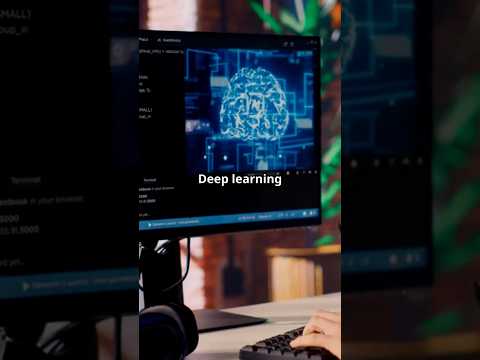
    Artificial intelligence might seem like magic, but under the hood, it’s all math and patterns — especially when it comes to deep learning. This subset of machine learning is responsible for some of the most impressive technologies today: facial recognition, autonomous vehicles, language models like ChatGPT, and even AI-generated art.

    But how does deep learning actually work? And more importantly — how does a machine learn without being told what to do?

    Let’s break it down.


    What Is Deep Learning, Really?

    At its core, deep learning is a method for training machines to recognize patterns in large datasets. It’s called “deep” because it uses multiple layers of artificial neural networks — software structures inspired (loosely) by the human brain.

    Each “layer” processes a part of the input data — whether that’s an image, a sentence, or even a sound. The deeper the network, the more abstract the understanding becomes. Early layers in a vision model might detect edges or colors. Later layers start detecting eyes, faces, or objects.


    Not Rules — Patterns

    One of the biggest misconceptions about AI is that someone programs it to know what a cat, or a human face, or a word means. That’s not how deep learning works. It doesn’t use fixed rules.

    Instead, the model is shown thousands or even millions of examples, each with feedback — either labeled or inferred — and it slowly adjusts its internal parameters to reduce error. These adjustments are tiny changes to “weights” — numerical values inside the network that influence how it reacts to input.

    In other words: it learns by doing. By failing, repeatedly — and then correcting.


    How AI Trains Itself

    Here’s a simplified version of what training a deep learning model looks like:

    1. The model is given an input (like a photo).
    2. It makes a prediction (e.g., “this is a dog”).
    3. If it’s wrong, the system calculates how far off it was.
    4. It adjusts internal weights to do better next time.

    Repeat that millions of times with thousands of examples, and the model starts to get very good at spotting patterns. Not just dogs, but the essence of “dog-ness” — statistically speaking.

    The result? A system that doesn’t understand the world like humans do… but performs shockingly well at specific tasks.


    Where You See Deep Learning Today

    You’ve already encountered deep learning today, whether you noticed or not:

    • Voice assistants (Siri, Alexa, Google Assistant)
    • Face unlock on your phone
    • Recommendation algorithms on YouTube or Netflix
    • Chatbots and AI writing tools
    • Medical imaging systems that detect anomalies

    These systems are built on deep learning models that trained on massive datasets — sometimes spanning petabytes of information.


    The Limitations

    Despite its power, deep learning isn’t true understanding. It can’t reason. It doesn’t know why something is a cat — only that it usually looks a certain way. It can make mistakes in ways no human would. But it’s fast, scalable, and endlessly adaptable.

    That’s what makes it so revolutionary — and also why we need to understand how it works.


    Deep Learning in 60 Seconds — How AI Learns From the World.

    Conclusion: AI Learns From Us

    Deep learning isn’t magic. It’s the machine equivalent of watching, guessing, correcting, and repeating — at scale. These systems learn from us. From our images, words, habits, and choices.

    And in return, they reflect back a new kind of intelligence — one built from patterns, not meaning.

    As AI becomes a bigger part of our world, understanding deep learning helps us stay grounded in what these systems can do — and what they still can’t.


    Watch the 60-second video version on Technoaivolution on YouTube for a lightning-fast breakdown — and subscribe if you’re into sharp insights on AI, tech, and the future.

    P.S.

    Machines don’t think like us — but they’re learning from us every day. Understanding how they learn might be the most human thing we can do.

    #DeepLearning #MachineLearning #NeuralNetworks #ArtificialIntelligence #AIExplained #AITraining #Technoaivolution #UnderstandingAI #DataScience #HowAIWorks #AIIn60Seconds #AIForBeginners #AIKnowledge #ModernAI #TechEducation
  • You Can’t Take Them With You — Death Reminds Us What’s Ours.

    You Can’t Take Them With You—Death Reminds Us What’s Ours, What Matters, and What to Let Go Of.
    You Can’t Take Them With You — Death Reminds Us What’s Ours.

    You Can’t Take Them With You — Death Reminds Us What’s Ours.

    We live our lives surrounded by things: goals, roles, identities, possessions, digital footprints. But at the end of it all, there’s one undeniable truth — you can’t take them with you. Death, uncomfortable as it may be, has a strange way of cutting through the noise. It clarifies.

    In the Buddhist tradition, death is not a taboo — it’s a teacher. It’s a daily meditation, not a final surprise. Reflecting on impermanence (anicca) and the absence of a fixed self (anatta) helps us see that most of what we identify with… isn’t really ours. Not in the way we think.

    The Illusion of Ownership

    We spend decades building resumes, collecting titles, stacking achievements. But when the body gives out, none of that comes with us. Not the job title. Not the trophies. Not even the name on the door.

    We also cling to relationships, narratives, grudges — as if our holding them somehow secures meaning. But Buddhist wisdom suggests otherwise. These attachments are not the self. They are conditioned, temporary, and ever-changing.

    Death reminds us: what we cling to most tightly is often the most fragile.

    So What Is Ours?

    That’s the uncomfortable — and liberating — question.

    When everything external is stripped away, what’s left?

    • Your house? Gone.
    • Your social media legacy? Fades faster than you think.
    • Your identity? Just a set of conditioned responses and beliefs.

    What remains, then, is awareness.
    Not in a mystical sense, but in the very real sense of how you lived your moments.
    Were you kind when it was inconvenient?
    Did you pause before reacting?
    Did you bring presence into the room, or did you just fill space?

    This is the heart of mindful living. It’s not about being serene or perfect — it’s about being awake to the temporary nature of all things, and letting that awareness inform how we live now.

    Why This Isn’t a Sad Message

    It might sound morbid at first — all this talk of death and impermanence. But in Buddhist philosophy, this is actually a doorway to joy. When we stop gripping so tightly to what’s slipping through our fingers anyway, we’re free to appreciate it. Genuinely. Fully.

    You stop trying to own the moment and start participating in it.

    You stop trying to preserve your legacy and start living your truth.

    When death is kept close — not in fear, but in respect — it keeps our priorities honest. It keeps our hearts soft.

    Practical Reflection: Ask Yourself

    • What am I spending energy on that won’t matter in the end?
    • What am I holding that death would ask me to release?
    • How would I act differently today if I remembered that nothing is mine forever?

    These aren’t abstract questions. They’re mirrors. And sometimes, all it takes is 45 seconds of real reflection to shift an entire week of autopilot.

    You Can’t Take Them With You — Death Reminds Us What’s Ours.
    You Can’t Take Them With You — Death Reminds Us What’s Ours.

    You Can’t Take Them With You — And That’s Okay

    This isn’t a tragedy. It’s clarity.

    Death doesn’t strip us of what’s real — it strips us of illusion. And in doing so, it shows us the one thing we actually have: how we meet each moment.

    So no, you can’t take them with you. But maybe you were never supposed to. Maybe that’s not the point.


    If this reflection resonated with you, check out our YourWisdomVault video short on YouTube on this very topic—and don’t forget to subscribe for more bite-sized teachings rooted in timeless wisdom.

    If death feels like a heavy teacher, that’s because it doesn’t waste words. Sometimes, the most freeing truth is the one that asks you to release what was never yours to hold.

    #BuddhistWisdom #Impermanence #MementoMori #MindfulLiving #NonAttachment #DeathAwareness #EgoDeath #SpiritualReflection #MinimalistMindset #ConsciousLiving #YouCantTakeItWithYou #Anicca #Anatta #YourWisdomVault #LifeAndDeath #LettingGo #AwarenessPractice

  • AI Is Just a Kid with a Giant Memory—No Magic, Just Math

    AI Is Just a Fast Kid with a Giant Memory—No Magic, Just Math. #artificialintelligence #nextgenai
    AI Is Just a Fast Kid with a Giant Memory—No Magic, Just Math

    AI Is Just a Fast Kid with a Giant Memory—No Magic, Just Math

    The Truth Behind Artificial Intelligence Without the Hype

    If you’ve been on the internet lately, you’ve probably seen a lot of noise about Artificial Intelligence. It’s going to change the world. It’s going to steal your job. It’s going to become sentient. But here’s the truth most people won’t say out loud: AI isn’t magic—it’s just math.

    At TechnoAIvolution, we believe in cutting through the buzzwords to get to the actual tech. And that starts with this one simple idea: AI is like a fast kid with a giant memory. It doesn’t understand you. It doesn’t “think” like you. It just processes information faster than any human ever could—and it remembers everything.

    What AI Actually Is (and Isn’t)

    Artificial Intelligence, at its core, is not a brain. It’s a system trained on vast amounts of data, using mathematical models (like neural networks and probability functions) to recognize patterns and generate outputs.

    When you ask ChatGPT a question or use an AI image generator, it’s not thinking. It’s calculating the most likely response based on everything it has seen. Think of it as statistical prediction at hyperspeed. It’s not smart in the way humans are smart—it’s just incredibly efficient at matching inputs to likely outputs.

    It’s not self-aware. It doesn’t care.
    It just runs code.

    The “Giant Memory” Part

    One of AI’s biggest advantages is memory. Not memory in the way a human remembers childhood birthdays, but digital memory at scale—terabytes and terabytes of training data. It “remembers” patterns, phrases, shapes, faces, code, and more—because it has seen billions of examples.

    That’s how it can “recognize” a cat, generate a photo, write a poem, or even simulate a conversation. But it doesn’t know what a cat is. It just knows what cat images and captions look like, and how those patterns show up in data.

    That’s why we say: AI is just a fast kid with a giant memory.
    Fast enough to mimic knowledge. Big enough to fake understanding.

    No Magic—Just Math

    A lot of AI hype makes it sound like we’ve built a digital soul. But it’s not sorcery. It’s not divine. It’s not dangerous by default. It’s just layers of math.

    Behind every chatbot, every AI-generated video, every deepfake, and every voice clone is a machine running cold, complex equations. Trillions of them. And yes, it’s impressive. But it’s not mysterious.

    This matters, because understanding the truth helps us use AI intelligently. It demystifies the tech and brings the power back to the user. We stop fearing it and start questioning how it’s being trained, who controls it, and what it’s being used for.

    Why It Matters

    When we strip AI of the magic and look at the math, we see what it really is: a tool.
    A powerful one? Absolutely.
    A revolutionary one? Probably.
    But a human replacement? Not yet. Maybe not ever.

    Understanding the real nature of AI helps us have better conversations about ethics, bias, automation, and responsibility. It also helps us spot bad information, false hype, and snake oil dressed in circuits.

    So, What Should You Remember?

    • AI doesn’t understand—it calculates.
    • AI doesn’t think—it predicts.
    • AI isn’t magical—it’s mathematical.
    • And it’s only as smart as the data it’s fed.

    This is what we talk about here at TechnoAIvolution: the future of AI, without the filters. No corporate jargon. No utopian delusions. Just honest breakdowns of how the tech really works.

    AI Is Just a Fast Kid with a Giant Memory—No Magic, Just Math
    AI Is Just a Fast Kid with a Giant Memory—No Magic, Just Math

    Final Thought
    If you’ve been feeling overwhelmed by all the noise about AI, remember: It’s not about being smarter than the machine. It’s about being more aware than the hype.

    Welcome to TechnoAIvolution on YouTube. We’ll keep the math real—and the magic optional.

    P.S. Sometimes, the smartest “kid” in the room isn’t thinking—it’s just calculating. That’s AI. And that’s why we should stop calling it magic.

    #ArtificialIntelligence #MachineLearning #HowAIWorks #AIExplained #NoMagicJustMath #AIForBeginners #NeuralNetworks #TechEducation #DataScience #FastKidBigMemory #AIRealityCheck #DigitalEvolution #UnderstandingAI #TechnoAIvolution

  • The Cost of Holding On to What’s Already Gone.

    The Cost of Holding On to What’s Already Gone and the Freedom That Comes with Letting Go.
    The Cost of Holding On to What’s Already Gone.

    The Cost of Holding On to What’s Already Gone.

    Why Clinging Hurts More Than We Realize

    In Buddhist philosophy, one of the core teachings is this: attachment is the root of suffering. This doesn’t just apply to material possessions—it includes emotions, relationships, identities, and even memories. And yet, many of us continue to suffer not because something or someone has left our lives—but because we keep clinging to what’s already gone.

    This subtle form of self-inflicted pain often goes unnoticed. We wonder why we’re still hurting, why peace feels distant, or why we feel stuck. More often than not, the answer lies in our unwillingness to accept impermanence.

    What Are We Really Holding On To?

    Maybe it’s a past relationship, a dream that didn’t unfold, or a version of ourselves that no longer exists. We keep replaying moments in our minds, hoping we could’ve changed the outcome. We scroll through old messages, revisit old photos, or silently compare the present to a romanticized past.

    But here’s the truth: what you’re holding onto no longer exists in the present moment. You’re clinging to a ghost—and like all ghosts, it haunts rather than heals.

    In Buddhism, this is known as upādāna, or clinging. It’s the act of mentally gripping something in the hope that it will bring us happiness or prevent suffering. Ironically, it does the opposite. Clinging binds us to the very pain we’re trying to avoid.

    The Hidden Cost of Clinging

    Clinging might feel natural—it even feels comforting at times—but it comes at a high cost.
    Emotionally, it drains us.
    Spiritually, it traps us.
    Energetically, it keeps us anchored in a place we’re meant to move beyond.

    We can’t evolve while tightly holding onto a past version of reality. Healing begins the moment we loosen our grip. Not because we’re trying to forget, but because we’re choosing to move forward without dragging the weight of yesterday behind us.

    The cost of holding on isn’t just suffering—it’s the opportunity cost of peace. The longer we resist impermanence, the longer we delay freedom.

    Buddhist Wisdom on Impermanence

    The Buddha taught that everything conditioned is impermanent. People change, seasons end, and even pain eventually fades—if we allow it to. The only constant is change itself.

    This isn’t a pessimistic view. On the contrary, it’s liberating. If we understand impermanence deeply, we stop trying to grip what cannot be held. We learn to meet life as it is—not as we wish it would stay.

    This shift—from resistance to awareness—is the essence of mindfulness. And through mindfulness, we begin to see clinging not as a necessity, but as a habit we can unlearn.

    So What Can We Do?

    If you’re reading this and something comes to mind—a name, a place, a moment—it’s okay. We’ve all clung to the past in some form. This path isn’t about judgment. It’s about compassion, awareness, and choice.

    Here are a few reflections that might help:

    • What am I holding onto that no longer exists?
    • What is this clinging costing me—emotionally, mentally, spiritually?
    • What would it feel like to honor the past without living in it?

    Awareness is the first release. The rest unfolds from there.


    The Cost of Holding On to What’s Already Gone.
    The Cost of Holding On to What’s Already Gone.

    Final Thoughts
    Letting go doesn’t mean forgetting. It means choosing not to suffer.
    The cost of holding on is steep—but the freedom on the other side is priceless.

    If this teaching resonates with you, consider subscribing to YourWisdomVault on YouTube for more bite-sized Buddhist insights. Sometimes, it only takes one mindful moment to change the direction of our lives.

    P.S. If this reflection spoke to you, take a moment to consider the true cost of holding on. Sometimes awareness is all it takes to begin releasing.

    #Buddhism #Mindfulness #NonAttachment #EmotionalHealing #SpiritualGrowth #InnerPeace #CostOfHoldingOn #DharmaWisdom #HealingJourney #LettingGo #SelfAwareness #Impermanence #BuddhistTeachings #PersonalGrowth #YourWisdomVault