Blog

  • AI vs Human Brain: Exploring the True Gap in Intelligence.

    AI vs the Human Brain: Exploring the True Gap in Intelligence & Power. #technology #nextgenai #tech
    AI vs the Human Brain: Exploring the True Gap in Intelligence & Power.

    AI vs the Human Brain: Exploring the True Gap in Intelligence & Power.

    As artificial intelligence advances at breakneck speed, comparisons to the human brain have become unavoidable—and often exaggerated. We’re told that AI is catching up, that machines are learning faster, thinking better, even replacing us in creative and intellectual domains. But are they really?

    Beneath the surface of flashy algorithms and data-driven tools lies a deeper question:
    What is the real gap between AI and human intelligence?
    To answer that, we need to look beyond raw processing power—and toward what makes us human.

    The Speed Isn’t the Story

    Yes, artificial intelligence systems can now analyze data sets in seconds that would take humans years. They can beat world champions in chess, write coherent essays, and generate eerily human-like speech. But this kind of intelligence is narrow. It’s task-specific, and deeply dependent on the data it’s trained on.

    The human brain, on the other hand, is a general-purpose engine. It adapts in real time. It rewires itself through neuroplasticity, forms intuitive leaps, and navigates uncertainty with emotional intelligence. These are traits artificial intelligence doesn’t possess—not even close.

    Consciousness: The Defining Divide

    The core difference between AI and the human brain lies in consciousness.
    We are not just processors of information. We are aware that we are processing information. We reflect. We suffer. We wonder why. These internal experiences—known as qualia—are completely absent in machines.

    AI doesn’t care about the data it processes. It has no subjective experience. It doesn’t know it exists.

    This isn’t just a poetic distinction—it has philosophical and ethical weight. A machine can fake empathy, but it doesn’t feel. It can simulate curiosity, but it doesn’t wonder. That gap isn’t shrinking—it’s foundational.

    Emotion, Meaning, and Motivation

    Another vast gap is emotional intelligence.
    Human cognition is inseparable from emotion. We make decisions not only through logic, but through feeling, context, and lived experience. AI, by contrast, has no internal motivation. It doesn’t value anything. It has no goals unless humans program them in.

    Whereas humans are driven by purpose, morality, and personal history, artificial intelligence follows statistical patterns and predictive models. It doesn’t want to help, learn, or evolve—it just executes.

    The Illusion of Intelligence

    Much of AI’s perceived brilliance comes from our tendency to anthropomorphize. When a chatbot mimics empathy, or an AI model generates artwork, we often assume human-like intention behind it. But these are illusions—outputs based on pattern recognition, not understanding.

    That’s the danger in overstating AI’s capabilities: we forget that intelligence is more than output. It’s about meaning, self-awareness, context, and depth. The human brain isn’t just a biological computer—it’s a living, feeling system with memory, identity, and a sense of self.

    What AI Can Teach Us About Ourselves

    Interestingly, the rise of artificial intelligence is forcing us to reflect more deeply on human cognition.
    What is creativity? What is consciousness? What is intelligence beyond performance?

    As we explore AI’s limits, we’re also beginning to understand our own minds more clearly. And that, perhaps, is one of the most valuable outcomes of this AI era—a mirror held up to human nature, showing us what truly sets us apart.

    AI vs the Human Brain: Exploring the True Gap in Intelligence & Power.
    AI vs the Human Brain: Exploring the True Gap in Intelligence & Power.

    Final Thoughts

    The real gap between AI and the human brain isn’t just technical—it’s existential.
    Until machines develop self-awareness, internal motivation, and the ability to experience the world from the inside out, they remain fundamentally different from us.

    AI can assist us, amplify us, and even challenge us. But it cannot replace the inner life of the human mind.


    Want more insights on the future of intelligence, consciousness, and tech evolution? Subscribe for weekly posts on TechnoAiVolution on YouTube exploring the edge where machines and minds meet.

    P.S. If this sparked a deeper question—or gave you a new lens on AI and the mind—subscribe for more insights at the intersection of human consciousness and machine intelligence.

    #AIvsHumanBrain #ArtificialIntelligence #ConsciousnessGap #HumanCognition #MindVsMachine #NeuroscienceAndAI #FutureOfIntelligence #EmotionalIntelligence #TechPhilosophy #AIandEthics
  • Holding Life Lightly: A Buddhist Way to Handle Struggle

    Holding Life Lightly: A Buddhist Way to Handle Self and Struggle with Grace and Understanding.
    Holding Life Lightly: A Buddhist Way to Handle Self and Struggle.

    Holding Life Lightly: A Buddhist Way to Handle Self and Struggle.

    In a world that encourages us to grip tightly—to our goals, our image, our opinions—Buddhist wisdom offers a radical alternative: hold everything lightly. It sounds simple, even passive. But it’s one of the most powerful inner skills you can develop.

    At the heart of this practice is the concept of non-attachment, a central teaching in Buddhism. Contrary to common misunderstanding, non-attachment isn’t indifference or avoidance. It’s not about becoming cold or distant. Instead, it’s a state of clear presence—a willingness to experience life fully, without being consumed by it.

    Why We Hold So Tightly

    Most of us hold on tightly because we’re afraid. We grip our identities—our sense of who we are—because we fear becoming lost or meaningless without them. We cling to outcomes, relationships, routines, and even our pain because they provide a false sense of control.

    This tightness shows up in thoughts like:

    • “If I stop pushing, everything will fall apart.”
    • “If I let go, I’ll lose who I am.”
    • “I need to fix this before I can feel okay.”

    But clinging only increases suffering. It makes us brittle in a world that’s constantly changing.

    The Power of Holding Life Lightly

    To hold life lightly means to soften your grip. It means to allow space between stimulus and response. It’s the difference between being hit by a wave and drowning in it. You still feel, but you don’t fuse with every emotion. You still care, but you’re not controlled by every thought.

    Buddhist teacher Thich Nhat Hanh once said, “Letting go gives us freedom, and freedom is the only condition for happiness.” This freedom arises not from abandoning life, but from approaching it with gentle awareness.

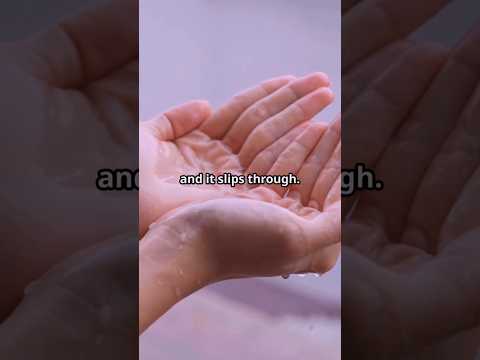
    Imagine holding water in your hand. Squeeze tightly, and it slips through. Hold it gently, and it stays. This is the essence of the Buddhist path—mindful living through non-grasping.

    Identity as a Process, Not a Prison

    One area where holding lightly makes a profound difference is in how we see ourselves. In the West, we often build identity like a monument—solid, fixed, and deeply defended. But Buddhism sees the self as fluid, more like a river than a statue.

    This shift allows us to stop taking ourselves so seriously. We become more open to growth, more forgiving of mistakes, and less reactive when our ego is challenged. We begin to ask: “What if I’m not this thought, not this mood, not this story?”

    In doing so, we unlock the capacity for emotional resilience, because we’re no longer at war with what arises. We simply notice, breathe, and let it pass.

    Practicing Holding Lightly

    So how can you begin?

    1. Pause Before Reacting: When emotion arises, take one conscious breath before responding. This creates space.
    2. Observe Your Thoughts: Practice seeing thoughts as clouds passing through the sky of your mind. Not facts, not truths—just mental weather.
    3. Soften the Narrative: Instead of saying “I am anxious,” try “Anxiety is here.” This subtle shift reduces identification.
    4. Release Outcome Obsession: Do the best you can, but stay flexible with how things unfold.
    5. Practice Mindful Presence: In everyday tasks, bring your full attention to the moment—not to control it, but to experience it.
    Holding Life Lightly: A Buddhist Way to Handle Self and Struggle.
    Holding Life Lightly: A Buddhist Way to Handle Self and Struggle.

    Letting Peace In

    The more you practice holding life lightly, the more you begin to feel a natural sense of inner peace. Not because life gets easier, but because your relationship to it changes. You stop wrestling with what is. You stop needing certainty to feel secure.

    This is not escape. It’s courage. It’s strength. It’s a way of walking through the world that is rooted, aware, and free.


    Ready to go deeper? Explore more reflections on Buddhist teachings, mindful living, and the art of emotional freedom in our upcoming posts.

    P.S. If this reflection helped you breathe a little easier today, consider subscribing to YourWisdomVault on YouTube to receive more insights on Buddhist wisdom, mindful living, and emotional clarity—delivered with calm, not clutter.

    #MindfulLiving #BuddhistWisdom #NonAttachment #InnerPeace #EmotionalResilience #LetGoOfControl #GentleAwareness #SpiritualGrowth #SelfAwareness #PresentMoment

    Thanks for watching: Holding Life Lightly: A Buddhist Way to Handle Self and Struggle.

  • How AI Understands Human Language: The Science Behind It.

    How AI Understands Human Language: The Surprising Science Behind It. #technology #nextgenai #tech
    How AI Understands Human Language: The Surprising Science Behind It.

    How AI Understands Human Language: The Surprising Science Behind It.

    Artificial Intelligence (AI) has made jaw-dropping strides in recent years—from writing essays to answering deep philosophical questions. But one question remains:
    How does AI actually “understand” language?
    The short answer? It doesn’t. At least, not the way we do.

    From Language to Logic: What AI Really Does

    Humans understand language through context, emotion, experience, and shared meaning. When you hear someone say, “I’m cold,” you don’t just process the words—you infer they might need a jacket, or that the window is open. AI doesn’t do that.

    AI systems like GPT or other large language models (LLMs) don’t “understand” words like humans. They analyze vast amounts of text and predict patterns. They learn the probability that a certain word will follow another.
    In simple terms, AI doesn’t comprehend language—it calculates it.


    How It Works: Language Models and Prediction

    Here’s the core mechanism: AI is trained on billions of sentences from books, websites, articles, and conversations. This training helps the model learn common patterns of speech and writing.

    Using a technique called transformer-based architecture, the AI breaks down language into tokens—smaller pieces of text—and learns how those pieces are likely to appear together.

    So when you ask it a question, it’s not retrieving an answer from memory. It’s calculating:
    “Based on all the data I’ve seen, what’s the most likely next word or phrase?”

    The result feels smart, even conversational. But there’s no awareness, no emotion, and no real comprehension.


    Neural Networks: The Silent Architects

    Behind the scenes are neural networks, inspired by the way the human brain processes information. These networks are made up of artificial “neurons” that process and weigh the importance of different pieces of input.

    In models like GPT, these networks are stacked in deep layers—sometimes numbering in the hundreds. Each layer captures more complex relationships between words. Early layers might identify grammar, while deeper layers start picking up on tone, context, or even sarcasm.

    But remember: this is still pattern recognition, not understanding.


    Why It Feels Like AI Understands

    If AI doesn’t think or feel, why does it seem so convincing?

    That’s the power of training at scale. When AI processes enough examples of human language, it learns to mirror it with astonishing accuracy. You ask a question, it gives a coherent answer. You give it a prompt, it writes a poem.

    But it’s all surface-level mimicry. There’s no awareness of meaning. The AI isn’t aware it’s answering a question—it’s just fulfilling a mathematical function.


    The Implications: Useful but Limited

    Understanding this distinction matters.

    • In customer service, AI can handle simple tasks but may misinterpret nuanced emotions.
    • In education, it can assist, but it can’t replace deep human understanding.
    • In creativity, it can generate ideas, but it doesn’t feel inspiration.

    Knowing the difference helps us use AI more wisely—and sets realistic expectations about what it can and cannot do.


    How AI Understands Human Language: The Surprising Science Behind It.
    How AI Understands Human Language: The Surprising Science Behind It.

    Final Thoughts

    So, how does AI understand language?
    It doesn’t—at least not in the human sense.
    It simulates understanding through staggering amounts of data, advanced neural networks, and powerful pattern prediction.

    But there’s no inner voice. No consciousness. No true grasp of meaning.
    And that’s what makes it both incredibly powerful—and inherently limited.

    As AI continues to evolve, understanding these mechanics helps us stay informed, critical, and creative in how we use it.


    🧠 Curious for more deep dives into AI, tech, and the future of human-machine interaction?
    Subscribe to Technoaivolution on YouTube—where we decode the code behind the future.

    P.S. Still curious about how AI understands language? Stick around—this is just the beginning of decoding machine intelligence.

    #HowAIUnderstands #AILanguageModel #ArtificialIntelligence #MachineLearning #NaturalLanguageProcessing #LanguageModel #TechExplained #GPT #NeuralNetworks #UnderstandingAI #Technoaivolution

  • When Love Isn’t Love: The Buddhist Truth About Attachment.

    When Love Isn’t Love: The Buddhist Truth About Attachment, Desire, and Finding Real Freedom.
    When Love Isn’t Love: The Buddhist Truth About Attachment.

    When Love Isn’t Love: The Buddhist Truth About Attachment.

    Most of us have mistaken attachment for love at some point. It feels like devotion, intensity, and passion. But often, beneath the surface, there’s fear, control, and the deep craving not to lose someone. That’s not love—it’s attachment. And according to Buddhist wisdom, confusing the two is one of the root causes of suffering.

    In Buddhism, true love is defined very differently from how pop culture or romantic movies portray it. Love, in its purest form, is expansive, liberating, and selfless. It wishes happiness for the other person—even if that happiness doesn’t include us. Attachment, on the other hand, is rooted in clinging. It says, “I need you to be mine so I can feel whole.”

    This subtle difference is life-changing once we recognize it.


    Attachment: The Craving That Disguises Itself as Love

    In Buddhist teachings, attachment (taṇhā) is one of the main sources of dukkha, or suffering. It arises from the illusion that we are incomplete, and that another person, possession, or experience can complete us. When we cling to someone out of this belief, we are no longer loving—they have become a means to an end.

    Attachment often brings anxiety, jealousy, and fear of abandonment. It’s not about the other person’s joy—it’s about keeping our emotional security intact. It’s love that turns inward and possessive.

    You might ask, “But if I care deeply, how can I not be attached?” The answer lies not in detachment, but in non-clinging. You can love fully and still allow space. You can hold someone in your heart without holding them in a cage.


    What Does True Love Look Like in Buddhism?

    According to Buddhist philosophy, true love is built on the Four Immeasurables:

    1. Loving-kindness (Metta) – The sincere wish for all beings to be happy.
    2. Compassion (Karuna) – The desire to ease others’ suffering.
    3. Sympathetic joy (Mudita) – Genuine happiness for others’ success and well-being.
    4. Equanimity (Upekkha) – The ability to love without attachment, bias, or expectation.

    These qualities create a kind of love that doesn’t hurt. It doesn’t seek to possess, control, or depend on conditions. It simply flows.


    Love Without Chains: Practicing Non-Attachment

    Letting go of attachment doesn’t mean becoming cold or disconnected. It means shifting from grasping to allowing. When we release the need to control outcomes, we open ourselves to deeper connection—not less.

    Here are a few ways to practice love without attachment:

    • Self-inquiry: Ask yourself honestly, “Am I loving them, or am I afraid to lose them?”
    • Mindfulness: Stay present with your emotions, noticing where you cling or contract.
    • Meditation: Practices like Metta Bhavana (loving-kindness meditation) help soften the heart and build unconditional love.
    • Non-possessiveness: Let people be who they are. Love them in their freedom, not your fear.

    From Craving to Clarity

    The Buddha didn’t condemn love—he clarified what hurts about our way of loving. It’s not love that brings suffering; it’s the grasping, the craving, the need for permanence in a world that constantly changes.

    When we learn to tell the difference between attachment vs. love, we begin to heal. We stop building emotional prisons. We start cultivating peace.

    When Love Isn’t Love: The Buddhist Truth About Attachment.
    When Love Isn’t Love: The Buddhist Truth About Attachment.

    Final Thoughts

    So, the next time you feel that emotional pull toward someone, pause and reflect:
    Is this love, or is this attachment?
    Is it freeing—or is it rooted in fear?

    Recognizing the difference is not just a path to better relationships. It’s a path to freedom.


    🧘‍♂️ Want more clarity on love, attachment, and Buddhist wisdom?
    Subscribe to YourWisdomVault on YouTube for weekly insights into the mind, the heart, and the human experience.

    P.S. If this post helped you see love more clearly, consider sharing it with someone who might be mistaking attachment for connection. A little clarity can change a life. 💛

    #BuddhistWisdom #AttachmentVsLove #MindfulRelationships #TrueLove #NonAttachment #EmotionalClarity #BuddhistTeachings #LettingGo #SpiritualGrowth #YourWisdomVault