Blog

  • Turing Test Is Dead — What Will Measure AI Intelligence Now?

    The Turing Test Is Dead — What Will Measure AI Intelligence Now? #nextgenai #artificialintelligence
    The Turing Test Is Dead — What Will Measure AI Intelligence Now?

    The Turing Test Is Dead — What Will Measure AI Intelligence Now?

    For decades, the Turing Test was seen as the ultimate benchmark of artificial intelligence. If a machine could convincingly mimic human conversation, it was considered “intelligent.” But in today’s AI-driven world, that standard no longer holds up.

    Modern AI doesn’t just talk—it writes code, generates images, solves complex problems, and performs at expert levels across dozens of fields. So it’s time we ask a new question:

    If the Turing Test is outdated, what will truly measure AI intelligence now?

    Why the Turing Test No Longer Works

    Alan Turing’s original test, introduced in 1950, imagined a scenario where a human and a machine would engage in a text conversation with another human judge. If the judge couldn’t reliably tell which was which, the machine passed.

    For its time, it was revolutionary. But the world—and AI—has changed.

    Today’s large language models like ChatGPT, Claude, and Gemini can easily pass the Turing Test. They can generate fluid, convincing text, mimic emotions, and even fake personality. But they don’t understand what they’re saying. They’re predicting words based on patterns—not reasoning or self-awareness.

    That’s the key flaw. The Turing Test measures performance, not comprehension. And that’s no longer enough.

    AI Isn’t Just Talking—It’s Doing

    Modern artificial intelligence is making real-world decisions. It powers recommendation engines, drives cars, assists in surgery, and even designs other AI systems. It’s not just passing as human—it’s performing tasks far beyond human capacity.

    So instead of asking, “Can AI sound human?” we now ask:

    • Can it reason through complex problems?
    • Can it transfer knowledge across domains?
    • Can it understand nuance, context, and consequence?

    These are the questions that define true AI intelligence—and they demand new benchmarks.

    The Rise of New AI Benchmarks

    To replace the Turing Test, researchers have created more rigorous, multi-dimensional evaluations of machine intelligence. Three major ones include:

    1. ARC (Abstraction and Reasoning Corpus)

    Created by François Chollet, ARC tests whether an AI system can learn to solve problems it’s never seen before. It focuses on abstract reasoning—something humans excel at but AI has historically struggled with.

    2. MMLU (Massive Multitask Language Understanding)

    This benchmark assesses knowledge and reasoning across 57 academic subjects, from biology to law. It’s designed to test general intelligence, not just memorized answers.

    3. BIG-Bench (Beyond the Imitation Game Benchmark)

    A collaborative, open-source project, BIG-Bench evaluates AI performance on tasks like moral reasoning, commonsense logic, and even humor. It’s meant to go beyond surface-level fluency.

    These tests move past mimicry and aim to measure something deeper: cognition, adaptability, and understanding.

    What Should Replace the Turing Test?

    There likely won’t be a single replacement. Instead, AI will be judged by a collection of evolving metrics that test generalization, contextual reasoning, and ethical alignment.

    And that makes sense—human intelligence isn’t defined by one test, either. We assess people through their ability to adapt, learn, problem-solve, create, and cooperate. Future AI systems will be evaluated the same way.

    Some experts even suggest we move toward a functional view of intelligence—judging AI not by how human it seems, but by what it can safely and reliably do in the real world.

    The Turing Test Is Dead — What Will Measure AI Intelligence Now?
    The Turing Test Is Dead — What Will Measure AI Intelligence Now?

    The Future of AI Measurement

    As AI continues to evolve, so too must the way we evaluate it. The Turing Test served its purpose—but it’s no longer enough.

    In a world where machines create, learn, and collaborate, intelligence can’t be reduced to imitation. It must be measured in depth, flexibility, and ethical decision-making.

    The real question now isn’t whether AI can fool us—but whether it can help us build a better future, with clarity, safety, and purpose.


    Curious about what’s next for AI? Follow TechnoAivolution on YouTube for more shorts, breakdowns, and deep dives into the evolving intelligence behind the machines.

  • You Don’t Own the People You Love: Freedom in Buddhist Love

    You Don’t Own the People You Love: True Freedom in Buddhist Love and the Art of Letting Go.
    You Don’t Own the People You Love: True Freedom in Buddhist Love

    You Don’t Own the People You Love: True Freedom in Buddhist Love

    In the modern world, we often hear the idea that love is about “finding your other half.” That someone out there will complete you, make you whole, and bring you the happiness you’ve been missing. But Buddhist philosophy offers a very different—and much more liberating—truth:

    Your happiness isn’t someone else’s job.

    This idea may seem harsh at first. After all, we want to feel loved, supported, and understood. But when we place the full weight of our emotional well-being on someone else, we cross the line from love into attachment. And according to Buddhism, attachment is the root of suffering.

    Love Without Clinging

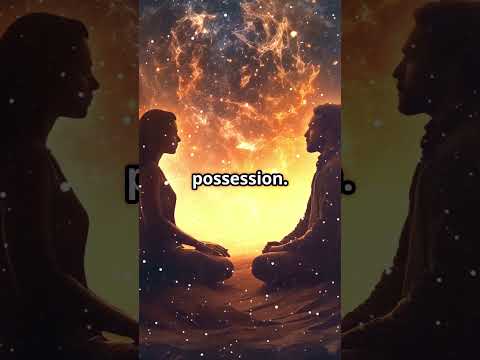
    True love, from a Buddhist perspective, is not about possession, control, or emotional dependence. It’s not about using another person to fill a void within ourselves. Instead, love is seen as a generous, compassionate energy—one that flows freely, without expectation or demand.

    When we say “Your happiness is your responsibility,” we’re not saying love doesn’t matter. We’re saying that real love can only grow from a stable inner foundation. If we rely on others to make us happy, we create a fragile system. One that breaks the moment things change—as they always do.

    Why We Project Our Happiness Onto Others

    Many of us have been conditioned to believe that relationships should “fix” us. That once we find the right partner, friend, or even teacher, everything inside us will finally settle. But Buddhism teaches that this is an illusion.

    Other people can support us, encourage us, and walk alongside us. But they cannot do the work within us. They cannot remove our suffering or guarantee our peace. Only we can do that—through mindfulness, presence, and the practice of self-awareness.

    When we project our happiness onto others, we make them responsible for something that isn’t theirs to carry. And in doing so, we unintentionally create pressure, resentment, and disappointment in our relationships.

    The Practice of Emotional Responsibility

    Taking ownership of your happiness doesn’t mean isolating yourself or rejecting connection. It means recognizing that:

    • Your inner peace comes from your own thoughts, beliefs, and actions.
    • Your emotions are yours to understand, accept, and work through.
    • Your self-worth is not determined by how someone else treats you.

    This is what Buddhism calls the path of emotional freedom. It’s about detaching from the idea that someone else should make you feel okay. It’s about learning to sit with discomfort, to know yourself deeply, and to love without needing.

    Relationships As Shared Journeys, Not Emotional Crutches

    In healthy, mindful relationships, two people come together not to fix each other—but to support each other’s growth. Love becomes a mutual exchange of presence and compassion, not a transaction for validation or emotional rescue.

    When both people take responsibility for their own well-being, the relationship becomes lighter. Freer. More resilient. There’s room for love to move naturally, without fear or pressure.

    This is the Buddhist ideal: non-attached love. Not cold or distant—but deeply present and respectful of each person’s path.

    How to Start Cultivating Inner Happiness

    You don’t need to be a monk to start practicing this truth. Here are three gentle steps anyone can take:

    1. Pause when you feel disappointed by others.
      Ask: “Was I expecting them to make me feel something I need to create myself?”
    2. Spend quiet time alone, without distractions.
      Get to know your own mind. Breathe. Observe. Let thoughts pass.
    3. Shift the question.
      From: “Why aren’t they making me happy?”
      To: “What can I do to cultivate peace in this moment?”
    You Don’t Own the People You Love: True Freedom in Buddhist Love
    You Don’t Own the People You Love: True Freedom in Buddhist Love

    Final Thoughts: Freedom Is Love

    When you stop expecting others to make you happy, you don’t become detached—you become free. And from that freedom, real love can finally grow—not based on need, but on truth, presence, and mutual care.


    If this teaching resonates with you, share it with someone who may be searching for peace in love. For more Buddhist reflections, explore our video library at YourWisdomVault on YouTube.

    Thanks for watching: You Don’t Own the People You Love: True Freedom in Buddhist Love

  • From Data to Decisions: How Artificial Intelligence Works

    From Data to Decisions: How Artificial Intelligence Really Works. #technology #nextgenai #chatgpt

    How Artificial Intelligence Really Works

    We hear it everywhere: “AI is transforming everything.” But what does that actually mean? How does artificial intelligence go from analyzing raw data to making real-world decisions? Is it conscious? Is it creative? Is it magic?

    Nope. It’s math. Smart math, trained on a lot of data.

    In this article, we’ll break down how AI systems really work—from machine learning models to pattern recognition—and explain how they turn data into decisions that power everything from movie recommendations to medical diagnostics.

    The Foundation:

    At the core of every AI system is data—massive amounts of it.

    Before AI can “think,” it has to learn. And to learn, it needs examples. This might include images, videos, text, audio, numbers—anything that can be used to teach the system patterns.

    For example, to train an AI to recognize cats, you don’t teach it what a cat is. You feed it thousands or millions of images labeled “cat”. Over time, it starts identifying the visual features that make a cat… well, a cat.

    Step Two: Pattern Recognition

    Once trained on data, AI uses machine learning algorithms to identify patterns. This doesn’t mean the AI understands what it’s seeing. It simply finds statistical connections.

    For instance, it might notice that images labeled “cat” often include pointed ears, whiskers, and certain body shapes. Then, when you show it a new image, it checks whether that pattern appears.

    This is how AI makes predictions—by comparing new inputs to patterns it already knows.

    Step Three: Decision-Making

    AI doesn’t make decisions like humans do. There’s no internal debate or emotion. It works more like this:

    1. Receive Input: A photo, sentence, or number.
    2. Analyze Using Trained Model: It compares this input to everything it’s learned from past data.
    3. Output the Most Probable Result: “That’s 94% likely to be a cat.” Or “This transaction looks like fraud.” Or “This user might enjoy this video next.”

    These outputs are often used to automate decisions—like unlocking your phone with face recognition, or adjusting traffic lights in smart cities.

    Real-Life Examples of AI in Action

    • Streaming services: Recommend what to watch based on your viewing history.
    • Email filters: Sort spam using natural language processing.
    • Healthcare diagnostics: Spot tumors or diseases in medical scans.
    • Customer service: AI chatbots answer common questions instantly.

    In each case, AI is taking in data, applying learned patterns, and making a decision or prediction. This process is called inference.

    The Importance of Data Quality

    One of the most overlooked truths about AI is this:
    Garbage in = Garbage out.

    AI is only as good as the data it’s trained on. If you feed it biased, incomplete, or low-quality data, the AI will make poor decisions. This is why AI ethics and transparent training datasets are so important. Without them, AI can unintentionally reinforce discrimination or misinformation.

    Is AI Actually “Intelligent”?

    Here’s the twist: AI doesn’t “understand” anything. It doesn’t know what a cat is or why fraud is bad. It’s a pattern-matching machine, not a conscious thinker.

    That said, the speed, accuracy, and scalability of AI make it incredibly powerful. It can process more data in seconds than a human could in a lifetime.

    So while AI doesn’t “think,” it can simulate decision-making in a way that looks intelligent—and often works better than human judgment, especially when dealing with massive data sets.

    From Data to Decisions: How Artificial Intelligence Really Works

    Conclusion: From Raw Data to Real Decisions

    AI isn’t magic. It’s not even mysterious—once you understand the process.

    It all starts with data, moves through algorithms trained to find patterns, and ends with fast, automated decisions. Whether you’re using generative AI, recommendation engines, or fraud detection systems, the core principle is the same: data in, decisions out.

    And as AI continues to evolve, understanding how it actually works will be key—not just for developers, but for everyone living in an AI-powered world.


    Want more bite-sized breakdowns of big tech concepts? Check out our full library of TechnoAivolution Shorts on YouTube and explore how the future is being built—one line of code at a time.

    P.S. The more we understand how AI works, the better we can shape the way it impacts our lives—and the future.

    #ArtificialIntelligence #MachineLearning #HowAIWorks #AIExplained #NeuralNetworks #SmartTech #AIForBeginners #TechnoAivolution #FutureOfTech

  • Love Without Ownership: The Truest Kind of Buddhist Love

    Love Without Ownership: The Toughest, Truest Kind of Buddhist Love That Frees the Heart Completely.
    Love Without Ownership: The Toughest, Truest Kind of Buddhist Love

    Love Without Ownership: The Toughest, Truest Kind of Buddhist Love

    In today’s world, love is often tangled up with possession. We’re taught to hold on tightly to the people we care about—to define, label, and sometimes even control them. But what if that’s not love at all? What if the deepest, most profound form of love is the one that doesn’t cling?

    In Buddhist philosophy, love is inseparable from non-attachment. That may sound cold to some ears, but in reality, it’s the opposite. It’s a love so pure, so selfless, that it expects nothing in return. It doesn’t demand attention, reciprocation, or permanence. It simply wishes the other well, exactly as they are, wherever they are.

    What Is Non-Attachment in Love?

    Non-attachment doesn’t mean detachment or indifference. It’s not the absence of love, but the absence of clinging. It’s the ability to fully appreciate another person without needing to grasp at them or make them yours.

    In Buddhism, attachment is considered one of the roots of suffering (dukkha). We suffer because we want to hold on to people, moments, and outcomes that are always changing. When we attach to someone out of fear—fear of being alone, fear of change, fear of loss—we’re not really loving them. We’re trying to use them to secure our own emotional safety.

    Love without ownership is different. It says:
    “I see you, I care for you, and I want your happiness—even if it doesn’t include me.”

    That’s hard. It’s countercultural. But it’s also the truest form of love according to Buddhist teachings.

    Love as Freedom, Not Possession

    Think about how often we confuse love with ownership:

    • “You’re mine.”
    • “If you loved me, you’d stay.”
    • “I can’t live without you.”

    These ideas come from attachment, not awareness. In mindful love, we aim to shift from possession to presence. Instead of trying to hold on, we simply show up. Instead of needing someone to complete us, we celebrate them for who they already are.

    True love in this context is liberation, not limitation. It respects boundaries. It welcomes change. It allows each person to grow freely.

    Practicing Non-Attached Love

    Non-attached love isn’t just for monks or spiritual masters—it’s for anyone who wants to love more deeply and suffer less. Here are a few ways to bring this practice into daily life:

    1. Observe your clinging:
      Notice when your love starts turning into fear or control. Are you acting out of love—or out of the fear of losing someone?
    2. Let people change:
      People grow, evolve, and sometimes drift. Loving without ownership means allowing this to happen without resistance.
    3. Wish them well—always:
      Even when relationships shift or end, continue to wish the other person happiness and peace. That’s unconditional love.
    4. Love yourself, too:
      Often, we cling to others because we haven’t yet learned to feel whole on our own. Self-compassion is the root of all compassionate love.

    The Hardest—and Most Beautiful—Kind of Love

    Love without ownership is not easy. It can feel like loss. It can feel like standing in the rain without an umbrella, heart exposed. But it’s also where real transformation begins. It’s the kind of love that doesn’t trap—it frees.

    In Buddhism, this is the love that liberates both the giver and the receiver. It’s not transactional. It’s not dependent on outcomes. It simply is—present, aware, and unconditional.

    If more of us practiced this form of love, maybe our relationships would suffer less from control, expectation, and fear. Maybe we’d hurt each other less. Maybe we’d learn to love more like the Buddha did—open-handed and open-hearted.

    Love Without Ownership: The Toughest, Truest Kind of Buddhist Love
    Love Without Ownership: The Toughest, Truest Kind of Buddhist Love

    If this reflection resonated with you, consider sharing it with someone who’s walking a similar path. And if you’re curious about more insights like this, explore our library of Buddhist Shorts at YourWisdomVault on YouTube. And remember: At its core, Buddhist wisdom invites us to practice love without ownership—a love rooted in freedom, not possession.

    #BuddhistLove #NonAttachment #MindfulRelationships #EmotionalFreedom #SpiritualGrowth #LettingGo #BuddhistWisdom #UnconditionalLove #SelflessLove #LoveWithoutAttachment

    P.S. Sometimes the hardest love to give is the one that asks for nothing. But in that surrender, we often find the deepest peace.

    Thanks for watching: Love Without Ownership: The Truest Kind of Buddhist Love