Tag: Buddha quotes

  • Victory Breeds Hate, Defeat Brings Pain — Peace Brings Joy!

    Victory Breeds Hate, Defeat Brings Pain—Only Peace Brings True Joy and Freedom of the Heart.
    Victory Breeds Hate, Defeat Brings Pain — Peace Brings Joy!

    Victory Breeds Hate, Defeat Brings Pain — Peace Brings Joy!

    In today’s fast-paced world, many of us are taught to strive for victory at all costs. We’re conditioned to believe that winning is the ultimate goal—whether it’s in our careers, relationships, or personal pursuits. But what if this mindset is actually a source of our suffering?

    The Buddha, in his timeless wisdom, once said:
    “Victory breeds hatred. The defeated live in pain. Peaceful live happily.”

    This powerful quote invites us to look beyond the surface of competition and conflict. It calls us to ask: What does it really mean to win? And what are we losing in the process?

    The Hidden Cost of Winning

    In a culture obsessed with success, we rarely pause to consider the consequences of our victories. When we “win” an argument, dominate in a debate, or outshine someone in competition, it may feel good—temporarily. But often, those victories come at a price: resentment, broken relationships, or feelings of superiority that isolate us.

    This is what the Buddha meant by “victory breeds hatred.” The act of overpowering another creates division, not unity. It fosters ego, not empathy. And over time, this leads to emotional isolation and spiritual unrest.

    The Pain of Defeat

    On the other side of the coin, defeat can be equally damaging. When we lose—whether it’s a job opportunity, a relationship, or even a minor disagreement—we often carry that pain with us. The feeling of being “less than” or “not enough” lingers in the mind and heart.

    The Buddha’s words ring true again: “The defeated live in pain.” This suffering doesn’t just come from loss itself, but from the attachment to winning, and the belief that our worth is tied to our outcomes.

    This kind of pain can manifest as anxiety, depression, low self-esteem, or anger. We become stuck in cycles of comparison and self-doubt, all because we haven’t been taught to value inner peace over external validation.

    The Path to True Happiness: Inner Peace

    So where does true happiness lie? Not in victory. Not in avoiding defeat. But in the peaceful mind—a mind that is free from ego, expectation, and the need to control outcomes.

    “Peaceful live happily.” This final line of the Buddha’s quote is more than just poetic—it’s deeply practical. When we release the need to always be right, to always win, we open ourselves to something greater: freedom.

    Peace isn’t passivity. It’s not giving up or letting others walk over you. It’s choosing not to engage in battles that drain your energy and cloud your clarity. It’s mastering your emotions rather than being mastered by them.

    How to Cultivate Inner Peace

    You might be wondering: How can I start living more peacefully? Here are a few steps rooted in Buddhist mindfulness and modern well-being:

    1. Practice Detachment – Let go of outcomes. Focus on effort, not results.
    2. Develop Compassion – See others not as opponents, but as fellow travelers.
    3. Meditate Daily – Even 5 minutes of stillness can reset your mindset.
    4. Reflect on Impermanence – Nothing lasts forever—not victory, not defeat.
    5. Speak Mindfully – Avoid words that wound. Choose connection over conquest.

    These practices help rewire the mind away from ego-driven behavior and toward conscious, compassionate living.

    Final Thoughts

    The Buddha’s teaching—“Victory breeds hatred. The defeated live in pain. Peaceful live happily.”—is a reminder that true fulfillment doesn’t come from “winning” according to the world. It comes from mastering yourself, letting go of the need to prove anything, and choosing peace even when conflict seems tempting.

    Ask yourself today: Is this worth my peace?
    And if it’s not—let it go.

    Victory Breeds Hate, Defeat Brings Pain — Peace Brings Joy!
    Victory Breeds Hate, Defeat Brings Pain — Peace Brings Joy!

    Liked this message?
    Share it, and follow YourWisdomVault on YouTube for more reflections on mindfulness, spiritual growth, and conscious living.

    P.S.

    If this message spoke to your soul, don’t just read it—live it. Peace is a choice you can make today. 🌱

    #BuddhaQuotes #Mindfulness #InnerPeace #SpiritualWisdom #VictoryAndDefeat #LettingGo #EmotionalHealing #LifeLessons #PeacefulLiving #YourWisdomVault

  • Avoid Low Company & the Careless – A Buddhist Life Lesson.

    Avoid Low Company & the Careless—A Buddhist Life Lesson on Wisdom, Integrity, and Inner Peace.
    Avoid Low Company & the Careless – A Buddhist Life Lesson.

    Avoid Low Company & the Careless – A Buddhist Life Lesson.

    In the teachings of the Buddha, there is a powerful directive:
    “One should not associate with low people or linger with the careless.”

    This might sound harsh at first glance, but within this simple statement lies profound spiritual wisdom. In today’s fast-paced and noisy world, our peace of mind is easily influenced — not just by events, but by people. Who we choose to associate with has a deep impact on our mental clarity, spiritual growth, and emotional well-being.

    The Company You Keep Shapes Your Path

    The Buddha emphasized mindfulness not only in meditation but also in relationships. The people we spend time with influence our thoughts, habits, and even our values. If we consistently associate with those who are reckless, careless, or rooted in negativity, we begin to absorb their energy — often without realizing it.

    Our environment is not just physical. It’s emotional. It’s spiritual. It’s the conversations we have, the energy exchanged, and the intentions people carry. When we surround ourselves with the careless, we start to lose our sense of direction.

    On the other hand, when we seek the company of the wise, the compassionate, and the mindful, we find our awareness begins to sharpen. Their presence uplifts us. Their energy strengthens our practice. That’s why ancient spiritual traditions across the world — not just Buddhism — have always stressed the importance of satsang, or keeping good company.

    This Is Not About Judgment

    It’s important to clarify: this teaching is not about judging others or thinking of ourselves as “higher” than someone else. It’s about recognizing what supports our path and what distracts from it.

    There are moments in life where we outgrow certain friendships or social circles — not because we’re better than anyone, but because our priorities have changed. Peace becomes more essential than drama. Growth is more valuable than gossip. Clarity is more desirable than chaos.

    The Buddha invites us to walk with intention. To choose relationships that help us evolve, not devolve.

    Signs You May Be Lingering with the Careless

    Here are a few subtle signs that someone’s presence may be hindering your mindfulness:

    • You feel drained or anxious after spending time with them
    • They constantly complain or dwell on negativity
    • Your values feel compromised in their company
    • They mock or dismiss spiritual or mindful practices
    • You begin to adopt behaviors or mindsets that feel out of alignment

    If you recognize any of these signs, it’s not a call to judge — but a gentle nudge to reassess. Protecting your energy is a form of self-compassion.

    Choosing the Company of the Wise

    So, how do we seek better company? Sometimes it’s not easy, especially if we’re surrounded by people we’ve known for years. But shifting our environment can start small:

    • Spend more time with those who uplift and inspire
    • Read books or listen to talks from spiritual teachers
    • Join communities that value growth and presence
    • Spend quiet time in nature — solitude can be wise company too

    As your inner clarity deepens, you’ll naturally be drawn to — and attract — others on a similar path.

    Final Thoughts: Protect Your Path

    In today’s world, distractions are endless. But spiritual growth requires focus, consistency, and inner stillness. That’s why this Buddhist teaching is as relevant now as it was 2,500 years ago.

    Choosing the right company is not about exclusivity. It’s about preservation. You are cultivating a garden of awareness — protect it from weeds. Be gentle, but be discerning. The quality of your relationships often reflects the quality of your inner life.

    If this teaching resonated with you, take a moment to reflect:
    Who in your life supports your peace — and who disrupts it?

    Avoid Low Company & the Careless – A Buddhist Life Lesson.
    Avoid Low Company & the Careless – A Buddhist Life Lesson.

    P.S. If this message resonated with you, consider subscribing to YourWisdomVault on YouTube for weekly Buddhist shorts, mindful living tips, and timeless spiritual insights.

    #BuddhistWisdom #MindfulLiving #SpiritualGrowth #AvoidNegativity #BuddhaQuotes #LifeLessons #ProtectYourEnergy #ConsciousLiving #SelfAwareness #YourWisdomVault

  • Few Cross to the Other Shore – Buddhist Wisdom on Rarity.

    Few Cross to the Other Shore—A Profound Buddhist Wisdom on the Rare Path to Enlightenment.
    Few Cross to the Other Shore – Buddhist Wisdom on Rarity.

    Few Cross to the Other Shore – Buddhist Wisdom on Rarity.

    In the ancient Buddhist text known as the Dhammapada, the Buddha offers a profound and haunting observation:

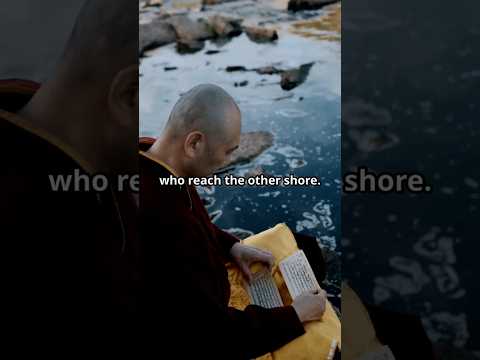
    “Few among men are those who reach the other shore; the rest run up and down the shore.”
    Dhammapada, Verse 85

    This verse is more than poetry—it’s a truth that continues to echo through time. It speaks to the spiritual path that few take, the inner journey that leads to freedom, peace, and awakening. In today’s fast-paced, distraction-filled world, this insight is more relevant than ever.


    What Is the “Other Shore”?

    The “other shore” is a metaphor for enlightenment—a state of liberation from suffering, ignorance, and the endless cycle of craving and aversion. In Buddhist philosophy, this cycle is called samsara. Most people, the Buddha teaches, are caught in the currents of samsara: pursuing temporary pleasures, fearing loss, and reacting to life from ego and attachment.

    To “reach the other shore” is to step out of this cycle. It means to live with mindfulness, clarity, and compassion. It is to realize the impermanence of all things and find peace in the present moment.


    Why So Few?

    Why do so few people reach the other shore?

    Because the path is not easy.

    It requires deep self-awareness, consistent meditation, and a willingness to let go of the illusions we cling to—identity, possessions, beliefs, and even our stories. The path asks us to look within rather than blame the world outside. It challenges us to examine our fears, our habits, and our attachments.

    Most people avoid this. It’s easier to stay busy, distracted, and entertained than to sit in silence and observe the mind. It’s easier to run up and down the shore than to actually cross the river.


    Crossing the River

    The Buddha often described the spiritual path as a crossing. He said the Dharma—the teachings—are like a raft. We use it to cross over from confusion to clarity, from suffering to serenity. But once we reach the other shore, we don’t carry the raft on our backs. We let it go.

    This speaks to the non-dogmatic nature of Buddhism. The teachings are a guide, not a belief system to be clung to. They serve their purpose—to help us awaken—and then we move forward with lightness and understanding.


    Bringing It Into Daily Life

    You don’t have to live in a monastery or renounce the world to begin crossing to the other shore. The journey starts in the present moment—with each breath, each choice, and each act of awareness.

    Ask yourself:

    • Am I reacting from ego or responding with wisdom?
    • Am I clinging to something that’s causing suffering?
    • Can I let go and be present right now?

    Practicing mindfulness, cultivating compassion, and reflecting on the impermanence of life are all part of the crossing.


    Final Thoughts

    The Buddha’s words remind us that the path of wisdom is not popular—it’s personal. It’s not loud, but quiet. Not filled with guarantees, but with invitations to look within. And while few may choose this path, those who do discover a freedom and peace that cannot be found on the surface of things.

    At YourWisdomVault, we share timeless teachings like this to inspire the modern seeker. If this message speaks to you, consider taking your own first step toward the other shore. You don’t have to know the whole path—just start walking it with intention.

    Few Cross to the Other Shore – Buddhist Wisdom on Rarity.
    Few Cross to the Other Shore – Buddhist Wisdom on Rarity.

    Explore More

    🙏 Thanks for watching our short video: Few Cross to the Other Shore – Buddhist Wisdom on Rarity.

    🎥 Subscribe to our channel YourWisdomVault on YouTube for more ancient insights in bite-sized form.

    🧘‍♀️ Begin your journey—one mindful breath at a time.

    #Buddhism #BuddhistWisdom #Dhammapada #Mindfulness #SpiritualJourney #Enlightenment #Awakening #InnerPeace #AncientWisdom #MeditationPractice #BuddhaTeachings #NonAttachment #EgoDeath #LettingGo #SelfAwareness #YourWisdomVault #CrossingToTheOtherShore #ModernSpirituality #DailyWisdom #PhilosophyOfLife

  • Focus on Your Path, Not Others – Buddhist Wisdom Quote.

    Focus on Your Path, Not Others—A Profound Buddhist Wisdom Quote on Mindful Self-Guidance.
    Focus on Your Path, Not Others – Buddhist Wisdom Quote.

    Focus on Your Path, Not Others – Buddhist Wisdom Quote.

    In our hyper-connected world, where social media constantly feeds us the lives, accomplishments, and opinions of others, it’s easy to lose sight of our own journey. One powerful quote from the Buddha reminds us of a timeless truth:

    “Let none neglect his own duty for the sake of another’s.”

    This Buddhist teaching encourages mindfulness, responsibility, and the importance of staying committed to our own spiritual and personal growth. At first glance, it may sound simple—but its depth is profound, especially when applied to modern life.

    The Trap of Comparison

    Comparison is one of the most subtle traps on the path of self-development. Whether it’s through scrolling social media, watching others succeed in your field, or trying to meet expectations set by family or culture, comparison can quickly turn into distraction.

    Buddhism teaches that suffering arises from attachment—and that includes attachment to how others live their lives. When we focus too much on what others are doing, we lose connection with the present moment and our own purpose. The Buddha’s words serve as a wake-up call: don’t trade your path for someone else’s. You were not born to live their life—you were born to live yours.

    Duty in the Buddhist Sense

    In Buddhism, the concept of “duty” isn’t about obligation in a burdensome way. Instead, it speaks to dharma—your personal truth, your role, your path in life. It means living in harmony with your values, your nature, and the lessons you are meant to learn and share.

    Neglecting your duty isn’t just about not doing your job. It’s about avoiding the inner work: not meditating when you need stillness, not speaking truth when it matters, not growing because it’s uncomfortable.

    When we abandon our dharma to chase someone else’s version of success, we drift further from inner peace. The quote calls us back to ourselves.

    How to Stay Focused on Your Path

    Here are a few mindful ways to apply this Buddhist wisdom in daily life:

    1. Limit Distractions

    Turn off the noise when needed—especially social media. If you find yourself constantly checking what others are doing, pause and breathe. Return to your space. Your body. Your breath.

    2. Practice Self-Reflection

    Ask yourself regularly: Am I acting out of alignment with my values? Write down your goals and revisit your “why” often. Mindfulness means returning—again and again—to presence and purpose.

    3. Celebrate Progress, Not Perfection

    Your path isn’t a race. Growth takes time. Comparing yourself to others’ highlight reels only steals your peace. Measure your progress by your own heart and actions, not the world’s applause.

    4. Make Time for Inner Work

    Meditation, journaling, silence, reading spiritual texts—whatever helps you return to your center. That’s your real work. That’s your true path.

    Final Thoughts

    Buddhist wisdom doesn’t tell us to ignore others or live in isolation. It invites us to honor the interconnectedness of all life while still taking responsibility for our unique journey. When the Buddha said, “Let none neglect his own duty for the sake of another’s,” he wasn’t promoting selfishness—he was advocating for self-responsibility.

    You are the guardian of your soul, your peace, and your path. Let others walk theirs, and you walk yours—with mindfulness, integrity, and love.

    Focus on Your Path, Not Others – Buddhist Wisdom Quote.
    Focus on Your Path, Not Others – Buddhist Wisdom Quote.

    Like this teaching?
    Subscribe to Your Wisdom Vault on YouTube for more Buddhist wisdom, spiritual quotes, and mindful reflections.

    🧘‍♂️ Stay grounded. Stay focused. Walk your path.


    #BuddhistWisdom #MindfulnessPractice #StayOnYourPath