Tag: buddhist mindfulness

  • How to Pause Without Guilt: Mindful Rest for Inner Peace!

    How to Pause Without Guilt — Practice Mindful Rest to Restore Balance, Clarity, and Inner Peace.
    How to Pause Without Guilt: Mindful Rest for Inner Peace!

    How to Pause Without Guilt: Mindful Rest for Inner Peace!

    In a culture obsessed with productivity and constant motion, the simple act of resting has become something we feel we must justify. We’ve been conditioned to associate stillness with laziness, and pausing with falling behind. But what if we told you that pausing—when done mindfully—is not a weakness, but a sacred form of wisdom?

    This idea is deeply rooted in both Buddhist teachings and Stoic philosophy. In both traditions, intentional rest isn’t seen as optional—it’s essential. It’s not an escape from life, but a way to return to it fully.

    The Guilt Trap of Rest

    Many of us are familiar with the voice in our heads that whispers, “You should be doing something.” Even when our body is tired, or our mind is overwhelmed, we push through. We fear being seen as unproductive or idle. This guilt-driven mindset keeps us stuck in cycles of burnout and self-judgment.

    But rest is not the opposite of effort—it’s what sustains it. Just like the inhale must follow the exhale, pausing gives life rhythm and depth. Without it, we lose our connection to presence and meaning.

    What Does Mindful Rest Look Like?

    Mindful rest is not just lying on the couch scrolling your phone. It’s the conscious decision to stop, breathe, and be with yourself without distraction.

    It could be:

    • Sitting quietly with your breath for five minutes.
    • Taking a walk without headphones, simply noticing your surroundings.
    • Saying “no” to something not aligned with your energy today.
    • A full stop—doing nothing, and being okay with it.

    Mindful rest honors the truth that you are not your productivity. You are a human being, not a human doing.

    What Buddhism Teaches About Stillness

    In Buddhism, stillness is not laziness—it’s a gateway to clarity and compassion. The Buddha himself taught the importance of right effort, which includes knowing when to act and when to pause.

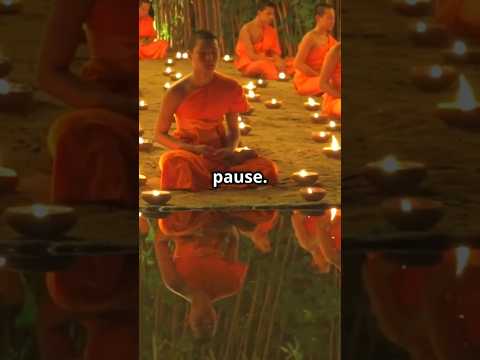
    Monastics often spend hours in seated meditation—not to escape life, but to engage with it more deeply. In those moments of silence, they cultivate presence, awareness, and inner peace.

    You don’t need to be a monk to embrace this. Even one mindful breath can create a pause in the storm.

    The Stoic Echo

    Interestingly, Stoic thinkers like Marcus Aurelius also emphasized the value of retreat. In his Meditations, he often reminded himself to “return to the self,” especially in moments of chaos or overstimulation.

    In this way, Stoicism and Buddhism meet: The still mind sees clearly. The rested soul acts wisely.

    You Are Allowed to Pause

    This is your reminder: You are allowed to rest. Without explanation. Without guilt.

    You are not falling behind by pausing. You’re showing up for yourself in the most honest way possible.

    When you choose rest with intention, you’re not stepping off the path—you’re walking it, mindfully. That pause becomes a sacred space where healing, clarity, and renewal can arise.

    A New Definition of Strength

    In a world that glorifies hustle, choosing rest is radical. It’s an act of resistance against burnout. It’s a reclaiming of your time, your energy, and your peace.

    Let’s redefine strength not as endless motion, but as the wisdom to know when to be still. In that stillness, we discover the peace that’s been waiting for us all along.

    How to Pause Without Guilt: Mindful Rest for Inner Peace!
    How to Pause Without Guilt: Mindful Rest for Inner Peace!

    If this message spoke to you, watch the 45-second video that inspired it:
    How to Pause Without Guilt: Mindful Rest for Inner Peace – available now on Your Wisdom Vault on YouTube.

    🧘‍♂️ Subscribe for more reflections on mindfulness, Buddhist wisdom, and intentional living.

  • How to Tame a Wild Mind Without Breaking It!

    How to Tame a Wild Mind Without Breaking It — Find Balance, Focus, and Inner Strength.
    How to Tame a Wild Mind Without Breaking It!

    How to Tame a Wild Mind Without Breaking It!

    We live in a world that constantly demands our attention. Our minds, already restless, become even more agitated with every notification, every worry about the future, and every regret about the past. If you’ve ever felt like your thoughts are running wild — like an untamed animal — you’re not alone. But here’s the good news: your mind doesn’t need to be silenced or suppressed. It needs to be tamed — and there’s a big difference.

    🧠 The Mind as a Wild Animal

    In Buddhist mindfulness and meditation teachings, the mind is often compared to a monkey — jumping from branch to branch, never settling. But I prefer the image of a wild animal. It’s not wrong. It’s not broken. It’s just instinctual, energetic, and reactive. Trying to cage it with force — through suppression, distraction, or denial — only increases its resistance.

    You don’t need to fight your thoughts. You need to understand them. And that begins with observation.

    🧘 The Power of Gentle Attention

    Mindfulness isn’t about stopping your thoughts. It’s about noticing them. When you sit quietly and simply observe your mind — without judgment, without trying to “fix” anything — something powerful happens. Your mind begins to trust you. Like a wild animal sensing safety, it starts to calm down on its own.

    Non-attachment plays a key role here. When a thought arises — maybe it’s fear, anxiety, or self-doubt — don’t grab it. Don’t run from it either. Just notice it. Watch how it appears, lingers, and fades. This is the core of taming the mind without breaking it: allowing space for thoughts without letting them control you.

    🔄 Control vs. Understanding

    Modern life teaches us that control equals power. But the deeper truths — those taught in Buddhism, Stoicism, and other philosophies — remind us that real strength is in surrender. Not a passive surrender, but an intentional letting go. When we try to force our minds into silence, we usually end up frustrated. But when we invite the mind to settle, it often does.

    Instead of saying, “I need to stop thinking,” say, “I’ll sit with this thought and watch it pass.” That subtle shift changes everything.

    🌿 A Practice for the Wild Mind

    Here’s a simple exercise you can try today:

    1. Sit comfortably, eyes open or closed.
    2. Focus on your breath for a few seconds.
    3. When a thought arises, label it gently — “planning,” “worrying,” “remembering.”
    4. Then, return to your breath.
    5. Repeat. Not to silence the mind, but to build the muscle of gentle awareness.

    With time, this practice creates space between you and your thoughts — a space where clarity, peace, and true presence live.

    🌅 Taming ≠ Breaking

    Taming your mind doesn’t mean becoming emotionless or robotic. It means becoming less reactive and more present. It’s about meeting your inner world with the same patience you’d offer a scared animal — not with punishment, but with understanding.

    The goal isn’t silence. It’s stillness.
    Not the kind you force, but the kind you find when you stop resisting.

    How to Tame a Wild Mind Without Breaking It!
    How to Tame a Wild Mind Without Breaking It!

    🌍 Final Thought

    Your mind may be wild, but it’s also wise. It’s trying to protect you, to process your world, to survive. But with compassion, practice, and patience, you can train it to work with you, not against you.

    So the next time your thoughts feel out of control, remember this:
    You don’t need to break your mind to find peace.
    You just need to listen — and gently guide it home.

    #Mindfulness #TameYourMind #NonAttachment #BuddhistWisdom #CalmTheMind #Overthinking #MentalClarity #PresentMoment #EmotionalBalance #YourWisdomVault

    P.S. If this brought you a little more clarity today, consider subscribing to YourWisdomVault on YouTube — where ancient wisdom meets the modern mind, one quiet insight at a time.