Tag: buddhist philosophy

  • Heedlessness Leads to Death – A Timeless Buddhist Teaching.

    Heedlessness Leads to Death—A Timeless Buddhist Teaching on Awareness, Wisdom, and Living Fully.
    Heedlessness Leads to Death – A Timeless Buddhist Teaching.

    Heedlessness Leads to Death – A Timeless Buddhist Teaching.

    In the fast-paced chaos of modern life, it’s easy to fall into autopilot—checking our phones, rushing through tasks, and reacting without awareness. But according to the Buddha, this way of living carries a far greater cost than we realize. In the Dhammapada, a revered collection of the Buddha’s sayings, he states clearly:

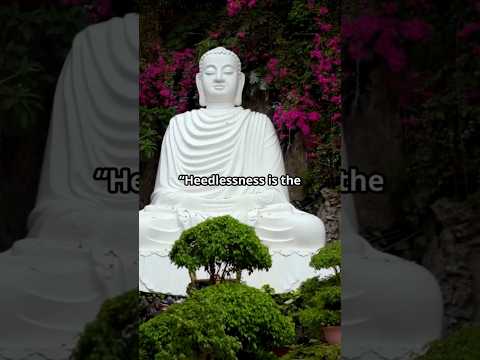
    “Heedlessness is the path to death. The heedful never die.”

    This deceptively simple line captures a deep and timeless truth at the heart of Buddhist philosophy.

    What Is Heedlessness?

    Heedlessness means living without mindfulness—without conscious presence or wise reflection. It’s the state of drifting through life unaware, chasing distractions, desires, or avoiding discomfort without truly understanding what we’re doing or why. In Buddhist terms, it’s a form of spiritual sleepwalking.

    Heedlessness often shows up as:

    • Reactivity: Responding to life with impulses rather than intention.
    • Attachment: Clinging to desires or aversions without questioning them.
    • Distraction: Constantly turning to entertainment or stimulation to avoid silence or stillness.
    • Forgetfulness: Losing touch with our values, our breath, and the moment we’re in.

    Over time, heedlessness deepens suffering. It feeds ignorance (avidyā), the root cause of the endless cycle of rebirth and dissatisfaction (samsara).

    The Path of Mindful Awareness

    By contrast, heedfulness—often translated as mindfulness, awareness, or vigilance—is the path to spiritual life. It means being fully present in each moment, aware of our thoughts, actions, and feelings without becoming entangled in them.

    Mindfulness brings:

    • Clarity: We begin to see the causes of our suffering.
    • Compassion: We respond rather than react, with care instead of fear.
    • Freedom: We let go of harmful habits and unconscious patterns.

    This is why the Buddha emphasized heedfulness as the “path of the deathless.” He wasn’t referring only to physical death, but to the death of wisdom, presence, and awakening. The heedless are alive biologically, but spiritually asleep. The heedful are alive in the deepest sense—awake to the nature of life, death, and liberation.

    Applying This Teaching in Daily Life

    You don’t need to live in a monastery to practice heedfulness. In fact, the modern world is the perfect training ground. Try these small, mindful shifts:

    1. Pause before reacting – Whether it’s a stressful email or a difficult conversation, take a breath before responding.
    2. Observe your thoughts – Spend 5 minutes a day noticing your mental patterns without judgment.
    3. Return to your body – Feel your feet on the ground or the rise of your breath to reconnect with the present.
    4. Question your cravings – Ask yourself if what you want will truly bring peace or just momentary relief.

    Every time you choose mindfulness over reactivity, you plant a seed of awakening.

    Final Thoughts: Living with Intention

    The Buddha’s warning isn’t meant to scare us—it’s meant to wake us up. Heedlessness isn’t just a moral failure. It’s a missed opportunity to live fully, freely, and wisely.

    Living with heedfulness doesn’t require perfection. It requires remembrance. Each moment is a chance to begin again, to return to the breath, and to live with conscious care.

    Heedfulness is the gateway to the deathless. And that journey begins not tomorrow, but right now.

    Heedlessness Leads to Death – A Timeless Buddhist Teaching.
    Heedlessness Leads to Death – A Timeless Buddhist Teaching.

    If this message resonates with you, I invite you to take one small step today toward greater awareness. Share it with someone walking a mindful path, and subscribe to YourWisdomVault on YouTube and stay connected to more timeless Buddhist wisdom.

    #Mindfulness #BuddhistTeachings #Heedlessness

  • Why Buddhism Isn’t Focused on Positivity All the Time.

    Why Buddhism Isn’t Focused on Positivity All the Time—but on Truth, Balance, and Inner Freedom.
    Why Buddhism Isn’t Focused on Positivity All the Time.

    Why Buddhism Isn’t Focused on Positivity All the Time.

    When people think of Buddhism, they often imagine peaceful monks, serene smiles, and a mindset full of positive vibes. But this popular image misses something essential. Buddhism isn’t about always being happy. It’s not about “good vibes only.” In fact, Buddhism teaches us that trying to cling to constant positivity is just another form of attachment—and suffering.

    In a world obsessed with positive thinking, Buddhism offers something different: clarity. Mindfulness. And a deep, compassionate understanding of how life really works.

    Buddhism and the Myth of Constant Positivity

    In Western self-help culture, positivity is often sold as the ultimate goal. We’re told to think positively, speak affirmations, and avoid anything that might feel “negative.” But Buddhism sees this differently. Why Buddhism isn’t focused on constant positivity?

    Buddhism teaches that everything is impermanent—including emotions. Joy comes and goes. So does sadness, frustration, boredom, and even peace. Trying to hold on to one and push the others away creates suffering. This is known as attachment.

    When we constantly chase happiness and resist discomfort, we end up denying reality. Buddhism invites us to do the opposite—to sit with what is, even if it’s painful.

    Suffering Isn’t Failure—It’s a Teacher

    One of the core truths in Buddhism is the First Noble Truth: life involves suffering (dukkha). That doesn’t mean life is only pain, but it acknowledges that challenges, loss, illness, and uncertainty are part of the human experience.

    Instead of labeling these moments as “negative” or something to escape, this is why Buddhism encourages us to observe them mindfully. To look deeply. When we do, we begin to see that suffering can be a teacher.

    This approach helps us develop equanimity—a steady mind that isn’t shaken by highs or lows. That’s far more powerful than forced positivity.

    Mindfulness Over Positivity

    Rather than striving to feel good all the time, Buddhism teaches us to be fully present—with whatever arises. This is the practice of mindfulness.

    Mindfulness means watching our thoughts and emotions with awareness, but without judgment. When sadness comes, we notice it. When anger appears, we observe it. And when joy arises, we appreciate it—without clinging to it.

    This balanced approach leads to inner peace. Not the fake kind that comes from pretending everything’s fine, but a genuine calm that comes from accepting life as it is.

    Letting Go of the Need to Feel Good

    The need to feel good all the time is a form of craving—tanha in Buddhist terms. And like all craving, it leads to suffering. Buddhism teaches us to let go of craving, not just for material things, but for emotional states as well.

    By letting go of the constant pursuit of happiness, we open the door to something deeper: freedom. Freedom from needing life to be a certain way. Freedom to face the present moment honestly.

    This is the heart of Buddhist wisdom—not escaping life, but fully engaging with it, with an open heart and a clear mind.

    Real Peace Comes from Acceptance

    Buddhism isn’t about staying upbeat or avoiding pain. It’s about acceptance, awareness, and compassion—toward ourselves and others. When we stop fighting reality, we find peace that isn’t dependent on external conditions.

    That peace doesn’t always look cheerful. Sometimes it’s quiet. Sometimes it’s stillness in the middle of chaos. But it’s real.

    Final Thoughts

    If you’ve ever felt like positivity culture just doesn’t cut it—like it’s masking something deeper—you’re not alone. Buddhism reminds us that life isn’t meant to be polished into perfection. It’s meant to be lived, with full awareness and compassion.

    So the next time someone tells you to “just be positive,” pause. Take a breath. And remember: clarity is more powerful than cheerfulness. And true peace isn’t about avoiding the storm—it’s about learning to sit with it.

    Why Buddhism Isn’t Focused on Positivity All the Time.
    Why Buddhism Isn’t Focused on Positivity All the Time.

    Liked this post?
    Subscribe to YourWisdomVault on YouTube for weekly insights from Buddhism, Stoicism, and timeless teachings.
    No fluff—just clarity.

    P.S. Ever wondered why Buddhism resonates so deeply in times of struggle? It’s because it doesn’t ask us to escape reality—it teaches us to understand it.

    #Buddhism #Mindfulness #LettingGo #YourWisdomVault #NonAttachment #RadicalAcceptance

    And remember! This is why Buddhism values awareness over forced happiness! And thanks for watching: Why Buddhism Isn’t Focused on Positivity All the Time.

  • When Is Enough Truly Enough? | Buddhist Take on Contentment.

    When Is Enough Truly Enough? | Buddhist Wisdom on Contentment, Simplicity, and Inner Peace.
    When Is Enough Truly Enough? | Buddhist Wisdom on Contentment.

    When Is Enough Truly Enough? | Buddhist Wisdom on Contentment.

    In a world that constantly whispers, “just a little more,” the question becomes louder: When is enough truly enough?

    Buddhism offers a profound answer rooted not in ambition, but in awareness, contentment, and letting go. At its core, Buddhist philosophy teaches that the source of human suffering isn’t the world itself—it’s our endless desire for things to be different than they are.


    The Root of Suffering: Craving and Attachment

    One of the most famous teachings of the Buddha is this:

    “Desire is the root of suffering.”

    This truth is part of the Four Noble Truths, which form the foundation of all Buddhist thought. According to these teachings, our suffering is not caused by pain alone, but by our attachment to pleasure, our craving for permanence, and our refusal to accept change.

    We suffer because we want more—we want happiness to last forever, our possessions to stay shiny, and our lives to remain within our control. But reality doesn’t work that way. Everything changes. Everything passes. And trying to cling to impermanent things creates stress, anxiety, and disappointment.


    What Does “Enough” Really Mean?

    From a Buddhist perspective, “enough” is not a number.
    It’s a state of mind.

    Contentment comes not when we have everything, but when we stop needing more to feel okay. True peace arises when we can say, “This moment is complete, just as it is.”

    This doesn’t mean giving up on goals or ambitions—it means learning to let go of the emotional craving that attaches our happiness to external things. A person can work hard, create, grow, and still be content, so long as their sense of peace isn’t based on always getting more. We rarely stop to ask when is enough, and even less often to listen.


    Why “Enough” Is Freedom

    Think of the mental energy spent chasing more:

    • More money
    • More likes
    • More attention
    • More comfort
    • More validation

    Now imagine that burden lifted. That’s what contentment feels like. It’s the freedom from needing anything to feel complete.

    This is why Buddhist monks often live simply—not because poverty is holy, but because simplicity removes distraction. When we stop feeding craving, we begin to see clearly. And from clarity comes peace.


    A Practical Takeaway: Noticing the Moment

    You don’t have to be a monk to practice this. You can begin simply by noticing:

    • When does your mind say, “I’ll be happy when…”?
    • What do you chase that never seems to satisfy?
    • What if this moment, this breath, was enough?

    The practice is not about shaming desire—it’s about observing it without letting it drive your life. Buddhism invites us to be present, aware, and grateful—not constantly pulled by the next craving. When is enough becomes a doorway to clarity, not just a question.


    A Stoic Parallel

    Interestingly, Stoic philosophy teaches something similar. Marcus Aurelius wrote:

    “Very little is needed to make a happy life; it is all within yourself.”

    Both Stoicism and Buddhism encourage us to look inward rather than outward for peace. They remind us that freedom comes not from control, but from acceptance.

    When Is Enough Truly Enough? | Buddhist Wisdom on Contentment.
    When Is Enough Truly Enough? | Buddhist Wisdom on Contentment.

    Final Reflection: What If You Already Have Enough?

    Ask yourself honestly:
    What if you already have enough?
    What changes in your heart, your pace, your sense of self, if you believe that nothing more is required for you to be whole?

    That’s not a rejection of growth—it’s the beginning of peaceful presence.


    P.S. “When Is Enough Truly Enough?” is not just a question—it’s a practice.
    👉 Want more timeless wisdom like this? Subscribe here on YouTube and unlock the vault within.

    #Buddhism #Contentment #Mindfulness #LettingGo #InnerPeace #SpiritualGrowth #YourWisdomVault

  • Impermanence Isn’t the Enemy — It’s the Path to Peace.

    Impermanence Isn’t the Enemy—It's the Path to Peace, Acceptance, and the Freedom to Truly Live.
    Impermanence Isn’t the Enemy — It’s the Path to Peace.

    Impermanence Isn’t the Enemy — It’s the Path to Peace.

    We spend so much of our lives trying to hold things together—our relationships, our careers, our identities. We fear change. We resist loss. And deep down, we hope that if we try hard enough, we can make something last forever.

    But Buddhism offers a radically different perspective: nothing lasts forever, and that’s not a problem—it’s a liberation.

    Understanding Impermanence (Anicca)

    At the heart of the Buddha’s teachings is the concept of impermanence, or anicca in Pali. It’s one of the three marks of existence, along with suffering (dukkha) and non-self (anatta). Simply put, everything in this world is in a constant state of change.

    Your thoughts change. Your body changes. Emotions rise and fall. People come and go. Even the things you cling to most—your beliefs, your memories, your identity—are subject to the flow of time.

    Trying to hold onto what must change is like trying to grasp water. The tighter you hold, the more it slips through your fingers. And the more you resist change, the more you suffer.

    Resistance Creates Suffering

    Most of our emotional pain doesn’t come from what’s happening—it comes from how we respond to it. We resist. We deny. We grasp. We wish it were different.

    When someone leaves, we grieve not only their absence but the story we told ourselves about how things should have gone.
    When plans fall apart, we mourn not just the change, but the illusion of control we once believed we had.

    This resistance is subtle but powerful. It keeps us locked in fear, anxiety, and frustration. And often, it blinds us to the truth: that peace doesn’t come from holding on—it comes from letting be.

    The Peace Within Change

    What if, instead of fighting change, we trusted it?

    What if impermanence isn’t the enemy, but the teacher? What if every ending was an opening? Every loss, a space for growth?

    This is where Buddhist mindfulness comes in. When we sit in stillness and observe our breath, our thoughts, and our feelings, we begin to see their transient nature. Joy passes. Anger passes. Even pain passes. When we witness this flow without clinging or pushing away, we taste a deeper peace—the kind that doesn’t rely on circumstances.

    That’s the beauty of impermanence: it reminds us that nothing stays broken forever. Just as joy fades, so too does sorrow. Every difficult moment carries the seed of transformation.

    Walking the Path of Acceptance

    This isn’t about becoming cold or detached. It’s about becoming present.

    Accepting impermanence doesn’t mean we stop caring. It means we stop suffering because we care. It allows us to love fully, knowing that love may one day change. To engage with life deeply, without pretending it will always look the same.

    This is what the Buddha meant by freedom: a heart that can hold everything, yet cling to nothing.

    From Concept to Practice

    So how do we live this truth?

    • Practice mindfulness: Learn to witness thoughts and emotions without identifying with them.
    • Reflect daily: Remind yourself that this moment, whatever it is, is temporary.
    • Let go consciously: When you feel tension or grasping, ask: “What am I afraid of losing?”
    • Return to the breath: It’s the simplest and clearest reminder of impermanence—rising and falling, again and again.

    And above all, remember: impermanence is not here to hurt you. It’s here to wake you up.

    Impermanence Isn’t the Enemy — It’s the Path to Peace.
    Impermanence Isn’t the Enemy — It’s the Path to Peace.

    If this reflection speaks to you, share it. Sit with it. Breathe with it.
    And when you’re ready, keep walking the path—with open hands and a quiet heart.

    YourWisdomVault on YouTube – sharing timeless truths, one breath at a time.

    P.S. If this reflection helped you breathe a little easier, consider sharing it with someone who may need a moment of peace today. 🌿

    #Impermanence #Buddhism #Mindfulness #SpiritualGrowth #LettingGo #Dharma #InnerPeace #Anicca #MeditationWisdom #BuddhistTeachings