Tag: Enlightenment path

  • Dhammapada 283: Cut the Thicket, Find the Path to Awakening.

    Dhammapada 283: Cut the Thicket, Find the Path to Awakening.
    Dhammapada 283: Cut the Thicket, Find the Path to Awakening.

    Dhammapada 283: Cut the Thicket, Find the Path to Awakening.

    In one short, vivid line, the Buddha delivers a life-changing instruction: before you search for the path, you must first clear what blocks it. Dhammapada 283 is not poetic decoration. It is direct, practical, and almost confrontational in its simplicity. If you feel stuck, lost, or spiritually stagnant, this verse points straight to the cause.

    We often believe the problem is that we haven’t found the right teaching, the appropriate method, or the right motivation. But Dhammapada 283 suggests something else entirely. The issue is not the absence of a path. The issue is the overgrowth.

    What Does “The Thicket” Really Mean?

    In Buddhist teaching, the thicket represents craving, attachment, distraction, fear, and mental clutter. These are not abstract ideas. They show up as overthinking, unhealthy habits, emotional dependency, constant stimulation, and the inability to sit quietly with yourself.

    According to Dhammapada 283, awakening is not about adding more practices, more information, or more techniques. It is about removing what is unnecessary. The mind, when not tangled, naturally becomes clear. The heart, when not bound, naturally becomes light.

    This is why so many people feel spiritually exhausted. They are trying to walk while still carrying the jungle.

    Why Letting Go Feels So Hard

    Letting go sounds simple, but emotionally it can feel like loss. We cling to habits, identities, and distractions because they provide comfort, familiarity, and escape. Even when something causes suffering, it can still feel safer than the unknown.

    Dhammapada 283 challenges this directly. It reminds us that comfort is not freedom. The Buddha does not say, “Decorate the thicket.” He says, “Cut it.” That implies effort, discipline, and courage.

    This is where real transformation begins.

    Cutting the Thicket in Daily Life

    You do not need to become a monk or retreat into the mountains to live the message of Dhammapada 283. The work happens in ordinary moments.

    It can look like:

    • Reducing mindless scrolling
    • Ending a toxic relationship
    • Letting go of constant self-criticism
    • Creating space for silence
    • Choosing simplicity over stimulation

    Each small act of letting go is a cut through the vines. Each moment of awareness clears a little more of the path.

    And slowly, without force, clarity appears.

    The Path Was Never Lost

    One of the most comforting aspects of Dhammapada 283 is the implication that the path is already there. You do not need to invent it. You do not need to earn it. Furthermore, you only need to uncover it.

    This aligns deeply with Buddhist psychology. The mind is naturally luminous when unobstructed. Peace is not created. It is revealed.

    When you remove what is unwholesome, what remains is naturally wholesome.

    The Psychological Power of Simplicity

    Modern life is engineered for complexity. Notifications, opinions, information, noise, and pressure constantly compete for your attention. No wonder the mind feels crowded.

    The wisdom of Dhammapada 283 is shockingly relevant in this context. It teaches that simplicity is not weakness. It is strength. A simplified life is not empty. It is spacious.

    And in space, insight arises.

    Why This Teaching Feels So Timely

    People today are not just tired. They are overstimulated, overwhelmed, and inwardly fragmented. The popularity of mindfulness, minimalism, and spiritual content is not a trend. It is a symptom.

    We are collectively feeling the thicket.

    This is why Dhammapada 283 resonates so strongly, even thousands of years later. It names the problem and offers a solution that does not depend on culture, technology, or status. It depends solely on awareness and willingness.

    Walking the Path One Cut at a Time

    The Buddha never asked for perfection. He asked for sincerity. You do not need to clear the entire jungle in one day. One vine is enough. One habit. One attachment. Furthermore, one moment of awareness.

    That is the quiet power of Dhammapada 283. It turns awakening into something approachable, practical, and human.

    Not dramatic. Not mystical. Just honest work.

    And honest work changes everything.

    A Gentle Reflection

    If your life feels tangled, if your mind feels noisy, if your direction feels unclear, do not assume you are broken. You may simply be overgrown.

    The path is still there.

    And you already hold the blade.

    Dhammapada 283: Cut the Thicket, Find the Path to Awakening.
    Dhammapada 283: Cut the Thicket, Find the Path to Awakening.

    PS: If this teaching resonated with you, subscribe to YourWisdomVault on YouTube for more timeless Buddhist wisdom, clarity, and calm—one verse at a time.

    #Dhammapada #BuddhistWisdom #BuddhaTeachings #SpiritualAwakening #Mindfulness #InnerPeace #AncientWisdom #SpiritualGrowth #MeditationLife #ZenLife #AwakeningPath #YourWisdomVault

  • Dhammapada 367: Buddhist Wisdom on Calm and Peace Practice.

    Dhammapada 367: Buddhist Wisdom on Calm and Peace Practice for Deep Freedom and Clarity.
    Dhammapada 367: Buddhist Wisdom on Calm and Peace Practice.

    Dhammapada 367: Buddhist Wisdom on Calm and Peace Practice.

    In a world filled with noise, comparison, and constant striving, the words of Dhammapada 367 offer timeless clarity. This verse reminds us that true nobility doesn’t come from birth or status, but from the calm purity of one’s mind. It teaches that the real spiritual path lies not in external rituals, but in mastering our thoughts, emotions, and actions.

    When we understand Dhammapada 367, we see that freedom is not a distant ideal—it’s the natural result of inner balance and self-restraint. Let’s explore the deeper meaning behind this teaching and how it can guide modern life toward serenity and purpose.

    The Verse Explained

    Dhammapada 367 says that one should be called a Brahmin, or noble person, not because of lineage, wealth, or title, but because they have achieved purity and peace. In this context, “Brahmin” represents anyone who has conquered the inner storms of anger, greed, and ignorance.

    The Buddha emphasized that nobility is born from the heart, not from heritage. This verse calls us to rise above ego and external validation, realizing that spiritual worth is measured by calm awareness and compassionate living.

    Through Dhammapada 367, we learn that mindfulness, restraint, and clarity are not just practices—they are expressions of true freedom.

    The Power of Inner Discipline

    To live by the spirit of Dhammapada 367, one must cultivate discipline of the mind. It’s easy to control external situations, but much harder to calm the inner world. The verse teaches that mastery over oneself is greater than any victory over others.

    When anger arises, awareness helps dissolve it. When desire tempts us, wisdom keeps us steady. Each moment of restraint builds the foundation for genuine peace. This is how the teachings of the Dhammapada transform daily life into a living meditation.

    Applying the Teaching in Modern Life

    The message of Dhammapada 367 is deeply practical for today’s world. In an age of distraction and emotional overload, the ability to remain calm is a form of strength. Here are simple ways to live this verse daily:

    • Pause before reacting. A breath can create space between impulse and wisdom.
    • Simplify your life. Let go of possessions or habits that cloud your mind.
    • Practice mindfulness. Even a few minutes of quiet each day can awaken clarity.
    • Show compassion. Understanding others reduces anger and strengthens peace.

    Each of these actions turns Buddhist philosophy into lived experience—quietly transforming the mind into a temple of awareness.

    The Path to Purity and Freedom

    Purity, as described in Dhammapada 367, doesn’t mean perfection. It means living with sincerity, aligning actions with truth, and freeing oneself from harmful patterns. The verse invites us to purify the heart through reflection, kindness, and mindful effort.

    When the mind becomes still, we no longer depend on outer circumstances for happiness. We realize that peace is already within us, waiting to be uncovered. This is the true freedom the Buddha spoke of—a liberation not from the world, but from confusion about who we are.

    Why This Teaching Still Matters

    The wisdom of Dhammapada 367 remains relevant in 2025 because human struggles have not changed. We still chase recognition, cling to identity, and forget that real peace comes from letting go. This verse reminds us that enlightenment begins with self-awareness.

    By returning to these ancient truths, we rediscover a way of living that is both gentle and powerful—a life guided by clarity, compassion, and inner calm.

    Conclusion

    Dhammapada 367 is not just a verse—it’s a mirror reflecting the essence of spiritual maturity. It calls us to move beyond superficial distinctions and to cultivate a heart free from anger and attachment. When we live with awareness, compassion, and restraint, we embody the highest form of nobility the Buddha described.

    Let this wisdom remind you that freedom is not something to earn—it’s something to remember. Calm your mind, purify your heart, and walk the path of true peace.

    Dhammapada 367: Buddhist Wisdom on Calm and Peace Practice.
    Dhammapada 367: Buddhist Wisdom on Calm and Peace Practice.

    PS: If this message brought you clarity or calm today, consider subscribing to YourWisdomVault on YouTube to receive more timeless Buddhist wisdom and daily inspiration.

    #Buddhism #Dhammapada #MindfulnessPractice #YourWisdomVault

  • Few Cross to the Other Shore – Buddhist Wisdom on Rarity.

    Few Cross to the Other Shore—A Profound Buddhist Wisdom on the Rare Path to Enlightenment.
    Few Cross to the Other Shore – Buddhist Wisdom on Rarity.

    Few Cross to the Other Shore – Buddhist Wisdom on Rarity.

    In the ancient Buddhist text known as the Dhammapada, the Buddha offers a profound and haunting observation:

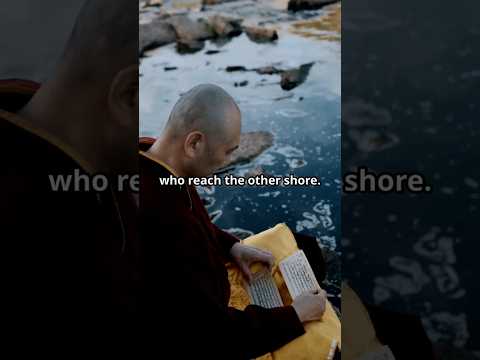
    “Few among men are those who reach the other shore; the rest run up and down the shore.”
    Dhammapada, Verse 85

    This verse is more than poetry—it’s a truth that continues to echo through time. It speaks to the spiritual path that few take, the inner journey that leads to freedom, peace, and awakening. In today’s fast-paced, distraction-filled world, this insight is more relevant than ever.


    What Is the “Other Shore”?

    The “other shore” is a metaphor for enlightenment—a state of liberation from suffering, ignorance, and the endless cycle of craving and aversion. In Buddhist philosophy, this cycle is called samsara. Most people, the Buddha teaches, are caught in the currents of samsara: pursuing temporary pleasures, fearing loss, and reacting to life from ego and attachment.

    To “reach the other shore” is to step out of this cycle. It means to live with mindfulness, clarity, and compassion. It is to realize the impermanence of all things and find peace in the present moment.


    Why So Few?

    Why do so few people reach the other shore?

    Because the path is not easy.

    It requires deep self-awareness, consistent meditation, and a willingness to let go of the illusions we cling to—identity, possessions, beliefs, and even our stories. The path asks us to look within rather than blame the world outside. It challenges us to examine our fears, our habits, and our attachments.

    Most people avoid this. It’s easier to stay busy, distracted, and entertained than to sit in silence and observe the mind. It’s easier to run up and down the shore than to actually cross the river.


    Crossing the River

    The Buddha often described the spiritual path as a crossing. He said the Dharma—the teachings—are like a raft. We use it to cross over from confusion to clarity, from suffering to serenity. But once we reach the other shore, we don’t carry the raft on our backs. We let it go.

    This speaks to the non-dogmatic nature of Buddhism. The teachings are a guide, not a belief system to be clung to. They serve their purpose—to help us awaken—and then we move forward with lightness and understanding.


    Bringing It Into Daily Life

    You don’t have to live in a monastery or renounce the world to begin crossing to the other shore. The journey starts in the present moment—with each breath, each choice, and each act of awareness.

    Ask yourself:

    • Am I reacting from ego or responding with wisdom?
    • Am I clinging to something that’s causing suffering?
    • Can I let go and be present right now?

    Practicing mindfulness, cultivating compassion, and reflecting on the impermanence of life are all part of the crossing.


    Final Thoughts

    The Buddha’s words remind us that the path of wisdom is not popular—it’s personal. It’s not loud, but quiet. Not filled with guarantees, but with invitations to look within. And while few may choose this path, those who do discover a freedom and peace that cannot be found on the surface of things.

    At YourWisdomVault, we share timeless teachings like this to inspire the modern seeker. If this message speaks to you, consider taking your own first step toward the other shore. You don’t have to know the whole path—just start walking it with intention.

    Few Cross to the Other Shore – Buddhist Wisdom on Rarity.
    Few Cross to the Other Shore – Buddhist Wisdom on Rarity.

    Explore More

    🙏 Thanks for watching our short video: Few Cross to the Other Shore – Buddhist Wisdom on Rarity.

    🎥 Subscribe to our channel YourWisdomVault on YouTube for more ancient insights in bite-sized form.

    🧘‍♀️ Begin your journey—one mindful breath at a time.

    #Buddhism #BuddhistWisdom #Dhammapada #Mindfulness #SpiritualJourney #Enlightenment #Awakening #InnerPeace #AncientWisdom #MeditationPractice #BuddhaTeachings #NonAttachment #EgoDeath #LettingGo #SelfAwareness #YourWisdomVault #CrossingToTheOtherShore #ModernSpirituality #DailyWisdom #PhilosophyOfLife