Tag: Four Noble Truths

  • Walking the Path to Freedom—A Short Buddhist Insight.

    Walking the Path to Freedom—A Short Buddhist Insight on Mindful Living and Inner Liberation.
    Walking the Path to Freedom—A Short Buddhist Insight.

    Walking the Path to Freedom—A Short Buddhist Insight.

    Freedom is a word often associated with external conditions—political rights, personal choices, financial independence. But Buddhism invites us to explore a much deeper, more transformative form of freedom: inner liberation. This isn’t about escaping responsibilities or avoiding life’s challenges. It’s about waking up to the truth of who we are beyond fear, craving, and illusion.

    The Buddhist path to freedom is built on the foundation of the Four Noble Truths. These timeless teachings remind us that suffering (dukkha) exists, that it has a cause—craving and attachment—and that there’s a path to freedom through ethical living, mindfulness, and wisdom. This path isn’t abstract; it’s lived in each moment, breath by breath, step by step.

    Mindfulness is at the core of this journey. In Buddhist philosophy, mindfulness means more than just being present. It’s a conscious awareness infused with clarity and compassion. When we practice mindfulness, we observe our thoughts and emotions without being entangled in them. We start to recognize the ways our mind reacts—grasping at pleasure, resisting pain, clinging to identity.

    It is this habitual reactivity that binds us. Freedom comes when we respond rather than react. When we pause instead of reaching for distraction. When we sit with discomfort instead of numbing it. These moments of mindful awareness are not small—they are revolutionary. They interrupt the unconscious cycle of suffering and offer a glimpse of our inherent spaciousness.

    Letting go is another essential teaching. In the West, “letting go” often sounds like loss. But in the Buddhist tradition, it’s liberation. Letting go doesn’t mean detachment from life—it means non-attachment to outcomes. We can love deeply, work passionately, and care sincerely—without clinging. This kind of non-attachment brings ease, flexibility, and resilience.

    We suffer most when we try to control what is uncontrollable: time, change, other people, even our own emotions. The Buddhist insight into impermanence teaches us that all conditioned things arise and pass. No joy or sorrow is permanent. By accepting this, we soften our grip. We begin to trust the flow of life instead of fighting against it.

    Meditation is the training ground for this inner freedom. In meditation, we sit with ourselves—not to escape the world, but to see it more clearly. We meet our own mind with gentleness. We watch thoughts come and go. We realize : we are not our thoughts. We are not our fears. We are the awareness that holds it all.

    Through consistent practice, the mind settles. A calm mind sees reality as it is, without distortion. This clarity is what the Buddha called prajna—wisdom. It cuts through illusion, helping us see the emptiness of ego and the interconnectedness of all beings. From this space, compassion arises naturally.

    The spiritual journey is not always smooth. There will be challenges, doubts, and distractions. But every time we return to the present moment, we take another step on the path of freedom. Every moment of awareness is an act of liberation.

    You don’t need to become a monk, renounce the world, or attain perfection. The Buddhist path is not about achieving something outside yourself. It’s about uncovering what has always been there—peace, clarity, and freedom, right here, right now.

    So ask yourself, what can I let go of today? What craving or fear can I meet with mindfulness? Even the smallest shift in awareness opens the door to inner freedom.

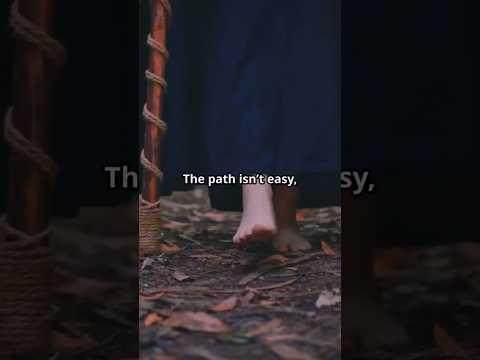
    The path to freedom is not a destination—it’s a way of being. A way of seeing. A way of walking through the world with openness, courage, and compassion.

    Walking the Path to Freedom—A Short Buddhist Insight.
    Walking the Path to Freedom—A Short Buddhist Insight.

    P.S.
    The path to freedom begins with a single moment of awareness. If this resonates with you, subscribe to YourWisdomVault on YouTube for more insights on walking it with clarity and purpose.

    #PathToFreedom #MindfulLiving #BuddhistJourney #InnerPeace #SpiritualAwakening #LettingGo #DharmaPath #MeditationPractice #SelfAwareness #BuddhistTeachings
  • When Is Enough Truly Enough? | Buddhist Take on Contentment.

    When Is Enough Truly Enough? | Buddhist Wisdom on Contentment, Simplicity, and Inner Peace.
    When Is Enough Truly Enough? | Buddhist Wisdom on Contentment.

    When Is Enough Truly Enough? | Buddhist Wisdom on Contentment.

    In a world that constantly whispers, “just a little more,” the question becomes louder: When is enough truly enough?

    Buddhism offers a profound answer rooted not in ambition, but in awareness, contentment, and letting go. At its core, Buddhist philosophy teaches that the source of human suffering isn’t the world itself—it’s our endless desire for things to be different than they are.


    The Root of Suffering: Craving and Attachment

    One of the most famous teachings of the Buddha is this:

    “Desire is the root of suffering.”

    This truth is part of the Four Noble Truths, which form the foundation of all Buddhist thought. According to these teachings, our suffering is not caused by pain alone, but by our attachment to pleasure, our craving for permanence, and our refusal to accept change.

    We suffer because we want more—we want happiness to last forever, our possessions to stay shiny, and our lives to remain within our control. But reality doesn’t work that way. Everything changes. Everything passes. And trying to cling to impermanent things creates stress, anxiety, and disappointment.


    What Does “Enough” Really Mean?

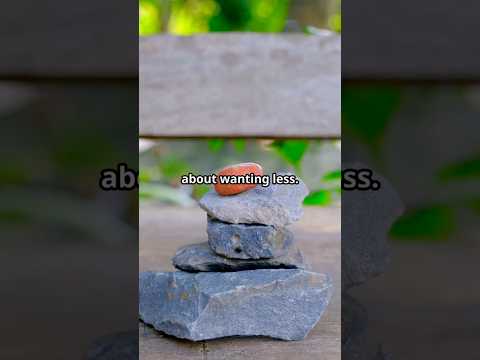
    From a Buddhist perspective, “enough” is not a number.
    It’s a state of mind.

    Contentment comes not when we have everything, but when we stop needing more to feel okay. True peace arises when we can say, “This moment is complete, just as it is.”

    This doesn’t mean giving up on goals or ambitions—it means learning to let go of the emotional craving that attaches our happiness to external things. A person can work hard, create, grow, and still be content, so long as their sense of peace isn’t based on always getting more. We rarely stop to ask when is enough, and even less often to listen.


    Why “Enough” Is Freedom

    Think of the mental energy spent chasing more:

    • More money
    • More likes
    • More attention
    • More comfort
    • More validation

    Now imagine that burden lifted. That’s what contentment feels like. It’s the freedom from needing anything to feel complete.

    This is why Buddhist monks often live simply—not because poverty is holy, but because simplicity removes distraction. When we stop feeding craving, we begin to see clearly. And from clarity comes peace.


    A Practical Takeaway: Noticing the Moment

    You don’t have to be a monk to practice this. You can begin simply by noticing:

    • When does your mind say, “I’ll be happy when…”?
    • What do you chase that never seems to satisfy?
    • What if this moment, this breath, was enough?

    The practice is not about shaming desire—it’s about observing it without letting it drive your life. Buddhism invites us to be present, aware, and grateful—not constantly pulled by the next craving. When is enough becomes a doorway to clarity, not just a question.


    A Stoic Parallel

    Interestingly, Stoic philosophy teaches something similar. Marcus Aurelius wrote:

    “Very little is needed to make a happy life; it is all within yourself.”

    Both Stoicism and Buddhism encourage us to look inward rather than outward for peace. They remind us that freedom comes not from control, but from acceptance.

    When Is Enough Truly Enough? | Buddhist Wisdom on Contentment.
    When Is Enough Truly Enough? | Buddhist Wisdom on Contentment.

    Final Reflection: What If You Already Have Enough?

    Ask yourself honestly:
    What if you already have enough?
    What changes in your heart, your pace, your sense of self, if you believe that nothing more is required for you to be whole?

    That’s not a rejection of growth—it’s the beginning of peaceful presence.


    P.S. “When Is Enough Truly Enough?” is not just a question—it’s a practice.
    👉 Want more timeless wisdom like this? Subscribe here on YouTube and unlock the vault within.

    #Buddhism #Contentment #Mindfulness #LettingGo #InnerPeace #SpiritualGrowth #YourWisdomVault