Tag: Inner Peace

  • Unshaken Like a Rock: The Wise Ignore Praise and Blame.

    Unshaken Like a Rock: The Wise Ignore Praise and Blame, Standing Calm in Truth and Serenity.
    Unshaken Like a Rock: The Wise Ignore Praise and Blame.

    Unshaken Like a Rock: The Wise Ignore Praise and Blame.

    In a world driven by social media likes, follower counts, and public opinion, it’s easy to become addicted to validation—or crushed by criticism. But over 2,500 years ago, the Buddha shared a simple yet profound truth that remains more relevant than ever:

    “As a rock is not shaken by the wind, so the wise are not moved by praise or blame.”
    Dhammapada, Verse 81

    This teaching reminds us of the power of emotional detachment, inner peace, and mindfulness. While the world swings between applause and judgment, the truly wise remain centered, calm, and unshaken.

    Praise and Blame: Two Sides of the Same Illusion

    Most of us are conditioned to chase praise and avoid blame. We feel proud when others compliment us and hurt when they criticize us. But both responses are reactions based on ego—on clinging to a certain identity or perception of self.

    The Buddha understood this trap. Praise can inflate the ego and pull us away from humility. Blame can wound the ego and trap us in anger or shame. Either way, our peace becomes dependent on something outside of ourselves.

    True wisdom lies in non-attachment—not in avoiding people or shutting down emotionally, but in learning not to let external opinions dictate our internal state.

    Becoming Like the Rock: Anchored in Mindfulness

    The image of a rock, unmoved by wind, is a powerful metaphor. It points to a state of being grounded in mindfulness and clarity. When we practice mindfulness, we become observers of our thoughts and emotions rather than being swept away by them.

    So how can we apply this teaching in everyday life?

    • When someone praises you, acknowledge it, but don’t cling to it. Let it pass like a breeze.
    • When someone criticizes you, reflect calmly. If there’s truth in it, learn. If not, release it without resentment.
    • Return your attention to the present moment—your breath, your intention, your values.

    This doesn’t mean becoming numb or indifferent. It means becoming stable, emotionally intelligent, and free.

    Wisdom in a Noisy World

    In today’s digital age, we are more exposed than ever to constant feedback. Likes, comments, shares, retweets—they all feed our craving for external affirmation. But as spiritual seekers, we are called to move in the opposite direction: inward.

    The wise don’t resist feedback—they just don’t depend on it. Their peace isn’t found in applause, and their worth isn’t destroyed by blame.

    Instead of reacting, they reflect.
    Instead of clinging, they let go.
    Instead of seeking approval, they seek understanding.

    This is the essence of Buddhist wisdom: to see clearly, respond compassionately, and remain centered in the face of change.

    Practicing the Teaching

    To embody this teaching in your own life, try these simple practices:

    1. Daily Reflection: Ask yourself each evening—was I moved today by praise or blame? Why?
    2. Mindful Breathing: When emotions rise due to feedback, return to your breath. Anchor yourself in the present.
    3. Journaling: Write about moments when you felt unshaken, and moments when you didn’t. Learn from both.
    4. Loving-Kindness Meditation: Build compassion for yourself and others, which makes letting go of ego reactions easier.

    Final Thoughts

    The path of wisdom isn’t about becoming cold or detached from the world—it’s about becoming free within it. When you no longer rely on praise or fear blame, you move through life with quiet confidence and deep clarity.

    You become like the rock—calm, grounded, and unmoved.

    Unshaken Like a Rock: The Wise Ignore Praise and Blame.
    Unshaken Like a Rock: The Wise Ignore Praise and Blame.

    If you found this teaching valuable, explore more daily insights and ancient wisdom by subscribing to our Your Wisdom Vault YouTube channel. Let timeless teachings guide you toward a more mindful and peaceful life.

    P.S. In a world full of noise, be the calm—be unshaken. 🌿

    #BuddhistWisdom #Mindfulness #InnerPeace #Detachment #Dhammapada #EmotionalResilience #SpiritualGrowth #NonAttachment #YourWisdomVault

    Thanks for watching: Unshaken Like a Rock: The Wise Ignore Praise and Blame.
  • Life isn’t the Problem — It’s How You’re Holding on to It.

    Life Isn’t the Problem—It's How You’re Holding On to It and Resisting the Flow of What Is.
    Life isn’t the Problem — It’s How You’re Holding on to It.

    Life isn’t the Problem — It’s How You’re Holding on to It.

    Have you ever felt like life was just… too much? Like things were spiraling, or slipping out of your control? You’re not alone. But here’s a gentle truth from Buddhist wisdom:
    Life itself isn’t the problem — it’s how tightly we’re trying to hold onto it.

    This simple idea has profound implications. Most of our suffering doesn’t come from what’s happening around us — but from the way we grasp at expectations, outcomes, identities, and control.

    The Pain of Holding On

    We all want things to go our way. We plan. We prepare. We set expectations. And when life doesn’t match up — we feel pain, disappointment, even anger.

    But Buddhism teaches that suffering (dukkha) comes from attachment — our tendency to cling to what we like, and push away what we don’t. It’s not the thing that causes the pain. It’s our mental grip on that thing.

    Let’s say a relationship ends. The pain isn’t just about the absence of the person — it’s the inner resistance to that change. It’s our refusal to accept that something once beautiful has run its course.

    Or consider a dream or goal that didn’t work out. The suffering isn’t in the failure itself — it’s in the tight grasp we had on how things “should’ve” gone.

    Life Flows — Let It

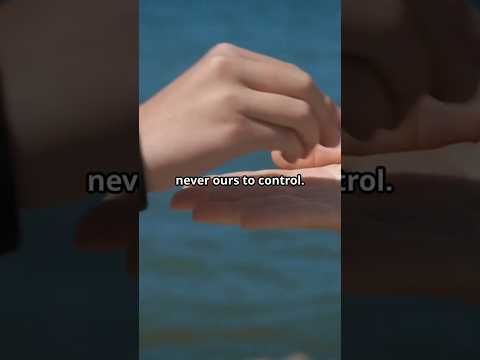
    Imagine holding water in your hands. The tighter you squeeze, the faster it slips through your fingers. But if you loosen your grip, you can hold it gently, even for a little while.

    Life works the same way.

    Trying to control every moment, every outcome, every twist of fate is exhausting — and futile. When we cling, we suffer. When we loosen our grip, we find peace.

    That doesn’t mean we stop caring or striving. It means we live and act without becoming attached to how it all unfolds.

    Letting Go Isn’t Giving Up

    A common misconception is that letting go means giving up. That’s not it at all.

    Letting go means trusting life. It means recognizing that everything is temporary — joy, sorrow, relationships, successes, failures. And in that impermanence, we can find a strange, liberating kind of peace.

    It’s about making space. When we release our grip on what we think we need, we open up to what we actually need.

    Practical Ways to Loosen the Grip

    Here are a few small ways to begin practicing non-attachment in daily life:

    • Notice when you’re resisting: Are you tense? Obsessing over outcomes? That’s a cue to pause.
    • Use the breath: A few mindful breaths can reconnect you to the present moment.
    • Practice gratitude: Focus on what is, not what’s missing.
    • Reframe change: Instead of fearing endings, see them as transitions.
    • Affirmation: Try saying, “I allow life to unfold without needing to control it.”

    These are not overnight fixes, but gentle practices that shift your relationship to life — one breath, one moment at a time.

    The Freedom of Letting Go

    In the end, this path isn’t about being passive. It’s about being free. Free from the exhausting need to control, predict, and possess. Free to live with clarity and calm, even when the world is chaotic.

    When we stop gripping so tightly, we start seeing more clearly. And we remember: life was never ours to control — only to experience.

    Life isn’t the Problem — It’s How You’re Holding on to It.
    Life isn’t the Problem — It’s How You’re Holding on to It.

    If this resonated with you, take a deep breath. Maybe… loosen the grip. Let today be enough.

    🌀

    For more mindful reflections like this, subscribe to YourWisdomVault on YouTube.
    You’ll find weekly insights rooted in Buddhist philosophy, mindfulness, and modern spiritual clarity.

    P.S.

    If this message helped ease your grip on life, imagine what letting go a little more could bring. Come back often — your wisdom’s just unfolding.

    #LettingGo #BuddhistWisdom #NonAttachment #Mindfulness #InnerPeace #SpiritualGrowth #LifeLessons #EmotionalFreedom #PeacefulLiving #YourWisdomVault #PresentMoment #SufferingAndAttachment #PersonalGrowth #LiveWithClarity #MindfulLiving

  • Stop Fixing the Ego: Watch It, Understand It, Be Free!

    Stop Fixing the Ego: Watch It, Understand It, Be Free, and Discover the Peace Beyond the Self.
    Stop Fixing the Ego: Watch It, Understand It, Be Free!

    Stop Fixing the Ego: Watch It, Understand It, Be Free!

    In today’s world of self-help and personal development, the ego often gets a bad reputation. We’re told to “overcome” it, “kill” it, or “fix” it—like it’s some broken part of ourselves standing in the way of happiness. But in many spiritual traditions, especially Buddhism and mindfulness-based practices, the ego is not something to be fixed. It’s something to be watched.

    What Is the Ego, Really?

    The ego isn’t some monster hiding in your mind. It’s the voice that says, “I am this,” or “I need that.” It’s the collection of identities, fears, and desires that form our sense of a separate self. Stop fixing the ego—it was never broken, only misunderstood.

    From a Buddhist perspective, this ego is not a permanent entity—it’s a habit. A pattern of thought. A survival mechanism formed over time. The problem isn’t that we have an ego; the problem is that we believe every word it says.

    The Trap of Trying to Fix the Ego

    When we try to “fix” the ego, we end up reinforcing it. Think about that. The desire to fix the self often comes from the ego itself—it’s another mask, another role: “The one who improves.” So every time you fight your ego, you’re actually feeding it.

    This is why so many people feel stuck on their spiritual journey. They’re still caught in a cycle of resistance: judging their thoughts, trying to silence their inner critic, or pushing away their darker emotions. But judgment only strengthens the illusion of separateness. The true shift happens when we observe the ego instead of battling it.

    The Power of Observation

    Observation is not passive. It’s powerful.

    In mindfulness practice, we are taught to observe thoughts and feelings as they arise—without judgment and without attachment. When you watch the ego in this way, something remarkable happens: it starts to lose its power. Not because you’ve beaten it, but because you’ve stopped identifying with it.

    This is what spiritual teacher Eckhart Tolle calls “the power of presence.” When you become the observer of your thoughts, you step outside the ego. You no longer are the voice in your head—you’re simply the awareness that notices it.

    Freedom Through Awareness

    True spiritual freedom doesn’t come from fixing yourself—it comes from knowing yourself beyond the ego. And that knowing begins with awareness. It’s not about achieving a perfect state. It’s about being present with what is, including your ego, without getting caught in its stories.

    Letting go doesn’t mean denying the ego. It means watching it, understanding it, and realizing that you are more than it. You are not your thoughts. You are not your fears. You are the awareness behind them.

    A Gentle Reminder

    If you find yourself trying to “fix” your mind, pause. Ask yourself: who is trying to fix whom? Can I just observe this moment? Can I witness the thought without following it?

    This practice may seem simple, but it’s transformative. Over time, awareness grows, and the ego naturally softens. Not because you forced it to change, but because you stopped believing it was all there was.

    Stop Fixing the Ego: Watch It, Understand It, Be Free!
    Stop Fixing the Ego: Watch It, Understand It, Be Free!

    Final Thoughts

    In the path of mindfulness and Buddhist insight, the invitation is clear: stop fixing the ego. Watch it. Understand it. And be free.

    Let this be your daily practice—not to change who you are, but to see who you truly are beyond the surface. In that stillness, clarity and peace emerge naturally. And remember: The real transformation begins the moment you stop fixing the ego and start observing it with calm awareness.

    If this message resonates with you, explore more mindful insights and spiritual reflections by subscribing to Your Wisdom Vault on YouTube.

    P.S. Stop Fixing the Ego.
    You were never meant to fight your inner world—only to understand it. The more you observe, the more you awaken. Keep watching. Keep walking. Freedom follows.

    #StopFixingTheEgo #MindfulnessPractice #EgoDeath #BuddhistWisdom #SpiritualAwakening #NonAttachment #ObserveTheMind #LetGoOfEgo #InnerPeace #YourWisdomVault #SelfAwareness #ConsciousLiving #MeditationJourney #AwakenTheSelf

  • Impermanence Isn’t the Enemy — It’s the Path to Peace.

    Impermanence Isn’t the Enemy—It's the Path to Peace, Acceptance, and the Freedom to Truly Live.
    Impermanence Isn’t the Enemy — It’s the Path to Peace.

    Impermanence Isn’t the Enemy — It’s the Path to Peace.

    We spend so much of our lives trying to hold things together—our relationships, our careers, our identities. We fear change. We resist loss. And deep down, we hope that if we try hard enough, we can make something last forever.

    But Buddhism offers a radically different perspective: nothing lasts forever, and that’s not a problem—it’s a liberation.

    Understanding Impermanence (Anicca)

    At the heart of the Buddha’s teachings is the concept of impermanence, or anicca in Pali. It’s one of the three marks of existence, along with suffering (dukkha) and non-self (anatta). Simply put, everything in this world is in a constant state of change.

    Your thoughts change. Your body changes. Emotions rise and fall. People come and go. Even the things you cling to most—your beliefs, your memories, your identity—are subject to the flow of time.

    Trying to hold onto what must change is like trying to grasp water. The tighter you hold, the more it slips through your fingers. And the more you resist change, the more you suffer.

    Resistance Creates Suffering

    Most of our emotional pain doesn’t come from what’s happening—it comes from how we respond to it. We resist. We deny. We grasp. We wish it were different.

    When someone leaves, we grieve not only their absence but the story we told ourselves about how things should have gone.
    When plans fall apart, we mourn not just the change, but the illusion of control we once believed we had.

    This resistance is subtle but powerful. It keeps us locked in fear, anxiety, and frustration. And often, it blinds us to the truth: that peace doesn’t come from holding on—it comes from letting be.

    The Peace Within Change

    What if, instead of fighting change, we trusted it?

    What if impermanence isn’t the enemy, but the teacher? What if every ending was an opening? Every loss, a space for growth?

    This is where Buddhist mindfulness comes in. When we sit in stillness and observe our breath, our thoughts, and our feelings, we begin to see their transient nature. Joy passes. Anger passes. Even pain passes. When we witness this flow without clinging or pushing away, we taste a deeper peace—the kind that doesn’t rely on circumstances.

    That’s the beauty of impermanence: it reminds us that nothing stays broken forever. Just as joy fades, so too does sorrow. Every difficult moment carries the seed of transformation.

    Walking the Path of Acceptance

    This isn’t about becoming cold or detached. It’s about becoming present.

    Accepting impermanence doesn’t mean we stop caring. It means we stop suffering because we care. It allows us to love fully, knowing that love may one day change. To engage with life deeply, without pretending it will always look the same.

    This is what the Buddha meant by freedom: a heart that can hold everything, yet cling to nothing.

    From Concept to Practice

    So how do we live this truth?

    • Practice mindfulness: Learn to witness thoughts and emotions without identifying with them.
    • Reflect daily: Remind yourself that this moment, whatever it is, is temporary.
    • Let go consciously: When you feel tension or grasping, ask: “What am I afraid of losing?”
    • Return to the breath: It’s the simplest and clearest reminder of impermanence—rising and falling, again and again.

    And above all, remember: impermanence is not here to hurt you. It’s here to wake you up.

    Impermanence Isn’t the Enemy — It’s the Path to Peace.
    Impermanence Isn’t the Enemy — It’s the Path to Peace.

    If this reflection speaks to you, share it. Sit with it. Breathe with it.
    And when you’re ready, keep walking the path—with open hands and a quiet heart.

    YourWisdomVault on YouTube – sharing timeless truths, one breath at a time.

    P.S. If this reflection helped you breathe a little easier, consider sharing it with someone who may need a moment of peace today. 🌿

    #Impermanence #Buddhism #Mindfulness #SpiritualGrowth #LettingGo #Dharma #InnerPeace #Anicca #MeditationWisdom #BuddhistTeachings