Tag: mindfulness practice

  • Only the Awakened Know How Hard It Is to Wake Up.

    Only the Awakened Know How Hard It Is to Wake Up—A Profound Reflection on True Awareness.
    Only the Awakened Know How Hard It Is to Wake Up.

    Only the Awakened Know How Hard It Is to Wake Up.

    Spiritual awakening is often romanticized. We picture serene monks, glowing light, and endless peace. But the reality of awakening—especially through the lens of Buddhist wisdom and nonduality—is far more intense, raw, and difficult than most people expect.

    In our latest 60-second spiritual short, we explore the paradox that only the awakened truly understand: waking up is hard. Not because the truth is hidden, but because it’s painfully obvious—and we’ve spent our entire lives avoiding it.

    Awakening Isn’t Bliss. It’s Breakdown.

    Many seekers begin their journey craving peace, joy, or enlightenment. But true awakening doesn’t deliver comfort—it delivers clarity. And clarity can burn. It dismantles your sense of self, breaks apart your attachments, and reveals that most of what we believe to be “real” is conditioned, borrowed, or simply illusion.

    The ego resists this process at every turn. Awakening challenges everything:

    • Your identity
    • Your beliefs
    • Your emotional safety nets
    • Even your desire for meaning

    No wonder it’s so painful.

    As Buddhist teacher Chögyam Trungpa once said, “The bad news is you’re falling through the air, nothing to hang on to, no parachute. The good news is, there’s no ground.”

    Why the Awakened Don’t Preach

    One of the most profound realizations that comes with awakening is that you can’t awaken anyone else. People have to be ready. They have to want to see.

    That’s why those who are truly awake don’t try to force others onto the path. They know how disorienting, even terrifying, it can be. And they respect the timing of others’ journeys.

    If you’re going through a dark, confusing, or painful phase in your spiritual growth, take heart:
    That may be the sign that something deeper is waking up in you.

    Buddhist Teachings on the Path to Enlightenment

    In Buddhism, awakening (or bodhi) isn’t a reward—it’s a responsibility. It’s not about escaping the world, but about seeing it clearly. That includes all its suffering (dukkha), impermanence (anicca), and non-self (anatta).

    This insight can be both freeing and frightening. You realize:

    • There’s no permanent self to protect.
    • There’s no external source of lasting happiness.
    • The “you” that seeks enlightenment is the very thing in the way.

    Yet, this is where true peace begins—not in denying reality, but in accepting it fully.

    You’re Not Alone on the Path

    Our short was made to let people like you know:
    If it feels like everything is falling apart, you may actually be waking up. This is not failure. It’s not regression. It’s the painful, beautiful, necessary process of shedding illusion.

    Whether you’re practicing mindfulness, exploring nonduality, or simply trying to make sense of your inner world, know that you’re not the only one navigating this path.

    Only the Awakened Know How Hard It Is to Wake Up.
    Only the Awakened Know How Hard It Is to Wake Up.

    Final Thoughts

    Awakening is not a trend. It’s not aesthetic. It’s not always joyful.
    It’s a process of undoing everything false to discover what’s real—and it’s not for the faint of heart.

    If this resonates with you, consider subscribing to Your Wisdom Vault on YouTube. We publish weekly spiritual shorts grounded in timeless truths—from Buddhism to consciousness, ego dissolution, and more.

    Let’s keep walking the path together.

    P.S.

    If this message stirred something in you—confusion, clarity, or even discomfort—good. That’s how awakening begins. Stick around, keep watching, and trust your inner unfolding. 🌱

    #SpiritualAwakening #Buddhism #Mindfulness #Nonduality #EgoDeath #SelfRealization #AwakeningJourney #Consciousness #InnerPeace #Dharma #YourWisdomVault #Enlightenment

  • No Fire Like Passion, No Grip Like Hatred – Buddhist Wisdom.

    No Fire Like Passion, No Grip Like Hatred—Buddhist Wisdom on Mastering Desire and Anger.
    No Fire Like Passion, No Grip Like Hatred – Buddhist Wisdom.

    No Fire Like Passion, No Grip Like Hatred – Buddhist Wisdom.

    In the Dhammapada, one of the core texts in Theravāda Buddhism, the Buddha offers a piercing reflection on human emotion:
    “There is no fire like passion, no grip like hatred.”

    This quote may be brief, but it holds profound insight. Whether you’re new to Buddhist teachings or deep in your mindfulness journey, understanding this truth can help you navigate the inner storms of modern life.

    The Fire That Consumes: Understanding Passion

    In Buddhism, passion isn’t just about romantic desire. It refers to craving—tanha—a thirst for things we believe will satisfy us. These cravings can include wealth, approval, pleasure, or success. But the more we chase, the more they burn.

    Desire functions like a fire: it flares up, spreads quickly, and demands constant fuel. And when we attach our happiness to getting what we want, we set ourselves up for suffering. Even when we do “win,” satisfaction is fleeting—and soon, we crave again.

    Mindfulness practice helps us observe our wants with curiosity instead of compulsion. By noticing the craving, we reduce its power. Awareness cools the flame.

    The Grip That Holds: The Weight of Hatred

    If passion burns hot and fast, hatred grips tight and long. When we carry anger, resentment, or blame, we’re not punishing others—we’re imprisoning ourselves.

    Hatred, in Buddhist philosophy, is one of the three poisons (alongside greed and delusion). It binds the heart and narrows the mind, keeping us stuck in cycles of reaction and suffering. In moments of anger, we often feel justified. But in truth, we’re just reinforcing our pain.

    Buddhism doesn’t ask us to suppress our emotions. Instead, it invites us to hold them in awareness, soften them with compassion, and gradually release them. Forgiveness—both toward others and ourselves—is not weakness. It’s freedom.

    Freedom Through Awareness

    What’s the antidote to both passion and hatred? Awareness.
    Through the simple practice of mindfulness—observing thoughts and feelings without judgment—we begin to reclaim our agency.

    When you notice desire rising, ask yourself:
    What’s fueling this? What happens if I let it pass?
    When anger shows up, pause and breathe:
    Is this serving me? Or is it hurting me more than anyone else?

    These questions don’t fix everything overnight. But they open the door to clarity. They loosen the grip. They calm the fire.

    Letting Go Doesn’t Mean Losing

    It’s a common misunderstanding: letting go means having less joy, less ambition, less connection. But in truth, letting go means no longer depending on unstable things for your happiness.

    You can still love, still strive, still engage fully with life—just without the burden of clinging. When you drop the need for control or vengeance, what remains is peace.

    Making It Real: A Daily Practice

    This teaching isn’t meant to stay on the cushion or in books. It’s meant for daily life.

    When you’re stuck in traffic and irritation rises—notice the grip.
    When you’re refreshing your feed craving likes—notice the fire.
    These micro-moments are where the practice lives.

    And each time you pause, breathe, and choose presence over reaction, you’re planting seeds of wisdom and compassion.


    Whether you’re navigating stress, healing old wounds, or seeking a deeper way to live, remember this:
    No fire is as destructive as passion. No grip is as tight as hatred. And no freedom is as powerful as awareness.

    No Fire Like Passion, No Grip Like Hatred – Buddhist Wisdom.
    No Fire Like Passion, No Grip Like Hatred – Buddhist Wisdom.

    P.S. If this teaching brought you a moment of clarity or calm, consider subscribing to Your Wisdom Vault on YouTube for more timeless insights and mindful reflections—delivered through short, powerful videos each week. 🌿✨


    #BuddhistWisdom #MindfulnessPractice #EmotionalHealing

  • Meditate, Detach, and Rise — Like a Swan Leaving the Lake.

    Meditate, Detach, and Rise—Like a Swan Leaving the Lake, Serene and Free in Peaceful Clarity.
    Meditate, Detach, and Rise — Like a Swan Leaving the Lake.

    Meditate, Detach, and Rise — Like a Swan Leaving the Lake.

    In today’s fast-paced world, inner peace often feels out of reach. We’re constantly pulled in every direction—by stress, social pressure, work demands, and endless distractions. But what if we could rise above it all, effortlessly and gracefully, like a swan leaving a still lake?

    This metaphor, drawn from ancient Buddhist wisdom, teaches us the power of meditation and detachment. It reminds us that peace isn’t something we find in the world—it’s something we uncover within ourselves.

    The Meaning Behind the Swan

    In Buddhism, the swan symbolizes grace, wisdom, and spiritual freedom. When a swan leaves the lake, it doesn’t struggle or thrash—it simply lifts off, with quiet strength and natural ease. This image beautifully represents the state of mind that comes from regular meditation and the practice of detachment.

    We are so often weighed down by our thoughts, emotions, and attachments. We cling to people, ideas, goals, and even our own self-image. This clinging creates suffering. The more tightly we hold on, the more turbulence we create in our own lives.

    But the swan doesn’t cling. And neither must we.

    What Is Detachment, Really?

    Detachment doesn’t mean apathy. It doesn’t mean shutting out the world or becoming cold or emotionless. In Buddhist terms, detachment means not being enslaved by desire or aversion. It means observing your thoughts and feelings without becoming entangled in them.

    When we practice detachment, we stop identifying with the chaos of the mind. We don’t need to chase every desire or resist every discomfort. We simply notice, breathe, and return to presence.

    This is where meditation becomes essential.

    Meditation: The Gateway to Stillness

    Meditation is not about escaping life—it’s about learning how to live fully, in awareness. When we sit in stillness, we begin to see clearly. Thoughts rise and fall. Emotions come and go. The breath remains steady. Over time, we begin to understand something profound:

    We are not our thoughts. We are the awareness behind them.

    This realization is the first step toward detachment. It gives us space. It gives us power. And from that space, we can choose peace.

    Rising Above the Noise

    Just like the swan, we can rise above the lake of noise, fear, and distraction. Not through force—but through stillness. Through gentle awareness. Through practice.

    Every time you sit in meditation, you’re teaching your mind to let go. You’re reminding yourself that you don’t need to control everything to be at peace. You’re choosing clarity over chaos, surrender over stress.

    And every small moment of mindfulness builds toward something greater—a life of spiritual freedom.

    Daily Wisdom in a Modern World

    At YourWisdomVault, our mission is to share timeless truths in a way that fits modern life. This short video, “Meditate, Detach, and Rise — Like a Swan Leaving the Lake,” offers a compact but powerful reflection on how ancient wisdom can help us live better today.

    Whether you’re just beginning your mindfulness journey or deep into spiritual practice, this message is a reminder to come home to yourself. To pause. To breathe. To rise.

    Final Thoughts

    In a world that glorifies hustle, control, and constant stimulation, detachment is a quiet rebellion. Meditation is your anchor. Presence is your path. And like the swan, you already have everything you need to rise.

    So today, take a breath. Sit in stillness. Let go.

    And remember:
    You are not the storm—you are the sky.

    Meditate, Detach, and Rise — Like a Swan Leaving the Lake.
    Meditate, Detach, and Rise — Like a Swan Leaving the Lake.

    If this message resonated with you, subscribe to YourWisdomVault on YouTube for more daily wisdom.
    Let’s walk this path—together.


    #Meditation #Detachment #BuddhistWisdom

  • Few Cross to the Other Shore – Buddhist Wisdom on Rarity.

    Few Cross to the Other Shore—A Profound Buddhist Wisdom on the Rare Path to Enlightenment.
    Few Cross to the Other Shore – Buddhist Wisdom on Rarity.

    Few Cross to the Other Shore – Buddhist Wisdom on Rarity.

    In the ancient Buddhist text known as the Dhammapada, the Buddha offers a profound and haunting observation:

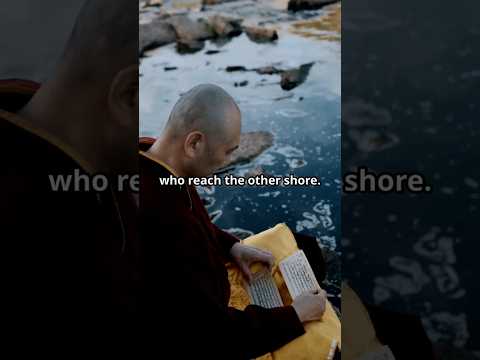
    “Few among men are those who reach the other shore; the rest run up and down the shore.”
    Dhammapada, Verse 85

    This verse is more than poetry—it’s a truth that continues to echo through time. It speaks to the spiritual path that few take, the inner journey that leads to freedom, peace, and awakening. In today’s fast-paced, distraction-filled world, this insight is more relevant than ever.


    What Is the “Other Shore”?

    The “other shore” is a metaphor for enlightenment—a state of liberation from suffering, ignorance, and the endless cycle of craving and aversion. In Buddhist philosophy, this cycle is called samsara. Most people, the Buddha teaches, are caught in the currents of samsara: pursuing temporary pleasures, fearing loss, and reacting to life from ego and attachment.

    To “reach the other shore” is to step out of this cycle. It means to live with mindfulness, clarity, and compassion. It is to realize the impermanence of all things and find peace in the present moment.


    Why So Few?

    Why do so few people reach the other shore?

    Because the path is not easy.

    It requires deep self-awareness, consistent meditation, and a willingness to let go of the illusions we cling to—identity, possessions, beliefs, and even our stories. The path asks us to look within rather than blame the world outside. It challenges us to examine our fears, our habits, and our attachments.

    Most people avoid this. It’s easier to stay busy, distracted, and entertained than to sit in silence and observe the mind. It’s easier to run up and down the shore than to actually cross the river.


    Crossing the River

    The Buddha often described the spiritual path as a crossing. He said the Dharma—the teachings—are like a raft. We use it to cross over from confusion to clarity, from suffering to serenity. But once we reach the other shore, we don’t carry the raft on our backs. We let it go.

    This speaks to the non-dogmatic nature of Buddhism. The teachings are a guide, not a belief system to be clung to. They serve their purpose—to help us awaken—and then we move forward with lightness and understanding.


    Bringing It Into Daily Life

    You don’t have to live in a monastery or renounce the world to begin crossing to the other shore. The journey starts in the present moment—with each breath, each choice, and each act of awareness.

    Ask yourself:

    • Am I reacting from ego or responding with wisdom?
    • Am I clinging to something that’s causing suffering?
    • Can I let go and be present right now?

    Practicing mindfulness, cultivating compassion, and reflecting on the impermanence of life are all part of the crossing.


    Final Thoughts

    The Buddha’s words remind us that the path of wisdom is not popular—it’s personal. It’s not loud, but quiet. Not filled with guarantees, but with invitations to look within. And while few may choose this path, those who do discover a freedom and peace that cannot be found on the surface of things.

    At YourWisdomVault, we share timeless teachings like this to inspire the modern seeker. If this message speaks to you, consider taking your own first step toward the other shore. You don’t have to know the whole path—just start walking it with intention.

    Few Cross to the Other Shore – Buddhist Wisdom on Rarity.
    Few Cross to the Other Shore – Buddhist Wisdom on Rarity.

    Explore More

    🙏 Thanks for watching our short video: Few Cross to the Other Shore – Buddhist Wisdom on Rarity.

    🎥 Subscribe to our channel YourWisdomVault on YouTube for more ancient insights in bite-sized form.

    🧘‍♀️ Begin your journey—one mindful breath at a time.

    #Buddhism #BuddhistWisdom #Dhammapada #Mindfulness #SpiritualJourney #Enlightenment #Awakening #InnerPeace #AncientWisdom #MeditationPractice #BuddhaTeachings #NonAttachment #EgoDeath #LettingGo #SelfAwareness #YourWisdomVault #CrossingToTheOtherShore #ModernSpirituality #DailyWisdom #PhilosophyOfLife