Tag: spiritual awakening

  • Heedlessness Leads to Death – A Timeless Buddhist Teaching.

    Heedlessness Leads to Death—A Timeless Buddhist Teaching on Awareness, Wisdom, and Living Fully.
    Heedlessness Leads to Death – A Timeless Buddhist Teaching.

    Heedlessness Leads to Death – A Timeless Buddhist Teaching.

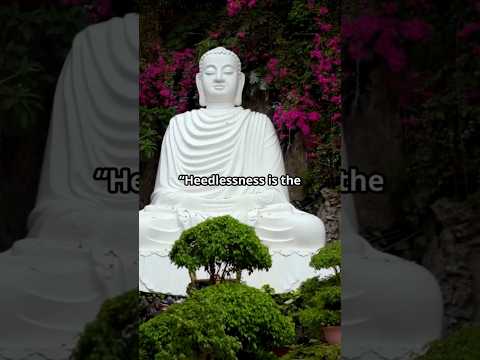
    In the fast-paced chaos of modern life, it’s easy to fall into autopilot—checking our phones, rushing through tasks, and reacting without awareness. But according to the Buddha, this way of living carries a far greater cost than we realize. In the Dhammapada, a revered collection of the Buddha’s sayings, he states clearly:

    “Heedlessness is the path to death. The heedful never die.”

    This deceptively simple line captures a deep and timeless truth at the heart of Buddhist philosophy.

    What Is Heedlessness?

    Heedlessness means living without mindfulness—without conscious presence or wise reflection. It’s the state of drifting through life unaware, chasing distractions, desires, or avoiding discomfort without truly understanding what we’re doing or why. In Buddhist terms, it’s a form of spiritual sleepwalking.

    Heedlessness often shows up as:

    • Reactivity: Responding to life with impulses rather than intention.
    • Attachment: Clinging to desires or aversions without questioning them.
    • Distraction: Constantly turning to entertainment or stimulation to avoid silence or stillness.
    • Forgetfulness: Losing touch with our values, our breath, and the moment we’re in.

    Over time, heedlessness deepens suffering. It feeds ignorance (avidyā), the root cause of the endless cycle of rebirth and dissatisfaction (samsara).

    The Path of Mindful Awareness

    By contrast, heedfulness—often translated as mindfulness, awareness, or vigilance—is the path to spiritual life. It means being fully present in each moment, aware of our thoughts, actions, and feelings without becoming entangled in them.

    Mindfulness brings:

    • Clarity: We begin to see the causes of our suffering.
    • Compassion: We respond rather than react, with care instead of fear.
    • Freedom: We let go of harmful habits and unconscious patterns.

    This is why the Buddha emphasized heedfulness as the “path of the deathless.” He wasn’t referring only to physical death, but to the death of wisdom, presence, and awakening. The heedless are alive biologically, but spiritually asleep. The heedful are alive in the deepest sense—awake to the nature of life, death, and liberation.

    Applying This Teaching in Daily Life

    You don’t need to live in a monastery to practice heedfulness. In fact, the modern world is the perfect training ground. Try these small, mindful shifts:

    1. Pause before reacting – Whether it’s a stressful email or a difficult conversation, take a breath before responding.
    2. Observe your thoughts – Spend 5 minutes a day noticing your mental patterns without judgment.
    3. Return to your body – Feel your feet on the ground or the rise of your breath to reconnect with the present.
    4. Question your cravings – Ask yourself if what you want will truly bring peace or just momentary relief.

    Every time you choose mindfulness over reactivity, you plant a seed of awakening.

    Final Thoughts: Living with Intention

    The Buddha’s warning isn’t meant to scare us—it’s meant to wake us up. Heedlessness isn’t just a moral failure. It’s a missed opportunity to live fully, freely, and wisely.

    Living with heedfulness doesn’t require perfection. It requires remembrance. Each moment is a chance to begin again, to return to the breath, and to live with conscious care.

    Heedfulness is the gateway to the deathless. And that journey begins not tomorrow, but right now.

    Heedlessness Leads to Death – A Timeless Buddhist Teaching.
    Heedlessness Leads to Death – A Timeless Buddhist Teaching.

    If this message resonates with you, I invite you to take one small step today toward greater awareness. Share it with someone walking a mindful path, and subscribe to YourWisdomVault on YouTube and stay connected to more timeless Buddhist wisdom.

    #Mindfulness #BuddhistTeachings #Heedlessness
  • Stop Fixing the Ego: Watch It, Understand It, Be Free!

    Stop Fixing the Ego: Watch It, Understand It, Be Free, and Discover the Peace Beyond the Self.
    Stop Fixing the Ego: Watch It, Understand It, Be Free!

    Stop Fixing the Ego: Watch It, Understand It, Be Free!

    In today’s world of self-help and personal development, the ego often gets a bad reputation. We’re told to “overcome” it, “kill” it, or “fix” it—like it’s some broken part of ourselves standing in the way of happiness. But in many spiritual traditions, especially Buddhism and mindfulness-based practices, the ego is not something to be fixed. It’s something to be watched.

    What Is the Ego, Really?

    The ego isn’t some monster hiding in your mind. It’s the voice that says, “I am this,” or “I need that.” It’s the collection of identities, fears, and desires that form our sense of a separate self. Stop fixing the ego—it was never broken, only misunderstood.

    From a Buddhist perspective, this ego is not a permanent entity—it’s a habit. A pattern of thought. A survival mechanism formed over time. The problem isn’t that we have an ego; the problem is that we believe every word it says.

    The Trap of Trying to Fix the Ego

    When we try to “fix” the ego, we end up reinforcing it. Think about that. The desire to fix the self often comes from the ego itself—it’s another mask, another role: “The one who improves.” So every time you fight your ego, you’re actually feeding it.

    This is why so many people feel stuck on their spiritual journey. They’re still caught in a cycle of resistance: judging their thoughts, trying to silence their inner critic, or pushing away their darker emotions. But judgment only strengthens the illusion of separateness. The true shift happens when we observe the ego instead of battling it.

    The Power of Observation

    Observation is not passive. It’s powerful.

    In mindfulness practice, we are taught to observe thoughts and feelings as they arise—without judgment and without attachment. When you watch the ego in this way, something remarkable happens: it starts to lose its power. Not because you’ve beaten it, but because you’ve stopped identifying with it.

    This is what spiritual teacher Eckhart Tolle calls “the power of presence.” When you become the observer of your thoughts, you step outside the ego. You no longer are the voice in your head—you’re simply the awareness that notices it.

    Freedom Through Awareness

    True spiritual freedom doesn’t come from fixing yourself—it comes from knowing yourself beyond the ego. And that knowing begins with awareness. It’s not about achieving a perfect state. It’s about being present with what is, including your ego, without getting caught in its stories.

    Letting go doesn’t mean denying the ego. It means watching it, understanding it, and realizing that you are more than it. You are not your thoughts. You are not your fears. You are the awareness behind them.

    A Gentle Reminder

    If you find yourself trying to “fix” your mind, pause. Ask yourself: who is trying to fix whom? Can I just observe this moment? Can I witness the thought without following it?

    This practice may seem simple, but it’s transformative. Over time, awareness grows, and the ego naturally softens. Not because you forced it to change, but because you stopped believing it was all there was.

    Stop Fixing the Ego: Watch It, Understand It, Be Free!
    Stop Fixing the Ego: Watch It, Understand It, Be Free!

    Final Thoughts

    In the path of mindfulness and Buddhist insight, the invitation is clear: stop fixing the ego. Watch it. Understand it. And be free.

    Let this be your daily practice—not to change who you are, but to see who you truly are beyond the surface. In that stillness, clarity and peace emerge naturally. And remember: The real transformation begins the moment you stop fixing the ego and start observing it with calm awareness.

    If this message resonates with you, explore more mindful insights and spiritual reflections by subscribing to Your Wisdom Vault on YouTube.

    P.S. Stop Fixing the Ego.
    You were never meant to fight your inner world—only to understand it. The more you observe, the more you awaken. Keep watching. Keep walking. Freedom follows.

    #StopFixingTheEgo #MindfulnessPractice #EgoDeath #BuddhistWisdom #SpiritualAwakening #NonAttachment #ObserveTheMind #LetGoOfEgo #InnerPeace #YourWisdomVault #SelfAwareness #ConsciousLiving #MeditationJourney #AwakenTheSelf

  • The River That Never Stays the Same – A Buddhist Lesson

    The River That Never Stays the Same—A Buddhist Lesson on Impermanence, Change, and Renewal.
    The River That Never Stays the Same – A Buddhist Lesson on Impermanence

    The River That Never Stays the Same – A Buddhist Lesson on Impermanence

    Have you ever stepped into the same river twice?

    According to ancient wisdom—and the Buddha himself—the answer is no. The water has changed, the current has shifted, and so have you. This simple truth points to one of the most profound teachings in Buddhism: impermanence.

    What Is Impermanence?

    In Buddhist philosophy, impermanence (anicca in Pali) is one of the Three Marks of Existence, along with suffering (dukkha) and non-self (anatta). It refers to the reality that everything in life is temporary. Our bodies age, relationships evolve, emotions rise and fall, and circumstances shift—often without warning.

    Impermanence isn’t just a spiritual idea. It’s a fact of life. Everything is in motion. Everything flows.

    The River as a Metaphor for Life

    The image of a flowing river beautifully captures this constant change. You can’t grasp water, no matter how hard you try. And the more you resist the current, the more you struggle. But if you relax and learn to float, you begin to move with the flow of life—not against it.

    The Buddha’s teachings on impermanence invite us to observe life the same way. When we try to hold on tightly to what must naturally change—whether it’s success, pleasure, love, or even our identity—we suffer. But when we accept the ever-changing nature of reality, we begin to find peace, clarity, and resilience.

    Letting Go: The Key to Freedom

    One of the biggest obstacles to inner peace is attachment. We cling to people, outcomes, feelings, and beliefs in hopes they’ll last forever. But the truth is: they won’t.

    Letting go doesn’t mean we stop caring or detach coldly. It means we stop expecting things to stay the same. We start living with awareness, appreciation, and acceptance. This is where true mindfulness begins—noticing what’s here, fully, without trying to freeze it in time.

    The next time you feel anxious about change or loss, remember the river. You don’t need to control it. You just need to trust the flow.

    Mindful Living in an Impermanent World

    In modern life, where everything moves fast—technology, trends, relationships—it can feel overwhelming to face change. But impermanence isn’t here to hurt us. It’s here to wake us up. It reminds us to cherish the present, love more fully, and live more deeply.

    Here are three mindful practices to embrace impermanence in daily life:

    1. Pause and observe. Notice how your thoughts, emotions, and surroundings are always shifting.
    2. Practice gratitude. When we realize things won’t last, we naturally appreciate them more.
    3. Let go gently. Whether it’s a past version of yourself or a phase of life, allow it to pass like water in a stream.

    A Timeless Teaching for Today

    Buddhism isn’t about escaping life—it’s about waking up to it. The teaching of impermanence isn’t meant to depress us. It’s meant to liberate us from the illusion of permanence that causes unnecessary suffering.

    When we understand that change is not a threat but a natural rhythm, we begin to dance with life, not resist it. Like a skilled swimmer in a flowing river, we learn when to float, when to dive deep, and when to simply let go.

    The River That Never Stays the Same – A Buddhist Lesson on Impermanence
    The River That Never Stays the Same – A Buddhist Lesson on Impermanence

    Final Thought

    So, what river are you standing in today?

    Maybe it’s a relationship shifting, a new phase of life, or simply a feeling that’s passing through. Whatever it is, know this: it’s okay to let it flow. You are not the same person you were yesterday—and that’s not a problem. That’s growth.

    Stay mindful. Stay open. And remember: the river never stays the same.


    Looking for more timeless insights like this?
    Subscribe to Your Wisdom Vault on YouTube for weekly Buddhist shorts, Zen stories, and spiritual reflections made simple.

    #BuddhistWisdom #Impermanence #MindfulLiving #LetGo #SpiritualGrowth

    P.S.

    If this reflection on impermanence spoke to you, consider sharing it with someone who’s navigating change—it might be the reminder they need today. 🙏