Tag: Spiritual growth and awareness

  • Dhammapada 225: A Powerful Lesson on Peace and Wisdom.

    Dhammapada 225: A Powerful Lesson on Peace and Wisdom.
    Dhammapada 225: A Powerful Lesson on Peace and Wisdom.

    Dhammapada 225: A Powerful Lesson on Peace and Wisdom.

    The Dhammapada is one of the most respected collections of teachings in Buddhism, offering clear guidance on how to live with awareness, compassion, and balance. Among its many verses, Dhammapada 225 delivers a powerful message about cultivating inner peace through intentional living.

    This teaching encourages us to look beyond external conditions and instead focus on the state of our own mind. In a world filled with distractions, pressure, and constant stimulation, this shift inward becomes not only helpful but essential.

    The Meaning Behind This Teaching

    At its core, Dhammapada 225 teaches that peace arises when we align our actions with wisdom and compassion. It emphasizes the importance of living truthfully, avoiding harm, and developing a calm and steady mind.

    Rather than offering abstract philosophy, this verse provides practical insight. It reminds us that every thought and action shapes our inner experience. When we begin to act with greater awareness, we naturally move toward a more peaceful state of being.

    Why Inner Peace Starts Within

    Many people search for peace in achievements, relationships, or material success. While these can bring temporary satisfaction, they rarely provide lasting calm. Dhammapada 225 points us in a different direction—toward the mind itself.

    When the mind is unsettled, even positive situations can feel stressful. But when the mind is clear and balanced, challenges become easier to manage. This understanding helps us take responsibility for our inner state rather than depending on external circumstances.

    Letting Go of What Disturbs the Mind

    A central message in Dhammapada 225 is the importance of letting go of negative mental patterns. Anger, resentment, and attachment can cloud our thinking and create unnecessary suffering.

    Learning to release these patterns does not mean ignoring them. Instead, it means observing them without becoming controlled by them. This simple but powerful shift allows us to respond with clarity rather than react impulsively.

    Bringing Mindfulness Into Everyday Life

    The teachings found in Dhammapada 225 are most effective when applied in everyday situations. Mindfulness is not limited to meditation—it can be practiced in small, ordinary moments throughout the day.

    Taking a mindful breath, listening fully to someone, or pausing before responding are all ways to bring awareness into daily life. These small actions may seem simple, but over time they create meaningful change.

    The Relevance of Ancient Wisdom Today

    Even though it was written centuries ago, Dhammapada 225 remains deeply relevant today. Modern life often brings stress, anxiety, and a constant sense of urgency, making it difficult to feel at ease.

    This teaching offers a timeless solution by guiding us back to the present moment. It reminds us that peace is not something we need to chase, but something we can cultivate through consistent awareness and intention.

    Developing a Peaceful and Balanced Mind

    Creating a peaceful mindset takes patience and practice. It is not something that happens overnight, but something that develops gradually over time. Returning to the message of Dhammapada 225 can help reinforce this process.

    Each moment becomes an opportunity to choose calm over reactivity, understanding over judgment, and awareness over distraction. With consistency, these choices begin to shape our overall experience of life.

    Conclusion: A Path Toward Lasting Peace

    The wisdom of Dhammapada 225 offers a simple yet transformative path. By letting go of negativity, practicing mindfulness, and living with compassion, we begin to create a more peaceful inner world.

    This shift does not require dramatic changes. It starts with small, intentional actions repeated over time. As these habits grow stronger, so does our ability to remain calm and centered, even in challenging situations.

    True peace is not something distant or unreachable. It is something we build within ourselves, moment by moment, through awareness and wise living.

    Dhammapada 225: A Powerful Lesson on Peace and Wisdom.
    Dhammapada 225: A Powerful Lesson on Peace and Wisdom.

    P.S. If this teaching resonated with you, consider subscribing to YourWisdomVault on YouTube for more timeless Buddhist wisdom, mindfulness, and inner peace insights shared in short, meaningful videos.

    #BuddhistWisdom #Dhammapada #Mindfulness #InnerPeace #Meditation #SpiritualGrowth #ZenWisdom #PeaceOfMind
  • Dhammapada 391 | Why the Gods Honor the Self-Controlled.

    Dhammapada 391 | Why the Gods Honor the Self-Controlled, Humble, and Spiritually Awakened.
    Dhammapada 391 | Why the Gods Honor the Self-Controlled.

    Dhammapada 391 | Why the Gods Honor the Self-Controlled.

    Among all the verses of the Buddha’s teaching, Dhammapada 391 shines as a quiet beacon of humility, discipline, and serenity. In a world filled with distraction, speed, and noise, this verse reminds us that lasting peace comes not from outer achievement but from mastering the inner world. The Buddha’s message is timeless: the self-controlled person, humble and calm, is honored by all beings—even by the gods themselves.

    The Verse and Its Essence

    Found in the Bhikkhu Vagga or The Monk Chapter, this passage reads:

    “He who lives purely and self-controlled,
    peaceful, with senses subdued,
    free from pride and craving—
    such a one the gods truly revere.”

    The verse offers a portrait of genuine spiritual strength. Purity and restraint are not about suppression; they are expressions of deep freedom. When the mind is calm and the senses are steady, wisdom naturally awakens.

    The Power of Self-Mastery

    Through Dhammapada 391, the Buddha teaches that discipline is the gateway to liberation. In modern culture, self-control can seem restrictive, but in truth, it frees us from the chaos of craving. When impulses are tamed, we act consciously rather than reactively. A mind that is balanced can meet joy or pain without being swept away.

    Meditation, mindfulness, and compassion training are the tools of this inner refinement. They polish the heart until it reflects clarity. Such composure does not go unnoticed; even divine beings, the devas of Buddhist cosmology, revere those who embody peace.

    Humility as True Greatness

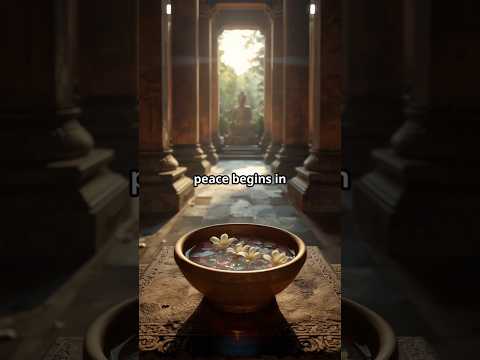
    A simple image captures the heart of Dhammapada 391—a clay bowl filled with clear water and petals resting upon a stone altar as morning light passes through ancient temple columns. The bowl does not boast; it merely holds and reflects. Likewise, the humble mind holds truth without distortion.

    Humility, in this sense, is not self-deprecation. It is the quiet knowing that we are part of something vast. When ego fades, compassion blooms. To be self-controlled is to recognize that anger, pride, and greed bring suffering. Letting them go is an act of wisdom, not loss.

    Practicing the Teaching

    Living the message of Dhammapada 391 begins with awareness in ordinary moments:

    • Pause before speaking in frustration.
    • Choose words that bring calm rather than conflict.
    • Simplify what you own and value what you have.
    • Spend a few minutes each day in mindful stillness.

    Each small act of restraint plants a seed of freedom. Gradually, peace becomes less a practice and more a natural state. The Buddha’s teaching reminds us that the real victory is mastery of the mind, not conquest of the world.

    The Modern Relevance

    Although spoken over two thousand years ago, Dhammapada 391 is strikingly relevant today. Our lives are filled with endless choices, distractions, and digital noise. The discipline to remain centered amid that storm is both rare and precious. Self-control allows us to live intentionally, to respond with wisdom instead of reacting with habit.

    When we embody this steadiness, we radiate a presence that uplifts others. The “gods” of our modern world—status, wealth, recognition—lose their grip, and a deeper peace takes their place. The self-controlled person becomes a quiet source of stability in a restless age.

    Walking the Path of Peace

    The teaching of Dhammapada 391 is not meant only for monks or hermits. It is an invitation to anyone who seeks serenity within daily life. Whether you are at work, at home, or among friends, every moment offers the chance to practice awareness. When anger rises, breathe. When pride whispers, smile gently. When craving tempts, remember the peace that comes from letting go.

    True strength is gentle, and genuine peace is humble. Through mindfulness and compassion, we discover that the calm heart is the most powerful force of all.

    Conclusion

    In the end, Dhammapada 391 calls us back to simplicity, reminding us that peace is born from restraint and that humility is the foundation of wisdom. When the mind is pure and the heart steady, life flows with quiet dignity. Such a person needs no recognition; their presence itself becomes a blessing.

    May this verse inspire you to live with awareness, patience, and kindness—so that your calm spirit may shine like still water under morning light.

    Dhammapada 391 | Why the Gods Honor the Self-Controlled.
    Dhammapada 391 | Why the Gods Honor the Self-Controlled.

    P.S.
    If this reflection on Dhammapada 391 brought you a moment of calm or clarity, take a breath—and consider subscribing to YourWisdomVault on YouTube for more timeless Buddhist wisdom, mindfulness insights, and gentle reminders to live with awareness each day. 🌿

    #YourWisdomVault #Dhammapada391 #BuddhistWisdom #Mindfulness #InnerPeace #BuddhaQuotes #Meditation #SelfControl #SpiritualGrowth #Humility #Dhammapada #BuddhistTeachings #WisdomPath #CalmMind #PeacefulLiving