
Tag: TechnoAIVolution

  • AI Songwriting: Can Machines Create Real Music?

    AI Songwriting: Can Machines Create Real Music? #chatgpt #nextgenai #deeplearning
    AI Songwriting: Can Machines Create Real Music?

    AI Songwriting: Can Machines Create Real Music?

    At the heart of the debate is a single question: can machines truly understand creativity? Artificial intelligence is transforming industries across the board — from finance and medicine to customer service and transportation. But one of the most intriguing and controversial frontiers is creativity. Can AI actually write a song? Not just generate sound, but create real music that carries emotional weight? As technology evolves, the line between machine output and human creativity is becoming increasingly blurry.

    The Rise of AI in Music Production

    AI is already being used in the music industry in various ways. Algorithms can now analyze popular songs, extract common structures, and generate melodies and lyrics that mimic top-charting hits. Platforms like OpenAI’s MuseNet and Google’s Magenta are pushing boundaries by creating full instrumental compositions, even in specific styles or genres. Some tools can even clone voices or master tracks with little to no human input. Today’s machines don’t just analyze music—they compose it, layer by layer.

    AI-powered songwriting tools like Amper Music, Aiva, and Soundraw allow users to create music by selecting mood, genre, and tempo. Within seconds, the AI generates a track based on those inputs. The results are often impressive — especially for background scores, ads, or royalty-free tracks — but are they truly “creative”?

    What Makes a Song “Real”?

    This leads us to a more profound question: What defines a song as “real”? Is it the structure — melody, rhythm, and harmony — or is it something less tangible? Many argue that music is about emotion, experience, and expression. When a songwriter pours heartbreak, hope, or nostalgia into lyrics, it’s not just about rhyme schemes and chord progressions — it’s about human connection. What once required human emotion and intuition is now being attempted by machines.

    AI can simulate structure. It can learn patterns. It can even write lyrics that rhyme and make sense. But can it understand heartbreak? Can it experience love? Can it feel?

    Emotion vs. Emulation

    AI-generated music typically feels impressive but hollow. That’s because while AI can replicate form, it struggles with meaning. Human songwriters write from a place of memory, pain, joy, and desire. Their music tells stories. Machines, on the other hand, rely entirely on data — no lived experiences, no inner world, no real intent.

    That said, the gap is narrowing. AI models are becoming more nuanced, more responsive, and in some cases, even more “inspired.” Recent examples of AI-generated songs have fooled listeners into thinking they were created by humans. This raises both exciting and uncomfortable questions.

    The Human-AI Collaboration

    Rather than thinking of AI as a replacement for human musicians, many experts, and artists see it as a tool — an extension of creativity. Think of it like a piano or a synthesizer. It’s not about AI taking over, but about new possibilities. Artists can use AI to experiment, generate ideas, overcome creative blocks, or build entire arrangements more efficiently.

    In this way, AI becomes a co-creator. The human still injects the soul; AI provides the scaffolding.

    Ethical and Creative Implications

    As AI becomes more prevalent in music, ethical questions arise. Who owns the rights to an AI-generated song? If a track is created with minimal human input, should the AI company receive royalties? What happens when AI starts mimicking living artists — their voices, styles, and even personas?

    There’s also the issue of originality. If AI is trained on existing music, are its compositions truly new? Or are they simply remixes of what’s already out there?

    The Future of Music Creation

    We’re at the beginning of a major shift in how music is made. AI won’t replace human creativity, but it will reshape it. As tools improve, more artists will integrate AI into their workflow. Music will evolve — perhaps not just in how it sounds, but in how it’s conceived, built, and shared.

    Imagine a future where a solo artist can write, produce, and distribute a full album in a single day — with AI assisting in every step. Or a listener who personalizes a song in real time, adjusting its lyrics or mood to fit their feelings. This isn’t science fiction. It’s on the horizon.

    AI Songwriting: Can Machines Create Real Music?
    AI Songwriting: Can Machines Create Real Music?

    Final Thoughts

    So, can machines create real music? The answer is: they can create music that sounds real. But whether that music feels real is still up for debate.

    What’s undeniable is that AI is changing the landscape of songwriting. It’s opening new doors for expression, innovation, and collaboration. And while it might not feel heartbreak or joy itself, it can be shaped by humans who do — becoming part of a creative process that’s evolving in real time.

    At Technoaivolution, we explore the fusion of technology and creativity — and this is just one example of how the future is being written… and sung.

    Welcome to the next verse in the evolution of sound.

    🔔 Subscribe to Technoaivolution on YouTube for bite-sized insights on AI, tech, and the future of human intelligence.

    Thanks for watching: AI Songwriting: Can Machines Create Real Music?

    #AISongwriting #ArtificialIntelligence #MusicTech #FutureOfMusic #AIvsCreativity #DigitalCreativity #MachineLearning #AIinMusic #SongwritingTools #Technoaivolution #CreativeAI #MusicIndustry #AIMusicGenerator #HumanVsMachine #NextGenMusic
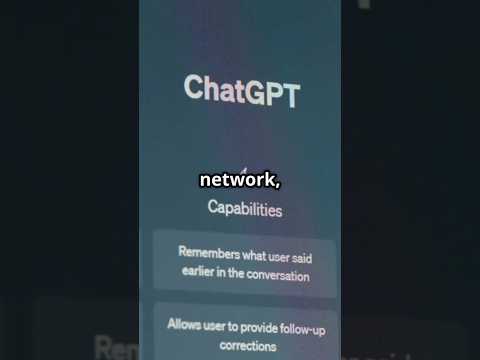
  • How Does ChatGPT Work? The Fastest Guide to AI You’ll Need!

    The Fastest Guide to How ChatGPT Works – AI Explained in Under a Minute! #technology #nextgenai
    How Does ChatGPT Work? The Fastest Guide to AI You’ll Need!

    How Does ChatGPT Work? The Fastest Guide to AI You’ll Ever Need

    Ever wondered how does ChatGPT work behind the scenes to generate human-like responses? Artificial Intelligence is no longer a distant sci-fi concept—it’s in your phone, your apps, your work tools… and maybe even helping you write blog posts like this one. One of the most talked-about AI tools today is ChatGPT, developed by OpenAI. But how does ChatGPT actually work?

    In this blog, we’ll break it down in simple terms—no PhD required. Whether you’re an AI newbie or just curious about the tech behind the chatbot, this is your quick and clear guide to how ChatGPT works.


    What Is ChatGPT?

    ChatGPT is a language model powered by AI. More specifically, it’s based on something called GPT, which stands for Generative Pre-trained Transformer. It’s trained to understand and generate human-like language.

    The tool was developed by OpenAI, and the version you’re using today (like GPT-4 or ChatGPT Plus) is the result of years of training, fine-tuning, and real-world interaction.

    But what’s going on under the hood? Let’s break it down.


    Trained on Text—Lots of It

    Understanding how does ChatGPT work helps demystify the power of large language models. The first thing to understand is that ChatGPT doesn’t have access to the internet while chatting with you. Instead, it was trained on a massive dataset of text from books, articles, websites, and other written sources available before a certain cutoff date.

    This training allows the AI to “learn” patterns in language. It doesn’t memorize facts like a search engine—it learns how people talk, how sentences are structured, and what types of responses typically follow certain prompts.


    Prediction, Not Thought

    Here’s the biggest myth to bust: ChatGPT doesn’t think. It doesn’t understand the world like you or I do.

    Instead, it works by predicting what word comes next in a sentence.

    Imagine you start a sentence like: “The cat sat on the…”

    Your brain knows it might end with “mat.” ChatGPT does something similar—only it’s doing it at a massive scale, using billions of parameters and a deep neural network to calculate the most likely next word, over and over, until a full response is generated.


    The Magic of Neural Networks

    So what’s powering all of this?

    Behind the scenes, ChatGPT is made up of a neural network—a kind of AI architecture inspired by the human brain. In the case of GPT-4, it has billions of connections (called parameters) that help it recognize patterns in data.

    This network allows it to understand context, tone, and structure, which is why it can sound surprisingly natural—even witty—when responding to your questions.


    It’s Not Perfect—And That’s Important

    Despite sounding smart, ChatGPT has limitations. It can “hallucinate” information (aka, make things up), misunderstand complex or vague prompts, or reflect biases found in the data it was trained on.

    Why? Because it’s not using reason—it’s using probabilities. It’s like a highly advanced guessing game, not a conscious thought process.

    That’s why OpenAI has built in safety features and moderation tools to reduce harmful or misleading content. But the tech is still evolving.


    So, How Does ChatGPT Work in a Nutshell?

    Let’s recap it fast:

    • ChatGPT is trained on a huge amount of text.
    • It learns patterns, not facts.
    • It generates responses by predicting the next word over and over.
    • It’s powered by a deep neural network with billions of parameters.
    • It doesn’t think—it mimics human-like text generation using probability.

    In short, it’s like a supercharged autocomplete system with surprisingly good conversation skills.


    Why It Matters

    Understanding how tools like ChatGPT work helps us use them more responsibly and effectively. Whether you’re a content creator, student, developer, or just curious about AI, knowing the basics can help you:

    • Write better prompts
    • Catch potential AI errors
    • Think critically about AI-generated content
    • Explore how this tech might evolve in the future
    How Does ChatGPT Work? The Fastest Guide to AI You’ll Need!
    How Does ChatGPT Work? The Fastest Guide to AI You’ll Need!

    Final Thoughts

    We’re living in an AI-powered world—and ChatGPT is just the beginning. As this technology continues to evolve, the line between machine-generated and human-created content will keep blurring.

    So next time you’re using ChatGPT, remember: it’s not magic—it’s math. And now that you know how it works, you’re ahead of the curve.

    If you found this blog helpful, see our 1-minute explainer video on the same topic for a visual breakdown, and don’t forget to like, share, and subscribe to Technoaivolution on YouTube for more AI insights. And remember! From training on massive data to predicting words—how does ChatGPT work is simpler than you think.

    #ChatGPT #AIExplained #HowChatGPTWorks #OpenAI #ArtificialIntelligence #MachineLearning #NeuralNetworks #LanguageModel #NaturalLanguageProcessing #TechnoAIVolution #AIForBeginners #AI101 #FutureOfTech #AITools #DeepLearning #SmartTech #DigitalEvolution #GPTExplained #TechExplainers

    Thanks for watching: How Does ChatGPT Work? The Fastest Guide to AI You’ll Need!