Tag: TechnoAIVolution

  • Turing Test Is Dead — What Will Measure AI Intelligence Now?

    The Turing Test Is Dead — What Will Measure AI Intelligence Now? #nextgenai #artificialintelligence
    The Turing Test Is Dead — What Will Measure AI Intelligence Now?

    The Turing Test Is Dead — What Will Measure AI Intelligence Now?

    For decades, the Turing Test was seen as the ultimate benchmark of artificial intelligence. If a machine could convincingly mimic human conversation, it was considered “intelligent.” But in today’s AI-driven world, that standard no longer holds up.

    Modern AI doesn’t just talk—it writes code, generates images, solves complex problems, and performs at expert levels across dozens of fields. So it’s time we ask a new question:

    If the Turing Test is outdated, what will truly measure AI intelligence now?

    Why the Turing Test No Longer Works

    Alan Turing’s original test, introduced in 1950, imagined a scenario where a human and a machine would engage in a text conversation with another human judge. If the judge couldn’t reliably tell which was which, the machine passed.

    For its time, it was revolutionary. But the world—and AI—has changed.

    Today’s large language models like ChatGPT, Claude, and Gemini can easily pass the Turing Test. They can generate fluid, convincing text, mimic emotions, and even fake personality. But they don’t understand what they’re saying. They’re predicting words based on patterns—not reasoning or self-awareness.

    That’s the key flaw. The Turing Test measures performance, not comprehension. And that’s no longer enough.

    AI Isn’t Just Talking—It’s Doing

    Modern artificial intelligence is making real-world decisions. It powers recommendation engines, drives cars, assists in surgery, and even designs other AI systems. It’s not just passing as human—it’s performing tasks far beyond human capacity.

    So instead of asking, “Can AI sound human?” we now ask:

    • Can it reason through complex problems?
    • Can it transfer knowledge across domains?
    • Can it understand nuance, context, and consequence?

    These are the questions that define true AI intelligence—and they demand new benchmarks.

    The Rise of New AI Benchmarks

    To replace the Turing Test, researchers have created more rigorous, multi-dimensional evaluations of machine intelligence. Three major ones include:

    1. ARC (Abstraction and Reasoning Corpus)

    Created by François Chollet, ARC tests whether an AI system can learn to solve problems it’s never seen before. It focuses on abstract reasoning—something humans excel at but AI has historically struggled with.

    2. MMLU (Massive Multitask Language Understanding)

    This benchmark assesses knowledge and reasoning across 57 academic subjects, from biology to law. It’s designed to test general intelligence, not just memorized answers.

    3. BIG-Bench (Beyond the Imitation Game Benchmark)

    A collaborative, open-source project, BIG-Bench evaluates AI performance on tasks like moral reasoning, commonsense logic, and even humor. It’s meant to go beyond surface-level fluency.

    These tests move past mimicry and aim to measure something deeper: cognition, adaptability, and understanding.

    What Should Replace the Turing Test?

    There likely won’t be a single replacement. Instead, AI will be judged by a collection of evolving metrics that test generalization, contextual reasoning, and ethical alignment.

    And that makes sense—human intelligence isn’t defined by one test, either. We assess people through their ability to adapt, learn, problem-solve, create, and cooperate. Future AI systems will be evaluated the same way.

    Some experts even suggest we move toward a functional view of intelligence—judging AI not by how human it seems, but by what it can safely and reliably do in the real world.

    The Turing Test Is Dead — What Will Measure AI Intelligence Now?
    The Turing Test Is Dead — What Will Measure AI Intelligence Now?

    The Future of AI Measurement

    As AI continues to evolve, so too must the way we evaluate it. The Turing Test served its purpose—but it’s no longer enough.

    In a world where machines create, learn, and collaborate, intelligence can’t be reduced to imitation. It must be measured in depth, flexibility, and ethical decision-making.

    The real question now isn’t whether AI can fool us—but whether it can help us build a better future, with clarity, safety, and purpose.


    Curious about what’s next for AI? Follow TechnoAivolution on YouTube for more shorts, breakdowns, and deep dives into the evolving intelligence behind the machines.

  • From Data to Decisions: How Artificial Intelligence Works

    From Data to Decisions: How Artificial Intelligence Really Works. #technology #nextgenai #chatgpt

    How Artificial Intelligence Really Works

    We hear it everywhere: “AI is transforming everything.” But what does that actually mean? How does artificial intelligence go from analyzing raw data to making real-world decisions? Is it conscious? Is it creative? Is it magic?

    Nope. It’s math. Smart math, trained on a lot of data.

    In this article, we’ll break down how AI systems really work—from machine learning models to pattern recognition—and explain how they turn data into decisions that power everything from movie recommendations to medical diagnostics.

    The Foundation:

    At the core of every AI system is data—massive amounts of it.

    Before AI can “think,” it has to learn. And to learn, it needs examples. This might include images, videos, text, audio, numbers—anything that can be used to teach the system patterns.

    For example, to train an AI to recognize cats, you don’t teach it what a cat is. You feed it thousands or millions of images labeled “cat”. Over time, it starts identifying the visual features that make a cat… well, a cat.

    Step Two: Pattern Recognition

    Once trained on data, AI uses machine learning algorithms to identify patterns. This doesn’t mean the AI understands what it’s seeing. It simply finds statistical connections.

    For instance, it might notice that images labeled “cat” often include pointed ears, whiskers, and certain body shapes. Then, when you show it a new image, it checks whether that pattern appears.

    This is how AI makes predictions—by comparing new inputs to patterns it already knows.

    Step Three: Decision-Making

    AI doesn’t make decisions like humans do. There’s no internal debate or emotion. It works more like this:

    1. Receive Input: A photo, sentence, or number.
    2. Analyze Using Trained Model: It compares this input to everything it’s learned from past data.
    3. Output the Most Probable Result: “That’s 94% likely to be a cat.” Or “This transaction looks like fraud.” Or “This user might enjoy this video next.”

    These outputs are often used to automate decisions—like unlocking your phone with face recognition, or adjusting traffic lights in smart cities.

    Real-Life Examples of AI in Action

    • Streaming services: Recommend what to watch based on your viewing history.
    • Email filters: Sort spam using natural language processing.
    • Healthcare diagnostics: Spot tumors or diseases in medical scans.
    • Customer service: AI chatbots answer common questions instantly.

    In each case, AI is taking in data, applying learned patterns, and making a decision or prediction. This process is called inference.

    The Importance of Data Quality

    One of the most overlooked truths about AI is this:
    Garbage in = Garbage out.

    AI is only as good as the data it’s trained on. If you feed it biased, incomplete, or low-quality data, the AI will make poor decisions. This is why AI ethics and transparent training datasets are so important. Without them, AI can unintentionally reinforce discrimination or misinformation.

    Is AI Actually “Intelligent”?

    Here’s the twist: AI doesn’t “understand” anything. It doesn’t know what a cat is or why fraud is bad. It’s a pattern-matching machine, not a conscious thinker.

    That said, the speed, accuracy, and scalability of AI make it incredibly powerful. It can process more data in seconds than a human could in a lifetime.

    So while AI doesn’t “think,” it can simulate decision-making in a way that looks intelligent—and often works better than human judgment, especially when dealing with massive data sets.

    From Data to Decisions: How Artificial Intelligence Really Works

    Conclusion: From Raw Data to Real Decisions

    AI isn’t magic. It’s not even mysterious—once you understand the process.

    It all starts with data, moves through algorithms trained to find patterns, and ends with fast, automated decisions. Whether you’re using generative AI, recommendation engines, or fraud detection systems, the core principle is the same: data in, decisions out.

    And as AI continues to evolve, understanding how it actually works will be key—not just for developers, but for everyone living in an AI-powered world.


    Want more bite-sized breakdowns of big tech concepts? Check out our full library of TechnoAivolution Shorts on YouTube and explore how the future is being built—one line of code at a time.

    P.S. The more we understand how AI works, the better we can shape the way it impacts our lives—and the future.

    #ArtificialIntelligence #MachineLearning #HowAIWorks #AIExplained #NeuralNetworks #SmartTech #AIForBeginners #TechnoAivolution #FutureOfTech

  • The Dark Side of AI No One Wants to Talk About.

    The Dark Side of Artificial Intelligence No One Wants to Talk About. #nextgenai #technology
    The Dark Side of Artificial Intelligence No One Wants to Talk About.

    The Dark Side of Artificial Intelligence No One Wants to Talk About.

    Artificial Intelligence is everywhere — in your phone, your feeds, your job, your healthcare, even your dating life. It promises speed, efficiency, and personalization. But beneath the sleek branding and techno-optimism lies a darker reality. One that’s unfolding right now — not in some sci-fi future. The dark side of AI reveals risks that are often ignored in mainstream discussions.

    This is the side of AI nobody wants to talk about.

    AI Doesn’t Understand — It Predicts

    The first big myth to bust? AI isn’t intelligent in the way we think. It doesn’t understand what it’s doing. It doesn’t “know” truth from lies or good from bad. It identifies patterns in data and predicts what should come next. That’s it.

    And that’s the problem.

    When you feed a machine patterns from the internet — a place full of bias, misinformation, and inequality — it learns those patterns too. It mimics them. It scales them.

    AI reflects the world as it is, not as it should be.

    The Illusion of Objectivity

    Many people assume that because AI is built on math and code, it’s neutral. But it’s not. It’s trained on human data — and humans are anything but neutral. If your training data includes biased hiring practices, racist policing reports, or skewed media, the AI learns that too.

    This is called algorithmic bias, and it’s already shaping decisions in hiring, lending, healthcare, and law enforcement. In many cases, it’s doing it invisibly — and without accountability. From bias to surveillance, the dark side of artificial intelligence is more real than many realize.

    Imagine being denied a job, a loan, or insurance — and no human can explain why. That’s not just frustrating. That’s dangerous.

    AI at Scale = Misinformation on Autopilot

    Language models like GPT, for all their brilliance, don’t understand what they’re saying. They generate text based on statistical likelihood — not factual accuracy. And while that might sound harmless, the implications aren’t.

    AI can produce convincing-sounding content that is completely false — and do it at scale. We’re not just talking about one bad blog post. We’re talking about millions of headlines, comments, articles, and videos… all created faster than humans can fact-check them.

    This creates a reality where misinformation spreads faster, wider, and more persuasively than ever before.

    Automation Without Accountability

    AI makes decisions faster than any human ever could. But what happens when those decisions are wrong?

    When an algorithm denies someone medical care based on faulty assumptions, or a face recognition system flags an innocent person, who’s responsible? The company? The developer? The data?

    Too often, the answer is no one. That’s the danger of systems that automate high-stakes decisions without transparency or oversight.

    So… Should We Stop Using AI?

    Not at all. The goal isn’t to fear AI — it’s to understand its limitations and use it responsibly. We need better datasets, more transparency, ethical frameworks, and clear lines of accountability.

    The dark side of AI isn’t about killer robots or dystopian futures. It’s about the real, quiet ways AI is already shaping what you see, what you believe, and what you trust.

    And if we’re not paying attention, it’ll keep doing that — just a little more powerfully each day.

    Final Thoughts

    Artificial Intelligence isn’t good or bad — it’s a tool. But like any tool, it reflects the values, goals, and blind spots of the people who build it.

    If we don’t question how AI works and who it serves, we risk building systems that are efficient… but inhumane.

    It’s time to stop asking “what can AI do?”
    And start asking: “What should it do — and who decides?”

    The Dark Side of Artificial Intelligence No One Wants to Talk About.
    The Dark Side of Artificial Intelligence No One Wants to Talk About.

    Want more raw, unfiltered tech insight?
    Follow Technoaivolution on YouTube — we dig into what the future’s really made of.

    #ArtificialIntelligence #AlgorithmicBias #AIethics #Technoaivolution

    P.S. AI isn’t coming to take over the world — it’s already shaping it. The question is: do we understand the tools we’ve built before they out scale us?

    Thanks for watching: The Dark Side of Artificial Intelligence No One Wants to Talk About.

  • The Creepiest Robot Ever Built | You Have to See to Believe.

    The Creepiest Robot Ever Built | Uncanny AI You Have to See to Believe. #technology #nextgenai
    The Creepiest Robot Ever Built | Uncanny AI You Have to See to Believe!

    The Creepiest Robot Ever Built | Uncanny AI You Have to See to Believe!

    Technology is evolving at an exponential rate, and nowhere is that more disturbingly clear than in the world of humanoid robotics. If you’ve ever looked at a robot and felt your skin crawl—even just a little—you’ve experienced what scientists call the uncanny valley. And there’s no better example of this effect than Ameca, arguably the creepiest robot ever built.

    But what makes Ameca so unsettling? And why are we continuing to design machines that look and behave like us—right down to the blink?

    Let’s explore the robot that’s making people across the internet ask one question:
    Is this really the future we want?


    What Is Ameca?

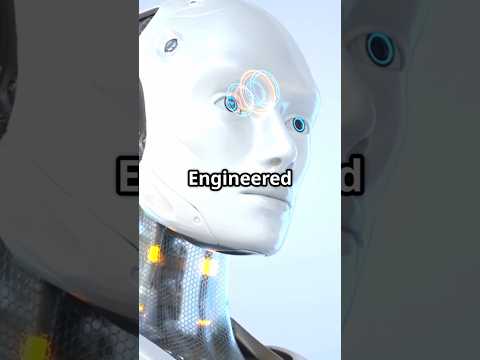
    Ameca is a humanoid robot developed by Engineered Arts, a UK-based robotics company known for creating lifelike, expressive machines. Built with cutting-edge artificial intelligence, silicone skin, and facial actuators, Ameca can smile, blink, and react with an eerie sense of timing and presence.

    What sets Ameca apart isn’t just its mechanical complexity—it’s the way it mimics human emotion. It reacts to nearby movement, raises its eyebrows in curiosity, and even makes eye contact that feels too real. For many viewers, that’s exactly what makes it so disturbing.


    Why Ameca Feels So Creepy: The Uncanny Valley

    The term uncanny valley refers to the discomfort we feel when a robot or animation looks almost human—but not quite. It’s familiar, but off. We instinctively recoil, sensing something unnatural trying to pass as natural.

    Ameca lives in that uncanny valley. It’s smooth, expressive, and intelligent—but not human. When it smiles, our brains register the movement as recognizable, but our instincts scream that something’s wrong.

    This unsettling experience is a key reason why Ameca has gone viral across YouTube, TikTok, and tech blogs. People are fascinated by it—but they’re also disturbed. And that reaction is exactly what makes it a conversation starter.


    The Rise of Humanlike AI

    The development of humanoid robots like Ameca isn’t just about appearances. Engineers and researchers are working to create machines that can:

    • Interpret and respond to human emotion
    • Simulate social interaction
    • Coexist with us in workspaces, homes, and public areas

    This brings us to a deeper question:
    When robots look, act, and respond like us—what’s left to distinguish them from us?

    It’s not just about technology anymore—it’s about identity, trust, and ethics.


    Should We Be Concerned?

    Ameca isn’t just a technical marvel—it’s a mirror. A mirror that reflects our ambition to humanize machines and perhaps, in the process, dehumanize ourselves.

    As AI grows more advanced, and robots become more lifelike, we’re entering new psychological and philosophical territory. When a machine mimics a smile, is it expressing something? Or just reflecting us back at ourselves?

    This is why content like “The Creepiest Robot Ever Built” matters. It doesn’t just entertain—it challenges our assumptions about technology and its place in our lives.


    Final Thoughts

    Ameca is unsettling, fascinating, and absolutely real. It’s not a character from a sci-fi movie. It’s not CGI. It’s a living prototype of where AI and robotics are heading—and it’s already here.

    Whether you find Ameca creepy or cool, one thing’s certain: robots are getting closer to us, both physically and psychologically. As we continue developing these technologies, we need to ask not just “Can we?”, but “Should we?”

    The Creepiest Robot Ever Built | Uncanny AI You Have to See to Believe
    The Creepiest Robot Ever Built | Uncanny AI You Have to See to Believe!

    If you’re into the weird, the futuristic, and the questions no one else is asking—subscribe to Technoaivolution on YouTube. We’re just getting started.

    #Ameca #CreepyRobot #UncannyValley #AIrobot #HumanoidAI #Technoaivolution #ArtificialIntelligence #FutureOfRobotics #EngineeredArts #RoboticsEthics #AIEmotion

    P.S. If this gave you chills—or made you think twice about the future of AI—share it with someone who still thinks robots are just tools.

    Thanks for watching: The Creepiest Robot Ever Built | You Have to See to Believe.