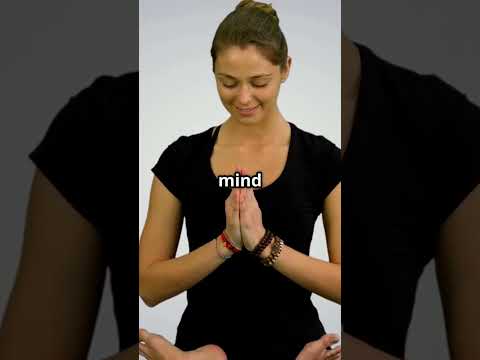
Tag: Train your mind

  • You Become What You Think: Buddhist Wisdom on the Mind.

    You Become What You Think: Buddhist Wisdom on the Mind, Thought, and the Power of Awareness.
    You Become What You Think: Buddhist Wisdom on the Mind.

    You Become What You Think: Buddhist Wisdom on the Mind.

    In a world filled with noise, distractions, and emotional reactivity, few truths cut through the chaos as clearly as this one:

    “All that we are is the result of what we have thought.”
    The Dhammapada (Verse 1)

    This timeless insight from the Buddha isn’t just a spiritual proverb—it’s a practical blueprint for how our inner world shapes our outer reality. Understanding this teaching can radically shift how you think, feel, and act in your daily life.

    Let’s unpack the depth behind these few simple words—and why they still matter today.


    The Mind as Creator

    Modern science is catching up with what ancient Buddhists taught over 2,500 years ago: your thoughts have power.

    They influence your mood, your behavior, your relationships—even how your body responds to stress or peace. In the Dhammapada, the Buddha teaches that the mind is not just reactive. It’s formative. What you hold in thought, you begin to manifest in action and emotion.

    Think long enough in fear, and you will live in anxiety.
    Think long enough in compassion, and you will begin to act with kindness.
    It’s not magic. It’s mental momentum.

    This is the root of karma in the Buddhist sense—not cosmic punishment, but the law of cause and effect on the level of thought.


    Beyond Positive Thinking

    This teaching isn’t about cheap positivity. Buddhism doesn’t promise you’ll manifest a mansion by visualizing it. Instead, it asks something harder: take full responsibility for the quality of your mind.

    That means:

    • Noticing your anger before it becomes speech
    • Watching your fear before it becomes avoidance
    • Seeing your craving before it becomes addiction

    This level of self-awareness requires discipline, not just desire. It’s not about being calm—it’s about being conscious.


    How to Apply This Wisdom Daily

    If you’re ready to take this principle seriously, here are three ways to start applying it today:

    1. Observe your inner dialogue

    What do you repeatedly say to yourself? Is it supportive or self-sabotaging? Your self-talk becomes your self-image.

    2. Interrupt negative loops

    When you catch yourself spiraling in fear, resentment, or doubt, pause. Breathe. Redirect your awareness. Awareness alone can begin to dissolve harmful patterns.

    3. Feed your mind intentionally

    Just as your body needs nourishing food, your mind needs nourishing input. Read texts that challenge you. Surround yourself with voices that uplift, not drain.


    You Are Not Your Thoughts—But You Are Their Consequences

    In Buddhism, you’re taught that you are not your thoughts, but the consequences of your thoughts are very real.

    You can’t always control what arises in the mind, but you can control what you feed, follow, or fight.

    Over time, the mind becomes conditioned. And once it’s conditioned a certain way—toward bitterness or peace, anxiety or confidence—it will carry that weight into every action, word, and decision you make.

    That’s why this teaching isn’t passive—it’s revolutionary. It demands mindfulness. It demands mastery.


    Final Thought

    “You become what you think” isn’t motivational fluff. It’s a diagnostic tool. A mirror. A challenge.

    The mind is a garden. What you plant, you grow.
    Anger plants thorns. Awareness plants peace.
    You don’t need to “fix” your life. You need to train your mind.

    As the Buddha taught:
    “The mind is everything. What you think, you become.”

    You Become What You Think: Buddhist Wisdom on the Mind.
    You Become What You Think: Buddhist Wisdom on the Mind.

    P.S. You become what you feed your mind.
    Start feeding it truth, not noise.
    → Subscribe to YourWisdomVault on YouTube for more ancient insight, modern clarity, and no-fluff philosophy.

    #YouBecomeWhatYouThink #BuddhistWisdom #MindfulnessPractice #Dhammapada #TrainYourMind #ConsciousLiving #InnerDiscipline #YourWisdomVault

  • How to Tame a Wild Mind Without Breaking It!

    How to Tame a Wild Mind Without Breaking It — Find Balance, Focus, and Inner Strength.
    How to Tame a Wild Mind Without Breaking It!

    How to Tame a Wild Mind Without Breaking It!

    We live in a world that constantly demands our attention. Our minds, already restless, become even more agitated with every notification, every worry about the future, and every regret about the past. If you’ve ever felt like your thoughts are running wild — like an untamed animal — you’re not alone. But here’s the good news: your mind doesn’t need to be silenced or suppressed. It needs to be tamed — and there’s a big difference.

    🧠 The Mind as a Wild Animal

    In Buddhist mindfulness and meditation teachings, the mind is often compared to a monkey — jumping from branch to branch, never settling. But I prefer the image of a wild animal. It’s not wrong. It’s not broken. It’s just instinctual, energetic, and reactive. Trying to cage it with force — through suppression, distraction, or denial — only increases its resistance.

    You don’t need to fight your thoughts. You need to understand them. And that begins with observation.

    🧘 The Power of Gentle Attention

    Mindfulness isn’t about stopping your thoughts. It’s about noticing them. When you sit quietly and simply observe your mind — without judgment, without trying to “fix” anything — something powerful happens. Your mind begins to trust you. Like a wild animal sensing safety, it starts to calm down on its own.

    Non-attachment plays a key role here. When a thought arises — maybe it’s fear, anxiety, or self-doubt — don’t grab it. Don’t run from it either. Just notice it. Watch how it appears, lingers, and fades. This is the core of taming the mind without breaking it: allowing space for thoughts without letting them control you.

    🔄 Control vs. Understanding

    Modern life teaches us that control equals power. But the deeper truths — those taught in Buddhism, Stoicism, and other philosophies — remind us that real strength is in surrender. Not a passive surrender, but an intentional letting go. When we try to force our minds into silence, we usually end up frustrated. But when we invite the mind to settle, it often does.

    Instead of saying, “I need to stop thinking,” say, “I’ll sit with this thought and watch it pass.” That subtle shift changes everything.

    🌿 A Practice for the Wild Mind

    Here’s a simple exercise you can try today:

    1. Sit comfortably, eyes open or closed.
    2. Focus on your breath for a few seconds.
    3. When a thought arises, label it gently — “planning,” “worrying,” “remembering.”
    4. Then, return to your breath.
    5. Repeat. Not to silence the mind, but to build the muscle of gentle awareness.

    With time, this practice creates space between you and your thoughts — a space where clarity, peace, and true presence live.

    🌅 Taming ≠ Breaking

    Taming your mind doesn’t mean becoming emotionless or robotic. It means becoming less reactive and more present. It’s about meeting your inner world with the same patience you’d offer a scared animal — not with punishment, but with understanding.

    The goal isn’t silence. It’s stillness.
    Not the kind you force, but the kind you find when you stop resisting.

    How to Tame a Wild Mind Without Breaking It!
    How to Tame a Wild Mind Without Breaking It!

    🌍 Final Thought

    Your mind may be wild, but it’s also wise. It’s trying to protect you, to process your world, to survive. But with compassion, practice, and patience, you can train it to work with you, not against you.

    So the next time your thoughts feel out of control, remember this:
    You don’t need to break your mind to find peace.
    You just need to listen — and gently guide it home.

    #Mindfulness #TameYourMind #NonAttachment #BuddhistWisdom #CalmTheMind #Overthinking #MentalClarity #PresentMoment #EmotionalBalance #YourWisdomVault

    P.S. If this brought you a little more clarity today, consider subscribing to YourWisdomVault on YouTube — where ancient wisdom meets the modern mind, one quiet insight at a time.

  • Train Your Mind:Daily Discomfort Builds Mental Toughness.

    Train Your Mind — Why Daily Discomfort Builds Mental Toughness, Resilience, and True Strength.
    Train Your Mind: Why Daily Discomfort Builds Mental Toughness.

    Train Your Mind: Why Daily Discomfort Builds Mental Toughness.

    In a world addicted to comfort, choosing discomfort purposely might sound crazy. But if you’re serious about growth, resilience, and self-mastery, daily discomfort is one of the most powerful tools you can use to train your mind.

    The ability to handle stress, resist instant gratification, and push through fear doesn’t magically appear. It’s built—through discomfort, repetition, and conscious effort.

    What Is “Daily Discomfort”?

    Daily discomfort is the intentional practice of doing things that challenge you—physically, mentally, or emotionally. It might mean waking up earlier than you want, saying no to unhealthy cravings, having a difficult conversation, or trying something that scares you.

    These aren’t random acts of suffering. They’re micro-challenges that force you to develop mental toughness, emotional regulation, and self-discipline.

    Why Does Discomfort Matter?

    Every time you step into discomfort, you’re teaching your brain that you can handle hard things. You’re rewiring your response to stress. Instead of shutting down, you learn to lean in.

    This kind of training builds what psychologists call resilience—the ability to recover quickly from setbacks and keep going under pressure. And in today’s world, resilience isn’t optional. It’s a superpower.

    Think about elite athletes, special forces, or successful entrepreneurs. What do they have in common? The ability to stay composed and focused when things get hard. That’s not talent—it’s training.

    Discomfort Sharpens Focus

    We live in a dopamine-driven world where comfort is only one click away. But chasing easy pleasures weakens our ability to focus and persist. Discomfort, on the other hand, does the opposite.

    Doing hard things forces your brain to activate higher-order thinking. It keeps you present. It heightens your awareness. And over time, it teaches you to delay gratification—one of the core traits of successful people.

    Examples of Productive Discomfort

    You don’t need to suffer or do extreme things. Here are a few simple ways to practice daily discomfort and train your mind:

    • Wake up 30 minutes earlier and spend time in silence or journaling.
    • Take a cold shower—not for pain, but for control.
    • Say no to sugar, social media, or other comfort cravings for a day.
    • Start that project you’ve been procrastinating on.
    • Speak up in a meeting when you’d rather stay quiet.
    • Go to the gym when you don’t feel like it.

    Each of these actions creates a tiny moment of resistance. And every time you push through, you prove to yourself that your mind—not your mood—is in charge.

    Discomfort Builds Identity

    Perhaps the most powerful benefit of daily discomfort is the way it shapes your identity. Each time you do something hard purposely, you’re casting a vote for the person you want to become.

    Want to become more disciplined? Do disciplined things.
    Want to build mental toughness? Embrace tough moments.
    Want to grow? Seek the edges of your comfort zone.

    Over time, your habits become your identity. And your identity becomes your destiny.

    Start Small, Stay Consistent

    You don’t have to turn your life upside down. Start with one uncomfortable action a day. Then, stay consistent. It’s not about intensity—it’s about momentum.

    When you choose discomfort daily, you’re not just building willpower. You’re building a mindset. One that says: “I can handle this.” One that doesn’t run from pressure but rises to it.

    That mindset will carry you further than any quick hack, motivational video, or shortcut ever could.


    Train Your Mind: Why Daily Discomfort Builds Mental Toughness.
    Train Your Mind: Why Daily Discomfort Builds Mental Toughness.

    Final Thought: Step Into Discomfort, Step Into Growth

    Discomfort is not the enemy. It’s a signal. A doorway. A forge.
    If you want to build mental strength, grow beyond your limits, and truly train your mind, discomfort is the path.

    So today, do one thing that makes you uncomfortable.
    Your future self will thank you.

    #MentalToughness #TrainYourMind #DailyDiscomfort #BuildResilience #SelfDiscipline #GrowthMindset #MindsetShift #PersonalGrowth #EmbraceDiscomfort #YourWisdomVault #DoHardThings #DiscomfortIsGrowth #SelfImprovementJourney

    P.S.
    If you found this valuable, don’t miss what’s next — subscribe to Your Wisdom Vault on YouTube for weekly insights on mastering your mind, building discipline, and becoming your strongest self.

    Thanks for watching: Train Your Mind: Why Daily Discomfort Builds Mental Toughness.

  • Overcoming Overthinking: Timeless Lessons for a Still Mind

    Overcoming Overthinking Through Stoicism: Timeless Lessons for a Still Mind.
    Overcoming Overthinking Through Stoicism: Timeless Lessons for a Still Mind.

    Overcoming Overthinking Through Stoicism: Timeless Lessons for a Still Mind.

    In today’s fast-paced world, overthinking has become one of the most difficult obstacles to mental peace and personal growth. Endless thoughts spiral through our minds, making it harder to focus, act, and live in the present moment. Fortunately, ancient Stoic philosophy offers timeless wisdom to help us overcome overthinking and regain control of our inner world.

    At the heart of Stoicism lies the idea of mental discipline — the ability to govern our thoughts, emotions, and reactions. The Stoics believed that our minds, just like our bodies, need regular training. Without discipline, we become slaves to our impulses, fears, and doubts. But with consistent practice, we can build a mind that remains calm, clear, and powerful, regardless of what life throws at us.

    One of the most powerful lessons Stoicism teaches about overthinking is the importance of training our perception. According to Marcus Aurelius, Roman emperor and famed Stoic philosopher, “You have power over your mind — not outside events. Realize this, and you will find strength.” In other words, while we cannot always control what happens to us, we can absolutely control how we interpret and respond to those events.

    When overthinking strikes, the Stoic method is simple: stand your ground and command your mind back to reason. Instead of allowing your thoughts to spiral into fear, doubt, or fantasy, pause and breathe. Ask yourself a critical question: Is this thought helping me, or is it harming me? If it harms your peace, it does not deserve your attention.

    Epictetus, another great Stoic teacher, put it bluntly: “First, say to yourself what you would be; then do what you have to do.” This advice cuts right through the noise of overthinking. Instead of analyzing every possible outcome or worrying about every potential problem, define who you want to be — calm, resilient, disciplined — and act according to that vision.

    Mental discipline is not about suppressing thoughts. It’s about choosing which thoughts to nourish and which ones to starve. Just like a gardener removes weeds to allow flowers to grow, a wise mind dismisses unhelpful thoughts to create space for clarity and action.

    By practicing Stoic techniques daily, we can train ourselves to respond to overthinking with strength rather than weakness. It’s not an overnight transformation. Building a still mind requires time, effort, and patience — but the rewards are profound. A clear mind leads to better decisions, stronger relationships, and a deeper sense of inner peace.

    Another powerful tool from Stoicism is premeditatio malorum, or the “premeditation of evils.” Stoics practiced imagining possible difficulties ahead of time, not to dwell in fear, but to prepare their minds to face challenges with courage and calm. This practice can help reduce overthinking about future uncertainties by transforming fear into readiness.

    At YourWisdomVault, we believe that embracing these Stoic lessons can revolutionize how we live. Instead of being trapped in endless loops of thought, we can free ourselves through self-mastery and wisdom.

    If you find yourself stuck in the cycle of overthinking, remember this:
    You do not need to control every outcome.
    You only need to control your mind, your actions, and your attitude.

    True freedom begins when we master our thoughts. True peace begins when we realize that not every thought deserves our energy.

    The Stoic path is not about becoming emotionless or detached from life. It’s about engaging with life fully — with courage, clarity, and conviction.

    So the next time you catch yourself lost in overthinking, pause.
    Breathe.
    Stand your ground.
    Train your mind like a Stoic warrior.

    Overcoming Overthinking: Timeless Lessons for a Still Mind
    Overcoming Overthinking: Timeless Lessons for a Still Mind

    And if you’re ready to dive deeper into ancient wisdom for a calmer, stronger mind, make sure to subscribe to YourWisdomVault on YouTube.
    We are here to unlock timeless lessons to help you master the art of living.

    PS:
    If you enjoyed this timeless Stoic wisdom, stay connected with YourWisdomVault. New insights on mastering your mind and living with clarity are just a click away. Let’s grow stronger together. 🛡️✨

    #Stoicism #Overthinking #MentalDiscipline #SelfMastery #InnerPeace #AncientWisdom #MarcusAurelius #Epictetus #MindsetTraining #ClearMind #PersonalGrowth #ConquerAnxiety #EmotionalResilience #YourWisdomVault #PhilosophyOfLife #TrainYourMind #DailyStoicPractice #StoicMindset #WisdomForLife #Mindfulness