Tag: Your Wisdom Vault

  • Kurungamiga Jataka—A Buddhist Story of Compassion.

    Kurungamiga Jataka – A Buddhist Story of Compassion | Timeless Tale of Kindness and Virtue.
    Kurungamiga Jataka—A Buddhist Story of Compassion.

    Kurungamiga Jataka—A Buddhist Story of Compassion.

    Among the treasured Jataka tales, stories that describe the Buddha’s past lives, the Kurungamiga Jataka stands out as a powerful lesson in kindness and empathy. These timeless narratives are more than folklore; they are moral guides that continue to resonate across cultures and centuries. This particular story is a reminder that compassion is greater than power, and mercy can transform both the giver and the receiver.

    The Background of Jataka Tales

    Jataka tales are ancient Buddhist stories preserved in the Pali Canon. Each story highlights the virtues that lead toward enlightenment, such as generosity, honesty, patience, and compassion. Monks and teachers throughout history used these stories to guide communities and to show how the Buddha, across countless lifetimes, practiced virtues that shaped his path to awakening.

    The Kurungamiga Jataka belongs to this rich collection and emphasizes the value of compassion, especially in moments where cruelty might otherwise prevail. By studying such stories, followers of Buddhism—and anyone seeking wisdom—gain inspiration to live with mindfulness, empathy, and respect for all beings.

    The Story of the Deer and the Prince

    In the Kurungamiga Jataka, a deer lives peacefully in the forest until hunters place traps to capture it. The animal’s fate seems sealed, but a noble prince discovers the suffering creature. Rather than seeking glory through conquest, the prince chooses mercy. By freeing the deer, he demonstrates that true strength lies not in dominance but in compassion.

    The choice is significant. In many traditional societies, a ruler’s power was measured by conquest and control. Yet the prince reveals a higher form of leadership: the ability to protect rather than exploit. His act of kindness not only saves the deer but inspires his people, setting an example that resonates far beyond the forest.

    The Buddhist Lesson of Compassion

    The Kurungamiga Jataka conveys a clear Buddhist teaching: compassion is not weakness but power. In Buddhism, showing kindness to all beings is a path toward enlightenment. The prince’s decision to save the deer illustrates the importance of ahimsa—nonviolence—and the recognition that every life is valuable.

    This story teaches that even in moments of authority and strength, true greatness comes from restraint and empathy. The act of saving another being uplifts both the giver and the receiver, creating harmony where there could have been suffering.

    Modern Relevance of the Tale

    Why does the Kurungamiga Jataka still matter today? In a world often driven by competition, violence, and selfish gain, this story reminds us that compassion leads to true peace. Acts of mercy create harmony in communities, families, and even within ourselves. Just as the prince elevated his people through kindness, modern readers can apply this wisdom by choosing empathy over aggression in daily life.

    Compassion today might mean supporting someone in need, protecting the environment, or choosing understanding over conflict. These small but significant acts reflect the same principle at the heart of the story—that kindness is a form of strength available to everyone.

    Reflection and Practice

    Readers of the Kurungamiga Jataka are encouraged not only to admire the prince’s choice but also to embody it. In daily life, this could mean standing up for someone vulnerable, protecting nature and animals, or showing patience where anger might be easier. By practicing compassion, we honor the same moral values the story celebrates.

    Meditation practices in Buddhism often focus on cultivating loving-kindness, or metta. Reflecting on stories like this one can deepen that practice by providing vivid examples of compassion in action. Each time we choose empathy, we step closer to the wisdom that the Jataka tales are meant to awaken within us.

    Conclusion

    The Kurungamiga Jataka is more than an ancient Buddhist tale—it is a living lesson. The story of a compassionate prince and a vulnerable deer reminds us that kindness is the highest form of strength. As part of the greater body of Jataka tales, it continues to inspire readers to live with empathy, respect, and awareness of the value of all life. By remembering and practicing its wisdom, we carry forward teachings that are as relevant now as they were thousands of years ago.

    Kurungamiga Jataka—A Buddhist Story of Compassion.
    Kurungamiga Jataka—A Buddhist Story of Compassion.

    P.S. If you enjoyed this story and want more timeless Buddhist wisdom and Jataka tales, don’t forget to subscribe to YourWisdomVault on YouTube for weekly insights and inspiring short stories.

    #KurungamigaJataka #JatakaTales #BuddhistStories #Compassion #MoralStories #AncientWisdom #BuddhistTeachings #YourWisdomVault

  • Beyond Karma: What Buddhism Teaches About Destiny.

    Beyond Karma: What Buddhism Teaches About Destiny, Choice, and the Freedom of Awareness.
    Beyond Karma: What Buddhism Teaches About Destiny.

    Beyond Karma: What Buddhism Teaches About Destiny.

    We often hear people say, “It’s just karma,” as if life’s events are dictated by an invisible, fixed force beyond our control. But Buddhism offers a very different, and much more empowering, perspective. In Buddhist philosophy, life is not a prewritten script. Destiny isn’t something we suffer—it’s something we influence, moment by moment.

    Rather than being fatalistic, Buddhism invites us to examine the role of cause and effect in shaping our experiences. While our lives may be influenced by past choices—our own and others’—they are not locked in place. Every moment offers an opportunity to respond with awareness, compassion, and intention.

    What Destiny Really Means in Buddhism

    Destiny, from a Buddhist view, is not about something being “meant to happen.” There’s no divine plan in the background, nor a cosmic ruler assigning experiences. Instead, life unfolds according to patterns—interconnected causes and conditions arising over time.

    Where does this leave personal freedom? Right in your hands. Buddhism teaches that we are not entirely free from the momentum of the past, but we are never powerless in the present. It’s through our current decisions—what we say, think, and do—that we influence what comes next.

    This view is both humbling and liberating. We’re part of a web of conditions, yes, but we are also agents with the power to shift those conditions. Small choices matter. Repeated actions shape character. Conscious living alters outcomes.

    A Clearer View of Karma

    In this context, karma isn’t a system of punishment or reward. It’s not about being “good” to avoid misfortune. It simply means that actions have consequences. Nothing more, nothing less. What we set in motion—through speech, behavior, and thought—ripples out and eventually returns in some form.

    This isn’t mystical. It’s practical. If you consistently plant seeds of anger or dishonesty, suffering tends to follow. If you plant seeds of generosity, patience, and mindfulness, your path gradually softens. But karma doesn’t lock you into anything. It simply mirrors what you bring to the moment.

    Importantly, karma doesn’t mean that people deserve the pain they face. Life is more complex than a simple one-to-one exchange. Suffering may arise from layers of history, social systems, or causes we’ll never fully trace. The point isn’t to judge but to take responsibility for what we can influence: our next move.

    Breaking the Illusion of Predetermination

    One of the most empowering ideas in Buddhism is that you’re never stuck. Even if you’ve made mistakes, even if the past weighs heavy, the present remains open. Destiny isn’t set in stone—it’s shaped in real time.

    The path forward isn’t about perfection. It’s about awareness. When we begin to live with more presence and clarity, we interrupt old cycles. We stop reacting out of habit and begin choosing more intentionally. This is how karma is transformed—not by denying it, but by meeting it with wisdom.

    You Are Not Your Past

    It’s tempting to define ourselves by what’s already happened. But Buddhism reminds us that identity is fluid. You are not the same person you were five years ago—or even five minutes ago. Who you become depends on how you engage with the present.

    In this light, karma becomes a source of hope. It tells us that our actions matter, not in some cosmic ledger, but in a real, tangible way. Our relationships change. Our minds change. Our future changes. All through the choices we make—starting now.

    Closing Reflection

    Buddhism doesn’t teach that we’re prisoners of our past. It teaches that the present is a place of power. Destiny, from this view, is less about where we’ll end up and more about how we show up.

    So the next time you wonder whether something was “meant to be,” consider this instead: What am I choosing now? What seeds am I planting? And how can I bring just a little more awareness to this moment?

    That’s the heart of living beyond karma.

    Beyond Karma: What Buddhism Teaches About Destiny.
    Beyond Karma: What Buddhism Teaches About Destiny.

    P.S. If this perspective shifted how you see karma or destiny, consider subscribing to Your Wisdom Vault on YouTube for more short, powerful insights from Buddhist teachings and beyond.

    #Buddhism #KarmaExplained #BuddhistWisdom #MindfulLiving #SpiritualGrowth #YourWisdomVault

  • Live Without Hate – Like an Elephant in the Forest (Buddha).

    Live Without Hate—Like an Elephant in the Forest, Peaceful and Strong in the Buddha’s Way.
    Live Without Hate – Like an Elephant in the Forest (Buddha).

    Live Without Hate – Like an Elephant in the Forest (Buddha).

    Buddhist Wisdom for Inner Peace

    In a world filled with noise, conflict, and division, living without hate may sound unrealistic — or even naive. But over 2,500 years ago, the Buddha offered a radical yet simple teaching:

    “Live without hate, like an elephant in the forest.”

    At first glance, this may sound poetic. But look closer — it’s a deep call for inner freedom and strength. And in today’s fast-paced, hyper-reactive society, it may be more relevant than ever.


    The Elephant as a Symbol in Buddhism

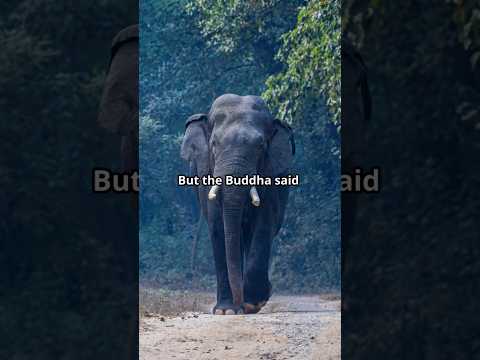
    In Buddhist tradition, the elephant symbolizes patience, mental strength, and calm focus. Elephants don’t react quickly. They move deliberately. When thunder roars or birds scream overhead, they don’t panic — they simply continue walking.

    To “live without hate” like the elephant means developing the kind of inner stillness that isn’t swayed by anger, criticism, or chaos around us. It’s about walking our path — without being pulled into every fight or emotional storm.


    Why We Cling to Hate

    Hate, resentment, and anger are rooted in ego. We feel threatened, insulted, or wronged — and the mind lashes out to defend itself. This reaction is deeply human, but it’s also deeply harmful.

    The Buddha taught that hatred does not cease by hatred — it only deepens suffering, both for us and for others. It clouds judgment, poisons relationships, and hardens the heart. Worse, it traps us in cycles of revenge, blame, and fear.


    Living Without Hate is Not Weakness

    To live without hate doesn’t mean being passive. It doesn’t mean allowing injustice or avoiding boundaries. Rather, it means responding with wisdom instead of reacting with rage.

    The elephant walks forward — it does not run away.

    Similarly, a wise person can confront life’s challenges without falling into hatred. They can disagree without becoming cruel. They can set firm boundaries without poisoning their own heart with resentment.


    Practical Ways to Cultivate This Wisdom

    You don’t need to be a monk or live in a forest to practice this. You can start cultivating this strength right now:

    • Pause before reacting. Ask: Is my response coming from hate or clarity?
    • Practice mindfulness. Return to your breath and body in moments of stress.
    • Reflect daily. What emotions dominated today? Did you nourish peace or feed conflict?
    • Spend time in nature. Like the elephant in the forest, solitude and quiet help reset the mind.

    Ancient Wisdom, Modern Relevance

    This simple Buddhist teaching — “Live without hate, like an elephant in the forest” — offers a timeless guide to modern living.

    In online arguments, at family dinners, in moments of political division or personal betrayal, we can choose a different path. We can walk with calm, clarity, and self-possession.

    We don’t need to chase every insult or correct every opinion. Instead, like the elephant, we can continue walking — strong, still, and free.


    Final Thoughts

    Living without hate is not a philosophy of weakness — it’s a path of power. It requires great strength to stay centered while the world pulls at you from every direction.

    But that strength lives in you. And every moment is a chance to return to it.

    Live Without Hate – Like an Elephant in the Forest (Buddha).
    Live Without Hate – Like an Elephant in the Forest (Buddha).

    If this message resonates, explore more teachings from the Buddha, the Stoics, and other timeless traditions at Your Wisdom Vault on YouTube — where we rediscover what still matters.

    P.S. If this teaching brought you a moment of peace or clarity, consider sharing it — someone else might need that elephant’s wisdom today.

    #Buddha #Mindfulness #LiveWithoutHate #SpiritualGrowth #BuddhistWisdom #InnerPeace #LetGoOfAnger #AncientPhilosophy #YourWisdomVault #EmotionalFreedom

  • Life isn’t the Problem — It’s How You’re Holding on to It.

    Life Isn’t the Problem—It's How You’re Holding On to It and Resisting the Flow of What Is.
    Life isn’t the Problem — It’s How You’re Holding on to It.

    Life isn’t the Problem — It’s How You’re Holding on to It.

    Have you ever felt like life was just… too much? Like things were spiraling, or slipping out of your control? You’re not alone. But here’s a gentle truth from Buddhist wisdom:
    Life itself isn’t the problem — it’s how tightly we’re trying to hold onto it.

    This simple idea has profound implications. Most of our suffering doesn’t come from what’s happening around us — but from the way we grasp at expectations, outcomes, identities, and control.

    The Pain of Holding On

    We all want things to go our way. We plan. We prepare. We set expectations. And when life doesn’t match up — we feel pain, disappointment, even anger.

    But Buddhism teaches that suffering (dukkha) comes from attachment — our tendency to cling to what we like, and push away what we don’t. It’s not the thing that causes the pain. It’s our mental grip on that thing.

    Let’s say a relationship ends. The pain isn’t just about the absence of the person — it’s the inner resistance to that change. It’s our refusal to accept that something once beautiful has run its course.

    Or consider a dream or goal that didn’t work out. The suffering isn’t in the failure itself — it’s in the tight grasp we had on how things “should’ve” gone.

    Life Flows — Let It

    Imagine holding water in your hands. The tighter you squeeze, the faster it slips through your fingers. But if you loosen your grip, you can hold it gently, even for a little while.

    Life works the same way.

    Trying to control every moment, every outcome, every twist of fate is exhausting — and futile. When we cling, we suffer. When we loosen our grip, we find peace.

    That doesn’t mean we stop caring or striving. It means we live and act without becoming attached to how it all unfolds.

    Letting Go Isn’t Giving Up

    A common misconception is that letting go means giving up. That’s not it at all.

    Letting go means trusting life. It means recognizing that everything is temporary — joy, sorrow, relationships, successes, failures. And in that impermanence, we can find a strange, liberating kind of peace.

    It’s about making space. When we release our grip on what we think we need, we open up to what we actually need.

    Practical Ways to Loosen the Grip

    Here are a few small ways to begin practicing non-attachment in daily life:

    • Notice when you’re resisting: Are you tense? Obsessing over outcomes? That’s a cue to pause.
    • Use the breath: A few mindful breaths can reconnect you to the present moment.
    • Practice gratitude: Focus on what is, not what’s missing.
    • Reframe change: Instead of fearing endings, see them as transitions.
    • Affirmation: Try saying, “I allow life to unfold without needing to control it.”

    These are not overnight fixes, but gentle practices that shift your relationship to life — one breath, one moment at a time.

    The Freedom of Letting Go

    In the end, this path isn’t about being passive. It’s about being free. Free from the exhausting need to control, predict, and possess. Free to live with clarity and calm, even when the world is chaotic.

    When we stop gripping so tightly, we start seeing more clearly. And we remember: life was never ours to control — only to experience.

    Life isn’t the Problem — It’s How You’re Holding on to It.
    Life isn’t the Problem — It’s How You’re Holding on to It.

    If this resonated with you, take a deep breath. Maybe… loosen the grip. Let today be enough.

    🌀

    For more mindful reflections like this, subscribe to YourWisdomVault on YouTube.
    You’ll find weekly insights rooted in Buddhist philosophy, mindfulness, and modern spiritual clarity.

    P.S.

    If this message helped ease your grip on life, imagine what letting go a little more could bring. Come back often — your wisdom’s just unfolding.

    #LettingGo #BuddhistWisdom #NonAttachment #Mindfulness #InnerPeace #SpiritualGrowth #LifeLessons #EmotionalFreedom #PeacefulLiving #YourWisdomVault #PresentMoment #SufferingAndAttachment #PersonalGrowth #LiveWithClarity #MindfulLiving