Blog

  • Will AI Replace Programmers? The Truth Behind the Hype.

    Will AI Replace Programmers? The Truth Behind the Hype. #nextgenai #artificialintelligence #chatgpt
    Will AI Replace Programmers? The Truth Behind the Hype.

    Will AI Replace Programmers? The Truth Behind the Hype.

    Every few months, a new headline circulates: “AI to Replace Programmers.” It sounds dramatic, attention-grabbing—and maybe even a little terrifying for those of us who write code for a living. But is it true?

    With the rapid development of tools like ChatGPT, GitHub Copilot, and other code-generating AI systems, it’s understandable that developers are asking serious questions about the future of their profession. However, the conversation about whether AI will replace programmers is far more nuanced than it might seem at first glance.

    What AI Can (and Can’t) Do in Programming

    AI has already proven it can generate functioning code snippets, autocomplete boilerplate, and even help debug simpler errors. It can save time, reduce repetitive tasks, and act as a productivity booster. In that sense, AI is already transforming how programming happens.

    But transformation is not the same as replacement.

    While AI can mimic certain tasks a programmer performs, it doesn’t truly “understand” code. It doesn’t know what the software is for, what the client actually needs, or how a given system fits into a complex business process. These are all aspects of development that require human context, strategic thinking, and creative problem-solving.

    In short: AI can write code, but it can’t think like a developer.

    The Human Edge in Software Development

    Developers do far more than just push syntax. They design systems, optimize architecture, gather requirements, and interpret feedback. They adapt solutions on the fly, communicate with stakeholders, and troubleshoot edge cases that AI models may never have seen.

    Even the most advanced AI lacks the ability to hold real conversations, negotiate trade-offs, or understand emotional nuance—something developers often do with clients, product teams, and other collaborators.

    So when we ask, “Will AI replace programmers?” we’re missing the bigger picture. The better question is: how will programmers evolve alongside AI?

    Collaborating With AI, Not Competing Against It

    Instead of fearing AI, developers can begin viewing it as a powerful tool. Much like how IDEs, version control, and Stack Overflow changed the way we code, AI will likely become another essential part of the modern programmer’s toolkit.

    Junior developers might lean on AI for basic syntax help. Senior engineers might use it to automate tests or refactor legacy code more efficiently. Project managers could even leverage AI to model early prototypes or explore architectural options.

    But the direction, insight, and quality control still need to come from humans.

    The Future: Augmented Programmers, Not Obsolete Ones

    History shows us that automation doesn’t always destroy jobs—it reshapes them. The same is true here. Developers who embrace AI may actually find themselves more valuable, not less. They’ll deliver faster, with fewer errors, and have more time to focus on higher-level logic and system design.

    The demand for software isn’t shrinking. If anything, it’s growing faster than ever. And that means skilled developers—especially those who know how to use AI strategically—will remain in high demand.

    Conclusion: Don’t Fear the Hype

    So, will AI replace programmers? Not entirely. Not anytime soon.

    Yes, the role is changing. Some parts of coding are becoming more automated. But that doesn’t mean developers are going extinct—it means we’re evolving. And those who learn to collaborate with AI instead of resisting it will be ahead of the curve.

    Keep coding. Keep thinking. And keep adapting.

    Will AI Replace Programmers? The Truth Behind the Hype.
    Will AI Replace Programmers? The Truth Behind the Hype.

    Looking for grounded takes on the future of AI, tech, and digital evolution?
    Follow Technoaivolution on YouTube for short-form insights that cut through the hype.

    #AIReplaceProgrammers #FutureOfCoding #ArtificialIntelligence #TechTrends #SoftwareDevelopment

    Thanks for watching: Will AI Replace Programmers? The Truth Behind the Hype.

    #AIReplaceProgrammers #FutureOfProgramming #ArtificialIntelligence #SoftwareDevelopment #AIvsDevelopers #CodingWithAI #GitHubCopilot #ChatGPTCoding #Technoaivolution #AIAssistedDevelopment #ProgrammerJobs #AIInTech #DeveloperTools #AIandJobs #DigitalEvolution
  • Mindfulness Amid Chaos: Real-World Test of Buddhist Wisdom.

    Mindfulness Amid Chaos — A Real-World Test of Buddhist Wisdom, Calm Awareness, and Compassion.
    Mindfulness Amid Chaos: Real-World Test of Buddhist Wisdom.

    Mindfulness Amid Chaos: Real-World Test of Buddhist Wisdom.

    In today’s fast-moving world, staying present is harder than ever. Between deadlines, distractions, and daily stress, we’re often pulled in a dozen directions at once. But in the middle of all that noise, there’s a quiet practice that offers clarity: mindfulness.

    Rather than being a luxury or a trend, mindfulness is a skill—one that can transform how we move through the chaos of life. It’s not about escaping stress. It’s about meeting each moment with intention, even when things feel overwhelming.

    What Mindfulness Really Means

    At its heart, mindfulness is the practice of being fully present. It means noticing what’s happening right now—your thoughts, your breath, your body, your surroundings—without trying to change or judge it.

    The concept has roots in ancient Buddhist teachings, but it’s also found in modern wellness, psychology, and stress reduction techniques. More than a meditation technique, it’s a way of engaging with the world—and yourself—with greater clarity and compassion.

    A Personal Experiment in Staying Present

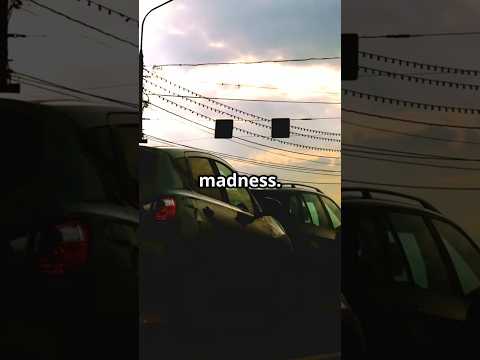
    I recently put this practice to the test—not in a quiet room, but during a high-stress, real-life situation. Picture this: late for an appointment, stuck in traffic, surrounded by honking horns and frustration rising.

    My instinct was to stress out. But instead, I paused. I focused on my breathing. I became aware of the tension in my body. I didn’t fight it—I just noticed it.

    In that moment, something shifted. The chaos outside didn’t disappear, but I stopped letting it control me inside. That’s the power of presence.

    Why Presence Matters

    Choosing to be present, especially in difficult moments, can reshape how we experience life. Studies have shown that regular mindful awareness can reduce anxiety, improve focus, and help us respond more thoughtfully to stress.

    But beyond the research, it’s simply a better way to live. When we’re present, we don’t miss our lives while waiting for things to calm down. We begin to see that peace isn’t something we chase—it’s something we can access, even in discomfort.

    Practical Ways to Stay Present

    You don’t need to sit in meditation for hours. Here are a few simple ways to apply this practice in your day:

    • Breathe with awareness: Take 3 slow breaths when you feel overwhelmed.
    • Notice your senses: What do you hear, see, feel right now?
    • Pause before reacting: In stressful moments, give yourself a second to respond with intention.
    • Reflect daily: Spend a few minutes each evening just noticing how you felt throughout the day.

    These small practices can anchor you, especially when life feels out of control.

    A Practice for Every Moment

    This isn’t about being perfect. There’s no “right” way to do it. The real practice is remembering to return to the moment, again and again. Whether you’re washing dishes, having a conversation, or facing a challenge—you can choose presence.

    Even when the world feels chaotic, you can carry a still point within you. That’s what this path offers: not escape, but transformation.

    Mindfulness Amid Chaos: Real-World Test of Buddhist Wisdom.
    Mindfulness Amid Chaos: Real-World Test of Buddhist Wisdom.

    Final Thoughts

    If you’ve been curious about how to stay grounded in the middle of modern stress, start with one breath. One pause. One choice to show up, fully.

    Presence isn’t a technique. It’s a way of being. And every moment is a new opportunity to begin again.


    Want more grounded reflections like this?
    Follow YourWisdomVault on YouTube for daily short-form insights rooted in Buddhist wisdom, presence, and inner calm.

    #Mindfulness #MindfulnessPractice #DailyMindfulness #MindfulLiving #BuddhistWisdom #PresentMoment #InnerCalm #StressRelief #SpiritualPractice #YourWisdomVault

  • This AI Learned Without Human Help – The Shocking Evolution

    This AI Learned Without Human Help – The Shocking Evolution of Intelligence. #nextgenai #technology
    This AI Learned Without Human Help – The Shocking Evolution of Intelligence

    This AI Learned Without Human Help – The Shocking Evolution of Intelligence

    For decades, artificial intelligence depended on us. We designed the models, labeled the data, and trained them step by step. But that era is changing. We’re entering a new phase—one where AI learned not by instruction, but by observation.

    Let that sink in.

    An AI that teaches itself, without human guidance, isn’t just a cool experiment—it’s a milestone. It signals the birth of self-directed machine intelligence, something that may soon reshape every digital system around us.

    What Does It Mean When an AI Learned on Its Own?

    Traditionally, AI models relied on supervised learning. That means humans would feed the machine labeled data: “This is a cat,” “That’s a dog.” The AI would then make predictions based on patterns.

    But when an AI learned without this supervision, it crossed into the world of self-supervised learning. Instead of being told what it’s looking at, the AI identifies relationships, fills in blanks, and improves by trial and error—just like a human child might.

    This is the technology behind some of today’s most advanced systems. Meta’s DINOv2, for example, and large language models that use context to predict words, have all demonstrated that AI learned more efficiently when given space to observe.

    How AI Mimics the Human Brain

    When an AI learned without input, it tapped into a learning style surprisingly close to how we learn as humans. Think about it: babies aren’t born with labeled datasets. They absorb patterns from sound, sight, and experience. They form meaning from repetition, correction, and context.

    Similarly, self-supervised AI systems consume huge amounts of raw data—text, images, videos—and try to make sense of it by predicting what comes next or what’s missing. Over time, they get better without being told what’s “right.”

    That’s not just automation. That’s adaptation.

    Why This Matters: A Leap Toward General Intelligence

    When we say an AI learned without human help, we’re talking about the beginning of artificial general intelligence (AGI)—a system that can apply knowledge across domains, adapt to new environments, and evolve beyond narrow tasks.

    In simple terms: we’re no longer just programming machines.
    We’re growing minds.

    This development could reshape industries:

    • Healthcare: A self-learning AI could detect new patterns in patient data faster than any doctor.
    • Education: AI tutors could adapt in real-time to each student’s unique learning style.
    • Robotics: Machines that learn from watching humans could function in unpredictable real-world environments.

    And of course, there are ethical implications. If an AI learned how to deceive, or optimize for unintended goals, it could lead to unpredictable consequences. That’s why this moment is so important—it requires both awe and caution.

    What Comes Next?

    We’re just scratching the surface. The next generation of self-learning AI will likely be more autonomous, more efficient, and perhaps, more intuitive than ever before.

    Here are a few possibilities:

    • AI that builds its own internal goals
    • Systems that learn socially from each other
    • Machines that modify their own code to optimize performance

    All of this began with one simple but profound shift: an AI learned how to learn.

    This AI Learned Without Human Help – The Shocking Evolution of Intelligence
    This AI Learned Without Human Help – The Shocking Evolution of Intelligence

    Final Thoughts

    The phrase “AI learned” may seem like a technical detail. But it’s actually a signpost—a marker that tells us we’ve crossed into new territory.

    In this new world, AI isn’t just reactive. It’s curious. It explores, adapts, and grows.
    And as it does, we’ll need to rethink what it means to teach, to guide, and to control the tools we create.

    Because from this point forward, the question isn’t just what we teach AI—
    It’s what happens when AI learned… without us.

    #AILearned #SelfLearningAI #ArtificialIntelligence #MachineLearning #DeepLearning #SelfSupervisedLearning #AIWithoutHumans #FutureOfAI #Technoaivolution #NeuralNetworks #AIRevolution #LearningMachines #AIIntelligence #AutonomousAI #DigitalConsciousness

    P.S. If this glimpse into the future sparked something in you, subscribe to Technoaivolution on YouTube and stay ahead as intelligence evolves — with or without us.

  • The Art of Watching Your Thoughts Burn: Mindful Detachment.

    The Art of Watching Your Thoughts Burn: Mindful Detachment in Action.
    The Art of Watching Your Thoughts Burn: Mindful Detachment in Action

    The Art of Watching Your Thoughts Burn: Mindful Detachment in Action

    In a world of constant mental noise, learning to observe rather than react is a radical act. This is where the art of watching comes in—a practice rooted in Buddhist mindfulness that can transform how we relate to our thoughts and emotions.

    Rather than battling the mind, the art of watching teaches us to witness it.

    Why Watching Matters

    Most of us are caught in a loop: a thought appears, and we react. That reaction fuels more thoughts, more emotions, and before long, we’re overwhelmed. The art of watching is about breaking that cycle—not by force, but through awareness.

    In Buddhist practice, thoughts are not the enemy. They’re simply phenomena that arise and pass. The problem begins when we believe, cling to, or resist them. Watching gives us space. Space to respond, not react. Space to choose peace over panic.

    Let the Fire Burn—But Stay Cool

    Think of your thoughts like sparks. Some are harmless. But when you latch onto anger, fear, or craving, those sparks can ignite a fire.

    The key isn’t to suppress the fire. It’s to watch it.

    This is where the art of watching becomes powerful. Instead of jumping into the flames of emotion, you sit beside them. You observe their rise, their intensity, and—most importantly—their fading. Every emotion, no matter how strong, passes when it’s not fed.

    This doesn’t make you cold or detached. It makes you clear and grounded.

    How to Practice the Art of Watching

    You don’t need to retreat to a monastery to begin. The art of watching can be practiced anytime, anywhere. Here’s how:

    • Pause before reacting: When you notice a strong thought, take a breath. Ask: can I watch this instead of becoming it?
    • Label gently: Silently name what you’re experiencing—“thinking,” “worrying,” “remembering.” This helps shift from identification to observation.
    • Use the breath as an anchor: While thoughts float by, keep your awareness gently on the breath. It grounds you without resistance.
    • Journal from awareness: Write what you notice without judgment. This builds the watcher’s perspective over time.

    Each of these practices strengthens your ability to remain present and unattached—even in challenging moments.

    The Wisdom Behind the Practice

    In Buddhist philosophy, suffering isn’t caused by thoughts themselves, but by our attachment to them. The art of watching reveals this truth in real time. When you watch a fear rise and fall without reacting, you see its impermanence. When you observe anger without fueling it, it loses its power.

    This shift—from doing to witnessing—is a kind of liberation. You realize you are not your thoughts. You are the awareness behind them.

    And from that space, peace becomes possible—even in chaos.

    The Art of Watching Your Thoughts Burn: Mindful Detachment in Action
    The Art of Watching Your Thoughts Burn: Mindful Detachment in Action

    Final Reflection

    The art of watching is not about becoming emotionless. It’s about becoming present. Watching doesn’t mean ignoring life—it means engaging with it more clearly, with less confusion and more compassion.

    So the next time your mind feels like it’s spinning, don’t fight it. Don’t fuel it. Just watch. Breathe. And let the fire burn itself out.

    With practice, the art of watching becomes second nature. A quiet power. A path to freedom.

    #ArtOfWatching #MindfulDetachment #BuddhistMindfulness #WatchYourThoughts #LettingGo #EmotionalAwareness #Vipassana #InnerPeace #NonAttachment #MeditationPractice #SpiritualGrowth #ObserveYourMind #BuddhistWisdom #MentalClarity #MindfulnessInAction

    P.S. If this post helped shift your perspective, consider subscribing to YourWisdomVault on YouTube to receive more insights on mindfulness, Buddhist wisdom, and the quiet power of observation — straight to your inbox.