Blog

  • Breathing Is the First Rebellion: Take Back Your Power!

    Breathing Is the First Rebellion — Take Back Your Power in Silence, Presence, and Stillness.
    Breathing Is the First Rebellion: Take Back Your Power in Silence!

    Breathing Is the First Rebellion: Take Back Your Power in Silence!

    In a culture built on speed, distraction, and noise, silence is rare. Stillness is rarer. But there is something even more radical—something so simple, so accessible, we overlook its power every day.

    The breath.

    Breathing—consciously—is your first act of rebellion.
    Why? Because in a world that wants to automate your thoughts, hijack your attention, and profit from your stress, taking a slow, intentional breath is not just calming. It’s revolutionary.


    Why Breathing Is Revolutionary

    Breath is the bridge between your body and your mind. It’s the only part of your nervous system you can control both consciously and unconsciously. That makes it incredibly powerful.

    When you slow your breath, you send a message to your body: We are safe.
    You exit the stress loop. You calm your heart rate. You shift from fight or flight to rest and restore.

    And when you do this—when you take back your autonomic rhythm from the chaos of the world—you reclaim control over how you feel, how you respond, and how you show up.

    That’s rebellion.
    Because a calm, grounded person is hard to manipulate.
    You stop reacting, and start choosing.


    The World Wants Your Breath

    We don’t talk about this enough: your breath is constantly being hijacked.
    Notifications. Alarms. Clickbait. Conflict. Endless scrolling.

    All of these things disrupt your breathing patterns. They make you shallow breathe. They keep your nervous system on edge. Why? Because a dysregulated person is more likely to consume, argue, obey, and react.

    Stillness doesn’t serve systems of control. But presence? That’s dangerous.

    Every time you pause and take a deep breath—without reacting—you are choosing presence over programming. You are saying: “I will not be rushed. I will not be triggered. I will not be owned.”


    Silence Is Strategy

    Rebellion doesn’t have to be loud. In fact, the most profound acts of defiance are often invisible.

    When you breathe consciously in a stressful meeting,
    when you exhale before replying to someone trying to provoke you,
    when you close your eyes and return to yourself instead of reacting—

    You are resisting the pull of a reactive world.

    You are building inner power.

    This is not just self-care. This is self-mastery.


    Take Back Your Power

    Breath is free. It’s always with you.
    And yet, most people give it away without even realizing it.

    They give it to stress.
    To screens.
    To fear.
    To control.

    But when you own your breath, you own your state.
    And when you own your state, you become unshakable.

    So the next time you feel overwhelmed, angry, anxious, or out of control—don’t just react.
    Pause.
    Breathe.
    That’s your first rebellion.
    And it’s one you can win, over and over again.

    Breathing Is the First Rebellion: Take Back Your Power in Silence!
    Breathing Is the First Rebellion: Take Back Your Power in Silence!

    Final Thought

    This isn’t just a mindfulness trick.
    It’s a way of life.
    A quiet revolution.

    Inhale power.
    Exhale control.
    Reclaim your breath—and with it, your clarity, calm, and freedom.


    Want more like this? Subscribe to YourWisdomVault on YouTube for weekly drops of grounded insight, self-mastery tools, and inner transformation—one breath at a time.

    #MindfulRebellion #InnerPower #ConsciousBreath

    P.S. The world moves fast, but your breath is timeless. When in doubt, return to it—and you’ll always find your way back to power.
  • The Dark Side of AI No One Wants to Talk About.

    The Dark Side of Artificial Intelligence No One Wants to Talk About. #nextgenai #technology
    The Dark Side of Artificial Intelligence No One Wants to Talk About.

    The Dark Side of Artificial Intelligence No One Wants to Talk About.

    Artificial Intelligence is everywhere — in your phone, your feeds, your job, your healthcare, even your dating life. It promises speed, efficiency, and personalization. But beneath the sleek branding and techno-optimism lies a darker reality. One that’s unfolding right now — not in some sci-fi future. The dark side of AI reveals risks that are often ignored in mainstream discussions.

    This is the side of AI nobody wants to talk about.

    AI Doesn’t Understand — It Predicts

    The first big myth to bust? AI isn’t intelligent in the way we think. It doesn’t understand what it’s doing. It doesn’t “know” truth from lies or good from bad. It identifies patterns in data and predicts what should come next. That’s it.

    And that’s the problem.

    When you feed a machine patterns from the internet — a place full of bias, misinformation, and inequality — it learns those patterns too. It mimics them. It scales them.

    AI reflects the world as it is, not as it should be.

    The Illusion of Objectivity

    Many people assume that because AI is built on math and code, it’s neutral. But it’s not. It’s trained on human data — and humans are anything but neutral. If your training data includes biased hiring practices, racist policing reports, or skewed media, the AI learns that too.

    This is called algorithmic bias, and it’s already shaping decisions in hiring, lending, healthcare, and law enforcement. In many cases, it’s doing it invisibly — and without accountability. From bias to surveillance, the dark side of artificial intelligence is more real than many realize.

    Imagine being denied a job, a loan, or insurance — and no human can explain why. That’s not just frustrating. That’s dangerous.

    AI at Scale = Misinformation on Autopilot

    Language models like GPT, for all their brilliance, don’t understand what they’re saying. They generate text based on statistical likelihood — not factual accuracy. And while that might sound harmless, the implications aren’t.

    AI can produce convincing-sounding content that is completely false — and do it at scale. We’re not just talking about one bad blog post. We’re talking about millions of headlines, comments, articles, and videos… all created faster than humans can fact-check them.

    This creates a reality where misinformation spreads faster, wider, and more persuasively than ever before.

    Automation Without Accountability

    AI makes decisions faster than any human ever could. But what happens when those decisions are wrong?

    When an algorithm denies someone medical care based on faulty assumptions, or a face recognition system flags an innocent person, who’s responsible? The company? The developer? The data?

    Too often, the answer is no one. That’s the danger of systems that automate high-stakes decisions without transparency or oversight.

    So… Should We Stop Using AI?

    Not at all. The goal isn’t to fear AI — it’s to understand its limitations and use it responsibly. We need better datasets, more transparency, ethical frameworks, and clear lines of accountability.

    The dark side of AI isn’t about killer robots or dystopian futures. It’s about the real, quiet ways AI is already shaping what you see, what you believe, and what you trust.

    And if we’re not paying attention, it’ll keep doing that — just a little more powerfully each day.

    Final Thoughts

    Artificial Intelligence isn’t good or bad — it’s a tool. But like any tool, it reflects the values, goals, and blind spots of the people who build it.

    If we don’t question how AI works and who it serves, we risk building systems that are efficient… but inhumane.

    It’s time to stop asking “what can AI do?”
    And start asking: “What should it do — and who decides?”

    The Dark Side of Artificial Intelligence No One Wants to Talk About.
    The Dark Side of Artificial Intelligence No One Wants to Talk About.

    Want more raw, unfiltered tech insight?
    Follow Technoaivolution on YouTube — we dig into what the future’s really made of.

    #ArtificialIntelligence #AlgorithmicBias #AIethics #Technoaivolution

    P.S. AI isn’t coming to take over the world — it’s already shaping it. The question is: do we understand the tools we’ve built before they out scale us?

    Thanks for watching: The Dark Side of Artificial Intelligence No One Wants to Talk About.

  • Why Most Mindfulness Advice Fails-What Truly Works Instead.

    Why Most Mindfulness Advice Fails — And What Truly Works for Lasting Peace and Mental Clarity.
    Why Most Mindfulness Advice Fails—and What Truly Works Instead.

    Why Most Mindfulness Advice Fails—and What Truly Works Instead.

    In today’s fast-paced world, mindfulness has become a buzzword — tossed around in self-help books, corporate wellness programs, and meditation apps. You’ve probably heard the typical advice: “Just clear your mind” or “Focus only on your breath.” But if you’ve ever tried to follow that guidance and still felt anxious, overwhelmed, or like you were doing it wrong, you’re not alone. Not all mindfulness advice leads to real change—some of it misses the mark entirely.

    Here’s the truth: Most mainstream mindfulness advice misses the point entirely. It oversimplifies a deep, nuanced practice — and in doing so, it often sets people up to feel like they’re failing.

    The Myth of the “Empty Mind”

    Let’s start with one of the biggest misconceptions:
    Mindfulness is not about having a blank mind.

    That idea — that a “successful” meditation means stopping all thoughts — is one of the most damaging myths in the wellness world. The mind thinks, just as the lungs breathe. You don’t force it to stop; you learn to relate to it differently.

    When people are told to “just clear your mind,” they often end up feeling frustrated when thoughts inevitably arise. Instead of cultivating peace, they build internal resistance — and the practice becomes a battle rather than a refuge.

    What Mindfulness Really Is

    At its core, mindfulness means paying attention on purpose, in the present moment, without judgment. It’s not about erasing thoughts — it’s about becoming aware of them.

    Rather than fighting your mental activity, true mindfulness invites you to observe it. You learn to watch your thoughts and emotions like clouds passing through the sky — temporary, shifting, and separate from who you really are.

    This shift in perspective is powerful. It creates space between you and the chaos. You’re no longer lost in thought — you’re aware that you’re thinking. That’s a subtle but profound transformation.

    Awareness Over Control

    The real secret to mindfulness isn’t control — it’s awareness.

    You don’t need to force yourself into stillness. You simply become present to what’s already happening. Whether it’s anxiety, boredom, tension, or even joy — you meet it, feel it fully, and let it pass.

    This is what most popular advice misses: it tries to teach mindfulness as a tool to fix or escape uncomfortable feelings. But true mindfulness is about turning toward those feelings, not away from them.

    It’s in this honest, non-judgmental awareness that real healing begins.

    A Practice That Meets You Where You Are

    You don’t need incense, a special cushion, or hours of silence to practice mindfulness. You need just one thing: a willingness to notice what’s happening inside you — right here, right now.

    That might look like:

    • Taking a conscious breath before answering a stressful email.
    • Noticing the tension in your shoulders during a commute.
    • Watching your thoughts spiral — without getting caught in them.

    These small moments are where mindfulness lives. And they add up.

    Why Most Mindfulness Advice Fails—and What Truly Works Instead.
    Why Most Mindfulness Advice Fails—and What Truly Works Instead.

    The Takeaway

    Mindfulness isn’t about “clearing your mind” — it’s about changing your relationship to your mind. When you let go of control and lean into awareness, you unlock the true potential of this ancient practice.

    So the next time someone tells you to just “quiet your thoughts,” smile. Then return to the present — as it is, not as you think it should be.


    Looking for deeper clarity and practical wisdom?
    Follow YourWisdomVault on YouTube for more insights that cut through the fluff and get to what really matters.

    #MindfulnessMatters #SelfAwareness #MentalClarity

    P.S. Struggling to quiet your mind doesn’t mean you’re doing it wrong — it means you’re human. The real practice is learning to stay present with the noise. Keep showing up. That’s the work.

    Thanks for watching: Why Most Mindfulness Advice Fails-What Truly Works Instead.

  • The Creepiest Robot Ever Built | You Have to See to Believe.

    The Creepiest Robot Ever Built | Uncanny AI You Have to See to Believe. #technology #nextgenai
    The Creepiest Robot Ever Built | Uncanny AI You Have to See to Believe!

    The Creepiest Robot Ever Built | Uncanny AI You Have to See to Believe!

    Technology is evolving at an exponential rate, and nowhere is that more disturbingly clear than in the world of humanoid robotics. If you’ve ever looked at a robot and felt your skin crawl—even just a little—you’ve experienced what scientists call the uncanny valley. And there’s no better example of this effect than Ameca, arguably the creepiest robot ever built.

    But what makes Ameca so unsettling? And why are we continuing to design machines that look and behave like us—right down to the blink?

    Let’s explore the robot that’s making people across the internet ask one question:
    Is this really the future we want?


    What Is Ameca?

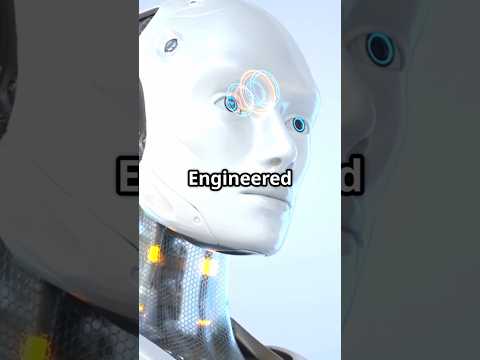
    Ameca is a humanoid robot developed by Engineered Arts, a UK-based robotics company known for creating lifelike, expressive machines. Built with cutting-edge artificial intelligence, silicone skin, and facial actuators, Ameca can smile, blink, and react with an eerie sense of timing and presence.

    What sets Ameca apart isn’t just its mechanical complexity—it’s the way it mimics human emotion. It reacts to nearby movement, raises its eyebrows in curiosity, and even makes eye contact that feels too real. For many viewers, that’s exactly what makes it so disturbing.


    Why Ameca Feels So Creepy: The Uncanny Valley

    The term uncanny valley refers to the discomfort we feel when a robot or animation looks almost human—but not quite. It’s familiar, but off. We instinctively recoil, sensing something unnatural trying to pass as natural.

    Ameca lives in that uncanny valley. It’s smooth, expressive, and intelligent—but not human. When it smiles, our brains register the movement as recognizable, but our instincts scream that something’s wrong.

    This unsettling experience is a key reason why Ameca has gone viral across YouTube, TikTok, and tech blogs. People are fascinated by it—but they’re also disturbed. And that reaction is exactly what makes it a conversation starter.


    The Rise of Humanlike AI

    The development of humanoid robots like Ameca isn’t just about appearances. Engineers and researchers are working to create machines that can:

    • Interpret and respond to human emotion
    • Simulate social interaction
    • Coexist with us in workspaces, homes, and public areas

    This brings us to a deeper question:
    When robots look, act, and respond like us—what’s left to distinguish them from us?

    It’s not just about technology anymore—it’s about identity, trust, and ethics.


    Should We Be Concerned?

    Ameca isn’t just a technical marvel—it’s a mirror. A mirror that reflects our ambition to humanize machines and perhaps, in the process, dehumanize ourselves.

    As AI grows more advanced, and robots become more lifelike, we’re entering new psychological and philosophical territory. When a machine mimics a smile, is it expressing something? Or just reflecting us back at ourselves?

    This is why content like “The Creepiest Robot Ever Built” matters. It doesn’t just entertain—it challenges our assumptions about technology and its place in our lives.


    Final Thoughts

    Ameca is unsettling, fascinating, and absolutely real. It’s not a character from a sci-fi movie. It’s not CGI. It’s a living prototype of where AI and robotics are heading—and it’s already here.

    Whether you find Ameca creepy or cool, one thing’s certain: robots are getting closer to us, both physically and psychologically. As we continue developing these technologies, we need to ask not just “Can we?”, but “Should we?”

    The Creepiest Robot Ever Built | Uncanny AI You Have to See to Believe
    The Creepiest Robot Ever Built | Uncanny AI You Have to See to Believe!

    If you’re into the weird, the futuristic, and the questions no one else is asking—subscribe to Technoaivolution on YouTube. We’re just getting started.

    #Ameca #CreepyRobot #UncannyValley #AIrobot #HumanoidAI #Technoaivolution #ArtificialIntelligence #FutureOfRobotics #EngineeredArts #RoboticsEthics #AIEmotion

    P.S. If this gave you chills—or made you think twice about the future of AI—share it with someone who still thinks robots are just tools.

    Thanks for watching: The Creepiest Robot Ever Built | You Have to See to Believe.