
Blog

  • How to Tame a Wild Mind Without Breaking It!

    How to Tame a Wild Mind Without Breaking It — Find Balance, Focus, and Inner Strength.
    How to Tame a Wild Mind Without Breaking It!

    How to Tame a Wild Mind Without Breaking It!

    We live in a world that constantly demands our attention. Our minds, already restless, become even more agitated with every notification, every worry about the future, and every regret about the past. If you’ve ever felt like your thoughts are running wild — like an untamed animal — you’re not alone. But here’s the good news: your mind doesn’t need to be silenced or suppressed. It needs to be tamed — and there’s a big difference.

    🧠 The Mind as a Wild Animal

    In Buddhist mindfulness and meditation teachings, the mind is often compared to a monkey — jumping from branch to branch, never settling. But I prefer the image of a wild animal. It’s not wrong. It’s not broken. It’s just instinctual, energetic, and reactive. Trying to cage it with force — through suppression, distraction, or denial — only increases its resistance.

    You don’t need to fight your thoughts. You need to understand them. And that begins with observation.

    🧘 The Power of Gentle Attention

    Mindfulness isn’t about stopping your thoughts. It’s about noticing them. When you sit quietly and simply observe your mind — without judgment, without trying to “fix” anything — something powerful happens. Your mind begins to trust you. Like a wild animal sensing safety, it starts to calm down on its own.

    Non-attachment plays a key role here. When a thought arises — maybe it’s fear, anxiety, or self-doubt — don’t grab it. Don’t run from it either. Just notice it. Watch how it appears, lingers, and fades. This is the core of taming the mind without breaking it: allowing space for thoughts without letting them control you.

    🔄 Control vs. Understanding

    Modern life teaches us that control equals power. But the deeper truths — those taught in Buddhism, Stoicism, and other philosophies — remind us that real strength is in surrender. Not a passive surrender, but an intentional letting go. When we try to force our minds into silence, we usually end up frustrated. But when we invite the mind to settle, it often does.

    Instead of saying, “I need to stop thinking,” say, “I’ll sit with this thought and watch it pass.” That subtle shift changes everything.

    🌿 A Practice for the Wild Mind

    Here’s a simple exercise you can try today:

    1. Sit comfortably, eyes open or closed.
    2. Focus on your breath for a few seconds.
    3. When a thought arises, label it gently — “planning,” “worrying,” “remembering.”
    4. Then, return to your breath.
    5. Repeat. Not to silence the mind, but to build the muscle of gentle awareness.

    With time, this practice creates space between you and your thoughts — a space where clarity, peace, and true presence live.

    🌅 Taming ≠ Breaking

    Taming your mind doesn’t mean becoming emotionless or robotic. It means becoming less reactive and more present. It’s about meeting your inner world with the same patience you’d offer a scared animal — not with punishment, but with understanding.

    The goal isn’t silence. It’s stillness.
    Not the kind you force, but the kind you find when you stop resisting.

    How to Tame a Wild Mind Without Breaking It!
    How to Tame a Wild Mind Without Breaking It!

    🌍 Final Thought

    Your mind may be wild, but it’s also wise. It’s trying to protect you, to process your world, to survive. But with compassion, practice, and patience, you can train it to work with you, not against you.

    So the next time your thoughts feel out of control, remember this:
    You don’t need to break your mind to find peace.
    You just need to listen — and gently guide it home.

    #Mindfulness #TameYourMind #NonAttachment #BuddhistWisdom #CalmTheMind #Overthinking #MentalClarity #PresentMoment #EmotionalBalance #YourWisdomVault

    P.S. If this brought you a little more clarity today, consider subscribing to YourWisdomVault on YouTube — where ancient wisdom meets the modern mind, one quiet insight at a time.
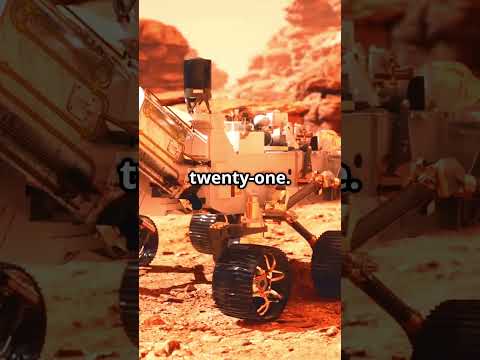
  • How NASA Uses AI to Explore Space and Plan Missions.

    How NASA Uses AI to Explore Space, Plan Missions, and Avoid Disasters. #artificialintelligence
    How NASA Uses AI to Explore Space, Plan Missions, and Avoid Disasters.

    How NASA Uses AI to Explore Space, Plan Missions, and Avoid Disasters.

    Artificial Intelligence isn’t just changing life on Earth — it’s reshaping how we explore the cosmos. At NASA, AI plays a mission-critical role in everything from interplanetary landings to data analysis and real-time decision-making. It’s no longer just a tool for automation — it’s become an essential co-pilot in humanity’s greatest adventure: space exploration. NASA uses AI to enhance space exploration and streamline mission planning.

    In this article, we’ll break down how NASA uses AI to explore space, plan complex missions, and prevent disasters — both in orbit and on Earth.


    Exploring Space with Autonomous Intelligence

    One of the most groundbreaking uses of artificial intelligence at NASA is in planetary exploration. The Mars rover Perseverance, which landed in 2021, didn’t rely solely on Earth-based commands. It used an onboard AI system known as Terrain-Relative Navigation to guide its own descent and landing on the Martian surface.

    Why is that so important? Because the delay between Earth and Mars signals can be up to 20 minutes. There’s no time for a human to steer or react. AI had to analyze terrain in real time, avoid hazards, and land the rover safely — all autonomously.

    This isn’t science fiction. It’s a real-world example of machine learning being used in one of the most dangerous and complex tasks in aerospace history.


    Planning Missions with Data-Driven Precision

    NASA also relies on artificial intelligence to help plan and manage missions more efficiently. With countless variables to consider — weather conditions, spacecraft readiness, orbital mechanics, and more — traditional planning methods can be slow and error-prone.

    AI systems can simulate thousands of scenarios quickly and accurately. They evaluate possible mission timelines, fuel needs, launch windows, and system redundancies. Tools like Deep Space Network scheduling AI help manage communication between Earth and multiple space probes without conflict or interference.

    This kind of predictive planning allows NASA to conserve resources, reduce mission risk, and execute far more complex operations with confidence.


    Preventing Disasters in Space and On Earth

    Disaster prevention is another area where AI proves invaluable.

    In Earth’s orbit, there are thousands of satellites — and even more pieces of space debris. Collision risk is real. NASA uses AI algorithms to track satellite trajectories, predict possible collisions, and recommend avoidance maneuvers long before danger becomes imminent.

    Back on Earth, AI is used to monitor spacecraft systems in real time. Machine learning models detect anomalies in telemetry data — often spotting issues before they lead to system failure. This proactive maintenance is key to long-duration missions and deep space exploration.

    But it doesn’t stop there. NASA also leverages AI to process climate data, monitor natural disasters, and even detect early signs of wildfires and floods. These systems help scientists respond faster and more effectively to Earth-based crises — all using technology developed for space.


    AI as NASA’s Co-Pilot for the Future

    AI is not replacing human intelligence at NASA — it’s extending it. With the sheer scale and complexity of modern space missions, human cognition alone can’t keep up. AI bridges that gap by offering speed, precision, and continuous learning in real-time environments.

    From exploring alien worlds to predicting disasters before they strike, AI is quickly becoming NASA’s most trusted partner. As technology evolves, we can expect this relationship to deepen — with AI guiding probes through alien terrain, managing space habitats, and maybe even assisting in crewed missions to Mars and beyond.


    How NASA Uses AI to Explore Space, Plan Missions, and Avoid Disasters
    How NASA Uses AI to Explore Space, Plan Missions, and Avoid Disasters.

    Final Thoughts

    NASA’s use of AI isn’t just about efficiency — it’s about survival, discovery, and pushing the limits of what’s possible. The synergy between human vision and machine intelligence is launching us into a new era of space exploration.

    As AI continues to evolve, so will the way we explore the stars. The future of space is smarter, faster, and more autonomous — and it’s already here.

    For more on how artificial intelligence is transforming the world and beyond, subscribe to Technoaivolution on YouTube and join us at the edge of the future.

    #NASA #ArtificialIntelligence #SpaceExploration #AIinSpace #MarsRover #MachineLearning #SpaceTechnology #Technoaivolution #FutureTech #DeepSpace #AutonomousSystems #NASAMissions #SmartMachines #SpaceInnovation #AIRevolution

    P.S. The future of exploration isn’t just about going farther — it’s about getting smarter. Thanks for reading. Stay curious, stay future-focused. 🚀

    Thanks for watching: How NASA Uses AI to Explore Space and Plan Missions.

  • How Stoics Faced Death Without Fear (Memento Mori Explained)

    How Stoics Faced Death Without Fear — Memento Mori Explained for Courage, Clarity, and Peace.
    How Stoics Faced Death Without Fear (Memento Mori Explained)

    How Stoics Faced Death Without Fear (Memento Mori Explained)

    What if you could face death… without fear?

    For the ancient Stoics, this wasn’t a hypothetical question. It was a daily practice. At the heart of their philosophy lies a powerful reminder: Memento Mori, a Latin phrase meaning “Remember you must die.”

    To many, this might sound grim or even morbid — but for the Stoics, it was anything but. Memento Mori wasn’t about dwelling on death. It was about transforming your life.


    What Does Memento Mori Really Mean?

    Memento Mori is not about fearing death, but about acknowledging it — and allowing that awareness to shape how we live. When you remember that life is temporary, everything shifts. You stop taking time for granted. You stop wasting energy on trivial things. You stop delaying your dreams.

    This idea wasn’t just theoretical for the Stoics — it was practical. They used it to cultivate presence, courage, and clarity. Understanding how Stoics faced death reveals their deep commitment to living with intention.


    Marcus Aurelius and the Power of Perspective

    One of the most famous Stoics, Marcus Aurelius, wrote extensively about mortality in his journal, Meditations. He reminded himself daily that he could leave life at any moment. Not to make himself afraid — but to make himself focused.

    By remembering death, Marcus cut through ego, distraction, and fear. It helped him prioritize wisdom, justice, and virtue — the things that truly matter. Ancient texts show us how Stoics faced death—with calm, clarity, and acceptance.


    Seneca on the Value of Time

    Seneca, another key Stoic philosopher, took this idea further. He argued that people are frugal with their money, but reckless with their time. Yet time, not money, is our most precious resource.

    He wrote: “Life is long, if you know how to use it.”
    Memento Mori was his way of making sure he used it well.

    Seneca believed that we should live each day as if it could be our last — not in a reckless way, but with intentionality. When you realize tomorrow isn’t promised, today becomes urgent. Today becomes important.


    Why This Matters Today

    In the modern world, it’s easy to get lost in distractions — endless scrolling, chasing status, living on autopilot. We often act like we’ll live forever. But the truth? We won’t.

    That’s where Stoicism still speaks volumes. Memento Mori is a wake-up call. It reminds us that we have a limited amount of time, and what we do with it defines us.

    When you embrace your mortality, you unlock a deeper appreciation for life. You start asking better questions:

    • Am I spending my time on what really matters?
    • Am I becoming the person I want to be?
    • What would I do differently if I remembered I won’t be here forever?

    These aren’t just philosophical musings. They’re practical tools for a better life.


    Memento Mori Isn’t About Dying — It’s About Living

    Stoicism doesn’t ask us to fear death — it invites us to face it, and use it as a guide. When you wake up with the mindset that this day could be your last, you treat it differently. You act with more presence. You appreciate small things. You speak more honestly. You love more deeply.

    Memento Mori turns death from an enemy into a teacher.


    Final Thoughts

    The Stoics didn’t wait for a crisis to remind them what matters — they practiced remembering it every day. And that’s the real power of Memento Mori. It doesn’t make life heavier. It makes it lighter. Clearer. More real.

    So the next time you’re caught in distraction, stress, or fear, pause. Breathe.
    And remember: You will die. And that’s precisely why you should live.

    How Stoics Faced Death Without Fear (Memento Mori Explained)
    How Stoics Faced Death Without Fear (Memento Mori Explained)

    Want more ancient wisdom for a modern life?
    Subscribe to YourWisdomVault on YouTube for powerful, bite-sized lessons from philosophy, psychology, and timeless thinkers. And remember: To grasp how Stoics faced death is to uncover the core of their philosophy on life itself.

    #MementoMori #Stoicism #MarcusAurelius #Seneca #StoicWisdom #AncientPhilosophy #LiveIntentionally #FaceDeathWithoutFear #DailyStoic #MindsetShift #PhilosophyForLife #YourWisdomVault #ModernStoicism #TimelessWisdom #SelfMastery

    P.S. Life is short, but wisdom is timeless — thank you for choosing to spend a moment of your day here. Keep seeking, keep growing. 🔐

    Thanks for watching: How Stoics Faced Death Without Fear (Memento Mori Explained)

  • How AI Diagnoses Illness Instantly (Healthcare Breakthrough)

    How AI Diagnoses Illness Instantly (Healthcare Tech Breakthrough) #technology #nextgenai
    How AI Diagnoses Illness Instantly (Healthcare Tech Breakthrough).

    How AI Diagnoses Illness Instantly (Healthcare Tech Breakthrough).

    Imagine going to the doctor, getting a scan, and receiving a diagnosis within seconds—not hours, not days. Just a few seconds. Thanks to the rapid evolution of artificial intelligence in healthcare, this is no longer science fiction—it’s real, and it’s already happening. AI diagnoses are revolutionizing healthcare by delivering faster, more accurate results.

    Welcome to the world of AI-driven medical diagnostics—a field that’s transforming how we detect, understand, and treat disease. From early cancer detection to identifying rare genetic disorders, AI diagnosis systems are changing the game.

    The Problem with Traditional Diagnostics

    Traditional medical diagnosis is a mix of science, experience, and sometimes guesswork. It takes time for human professionals to interpret scans, analyze lab results, and piece together symptoms. Even the most experienced doctors can miss subtle patterns in complex data.

    In critical conditions like cancer or heart disease, time isn’t just money—it’s life. Delayed diagnosis can mean delayed treatment, reduced survival rates, and increased costs. This is where AI in medicine is stepping in with unprecedented speed and precision.

    How AI Diagnoses Illness in Seconds

    Medical AI systems use machine learning algorithms trained on vast datasets—images, patient histories, lab results, and outcomes. These systems learn to detect patterns and correlations that are often invisible to the human eye.

    For example:

    • An AI model developed by Google Health was able to diagnose lung cancer from CT scans faster and more accurately than experienced radiologists.
    • Another AI tool can detect rare genetic conditions in children by analyzing facial features in photographs—something that might take a human expert days or weeks to confirm.

    These systems can analyze thousands of variables in real-time, giving doctors a near-instant second opinion—or even a first.

    Why AI Is So Effective in Medicine

    There are several reasons why AI diagnosis technology is so effective:

    1. Speed: AI can process massive datasets in seconds.
    2. Consistency: Unlike humans, AI doesn’t get tired or distracted.
    3. Scalability: Once trained, AI models can be deployed worldwide.
    4. Early Detection: AI can often spot patterns before symptoms become obvious.

    It’s important to note that AI doesn’t replace doctors—it enhances their ability to make faster, more accurate decisions. In many cases, AI serves as a diagnostic assistant, flagging potential issues and suggesting further testing.

    The Ethical and Practical Questions

    Of course, this breakthrough comes with questions.

    Can we trust an algorithm with something as important as our health? What happens if AI gets it wrong? How do we ensure patient privacy and data security in these massive training datasets?

    These are important concerns, and they’re being addressed by healthcare professionals, ethicists, and AI developers alike. Transparency, validation, and strict data governance are becoming essential parts of deploying AI in healthcare safely and responsibly.

    What the Future Holds

    The future of AI in healthcare is incredibly promising. We’re likely to see:

    • More integration of AI tools into everyday clinics and hospitals
    • Personalized diagnostics tailored to your genetic and lifestyle data
    • Reduced diagnostic errors across all levels of healthcare

    AI will not replace the human element in medicine—but it allows medical professionals to do what they do best: focus on care, empathy, and treatment, while the AI handles the heavy data lifting.

    Final Thoughts

    AI that diagnoses illness instantly isn’t just a futuristic dream—it’s already saving lives. Whether it’s catching cancer early, identifying rare conditions, or speeding up emergency room decisions, the impact is massive.

    As this technology continues to evolve, we stand at the edge of a new era in medicine—one where artificial intelligence and human compassion work side by side.

    How AI Diagnoses Illness Instantly (Healthcare Tech Breakthrough)
    How AI Diagnoses Illness Instantly (Healthcare Tech Breakthrough)

    Want More?

    Subscribe to TechnoAivolution on YouTube for more insights on AI breakthroughs, future tech trends, and how innovation is transforming the world—one algorithm at a time.

    #AIinHealthcare #MedicalAI #FutureOfMedicine #HealthTech #ArtificialIntelligence #DiagnosisTech #MachineLearning #MedicalInnovation #InstantDiagnosis #TechnoAivolution

    P.S. The next time you see a doctor, imagine what’s possible when AI is part of the diagnosis. The future of medicine is closer than you think.

    Thanks for watching: How AI Diagnoses Illness Instantly (Healthcare Breakthrough)