Blog

  • The Turing Test? How We Measure If AI Can Think Like Us.

    What Is the Turing Test? How We Measure If AI Can Think Like Us. #machinelearning #technology #tech
    What Is the Turing Test? How We Measure If AI Can Think Like Us.

    What Is the Turing Test? How We Measure If AI Can Think Like Us.

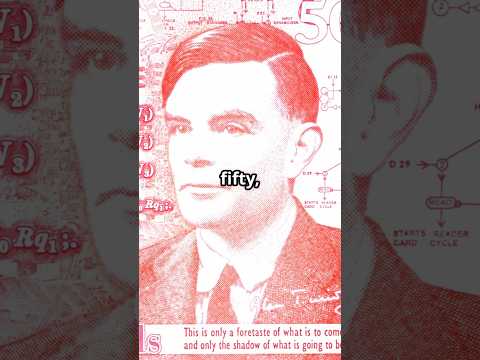
    Can a machine truly think like a human? It’s a question that’s fascinated scientists, philosophers, and futurists for decades. And one of the earliest—and still most iconic—attempts to answer that question came from British mathematician and computer scientist Alan Turing.

    In 1950, Turing proposed a method to evaluate machine intelligence in his famous paper “Computing Machinery and Intelligence.” Instead of debating the definition of “thinking,” Turing offered a practical test: if an artificial intelligence can carry on a conversation that’s indistinguishable from a human, it could be considered intelligent. This became known as the Turing Test.

    How the Turing Test Works

    At its core, the Turing Test is surprisingly simple. An evaluator engages in text-based conversations with two participants—one human and one machine. If the evaluator can’t reliably tell which is which, the machine is said to have passed the test.

    There are no rules about how the AI needs to “think.” It doesn’t need a body, emotions, or consciousness. It just needs to mimic human responses well enough to fool someone.

    Turing himself predicted that by the year 2000, machines would be able to pass the test 30% of the time. While some chatbots have come close, true and consistent success is still rare—even in 2025.

    Why the Turing Test Still Matters

    In an era where AI tools and chatbots like GPT-4, Bard, and others are mainstream, the Turing Test is more relevant than ever. It’s a benchmark for natural language processing—how well machines can understand and generate human-like dialogue.

    While modern AI can write essays, hold conversations, and even compose music, that doesn’t necessarily mean they understand the meaning behind what they say. The Turing Test highlights this distinction: are we seeing real intelligence—or just an illusion of it?

    This raises key ethical and technological questions:

    • Can machines ever possess true consciousness?
    • Should we trust AI systems that sound human but aren’t?
    • How do we design transparent systems, not deceptive?

    The Illusion of Intelligence

    The genius of the Turing Test is that it doesn’t require a machine to “think” like a human, it only has to appear as if it does. This opens the door for systems that are intelligent in form, but not in substance.

    For example, a chatbot might pass the test by using clever language tricks, vast data access, and contextual guessing—but it still doesn’t feel anything or understand the conversation the way a person does.

    This is why many AI experts now view the Turing Test as a starting point, not the final goal. True artificial general intelligence (AGI) would require deeper reasoning, self-awareness, and adaptability across a wide range of tasks—far beyond what the Turing Test measures.

    From Theory to Reality

    Despite its philosophical nature, the Turing Test has inspired real-world AI development. Developers use it as a guidepost for building more natural and conversational interfaces, whether in customer service, virtual assistants, or creative tools.

    The Turing Test also sparks conversation about human-computer interaction, machine learning, and how close we are to bridging the gap between organic and artificial thought.

    In short, it reminds us that language is powerful, and the line between human and machine communication is growing blurrier every day.

    The Turing Test? How We Measure If AI Can Think Like Us.

    Final Thoughts

    The Turing Test remains one of the most iconic ideas in the history of artificial intelligence. It’s not perfect—but it’s a brilliant lens through which we can examine how we define intelligence, how we relate to machines, and what the future of AI might look like.

    As we continue exploring the capabilities of modern AI, the question behind the Turing Test still echoes:
    Can machines truly think—or are they just convincing mirrors of ourselves?


    Want more tech insights in under a minute?
    Subscribe to Technoaivolution on YouTube for quick, smart explainers about AI, machine learning, and digital evolution.

    #TuringTest #AIExplained #ArtificialIntelligence #AlanTuring #MachineLearning #AIvsHuman #Chatbots #TechHistory #DigitalEvolution #Technoaivolution

    P.S. As AI keeps evolving, the real question may not be can machines think—but rather, how will we change when they do?

  • Handle Toxic People the Stoic Way: Calm, Control, & Clarity

    Handle Toxic People the Stoic Way — Respond with Calm, Maintain Control, and Find Clarity.
    Handle Toxic People the Stoic Way: Calm, Control, and Clarity

    Handle Toxic People the Stoic Way: Calm, Control, and Clarity

    In today’s fast-paced world, toxic people are unfortunately everywhere—at work, online, even sometimes in our homes. While we can’t always avoid negativity, we can choose how to respond to it. That’s where Stoic philosophy offers timeless and powerful guidance.

    The ancient Stoics—think Marcus Aurelius, Epictetus, and Seneca—were masters of emotional resilience. Their teachings offer a simple but profound message: you can’t control others, but you can always control yourself.

    Why Toxic People Trigger Us

    Toxic people thrive on reaction. Whether it’s passive aggression, manipulation, or outright hostility, their behavior often pulls us into emotional spirals. It’s easy to get defensive or angry when someone pushes your buttons—but reacting impulsively rarely helps. In fact, it usually gives toxic individuals exactly what they want: power over your emotional state.

    The Stoic Approach: Respond, Don’t React

    One of the most powerful Stoic principles is the distinction between what we can control and what we cannot. We can’t control others’ actions or words—but we can control how we perceive and respond to them.

    Marcus Aurelius wrote in Meditations, “You don’t have to turn this into something personal.” In other words, just because someone is acting out doesn’t mean it has anything to do with you. Their chaos doesn’t need to become your chaos.

    Three Stoic Tools for Handling Toxicity

    1. Calm
      Stoics practiced the art of stillness. Before reacting, pause. Breathe. Let the storm pass. Remaining calm in the face of provocation isn’t weakness—it’s strength. Toxic people feed off emotional chaos. When you remain unshaken, you rob them of their power.
    2. Control
      Control doesn’t mean suppressing your feelings—it means directing them with intention. Rather than being dragged into an emotional mess, choose your response. Ask yourself: What would my highest self do here?
    3. Clarity
      Toxic encounters often cloud our judgment. Stoicism brings us back to clarity. What matters? What’s in your control? What can you let go of? By stepping back and zooming out, you protect your peace and make wiser choices.

    Practical Stoic Steps for Daily Life

    • Create space between trigger and response. Count to five, take a deep breath, or step away for a moment.
    • Use reason as your shield. Ask: “What’s actually happening here? Am I being provoked, or is this my ego reacting?”
    • Write it down. Journaling—a Stoic favorite—helps you process emotions and gain perspective.
    • Practice premeditatio malorum. This Stoic exercise involves imagining potential challenges ahead of time so you’re emotionally prepared.

    Don’t Let Toxic People Rent Space in Your Mind

    Stoicism teaches that peace is an inside job. No one can disturb your mind without your permission. When someone’s words or actions try to drag you down, remind yourself: That’s their burden, not mine.

    By choosing calm over chaos, control over reactivity, and clarity over confusion, you take back your power. You become less reactive, more centered, and ultimately, more free.

    Handle Toxic People the Stoic Way: Calm, Control, & Clarity
    Handle Toxic People the Stoic Way: Calm, Control, & Clarity

    Final Thoughts

    Toxic people may always exist—but how you handle them defines your inner strength. By applying Stoic principles, you shift the dynamic. You no longer play their game. Instead, you lead with wisdom, intention, and integrity.

    So the next time someone tests your patience, pause and remember: You’re not here to match their energy. You’re here to master yours.


    Want more Stoic wisdom in bite-sized form?
    Subscribe to Your Wisdom Vault on YouTube and follow along for daily inspiration on building a resilient, thoughtful life.

    #Stoicism #HandleToxicPeople #EmotionalResilience #MarcusAurelius #StoicPhilosophy #SelfControl #MentalStrength #InnerPeace #YourWisdomVault #CalmMind

    P.S. Remember, the real power isn’t in avoiding toxic people—it’s in mastering yourself so deeply that their chaos no longer shakes your peace.

  • How AI Sees the World: Machine Vision Explained in 45 Second

    How AI Sees the World: Machine Vision Explained in 45 Seconds. #technology #nextgenai #tech
    How AI Sees the World: Machine Vision Explained in 45 Seconds

    How AI Sees the World: Machine Vision Explained in 45 Seconds

    Understanding how AI sees is key to grasping the future of machine vision. Artificial Intelligence is changing everything—from the way we drive to how we shop, diagnose diseases, and even unlock our phones. But one of the most fascinating aspects of AI is how it “sees” the world.

    Spoiler alert: it doesn’t see like we do.
    AI doesn’t have eyes, emotions, or consciousness. Instead, it uses machine vision—a branch of AI that allows computers to interpret visual data, analyze it, and respond accordingly.

    In this post, we’ll break down what machine vision is, how it works, and why it matters more than ever in today’s tech-driven world.

    What Is Machine Vision?

    Machine vision, also called computer vision, is the ability of machines to process and interpret images, videos, and visual data—just like humans do with their eyes and brain.

    The key difference? AI doesn’t see in a human sense. It processes patterns, pixels, edges, and colors using mathematics and algorithms. It breaks down an image into raw data and then identifies what it’s “looking” at based on learned patterns.

    So when AI detects a face, a road sign, or a tumor in an X-ray, it’s not really seeing—it’s calculating probabilities based on massive datasets.

    How Does AI Actually “See”?

    Machine vision starts with image input—from a camera, sensor, or even a satellite. That visual data is then processed using complex neural networks that mimic the way a human brain processes visual information.

    Here’s a simplified breakdown of the process:

    1. Image Capture – A camera or sensor collects visual data.
    2. Preprocessing – The image is cleaned up and standardized.
    3. Feature Detection – Edges, corners, textures, and shapes are extracted.
    4. Pattern Recognition – The AI compares these features to known patterns.
    5. Decision Making – Based on probabilities, the AI decides what it’s seeing.

    This process is powered by deep learning and convolutional neural networks (CNNs)—technologies that help AI get better at recognizing visual data the more it’s trained.

    Real-World Applications of Machine Vision

    AI vision is already integrated into many parts of daily life. Here are just a few examples:

    • Self-Driving Cars – Detecting lanes, pedestrians, traffic signs.
    • Facial Recognition – Unlocking phones, verifying identity at airports.
    • Medical Imaging – Spotting tumors, fractures, or infections in scans.
    • Retail & Security – Monitoring store traffic, identifying suspicious behavior.
    • Robotics – Helping robots navigate environments and perform tasks.

    As this technology advances, its accuracy and applications are only expanding.

    Limitations of AI Vision

    While machine vision is powerful, it’s not perfect. It struggles with:

    • Unfamiliar data – AI can misidentify things it hasn’t been trained on.
    • Bias – If the training data is biased, the AI will be too.
    • Context – AI lacks real-world understanding. It sees shapes, not meaning.

    That’s why it’s important to combine machine intelligence with human oversight, especially in sensitive fields like healthcare, law enforcement, and finance.

    Why It Matters

    Understanding how AI sees the world helps us understand how it’s shaping ours. Machine vision is no longer sci-fi—it’s a critical part of modern infrastructure.

    From autonomous vehicles to smart surveillance, AI-powered diagnostics, and industrial automation, the ability for machines to process visual data is revolutionizing the way we live and work.

    But with great power comes great responsibility. As AI becomes better at interpreting what it sees, we need to ask: how will we use that insight—and who gets to control it?

    How AI Sees the World: Machine Vision Explained in 45 Second
    How AI Sees the World: Machine Vision Explained in 45 Seconds

    Final Thoughts

    AI doesn’t see with eyes. It sees with data.
    It doesn’t understand—it analyzes, compares, and predicts. How AI sees the world differs greatly from human perception—and that’s the point.

    Machine vision may not be human, but it’s getting incredibly good at doing things we once thought only humans could do. As we move forward into an AI-driven future, understanding how these systems “see” is essential to using them wisely.

    At Technoaivolution, we believe in making cutting-edge tech simple, engaging, and understandable—for everyone.


    Watch our 45-second video breakdown of AI vision and subscribe to Technoaivolution on YouTube for more tech explained fast.

    #AI #MachineVision #ComputerVision #ArtificialIntelligence #TechExplained #DeepLearning #Technoaivolution #FutureOfAI #HowAIWorks #AIInsights

    P.S. AI might not blink, but you just caught it mid-thought. Stay curious. 🤖👁️

    Thanks for watching: How AI Sees the World: Machine Vision Explained in 45 Seconds.

  • Seneca’s Timeless Wisdom on Wealth, Happiness & Good Life

    Seneca’s Timeless Wisdom on Wealth, Happiness, and the Good Life — Live with Purpose and Peace.
    Seneca’s Timeless Wisdom on Wealth, Happiness & the Good Life

    Seneca’s Timeless Wisdom on Wealth, Happiness & the Good Life

    When most people think of wealth, they imagine money, luxury, and material success. But over 2,000 years ago, the Roman Stoic philosopher Seneca challenged that idea. His writings offer a radically different definition of what it means to be wealthy—and it has nothing to do with how full your bank account is.

    At YourWisdomVault, we believe ancient wisdom holds powerful lessons for modern life. And few thinkers expressed those lessons as clearly as Seneca. Let’s explore what he taught about wealth, happiness, and the true good life.

    What Is True Wealth?

    Seneca famously wrote: “It is not the man who has too little, but the man who craves more, who is poor.”

    This quote captures the essence of Stoic philosophy—a mindset focused on inner peace, self-control, and freedom from unnecessary desires. According to Seneca, true wealth is not measured by what you have, but by what you can live happily without.

    In other words, wealth is a mindset. A person who lives simply, desires little, and is content with what they have may be far wealthier than someone constantly chasing the next big thing.

    The Trap of Endless Desire

    Modern society constantly encourages us to want more—more money, more things, more success. But Seneca saw this as a dangerous trap. He believed that desire has no natural limit. The more you feed it, the more it grows.

    This creates a vicious cycle: even when you reach a goal or buy a new item, the satisfaction is short-lived. Soon enough, you’re craving something else.

    Seneca’s wisdom teaches us to question our cravings. Do we really need what we want? Or are we just reacting to social pressure, advertising, or insecurity?

    Happiness Through Simplicity

    Seneca believed that happiness comes not from external possessions, but from internal clarity. By living with intention, gratitude, and purpose, we can find joy in even the smallest things.

    This is where Seneca’s Stoicism aligns beautifully with minimalism and mindful living. Strip away what you don’t need, and focus on what truly matters—relationships, self-mastery, learning, peace of mind.

    He argued that fortune is unreliable—money, fame, and success can be lost at any moment. But our character, our reason, and our choices? Those are within our control.

    The Good Life According to Seneca

    So what is the good life?

    For Seneca, it’s a life lived in harmony with reason, virtue, and nature. That means:

    • Practicing moderation
    • Cultivating wisdom
    • Embracing simplicity
    • Letting go of what you can’t control

    Instead of chasing endless goals, Seneca urges us to look inward and find contentment in the present.

    Applying Seneca’s Timeless Wisdom Today

    You don’t need to renounce all your possessions or become a hermit to follow Seneca’s teachings. Here are a few ways to bring his wisdom into your daily life:

    • Audit your desires: Ask yourself why you want something before you pursue it.
    • Practice gratitude: Focus on what you already have, rather than what’s missing.
    • Limit excess: Try living with less and see how it impacts your mental clarity.
    • Reflect daily: Take time to journal or meditate on what truly brings you peace.

    These small shifts can help you create a life that feels rich—even without riches.

    Seneca’s Timeless Wisdom on Wealth, Happiness & Good Life
    Seneca’s Timeless Wisdom on Wealth, Happiness & Good Life

    Final Thoughts

    Seneca’s timeless insights remind us that true wealth is freedom from want, and happiness is found in self-mastery, not material gain. His philosophy cuts through the noise of modern consumerism and offers a deeper, more sustainable path to a good life.

    At YourWisdomVault, we believe these ancient truths are more relevant than ever. If you’re on a journey to live with more meaning and less noise, Seneca is a guide worth following.


    Enjoyed this insight? Watch our full 45-second video on Seneca’s philosophy, and subscribe to YourWisdomVault on YouTube for more timeless wisdom made simple.

    #Stoicism #Seneca #Happiness #WealthMindset #AncientWisdom #Minimalism #PhilosophyOfLife #YourWisdomVault

    P.S. The ancients didn’t scroll—they reflected. You’re already ahead. 🏛️💭

    Thanks for watching: Seneca’s Timeless Wisdom on Wealth, Happiness & Good Life