Blog

  • How to Master Your Emotions with Stoic Thinking

    How to Master Your Emotions with Stoic Thinking — Find Balance, Clarity, and Inner Strength.
    How to Master Your Emotions with Stoic Thinking: Timeless Wisdom for Modern Chaos

    How to Master Your Emotions with Stoic Thinking: Timeless Wisdom for Modern Chaos

    In an age of constant stimulation, emotional overwhelm, and digital distractions, learning how to master your emotions isn’t just a nice idea—it’s essential. Fortunately, we don’t need to reinvent the wheel. The ancient Stoic philosophers developed a system of thought that remains shockingly relevant today.

    So, how do we apply Stoic thinking to our fast-paced, pressure-filled lives? And more importantly—how do we use it to master our emotions instead of letting them master us?

    Let’s break it down.


    What Is Stoic Thinking?

    Stoicism is an ancient Greek philosophy, made famous by thinkers like Marcus Aurelius, Seneca, and Epictetus. It emphasizes rationality, virtue, and understanding what is within our control—and what isn’t.

    At its core, Stoic thinking helps you create space between stimulus and response. Instead of reacting emotionally to what life throws at you, Stoicism teaches you to pause, reflect, and choose your response wisely.

    This isn’t about suppressing emotions. It’s about owning them.


    The Central Stoic Rule: Control What You Can, Accept What You Can’t

    Here’s the first and most powerful Stoic principle:

    “You have power over your mind—not outside events. Realize this, and you will find strength.” – Marcus Aurelius

    Every day, we face things that are outside our control: traffic jams, rude comments, setbacks, criticism, or changes in plans. The Stoics teach us to ask one crucial question in these moments:

    Is this within my control?

    If the answer is no—then let it go.

    That simple mindset shift can help you reclaim emotional clarity in even the most frustrating moments.


    The Power of the Pause

    When emotions surge—anger, frustration, sadness—Stoic practice says: pause.

    That pause creates distance between you and your automatic reaction. In that space, you gain the freedom to respond with intention.

    This technique is used today in psychology and mindfulness training, but the Stoics had it figured out centuries ago.

    Practical tip:
    The next time someone irritates you, pause for 3 seconds. Ask yourself:
    “Is this worth my energy? Am I reacting, or responding?”

    That moment of stillness? That’s Stoic mastery.


    Modern Applications of Stoic Thinking

    Let’s be real: you’re probably not facing the same challenges Marcus Aurelius did in ancient Rome. But Stoicism is more relevant than ever in today’s world of high stress and low patience.

    Here’s how modern Stoic thinking can help you:

    • In relationships: Respond with calm instead of lashing out. Choose empathy over ego.
    • In work: When deadlines shift or things go wrong, adapt instead of panicking.
    • On social media: Practice digital detachment. Not every comment deserves a reaction.
    • With self-talk: When negative thoughts arise, observe them without judgment.

    You don’t have to be a philosopher to be a Stoic. You just need to practice self-awareness.


    Key Stoic Practices for Emotional Mastery

    Want to put Stoic thinking into daily use? Start with these:

    1. Daily Reflection: Spend a few minutes each morning or night asking, What did I do well? What could I improve?
    2. Negative Visualization: Imagine things going wrong—not to become anxious, but to prepare your mind. It’s mental resilience training.
    3. Voluntary Discomfort: Occasionally go without something—comfort food, hot showers, scrolling—just to build discipline and gratitude.
    4. Journaling: Write out your thoughts to gain distance and clarity.
    5. Memento Mori: Remind yourself that time is limited. Focus on what truly matters.

    Emotional Mastery Is a Skill—Not a Trait

    Here’s the truth most people don’t hear enough: emotional intelligence is trainable. Just like you’d train your body, you can train your mind to respond instead of react.

    The more you practice Stoic principles, the more automatic your emotional resilience becomes.

    You’ll notice when others lose their cool, and you’ll be the calm in the storm.
    You’ll feel the frustration rise—and then pass—without it owning you.

    That’s not weakness. That’s power.


    How to Master Your Emotions with Stoic Thinking
    How to Master Your Emotions with Stoic Thinking

    Final Thoughts

    Mastering your emotions with Stoic thinking doesn’t mean becoming emotionless.
    It means learning to lead your emotions instead of following them blindly.

    It’s about choosing peace over panic. Strength over reactivity. And perspective over drama.

    In a world where people are quick to react and slow to reflect, Stoic thinking gives you a real edge.

    So start today. Ask the Stoic question:
    “Is this in my control?”

    And if it isn’t—smile, breathe, and let it go.

    🔔 Subscribe to YourWisdomVault on YouTube for timeless insights on life, mind, and meaning.

    #Stoicism #EmotionalMastery #MarcusAurelius #MindsetShift #MentalToughness #DailyStoic #SelfImprovement #SelfControl #ModernStoicism #LifeWisdom #EmotionalIntelligence

  • Build a Mindset No One Can Break – Do This Daily!

    Build a Mindset No One Can Break — Practice This Daily for Unshakable Strength and Peace.
    Build a Mindset No One Can Break – Do This Daily!

    Build a Mindset No One Can Break – Do This Daily!

    In a world that constantly challenges your peace, your focus, and your goals, having a strong, resilient mindset isn’t just helpful — it’s essential. The truth is, your mindset shapes how you experience everything: your career, your relationships, your health, and your happiness. If you’re feeling stuck, overwhelmed, or thrown off by setbacks, it’s time to build a mindset no one can break.

    Here are three simple but powerful habits you can start doing every day to create mental toughness, inner clarity, and emotional resilience.

    1. Own Your Morning

    The way you begin your day sets the tone for everything that follows. This habit is about taking back control of your time, energy, and mental space before the world tries to take it from you.

    Start with these practices:

    • Wake up with intention. Skip the snooze button and get out of bed on the first alarm.
    • Move your body. Whether it’s stretching, walking, or a quick workout, physical movement boosts mental clarity.
    • Set a simple goal or intention for the day. It might be focus, calm, or productivity — whatever you need most.
    • Avoid screens for the first 30 minutes. Give your brain a chance to wake up without distractions.

    A consistent morning routine builds discipline, reduces stress, and increases your confidence before you’ve even checked your notifications.

    2. Train Your Inner Voice

    Your mindset is deeply shaped by how you speak to yourself. If your inner voice is full of doubt, fear, or criticism, it becomes harder to take action and trust your decisions.

    Start becoming aware of your self-talk:

    • Catch negative thoughts before they spiral. When you hear yourself say, “I can’t do this,” pause and reframe it.
    • Replace it with empowering language like, “This is hard, but I can figure it out.”
    • Practice daily affirmations. Say them out loud or write them down. Even 60 seconds of affirmations can shift your state.

    When you make your inner voice your coach instead of your critic, you start to build real self-belief. And that kind of belief is unshakable.

    3. Do Hard Things On Purpose

    Discomfort is the gym for your mindset. Every time you lean into something challenging — whether it’s having a difficult conversation, pushing through a tough workout, or learning a new skill — you’re building mental strength.

    Choose daily discomfort:

    • Take cold showers to train resilience and willpower.
    • Work on something you’ve been avoiding.
    • Say yes to an opportunity that scares you.

    The more often you do hard things, the less intimidating they become. You stop waiting for motivation and start building momentum.

    Why These Habits Work

    These three daily habits may seem simple, but they’re backed by science and used by high performers around the world. They activate your prefrontal cortex — the part of your brain responsible for focus, planning, and decision-making. They also reduce activity in the fear-based part of your brain (the amygdala), helping you feel more in control.

    When you combine these habits consistently, your mindset becomes sharper, calmer, and more capable of handling whatever life throws your way.

    Build a Mindset No One Can Break – Do This Daily!
    Build a Mindset No One Can Break – Do This Daily!

    Final Thoughts

    An unshakable mindset doesn’t mean you’re always confident or never feel fear. It means you know how to move forward anyway. You trust yourself. You show up when it’s uncomfortable. You lead with clarity, not chaos.

    Start with just one habit. Do it every day. Then add the next. Let consistency be your superpower.

    The world doesn’t need more perfection — it needs more people who are mentally strong, emotionally grounded, and relentlessly focused.

    Start today. Build a mindset no one can break.

    🔔 Subscribe to YourWisdomVault on YouTube for timeless insights on life, mind, and meaning.

    Thanks for watching: Build a Mindset No One Can Break – Do This Daily!

    Ps: When you build a mindset rooted in discipline and purpose, challenges become stepping stones.

    #MindsetMatters #UnbreakableMindset #DailyHabits #MentalToughness #EmotionalResilience #SelfDiscipline #GrowthMindset #InnerStrength #MorningRoutine #SelfTalk #MotivationalHabits #MindsetShift #PersonalDevelopment #MindsetTraining #PositiveHabits #ResilientLiving #SuccessMindset #NyksyWisdom #YourWisdomVault

  • AI Didn’t Start with ChatGPT – It Started in 1950!

    AI Didn’t Start with ChatGPT… It Started in 1950 👀 #chatgpt #nextgenai #deeplearning
    AI Didn’t Start with ChatGPT – It Started in 1950!

    AI Didn’t Start with ChatGPT – It Started in 1950!

    When most people think of artificial intelligence, they imagine futuristic robots, ChatGPT, or the latest advancements in machine learning. But the history of AI stretches much further back than most realize. It didn’t start with OpenAI, Siri, or Google—it started in 1950, with a single, groundbreaking question from a man named Alan Turing: “Can machines think?”

    This question marked the beginning of a technological journey that would eventually lead to neural networks, deep learning, and the generative AI tools we use today. Let’s take a quick tour through this often-overlooked history. While many associate modern AI with ChatGPT, its roots trace all the way back to 1950.


    1950: Alan Turing and the Birth of the Idea

    Alan Turing was a British mathematician, logician, and cryptographer whose work during World War II helped crack Nazi codes. But in 1950, he shifted focus. In his paper titled “Computing Machinery and Intelligence,” Turing introduced the idea of artificial intelligence and proposed what would later be called the Turing Test—a way to evaluate whether a machine can exhibit intelligent behavior indistinguishable from a human.

    Turing’s work laid the intellectual groundwork for what we now call AI.


    1956: The Term “Artificial Intelligence” Is Born

    Just a few years later, in 1956, the term “Artificial Intelligence” was coined at the Dartmouth Conference, organized by John McCarthy, Marvin Minsky, Nathaniel Rochester, and Claude Shannon. This conference marked the official start of AI as an academic field. The attendees believed that “every aspect of learning or any other feature of intelligence can in principle be so precisely described that a machine can be made to simulate it.”

    This optimism gave rise to early AI programs that could solve logical problems and perform basic reasoning. But this initial wave of progress would soon face its first major roadblock.


    The AI Winters: 1970s and 1980s

    AI development moved slowly through the 1960s and hit serious challenges in the 1970s and again in the late 1980s. These periods, known as the AI winters, were marked by declining interest, reduced funding, and stalled progress.

    Why? Because early expectations were unrealistic. The computers of the time were simply too limited in power, and the complexity of real-world problems proved overwhelming for rule-based systems.


    Machine Learning Sparks a New Era

    In the 2000s, a new approach breathed life back into the AI field: machine learning. Instead of trying to hard-code logic and behavior, developers began training models to learn from data. This shift was powered by advances in computing, access to big data, and improved algorithms.

    From email spam filters to product recommendations, AI slowly began embedding itself into everyday digital experiences.


    2012–2016: Deep Learning Changes Everything

    The game-changing moment came in 2012 with the ImageNet Challenge. A deep neural network absolutely crushed the image recognition task, outperforming every traditional model. That event signaled the beginning of the deep learning revolution.

    AI wasn’t just working—it was outperforming humans in specific tasks.

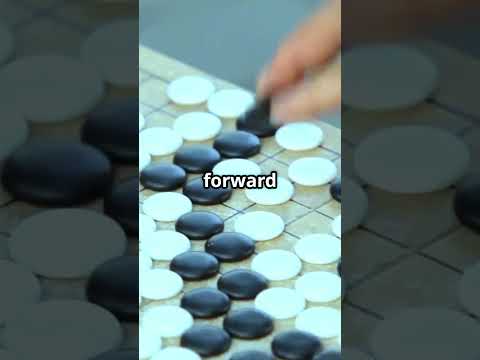
    And then in 2016, AlphaGo, developed by DeepMind, defeated the world champion of Go—a complex strategy game long considered a final frontier for AI. The world took notice: AI was no longer theoretical or niche—it was real, and it was powerful.


    2020s: Enter Generative AI – GPT, DALL·E, and Beyond

    Fast forward to today. Generative AI tools like GPT-4, DALL·E, and Copilot are writing, coding, drawing, and creating entire projects with just a few prompts. These tools are built on decades of research and experimentation that began with the simple notion of machine intelligence.

    ChatGPT and its siblings are the result of thousands of iterations, breakthroughs in natural language processing, and the evolution of transformer-based architectures—a far cry from early rule-based systems.


    Why This Matters

    Understanding the history of AI gives context to where we are now. It reminds us that today’s tech marvels didn’t appear overnight—they were built on the foundations laid by pioneers like Turing, McCarthy, and Minsky. Each step forward required trial, error, and immense patience.

    We are now living in an era where AI isn’t just supporting our lives—it’s shaping them. From the content we consume to the way we learn, shop, and even work, artificial intelligence is woven into the fabric of modern life.


    AI Didn’t Start with ChatGPT – It Started in 1950!
    AI Didn’t Start with ChatGPT – It Started in 1950!

    Conclusion: Don’t Just Use AI—Understand It

    AI didn’t start with ChatGPT. It started with an idea—an idea that machines could think. That idea evolved through decades of slow growth, massive setbacks, and jaw-dropping breakthroughs. Now, with tools like GPT-4 and generative AI becoming mainstream, we’re only beginning to see what’s truly possible.

    If you’re curious about AI’s future, it’s worth knowing its past. The more we understand about how AI came to be, the better equipped we’ll be to use it ethically, creatively, and wisely.

    🔔 Subscribe to Technoaivolution on YouTube for bite-sized insights on AI, tech, and the future of human intelligence.

    Thanks for watching: AI Didn’t Start with ChatGPT – It Started in 1950!

    Ps: ChatGPT may be the face of AI today, but the journey began decades before its creation.

    #AIHistory #ArtificialIntelligence #AlanTuring #TuringTest #MachineLearning #DeepLearning #GPT4 #ChatGPT #GenerativeAI #NeuralNetworks #FutureOfAI #ArtificialGeneralIntelligence #OriginOfAI #EvolutionOfAI #NyksyTech

  • The History of Artificial Intelligence: From 1950 to Now

    The History of Artificial Intelligence: From 1950 to Now. #ArtificialIntelligence #AIHistory
    The History of Artificial Intelligence: From 1950 to Now — How Far We’ve Come!

    The History of Artificial Intelligence: From 1950 to Now — How Far We’ve come!

    Artificial Intelligence (AI) might seem like a modern innovation, but its story spans over 70 years. From abstract theories in the 1950s to the rise of generative models like ChatGPT and DALL·E in the 2020s, the journey of AI is a powerful testament to human curiosity, technological progress, and evolving ambition. In this article, we’ll walk through the key milestones that shaped the history of artificial intelligence—from its humble beginnings to its current role as a transformative force in nearly every industry.

    1. The Origins of Artificial Intelligence (1950s)

    The conceptual roots of AI begin in the 1950s with British mathematician Alan Turing, who asked a simple yet revolutionary question: Can machines think? His 1950 paper introduced the Turing Test, a method for determining whether a machine could exhibit human-like intelligence.

    In 1956, a group of researchers—including John McCarthy, Marvin Minsky, and Claude Shannon—gathered at the Dartmouth Conference, where the term “artificial intelligence” was officially coined. The conference launched AI as an academic field, full of optimism and grand visions for the future.

    2. Early Experiments and the First AI Winter (1960s–1970s)

    The 1960s saw the development of early AI programs like the Logic Theorist and ELIZA, a basic natural language processing system that mimicked a psychotherapist. These early successes fueled hope, but the limitations of computing power and unrealistic expectations soon caught up.

    By the 1970s, progress slowed. Funding dwindled, and the field entered its first AI winter—a period of reduced interest and investment. The technology had overpromised and underdelivered, causing skepticism from both governments and academia.

    3. The Rise (and Fall) of Expert Systems (1980s)

    AI regained momentum in the 1980s with the rise of expert systems—software designed to mimic the decision-making of human specialists. Systems like MYCIN (used for medical diagnosis) showed promise, and companies began integrating AI into business processes.

    Japan’s ambitious Fifth Generation Computer Systems Project also pumped resources into AI research, hoping to create machines capable of logic and conversation. However, expert systems were expensive, hard to scale, and not adaptable to new environments. By the late 1980s, interest declined again, ushering in the second AI winter.

    4. The Machine Learning Era (2000s)

    The early 2000s marked a major turning point. With the explosion of digital data and improved computing hardware, researchers shifted their focus from rule-based systems to machine learning. Instead of programming behavior, algorithms learned from data.

    Applications like spam filters, recommendation engines, and basic voice assistants began to emerge, bringing AI into everyday life. This quiet revolution laid the groundwork for more complex systems to come, especially in natural language processing and computer vision.

    5. The Deep Learning Breakthrough (2010s)

    In 2012, a deep neural network trained on the ImageNet dataset drastically outperformed traditional models in object recognition tasks. This marked the beginning of the deep learning revolution.

    Inspired by the brain’s structure, neural networks began outperforming humans in a variety of areas. In 2016, AlphaGo, developed by DeepMind, defeated a world champion in the game of Go—a feat once thought impossible for AI.

    These advancements powered everything from virtual assistants like Siri and Alexa to self-driving car prototypes, transforming consumer technology across the globe.

    6. Generative AI and the Present (2020s)

    Today, we live in the age of generative AI. Tools like GPT-4, DALL·E, and Copilot are not just assisting users—they’re creating content: text, images, code, and even music.

    AI is now a key player in sectors like healthcare, finance, education, and entertainment. From detecting diseases to generating personalized content, artificial intelligence is becoming deeply embedded in our digital infrastructure.

    Yet, this progress also raises critical questions: Who controls these tools? How do we ensure transparency, privacy, and fairness? The conversation around AI ethics, algorithmic bias, and responsible development is more important than ever.

    The History of Artificial Intelligence: From 1950 to Now
    The History of Artificial Intelligence: From 1950 to Now

    Conclusion: What’s Next for AI?

    The history of artificial intelligence is a story of ambition, setbacks, and astonishing breakthroughs. As we look ahead, one thing is clear: AI will continue to evolve, challenging us to rethink not just technology, but what it means to be human.

    Whether we’re designing smarter tools, confronting ethical dilemmas, or dreaming of artificial general intelligence (AGI), the journey is far from over. What began as a theoretical idea in a British lab has grown into a world-changing force—and its next chapter is being written right now.

    🔔 Subscribe to Technoaivolution on YouTube for bite-sized insights on AI, tech, and the future of human intelligence.

    #ArtificialIntelligence #AIHistory #MachineLearning #DeepLearning #NeuralNetworks #AlanTuring #ExpertSystems #GenerativeAI #GPT4 #AIEthics #FutureOfAI #ArtificialGeneralIntelligence #TechEvolution #AITimeline #NyksyTech