Tag: Buddhist teachings

  • The Power of Compassion: A Buddhist Path to Inner Peace.

    The Power of Compassion: A Buddhist Path to Inner Peace, Loving-Kindness, and Liberation.
    The Power of Compassion: A Buddhist Path to Inner Peace.

    The Power of Compassion: A Buddhist Path to Inner Peace.

    In today’s fast-paced world, where stress, division, and isolation often take center stage, the power of compassion offers a deeply needed counterbalance. More than just a moral ideal, compassion in Buddhism is considered a transformational practice—one that unlocks emotional freedom, nurtures connection, and opens the door to true inner peace.

    What Is the Power of Compassion?

    The power of compassion refers to our ability to respond to the suffering of others with empathy, care, and wisdom. In Buddhism, compassion (karuṇā) is not passive pity; it’s an active intention to relieve suffering wherever it arises. It’s rooted in mindful awareness and the understanding that we are all interconnected.

    When we recognize that pain and joy are shared human experiences, our hearts soften. Compassion becomes a tool—not just for healing others, but for dissolving the inner barriers that prevent us from experiencing lasting peace.

    Why Compassion Leads to Inner Peace

    One of the core teachings of Buddhism is that true happiness comes not from external circumstances, but from our internal state of being. The power of compassion helps us cultivate that internal state by reducing ego-driven thoughts, softening judgment, and dissolving resentment.

    When we act with compassion—whether through small acts of kindness, deep listening, or simply being present—we interrupt the habitual patterns of fear, anger, and selfishness. In doing so, we find that peace isn’t something far away or mystical. It lives within the compassionate heart.

    How to Practice the Power of Compassion Daily

    The power of compassion is not reserved for monks or saints. It’s accessible to all of us, every day, through small but meaningful actions. Here are a few simple ways to cultivate it in your life:

    • Start with self-compassion: Offer yourself the same kindness you’d extend to a friend.
    • Listen without judgment: Sometimes the most healing act is to simply be present.
    • Practice mindfulness: Compassion arises more naturally when we are grounded in the present.
    • Offer help without expecting a return: True compassion is unconditional.
    • Try loving-kindness meditation: This powerful practice builds the heart muscle of empathy and goodwill.

    Each time you act with compassion, you shift your inner world—and by extension, the world around you.

    The Spiritual Strength of Compassion

    Some may see compassion as a weakness in a world that often prizes toughness. But in Buddhism, the power of compassion is a form of inner strength. It takes courage to face suffering—your own and others’—without turning away. It takes wisdom to act from love instead of fear.

    Compassion doesn’t mean being soft or passive. It means choosing understanding over judgment, patience over reaction, and love over fear. These are not easy choices, but they are the choices that lead to freedom.

    By embodying compassion, we move closer to enlightenment—not by escaping the world, but by embracing it fully, with an open heart.

    Final Reflections: Let Compassion Lead

    If you’re searching for peace, clarity, or emotional healing, the power of compassion may be the key. This simple but profound practice bridges the gap between self and other, ego and awareness, and suffering and serenity.

    Through compassion, we return to what it means to be fully human—present, caring, and awake. And as we offer that presence to others, we nourish the deepest part of ourselves.

    Let your journey toward inner peace begin with the power of compassion. It has the potential to transform not just your life—but the lives of everyone you touch.

    The Power of Compassion: A Buddhist Path to Inner Peace.
    The Power of Compassion: A Buddhist Path to Inner Peace.

    P.S. If this message resonated with you, subscribe to Your Wisdom Vault on YouTube for more mindful insights, Buddhist wisdom, and spiritual reflections delivered in under 60 seconds.

    #PowerOfCompassion #BuddhistWisdom #InnerPeace #Mindfulness #CompassionPractice #SpiritualGrowth #YourWisdomVault #ShortsWithMeaning #KindnessMatters

  • Only the Awakened Know How Hard It Is to Wake Up.

    Only the Awakened Know How Hard It Is to Wake Up—A Profound Reflection on True Awareness.
    Only the Awakened Know How Hard It Is to Wake Up.

    Only the Awakened Know How Hard It Is to Wake Up.

    Spiritual awakening is often romanticized. We picture serene monks, glowing light, and endless peace. But the reality of awakening—especially through the lens of Buddhist wisdom and nonduality—is far more intense, raw, and difficult than most people expect.

    In our latest 60-second spiritual short, we explore the paradox that only the awakened truly understand: waking up is hard. Not because the truth is hidden, but because it’s painfully obvious—and we’ve spent our entire lives avoiding it.

    Awakening Isn’t Bliss. It’s Breakdown.

    Many seekers begin their journey craving peace, joy, or enlightenment. But true awakening doesn’t deliver comfort—it delivers clarity. And clarity can burn. It dismantles your sense of self, breaks apart your attachments, and reveals that most of what we believe to be “real” is conditioned, borrowed, or simply illusion.

    The ego resists this process at every turn. Awakening challenges everything:

    • Your identity
    • Your beliefs
    • Your emotional safety nets
    • Even your desire for meaning

    No wonder it’s so painful.

    As Buddhist teacher Chögyam Trungpa once said, “The bad news is you’re falling through the air, nothing to hang on to, no parachute. The good news is, there’s no ground.”

    Why the Awakened Don’t Preach

    One of the most profound realizations that comes with awakening is that you can’t awaken anyone else. People have to be ready. They have to want to see.

    That’s why those who are truly awake don’t try to force others onto the path. They know how disorienting, even terrifying, it can be. And they respect the timing of others’ journeys.

    If you’re going through a dark, confusing, or painful phase in your spiritual growth, take heart:
    That may be the sign that something deeper is waking up in you.

    Buddhist Teachings on the Path to Enlightenment

    In Buddhism, awakening (or bodhi) isn’t a reward—it’s a responsibility. It’s not about escaping the world, but about seeing it clearly. That includes all its suffering (dukkha), impermanence (anicca), and non-self (anatta).

    This insight can be both freeing and frightening. You realize:

    • There’s no permanent self to protect.
    • There’s no external source of lasting happiness.
    • The “you” that seeks enlightenment is the very thing in the way.

    Yet, this is where true peace begins—not in denying reality, but in accepting it fully.

    You’re Not Alone on the Path

    Our short was made to let people like you know:
    If it feels like everything is falling apart, you may actually be waking up. This is not failure. It’s not regression. It’s the painful, beautiful, necessary process of shedding illusion.

    Whether you’re practicing mindfulness, exploring nonduality, or simply trying to make sense of your inner world, know that you’re not the only one navigating this path.

    Only the Awakened Know How Hard It Is to Wake Up.
    Only the Awakened Know How Hard It Is to Wake Up.

    Final Thoughts

    Awakening is not a trend. It’s not aesthetic. It’s not always joyful.
    It’s a process of undoing everything false to discover what’s real—and it’s not for the faint of heart.

    If this resonates with you, consider subscribing to Your Wisdom Vault on YouTube. We publish weekly spiritual shorts grounded in timeless truths—from Buddhism to consciousness, ego dissolution, and more.

    Let’s keep walking the path together.

    P.S.

    If this message stirred something in you—confusion, clarity, or even discomfort—good. That’s how awakening begins. Stick around, keep watching, and trust your inner unfolding. 🌱

    #SpiritualAwakening #Buddhism #Mindfulness #Nonduality #EgoDeath #SelfRealization #AwakeningJourney #Consciousness #InnerPeace #Dharma #YourWisdomVault #Enlightenment

  • One Word of Peace Is Worth More Than a Thousand Empty Ones.

    One Word of Peace Is Worth More Than a Thousand Empty Ones—Speak Truth with Gentle Wisdom.
    One Word of Peace Is Worth More Than a Thousand Empty Ones.

    One Word of Peace Is Worth More Than a Thousand Empty Ones.

    — Buddhist Wisdom for a Noisy World

    In a world overflowing with noise—endless news, constant scrolling, and relentless opinions—finding true peace can feel impossible. But sometimes, it only takes one simple, heartfelt word to change everything.

    Buddha once said,
    “Better than a thousand meaningless words is one word that brings peace.”

    This short but powerful teaching offers timeless wisdom for modern life. While we’re often taught to speak up, explain ourselves, and fill silence with chatter, this quote encourages the opposite: intentional speech. It reminds us that depth and clarity matter far more than quantity.


    Why Empty Words Fail Us

    Empty words are everywhere—automatic replies, insincere praise, small talk that goes nowhere. We say a lot but often communicate very little. In Buddhism, this kind of speech is seen as a distraction from mindfulness and awareness. It adds to the mental clutter rather than reducing it.

    When we speak without thought or presence, we miss the opportunity to truly connect—with others, and with ourselves.


    The Power of a Word of Peace.

    Think about the times in your life when a single word brought you calm. Maybe someone said “breathe,” or “forgive,” or even just “peace.”
    That one word, spoken from the heart, may have done more than hours of conversation ever could.

    In Buddhist practice, right speech is part of the Noble Eightfold Path. It encourages us to speak truthfully, kindly, and mindfully. A single word, chosen with care and compassion, can diffuse conflict, heal wounds, or bring clarity.


    Modern Applications of Ancient Wisdom

    You don’t have to be a monk or meditate for hours a day to apply this teaching. You can start today, right where you are.

    • The next time you feel tempted to over-explain, pause.
    • When someone else is speaking, listen deeply.
    • Before reacting in anger, try finding one peaceful word instead.

    In doing so, you honor not only your own inner peace, but you also become a source of calm in the lives of others.

    This isn’t about being silent—it’s about being selective. One kind, peaceful word can carry more weight than paragraphs of noise.


    A Call to Mindfulness

    This teaching also serves as a call to mindfulness. When we slow down and become present, we realize how much of our daily speech is automatic and reactive. Buddhism teaches that awareness is the foundation of peace. And one peaceful word, spoken from awareness, can ripple out far beyond the moment it’s said.


    Let Your Words Be Anchored in Peace

    Whether you’re navigating a difficult relationship, dealing with stress at work, or simply seeking more clarity in your life, this wisdom invites you to pause and choose your words with care.

    Let your speech reflect your intention for peace. Say less, but mean more.

    And the next time you’re unsure what to say, ask yourself: What word would bring peace right now?

    One Word of Peace Is Worth More Than a Thousand Empty Ones.
    One Word of Peace Is Worth More Than a Thousand Empty Ones.

    Watch the Short Video

    If this message resonates with you, we invite you to watch our short video titled:
    “One Word of Peace Is Worth More Than a Thousand Empty Ones”
    It’s a 60-second reminder that sometimes, one quiet truth speaks louder than the world’s noise.

    👉 Watch it here on Your Wisdom Vault YouTube Channel


    Final Thoughts

    The Buddha’s words remind us that true power doesn’t come from how much we say, but from how deeply we mean it. In a distracted world, peace begins with presence—and presence begins with a single word.

    If this teaching inspired you, leave a comment below:
    What’s one word that brings you peace?


    P.S. Sometimes, all it takes is one sincere word of peace to shift your entire day—may this teaching help you find and share that word more often.

    #BuddhaWisdom #MindfulLiving #InnerPeace

  • Heedlessness Leads to Death – A Timeless Buddhist Teaching.

    Heedlessness Leads to Death—A Timeless Buddhist Teaching on Awareness, Wisdom, and Living Fully.
    Heedlessness Leads to Death – A Timeless Buddhist Teaching.

    Heedlessness Leads to Death – A Timeless Buddhist Teaching.

    In the fast-paced chaos of modern life, it’s easy to fall into autopilot—checking our phones, rushing through tasks, and reacting without awareness. But according to the Buddha, this way of living carries a far greater cost than we realize. In the Dhammapada, a revered collection of the Buddha’s sayings, he states clearly:

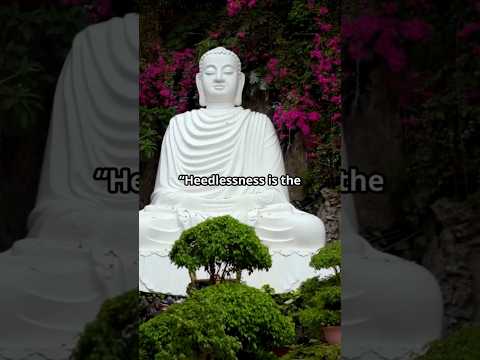
    “Heedlessness is the path to death. The heedful never die.”

    This deceptively simple line captures a deep and timeless truth at the heart of Buddhist philosophy.

    What Is Heedlessness?

    Heedlessness means living without mindfulness—without conscious presence or wise reflection. It’s the state of drifting through life unaware, chasing distractions, desires, or avoiding discomfort without truly understanding what we’re doing or why. In Buddhist terms, it’s a form of spiritual sleepwalking.

    Heedlessness often shows up as:

    • Reactivity: Responding to life with impulses rather than intention.
    • Attachment: Clinging to desires or aversions without questioning them.
    • Distraction: Constantly turning to entertainment or stimulation to avoid silence or stillness.
    • Forgetfulness: Losing touch with our values, our breath, and the moment we’re in.

    Over time, heedlessness deepens suffering. It feeds ignorance (avidyā), the root cause of the endless cycle of rebirth and dissatisfaction (samsara).

    The Path of Mindful Awareness

    By contrast, heedfulness—often translated as mindfulness, awareness, or vigilance—is the path to spiritual life. It means being fully present in each moment, aware of our thoughts, actions, and feelings without becoming entangled in them.

    Mindfulness brings:

    • Clarity: We begin to see the causes of our suffering.
    • Compassion: We respond rather than react, with care instead of fear.
    • Freedom: We let go of harmful habits and unconscious patterns.

    This is why the Buddha emphasized heedfulness as the “path of the deathless.” He wasn’t referring only to physical death, but to the death of wisdom, presence, and awakening. The heedless are alive biologically, but spiritually asleep. The heedful are alive in the deepest sense—awake to the nature of life, death, and liberation.

    Applying This Teaching in Daily Life

    You don’t need to live in a monastery to practice heedfulness. In fact, the modern world is the perfect training ground. Try these small, mindful shifts:

    1. Pause before reacting – Whether it’s a stressful email or a difficult conversation, take a breath before responding.
    2. Observe your thoughts – Spend 5 minutes a day noticing your mental patterns without judgment.
    3. Return to your body – Feel your feet on the ground or the rise of your breath to reconnect with the present.
    4. Question your cravings – Ask yourself if what you want will truly bring peace or just momentary relief.

    Every time you choose mindfulness over reactivity, you plant a seed of awakening.

    Final Thoughts: Living with Intention

    The Buddha’s warning isn’t meant to scare us—it’s meant to wake us up. Heedlessness isn’t just a moral failure. It’s a missed opportunity to live fully, freely, and wisely.

    Living with heedfulness doesn’t require perfection. It requires remembrance. Each moment is a chance to begin again, to return to the breath, and to live with conscious care.

    Heedfulness is the gateway to the deathless. And that journey begins not tomorrow, but right now.

    Heedlessness Leads to Death – A Timeless Buddhist Teaching.
    Heedlessness Leads to Death – A Timeless Buddhist Teaching.

    If this message resonates with you, I invite you to take one small step today toward greater awareness. Share it with someone walking a mindful path, and subscribe to YourWisdomVault on YouTube and stay connected to more timeless Buddhist wisdom.

    #Mindfulness #BuddhistTeachings #Heedlessness