Blog

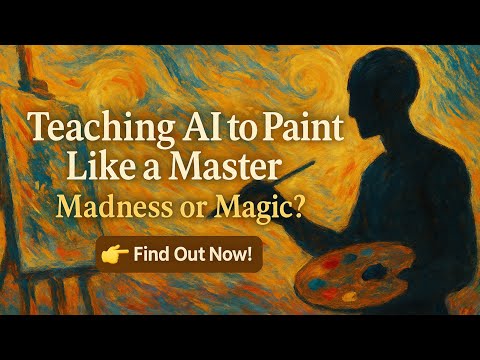
  • Teaching AI to Paint Like a Master – Madness or Magic?

    Teaching AI to Paint Like a Master – Madness or Magic? #AIArt #MachineLearning #DigitalCreativity
    Teaching AI to Paint Like a Master – Madness or Magic?

    Teaching AI to Paint Like a Master – Madness or Magic?

    In a world where artificial intelligence is composing music, writing stories, and even helping us diagnose diseases, one big question remains: Can AI truly create art? And more intriguingly—can it paint like the masters of old? In this post, we explore the fascinating intersection of AI, machine learning, and fine art, and ask: is this the dawn of a new creative renaissance or a digital descent into madness?

    The Rise of AI in the Art World

    Over the past few years, AI-generated art has exploded into the spotlight. From DALL·E creating surreal imagery from text prompts to StyleGAN generating lifelike portraits of people who don’t exist, the blend of technology and creativity is more vibrant—and controversial—than ever.

    Machine learning models are now being trained on massive datasets of paintings, illustrations, and digital media. These models don’t just copy what they see—they analyze, interpret, and generate new works based on patterns they’ve learned. That’s where things get interesting: when an AI begins to replicate the brushstroke flair of Van Gogh, the emotional depth of Picasso, or the anatomical precision of Da Vinci, are we witnessing madness or magic?

    Teaching AI to Paint – How Does It Work?

    At its core, teaching AI to paint like a master involves training neural networks using thousands—sometimes millions—of images and styles. This technique, often referred to as style transfer, allows an AI model to learn the visual language of a particular artist and apply it to new images or compositions.

    For example, a computer could take a photo of a city street and transform it into something that looks like it came straight from Impressionist France, all through the lens of Claude Monet’s painting style. It’s not just copying—it’s a computational reinterpretation.

    What makes this magical is the creative potential. What makes it controversial is the philosophical question: Is this still art? Or is it just mimicry?

    Is AI Truly Creative?

    The heart of this debate lies in what we define as creativity. Traditionalists argue that art is about emotion, intent, and the human experience—something an AI simply can’t possess. After all, can a robot feel the heartbreak that inspired a masterpiece? Can it understand beauty the way we do?

    But others argue that creativity isn’t reserved for human minds. If a machine can surprise us, provoke thought, or inspire emotion—doesn’t that qualify as art? Even more, some believe that AI might unlock new forms of expression that we haven’t even imagined yet.

    What’s certain is this: AI is changing the creative landscape. Whether you see that as an evolution or a threat depends on your perspective.

    Madness or Magic? The Artist’s Perspective.

    Many artists are beginning to embrace AI as a tool—not a replacement. Just as digital painting expanded the boundaries of traditional art, generative art tools powered by AI are becoming part of the modern creative toolkit.

    Artists now use machine learning to:

    • Generate inspiration and early sketches
    • Explore color palettes and compositions
    • Blend unexpected styles in seconds
    • Create immersive digital installations

    But with opportunity comes challenge. Some worry about AI-generated art flooding the market, devaluing human-made pieces, or leading to ethical issues around authorship and originality.

    The Future of AI and Creativity

    We’re only at the beginning of the journey. AI isn’t just copying the masters—it’s being trained to become one. And while some view that as artistic blasphemy, others see it as a leap forward into a new digital renaissance.

    In the future, we might see AI-human collaborations become the norm. Think of a world where a human sketches an idea, an AI renders it in five distinct styles, and then both refine it together. In that sense, AI could be the ultimate creative partner—not a rival.

    Teaching AI to Paint Like a Master – Madness or Magic?
    Teaching AI to Paint Like a Master – Madness or Magic?

    Final Thoughts: The Verdict Is Yours

    So, is teaching AI to paint like a master madness or magic?
    The answer may not be black or white. It might be a vibrant blend of both—painted in strokes that only a machine could dream of.

    Let us know your thoughts. Does AI art inspire you or unsettle you? Would you hang an AI-generated painting on your wall? Or do you believe the soul of art must remain human?

    🔔 Subscribe to Technoaivolution on YouTube for bite-sized insights on AI, tech, and the future of human intelligence.

    Thanks for watching: Teaching AI to Paint Like a Master – Madness or Magic?

    #AIArt #GenerativeArt #MachineLearning #CreativeAI #DigitalCreativity
  • Can AI Create Real Art? Watch It Paint Like Picasso.

    Can AI Create Real Art? Watch It Paint Like Picasso? #technology #nextgenai #deeplearning
    Can AI Create Real Art? Watch It Paint Like Picasso.

    Can AI Create Real Art? Watch It Paint Like Picasso.

    Artificial intelligence is evolving at a staggering pace. From writing poetry to composing music, AI is now venturing into the world of visual arts—raising an age-old question in a new light: Can a machine create real art?

    At Nyksy, we love diving into the spaces where technology, creativity, and culture collide. And this one’s a big one. Because today, AI isn’t just crunching numbers or powering your voice assistant—it’s painting like Picasso.

    The Rise of AI Art

    AI-generated art has become one of the most fascinating developments recently. Tools like DALL·E, Midjourney, and DeepArt are capable of generating stunning visuals based on simple text prompts. These platforms analyze thousands—sometimes millions—of images and artistic styles to learn how to replicate them.

    Want a portrait in the style of Van Gogh? No problem. A surreal cityscape inspired by Salvador Dalí? Done in seconds.

    And now, with just a few clicks, AI can mimic the iconic brushwork and color palette of Picasso himself—cubist angles, abstract figures, and all.

    But here’s the question that’s sparking debate: Does AI art count as real art? Or is it just advanced imitation?

    Creativity: Human or Machine?

    Let’s break it down.

    AI doesn’t feel emotion. It doesn’t dream, it doesn’t suffer heartbreak, and it doesn’t stare out the window contemplating the meaning of life. It doesn’t have a “muse.”

    So how can something that lacks human experience create real art?

    According to some artists and philosophers, creativity requires intention, emotion, and meaning. Without those elements, the output—no matter how beautiful—is technically not “art.” It’s just a product.

    But others argue that art is defined not by the artist’s intention, but by the impact on the viewer. If an AI-generated painting moves you, inspires you, or makes you think, doesn’t that count for something?

    After all, we’ve accepted photography and digital art as legitimate forms of creative expression. Why should AI be any different?

    Picasso, Reimagined by AI

    The short video we released—“Can AI Create Real Art? Watch It Paint Like Picasso?”—shows just how far AI has come. The neural network behind the art was trained on thousands of pieces, learning not just colors and shapes, but styles and feeling—or at least the appearance of it.

    In just seconds, it can produce pieces that look like they belong in a modern art museum.

    Of course, Picasso spent decades refining his craft. His paintings weren’t just about form—they reflected his inner turmoil, his political views, and the cultural chaos of his time.

    So while the AI can paint like Picasso, it cannot be Picasso.

    And maybe that’s the point.

    The Future of AI and Creativity

    We’re entering a new era—where art and algorithms meet. AI is no longer just a tool for automation or analysis. It’s becoming a collaborator, a co-creator, and in some cases… a competitor.

    But this isn’t necessarily a bad thing.

    AI art is opening new doors for expression. It allows people without traditional training to create stunning visuals. It’s pushing professional artists to think differently. And it’s challenging all of us to reconsider what we mean by “creativity.”

    Is it a process? An outcome? An experience?

    Whatever your stance, there’s no denying that AI-generated art is here to stay—and it’s only getting more sophisticated.

    Can AI Create Real Art? Watch It Paint Like Picasso
    Can AI Create Real Art? Watch It Paint Like Picasso.

    Final Thoughts

    So, can AI create real art? The answer depends on how you define “real.”

    If art must come from emotion, then maybe not. But if art is about impact, inspiration, and innovation—then AI is already doing it.

    At Nyksy, we believe the conversation is just as important as the creation. And we’re here for all of it—the awe, the questions, the blurry lines between man and machine.

    So go ahead, watch the short. Let it stir your thoughts. And then ask yourself…

    Is this creativity—or just clever code?

    🔔 Subscribe to Technoaivolution on YouTube for bite-sized insights on AI, tech, and the future of human intelligence. And remember! The question isn’t just can AI create, but whether it can truly capture the soul of art.

    Thanks for watching: Can AI Create Real Art? Watch It Paint Like Picasso.

    #AIArt #ArtificialIntelligence #NeuralNetworks #DigitalArt #CreativeAI #MachineLearning #AIGeneratedArt #FutureOfArt #PicassoStyle #Dalle #Midjourney #TechAndCreativity #ArtAndTechnology #AIExplained #CanAICreateArt #ModernArt #AIvsHuman #InnovationInArt

  • A Simple Morning Routine Inspired by Stoicism

    A Simple Morning Routine Inspired by Stoicism — Start Your Day with Clarity, Focus, and Calm.
    A Simple Morning Routine Inspired by Stoicism

    A Simple Morning Routine Inspired by Stoicism

    What if the first five minutes of your day could completely change how you face the world?

    The ancient Stoics believed that mornings weren’t just for waking up — they were for preparing the mind, setting intention, and aligning yourself with what truly matters. In our modern world, filled with distractions and digital noise, a Stoic morning routine is more powerful — and more necessary — than ever.

    This guide will walk you through a simple, timeless morning ritual inspired by Stoic philosophy, Marcus Aurelius, and other great minds of the ancient world. It’s a small habit with the potential to shift your mindset, increase mental clarity, and bring more purpose to each day.

    Why Your Morning Routine Matters

    Modern psychology and ancient philosophy agree: the way you start your morning shapes your entire day. Whether you fall into reaction mode or take control with calm, purposeful action can make the difference between a day of stress and a day of strength.

    The Stoics — especially Marcus Aurelius, Epictetus, and Seneca — knew this well. Their writings are full of reminders to begin each day with reflection, discipline, and awareness of what truly lies within our control.

    Let’s break down a practical Stoic morning routine that can be done in 5–10 minutes — no apps, no gimmicks, just mindset mastery.

    Step 1: Wake with Gratitude and Intention

    As soon as you wake up, resist the urge to grab your phone. Instead, sit up and remind yourself:

    “I’ve been given another day. I won’t waste it.”

    This moment of intention mirrors the writings of Marcus Aurelius in Meditations. The Stoics believed that life is fleeting, and each day is a gift — not a guarantee. Starting your day with gratitude sets a tone of presence and purpose.

    Step 2: Practice Negative Visualization

    Take 60 seconds to ask yourself:

    “What could go wrong today?”

    This isn’t pessimism — it’s premeditatio malorum, or the Stoic art of anticipating adversity. By visualizing potential obstacles — a traffic jam, a tough conversation, unexpected delays — you build emotional resilience ahead of time.

    When those challenges arise, your mind won’t be shocked. You’ll be ready.

    This is a cornerstone of the Stoic mindset: control your response, not the world.

    Step 3: Journal With Clarity

    Grab a notebook or open a note on your phone, and jot down two things:

    1. What is in my control today?
    2. What virtue will guide me?

    Maybe today, you’ll focus on discipline, patience, or courage. This quick reflection helps you step into the day with intention, rather than drifting through it on autopilot.

    Seneca often wrote about self-reflection as a daily practice for aligning thought with action. He knew that to master the self, we must first understand it.

    The Benefits of a Stoic Morning Routine

    This simple practice offers more than peace of mind — it helps train emotional intelligence, decision-making, and stress resilience.

    By incorporating this Stoic-inspired routine into your mornings, you’re not just copying ancient philosophy. You’re living it. And in doing so, you’re stepping into your day not as a victim of circumstances, but as the master of your mindset.

    Benefits include:

    • Improved focus and clarity
    • Reduced anxiety and reactivity
    • Greater alignment with your values
    • More consistent productivity
    • A calmer, more grounded mindset

    Make It Your Own

    The best part? You don’t need an hour, a guru, or a perfectly curated space. You just need 5–10 minutes of honest focus.

    You can recite Marcus Aurelius quotes, write in a journal, sit quietly with your thoughts — or all of the above. The key is consistency. Over time, this practice becomes a kind of mental armor — preparing you not just for the day, but for life.

    A Simple Morning Routine Inspired by Stoicism
    A Simple Morning Routine Inspired by Stoicism

    Final Thoughts

    A Stoic morning routine is simple, powerful, and rooted in ancient wisdom. It’s not about hacks or hustle culture — it’s about self-awareness, personal sovereignty, and the steady pursuit of virtue.

    So tomorrow morning, before the noise of the world sets in, give yourself a moment. A breath. A quiet reflection.

    Because mastering your morning is the first step toward mastering yourself.

    🔔 Subscribe to YourWisdomVault on YouTube for timeless insights on life, mind, and meaning.

    #Stoicism #MorningRoutine #MarcusAurelius #DailyStoic #AncientWisdom #SelfMastery #MindsetShift #PremeditatioMalorum #MentalClarity #PersonalGrowth #StoicPhilosophy #InnerPeace #JournalingPractice #StoicHabits #LifeLessons

  • How to Stay Calm in Any Situation – A Stoic Guide

    How to Stay Calm in Any Situation — A Stoic Guide to Peace, Strength, and Emotional Control.
    How to Stay Calm in Any Situation – A Stoic Guide to Emotional Control

    How to Stay Calm in Any Situation – A Stoic Guide to Emotional Control!

    In a world filled with stress, distractions, and constant pressure, learning how to stay calm in any situation isn’t just a nice skill to have — it’s a superpower. Whether it’s dealing with a difficult coworker, receiving bad news, or simply being stuck in traffic, how we respond in those moments defines not just our day, but our character. Learning to stay calm is the first step toward mastering your emotions.

    The ancient Stoics — like Marcus Aurelius, Seneca, and Epictetus — understood this better than anyone. Their teachings provide a simple, powerful blueprint for emotional control, resilience, and inner peace. This post explores how to use Stoic philosophy to remain composed, grounded, and mentally strong, regardless of what life throws at you.

    The Stoic View: Control What You Can, Let Go of the Rest

    At the heart of Stoicism is one core idea: you can’t control everything — but you can always control your response.

    Stoics believed that our emotions often come not from external events, but from how we interpret them. When someone insults you or when plans fall apart, the initial feeling of anger or frustration isn’t caused by the event itself — it’s your internal reaction.

    This is why Epictetus said:

    “It’s not what happens to you, but how you react to it that matters.”

    In practical terms? When something unexpected happens, ask yourself:

    • Is this within my control?
    • If not, what is in my control right now?

    That mental shift is the first step toward calm.

    The Pause: Create Space Between Trigger and Response

    In the fast-paced modern world, we typically react to impulse. The Stoic approach invites us to pause. Take a breath. Think before reacting.

    Marcus Aurelius, the Roman emperor and Stoic philosopher, practiced this daily. He wrote to himself in his journal — now known as Meditations — reminding himself to remain steady in the face of chaos.

    So next time something tests your patience, try this:

    1. Stop.
    2. Breathe deeply.
    3. Ask yourself: “What would the wise thing to do be right now?”

    That space between stimulus and response is where your power lies.

    Reframing: Change the Story You Tell Yourself

    Stoicism teaches us that our suffering typically comes from our thoughts about the situation, not the situation itself. This is known as cognitive reframing.

    Let’s say you miss an important meeting. Instead of spiraling into frustration, a Stoic would ask:

    • “Is this the worst thing that could happen?”
    • “Can I use this as a lesson?”
    • “How would a calm, rational person handle this?”

    By reframing problems as opportunities, or at least as neutral events, we gain control over how they affect us.

    Daily Practice Builds Emotional Strength

    Staying calm isn’t something you master overnight. It’s a daily practice. The Stoics believed in preparing the mind — like training a muscle — so that when difficult moments arise, you’re ready.

    Here are a few ways to build that calm mindset:

    • Morning Reflection: Ask yourself, “What challenges might I face today, and how will I respond with strength?”
    • Evening Journaling: Reflect on how you handled yourself. What went well? What could improve?
    • Voluntary Discomfort: Expose yourself to small, controlled stress (cold showers, fasting, early wake-ups) to train resilience.

    Why Staying Calm is a Power Move

    When you stay calm under pressure, you stand out — in a good way. People trust calm leaders. Employers value emotional intelligence. Partners appreciate groundedness.

    And most importantly, you feel better.

    You’re not being dragged around by every external force. You’re controlling your emotions, your actions, and your outcomes.

    Final Thought: Peace Is a Choice

    One of the greatest Stoic lessons is that peace isn’t found by controlling the world — it’s found by controlling yourself.

    You don’t need to react to everything. You don’t need to let emotions run the show. You can observe, breathe, and respond with purpose.

    How to Stay Calm in Any Situation – A Stoic Guide
    How to Stay Calm in Any Situation – A Stoic Guide

    Want to Go Deeper?

    If you’re interested in learning more about Stoic philosophy, emotional control, and mental toughness, be sure to subscribe to our YouTube Shorts channel where we break down Stoic wisdom in 60 seconds or less.

    And remember…

    “You have power over your mind – not outside events. Realize this, and you will find strength.”
    — Marcus Aurelius

    🔔 Subscribe to YourWisdomVault on YouTube for timeless insights on life, mind, and meaning. And remember! Stoic wisdom teaches us how to stay calm, even when life feels out of control.

    Thanks for watching: How to Stay Calm in Any Situation – A Stoic Guide

    #Stoicism #Mindset #EmotionalControl #MarcusAurelius #Seneca #Epictetus #StayCalm #MentalStrength #InnerPeace #SelfDiscipline #PersonalGrowth #PhilosophyOfLife #DailyStoic #Resilience #Mindfulness #SelfImprovement #StoicWisdom #LifeLessons #ControlYourMind #ModernStoicism